Skip to content

Lighthouse

Bi-monthly publication of CSS Group

Lighthouse
  • Call +971 4 8872333
  • Mail info@cssdubai.com
  • Menu
    • Home
    • About
    • Services
      • Global Freight forwarding
      • Ocean Freight Management
      • Supply Chain Management
      • Land Transportation Management
      • Industrial Packing, Crating & Lashing
      • Air Freight Management
      • Projects Oil & Energy
      • Exhibition Event Logistics
      • Automobile Logistics
      • Art Logistics
      • Non Vessel Operating Common Carrier (NVOCC)
      • Hospitality & Hotel Logistics
      • Multi-modal Operations
      • Container Freight Station (CFS)
      • Yacht & Marine Logistics
      • E-commerce Fulfillment
    • Locations
      • Dubai
      • Abu Dhabi
      • Sharjah
      • Ras Al Khaimah
      • Bahrain
      • Oman
      • Qatar
      • Saudi Arabia
      • India
      • Sri Lanka
    • Careers
    • Track & Trace
    • Login
      • Customer / Agent
      • Employee – Portal
      • Employee – Dashboard
      • CSS India Login
    • More+
      • Lighthouse
      • Media Hub
      • Feedback
    • Contact Us
  • Login
    • Customer / Agent
    • Employee – Portal
    • Employee – Dashboard
    • CSS India Login
  • TRACK & TRACE
  • NOTICES
  • LIGHTHOUSE
Lighthouse
  • Call +971 4 8872333
  • Mail info@cssdubai.com
  • Menu
    • Home
    • About
    • Services
      • Global Freight forwarding
      • Ocean Freight Management
      • Supply Chain Management
      • Land Transportation Management
      • Industrial Packing, Crating & Lashing
      • Air Freight Management
      • Projects Oil & Energy
      • Exhibition Event Logistics
      • Automobile Logistics
      • Art Logistics
      • Non Vessel Operating Common Carrier (NVOCC)
      • Hospitality & Hotel Logistics
      • Multi-modal Operations
      • Container Freight Station (CFS)
      • Yacht & Marine Logistics
      • E-commerce Fulfillment
    • Locations
      • Dubai
      • Abu Dhabi
      • Sharjah
      • Ras Al Khaimah
      • Bahrain
      • Oman
      • Qatar
      • Saudi Arabia
      • India
      • Sri Lanka
    • Careers
    • Track & Trace
    • Login
      • Customer / Agent
      • Employee – Portal
      • Employee – Dashboard
      • CSS India Login
    • More+
      • Lighthouse
      • Media Hub
      • Feedback
    • Contact Us
  • Login
    • Customer / Agent
    • Employee – Portal
    • Employee – Dashboard
    • CSS India Login
  • TRACK & TRACE
  • NOTICES
  • LIGHTHOUSE

US PORTS ARE STILL STRUGGLING
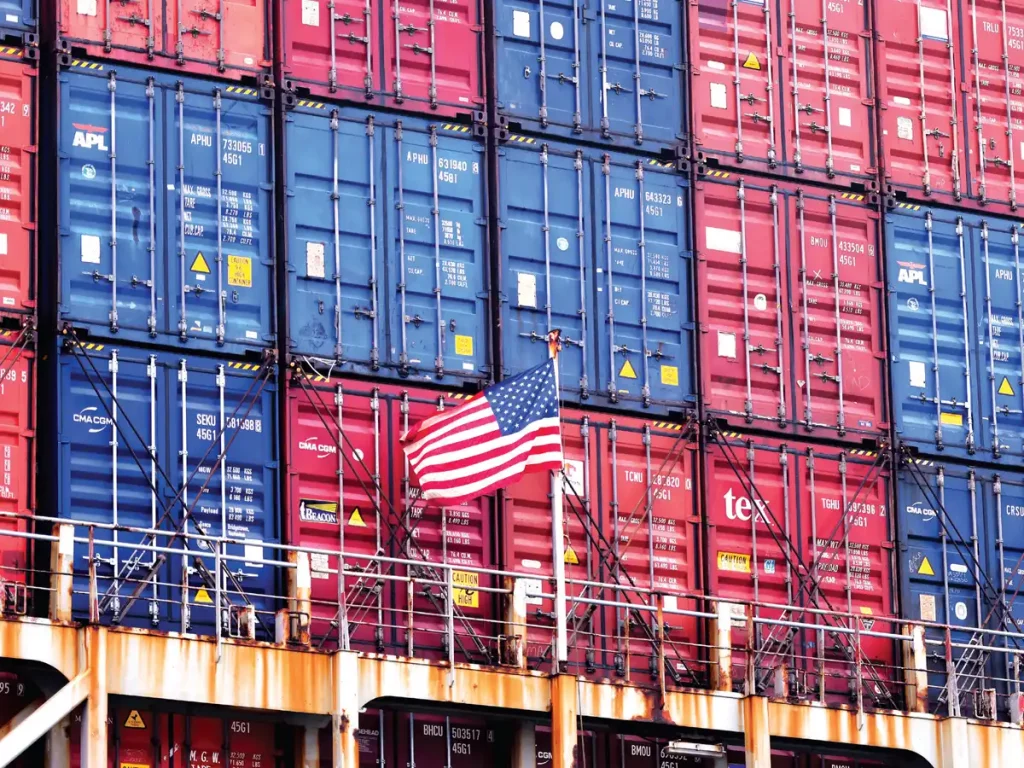
US ports are having productivity issues due to congestion, even as container volume from China is lower than usual. More cargo has been moved away from the U.S. west coast because of an increase in container vessels anchored off Savannah and Houston. Meanwhile, East and Gulf coast warehousing is a big beneficiary, where many container volumes are pushing up prices.

Crisis Faced by the U.S. and Canadian Ports

According to earlier CNBC reports, ocean carriers have a cut in vessel services due to the congestion at the U.S. and Canadian ports. The latest report shows that it is not receding. “It comes as no surprise ocean carriers are blanking (canceling) sailings,” said Alan Baer, CEO of OL USA. “It needs to be done to regain some sort of schedule reliability.” The outcome is that all these vessels will not be in a position for the return voyage, moving containers, loading U.S. exports, and, finally, will only load imports.

“A lot of this was the result of moving freight away from USWC arrivals due to labor disruption risk,” Baer said. According to Captain Adil Ashiq, United States Western Region executive, more complications from the East Coast ports are anticipated due to the strike at Felixstowe. “This means holiday goods could end up reaching shelves closer to the start of the holiday season — it may be prudent to seek alternative modes of transport, if possible,” Ashiq said.

Shift Of Freight

Ocean carriers, most recently MSC, have been announcing modifications to their vessel schedule due to port congestion. In July, East Coast congestion was impacting the arrival of vessels back to the Port of Shenzhen for reloading. The warehousing costs are increasing fast on the East Coast, a consequence of the increase in the vessels, Jordan Brunk, CMO of WarehouseQuote, reported. He added, “We are seeing a shift of freight traditionally held on the West Coast now moving to the Northeast and Southwest.” As a result, there is a decrease in the pricing on the West Coast.

A pullback on Manufacturing Orders and Ocean Bookings

There is a decrease in container bookings due to the pullback in manufacturing orders and all the congestion at the ports is skewing it.

“As booking levels, which indicate future import volumes, continue their descent, peak season demand on the ocean looks muted,” Mulvey said. “Softer demand on the ocean leads carriers to increase the number of blank sailings to slow the rapid decline in Trans-Pacific spot rates.” According to OrientStar Group, currently, space is open for all lanes, and more bookings with freight adjustments weekly and some daily, are being pushed by ocean carriers.

Impact Of Strike at German Ports And Felixstowe

China to West Coast Ocean freight rates is down to 6%, and China to the East Coast is down by 3%, tracked by Freightos. The strike at Felixstowe and the previous labor strife in Germany have led to massive port congestion resulting in the freight rates going up from Europe to North America and China to Europe.

It will take the first quarter of 2023 for the congestion to be eased, reported Crane. Those who have the information about the German deal state that it will take two weeks for the union to announce its final decision. The union negotiation committee has approved the deal for a retroactive pay increase of 9.4%, followed by 4.4%. There is a trade slowdown of $4.7 billion due to the current strike at Felixstowe.

“If the strike action goes for the full eight days or longer, massive delays will be seen across the U.K., with spillover effects into the E.U. as containers get diverted to other ports such as Rotterdam or Le Havre. Moreover, many U.K. and E.U. ports are already experiencing maximum capacity volumes, so their ability to handle even more may be limited,” Brazil said.

The strike will impact significant companies that use the port at Felixstowe to transport their goods. It will also harm the U.S. companies and industries that export to the U.K. If the pay demand is not met, the port disruption could last until Christmas, union Unite has warned. Sources say that if the request is approved, there will be no more strikes till March 2024.
FREIGHT FORWARDER NOT LIABLE FOR THE LOSS DUE TO THE THEFT OF CARGO BY EMPLOYEE: SUPREME COURT OF APPEAL OF SOUTH AFRICA

A recent judgment by the Hon’ble Supreme Court of Appeal of South Africa, in an Appeal named Schenker South Africa (Pty) Limited vs. Fujitsu Services Core (Pty) Limited (508 of 2020) [2022] ZASCA 7 (18 January 2022), overturned the Judgment of the High Court of South Africa and pronounced that the Freight Forwarder is not liable for the loss due to the theft of Cargo by Employee for various reasons.
In the said case filed by Fujitsu Services Core (Pty) Limited against Schenker South Africa (Pty) Limited before the Hon’ble High Court of South Africa, the claimant Fujitsu imported a consignment of laptops and accessories from its affiliate company in Germany to the value of $516,887/- and engaged the services of Schenker South Africa (Pty) Limited to assist with the logistics, freight forwarding, warehousing and clearing of the consignment. Thus the scope of services by Schenker included receiving the consignment from the Carrier; delivering them by road to Fujitsu after performing the necessary customs clearance and other logistical services. Once the consignment arrived in the storage at the South African Airways Cargo Warehouse and was ready to be delivered to Fujitsu, Schenker issued necessary documentation to its drawing clerk, one Mr. Wilfred Lerama, authorizing him to collect and deliver the Cargo to Fujitsu. On 23rd June 2012, Mr. Lerama arrived at the warehouse to collect the laptops on behalf of Schenker and Fujitsu. The consignment was then loaded onto his truck, which was “not marked with the Schenker Branding,” and drove off, never to be seen again. Consequently, Fujitsu filed a claim for damages against Schenker in relation to the theft of its consignment.

In the said case, even though the High Court pronounced its Judgment holding the Freight Forwarder, Schenker, liable on the grounds of Vicarious Liability (Holding liable for the fraudulent act by its Employee) and on the terms and conditions of the National Distribution Agreement entered into between both the Parties, the Hon’ble Supreme Court of Appeal, dismissed the Judgment of High Court. The Supreme Court of Appeal, while interpreting Clause 17, titled “Exemption Clause” of the said Agreement, determined that Schenker had been “handling or dealing” with the Cargo at the time of the theft, as contemplated by the Exemption Clause and was therefore executing the contract. The exemption clause 17 of the National Distribution Agreement reads, “Except, under special arrangements previously made in writing, the Company (Schenker) will not accept or deal with bullion, coins, precious stones, jewelry, valuables, antiques, pictures, human remains, livestock or plants. Should Customer (Fujitsu) nevertheless deliver such goods to Company or case Company to handle or deal with any such goods, otherwise than under special arrangements previously made in writing, Company shall incur no liability whatsoever in respect of such goods, and in particular, shall incur no liability in respect of its negligent acts or omissions in respect of such goods….”. The Supreme Court of Appeal further observed that if Fujitsu had informed it that the Cargo was valuable, it could have reduced the risk by taking appropriate steps, including but not limited to employing security guards or taking out fidelity insurance.

The difference of opinion, observation, and comments by both the High Court and the Supreme Court of Appeal, though, has raised a concern among the Parties from various industries, who are now being advised about the importance of careful drafting of the contractual terms and the difficulty in recovering the stolen goods, however, has allowed the Freight Forwarders to breathe a sigh of relief.

Even if there are few circumstances where the Court declares the Freight Forwarder not liable for the loss or damage to the consignment or any other claims against them, different Courts of different jurisdictions consider various factors depending on which role they assume when agreeing to make the shipping arrangements. In any case, experts advise the Parties who engage as Freight Forwarders to take a Freight Forwarder’s Liability Insurance Policy with any reputed insurance company so that they would get the required assistance to deal with the claims as appropriate.

Chairman’s Message

Supply chains and logistic companies like ours are not new to digital transformation. When the pandemic hit us, we quickly adopted digitization to enable our teams’ remote working, ensuring business continuity in the midst of the lockdowns.

Logistics in the Metaverse and Web3

In October 2021, Facebook rebranded itself as Meta. The Metaverse is a digital 3D universe that creates a digital space that is then translated into the physical world. It is considered the next big step in the future of digital interaction. It has become a popular trend pursued by several organizations, not just by Facebook alone. At the Intersec conference held in Dubai early this year, the experts said that the Metaverse also shows a demand for jobs, which is definitely portending a future digital economy.
This also means that the Metaverse can affect how supply chains operate. It will enhance collaboration across all supply chain tiers, both internally and externally. This environment will also help create better warehouse designs as it can be simulated, experienced, and improved in the Metaverse before the physical build, saving money and time from concept to reality.
Web3 is another revolutionary concept in which platforms and data are owned by the people who build and use them. Considered to be the next iteration of the internet, supply chain and logistics start-ups are built on decentralized ledgers with a backbone of cryptocurrencies. These solutions can help manage and track the shipment of anything worldwide.

CSS -The Technology Adopters

Reuters Events surveyed 488 logistics and supply chain professionals worldwide between January and February 2022 in partnership with CargoWise. In the survey report titled Global logistics: The link between technology and productivity, the key takeaway is that technology is essential to unlocking consistent productivity gains for logistics providers. At CSS, we have always been at the forefront of adopting robust digital infrastructural facilities so that we can deliver on customer demands and respond quickly to change.

Disruptive Thinking

We need to adopt disruptive thinking to succeed in an increasingly uncertain business landscape. It means thinking differently or a way that challenges the usual way of doing things. The architect of the disruption theory, Clayton M. Christensen, explains, “Disruption describes a process whereby a smaller company with fewer resources can successfully challenge established incumbent businesses.”

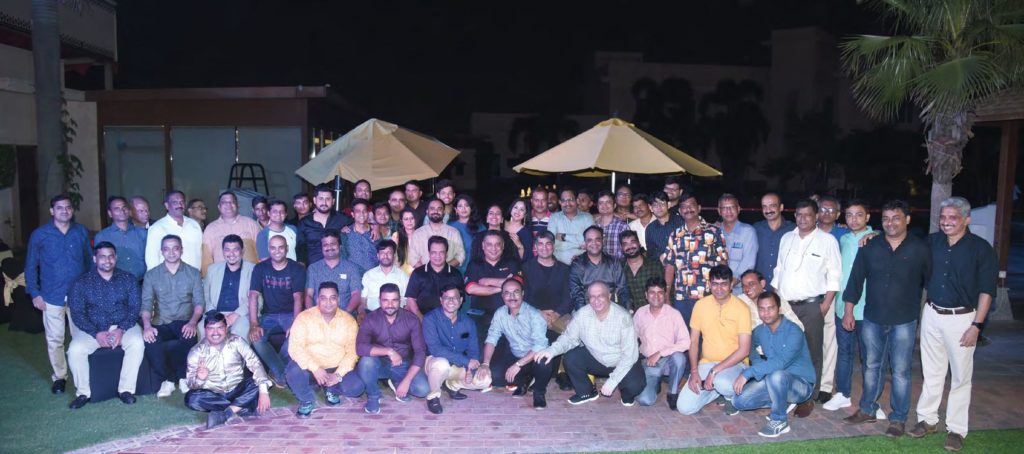
India Staff Meet at New Delhi

We had a great time at the India Staff Meet, which was held on 31st July 2022 at ‘The Umrao’, a much sought-after luxury hotel in the National Capital Region (NCR) of New Delhi. It was a night of grand festivities and a time of honoring the stupendous efforts of the CSS India team.
Many breakthrough technologies will emerge and evolve in the days ahead. We are at the birthing stages of new tech like the Metaverse and Web3. Team CSS has always been one step ahead of the others in the industry. As we adopt a disruptive mentality, it will help us provide valuable offerings to our customers. Let us be future-ready to go beyond physical workplaces to envision a future with virtual working environments.
This has made me think that even our future staff meetings might be on the Metaverse!

CSS INDIA STAFF MEET IN DELHI

The CSS India Staff Meet was held on 31st July 2022 at ‘The Umrao’, a much sought-after luxury hotel in the National Capital Region (NCR) of New Delhi. The CSS Group Chairman Mr. T S Kaladharan and the CSS Management threw a scintillating cocktail party and DJ night to rebuild the connections that were restricted due to the pandemic-induced constraints over the past two years.
The party was well attended by CSS team members from every CSS office across the Indian subcontinent. Mr. Fida Asghar represented the Dubai office, while Mr. Rahat came with a strong contingent of 14 employees from the CSS Mumbai branch. From the South, Mr. Vishwanath represented the Coimbatore and Tirupur offices, while Mr. Jitendra & Mr. Sathiya Narayanan came from the Chennai wing. There was also Mr. Sudeep and Mr. Jinu from our Kochi Office, while Mr. Naveen represented the Bangalore branch. Mr. Anirban was representing the Kolkata office from the eastern part of the country. Since the meeting was held in Delhi, the entire team attended the party from our Delhi and Ludhiana offices.

An Exhilarating Night of Celebrations, Joy, and Laughter

The party was organized at ‘The Umrao’, one of the most sought-after venues, CSS always ensures that our team gets nothing but the best, the poolside party kicked off with the DJ’s foot-tapping numbers that set the mood for the night. The dancing session was followed by a sumptuous dinner and spirits that brought mirth and revelry to the event. The CSS India staff made most of the night as they enjoyed every moment of the party.
Fida entertained the audience with witty and rib-tickling jokes, roaring with laughter throughout the night. Mr. Rahat had everyone spellbound with his remarkable dialogues filled with witticisms and anecdotes. The party’s highlight was the melodious voice of Mr. Pramod Dubey from the Ludhiana office, who revealed timeless hits and Bollywood songs to the audience.

Welcoming the New Additions to Team CSS

We also took the opportunity to introduce our new joiners to the CSS team. We also remembered our revered colleague Mr. Rinku, whom we have lost due to Covid. His wife, now part of the CSS Team, was introduced to our guests.

Awards and Felicitations

Our Honourable Chairman, Mr. T.S Kaladharan, also felicitated the company’s outstanding employees by giving mementos to them. He also felicitated the respective vertical heads, Mr. Rahat, Mr. Rajeev, Mr. Jinu, Mr. Sudeep, and Mr. Vishwanath, with signature gifts.
The Chairman also gave rewards to Mr. Sanjay Dutt and Mr. Ajay Kumar from the Delhi office. They were the two outstanding dancers who set the floor on fire with their unique steps and moves.
Mr T S Kaladharan and Mr. Fida praised and felicitated Ms. Nishu Jain from the event management company The Impresario for meticulously planning and conducting the whole event without any glitches.

Connections are the Key to the CSS Success Story

At CSS, our Chairman, TS Kaladharan, has always been at the forefront of nurturing connections between team members. Even though CSS operates with teams across multiple geographical boundaries, it is important for the teams to be connected no matter where they are. Mr. Kaladharan has always encouraged building a rapport between team members. He believes that along with recognition and rewards, these connections go beyond the celebrations. The company will gain intangible rewards that reap benefits that even affect the company’s bottom lines.
Here’s to more celebrations and new connections!

AIRCRAFT ENGINE MOVEMENT COMPLETED BY CSS KINGSTON

Over the last few years, CSS has set an enviable track record in air shipments of large equipment, luxury cars and bikes. CSS Kingston Logistics, Ras Al Khaimah recently had the opportunity to undertake the movement of an aircraft engine all the way to Antwerp, Belgium from Jebel Ali. The Air Craft Engine was shipped on a HAPAG LLOYD on a 40 feet flat rack.
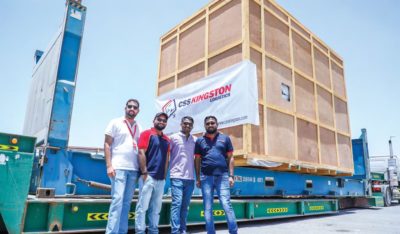
CSS Kingston Logistics, Ras Al Khaimah

CSS Kingston Logistics’ Ras Al Khaimah branch started it operations in the midst of the pandemic in August 2021. With the backing from our leading networks and global partners, the division soon emerged as a trusted and reliable logistics partner catering especially to the northern Emirates of UAE. The branch has specialized in 3PL services and offers reliable cargo movement to LCL hubs. CSS Kingston also offers documentation, storage and logistics, all under one roof. Above all, it has a dedicated team of professional manpower who are willing to go the extra mile till the project is completed. Team CSS Kingston has been providing exceptional tailor-made solutions to meet the specialized client requirements.
The shipment of the aircraft engine was undertaken on 13 June 2022. It had to be delivered securely all the way at Antwerp, Belgium. Our clients had entrusted this highly costly and sensitive cargo in our safe hands!

Aircraft Parts Transportation

In the world of aviation, even seemingly small aircraft parts can cost a lot of money, making their transportation both risky and costly. Aircraft parts transportation needs special handling and immediate response. Aircraft engines are highly valuable with highly sensitive components. Therefore, adequate safety precautions need to be taken when transporting them. Keeping this in mind, safety was our priority.
Partnering with experts with specialist knowledge was the key. For shipping the aircraft engine, a dedicated vehicle with a large capacity was required to secure the cargo. With this type of high-value shipment, the question is not how much it will cost or how long it will take, but rather trustworthy partners who will be fully committed to the project till its delivery. We collaborated with experts, trusted shippers to provide services that comply with all the safety regulations to ensure that the parts arrived as intended.

A Transcontinental Shipment

Apart from all this, the shipment delivery location was in Belgium, Europe. This required cross-channel logistics support combined with inventive thinking and innovative strategy. The operations team closely aligned with the manufacturer’s guidelines to safeguard the integrity of the engine throughout the entire transportation process. The result was a secure transport solution with minimal hassles and maximum attention to detail.
CSS carried out this specialized operation for this cargo along with expert freight carriers and a dedicated team of logistic experts. We successfully delivered the aircraft engine securely and intact at the client’s location in Belgium. It was indeed a mammoth operation; at the end of the day right combination of top technology, expert human resource inputs and experience got the job “well done”. We completed movement with minimal loading time and maximum attention to detail.

PROJECT AT A GLANCE

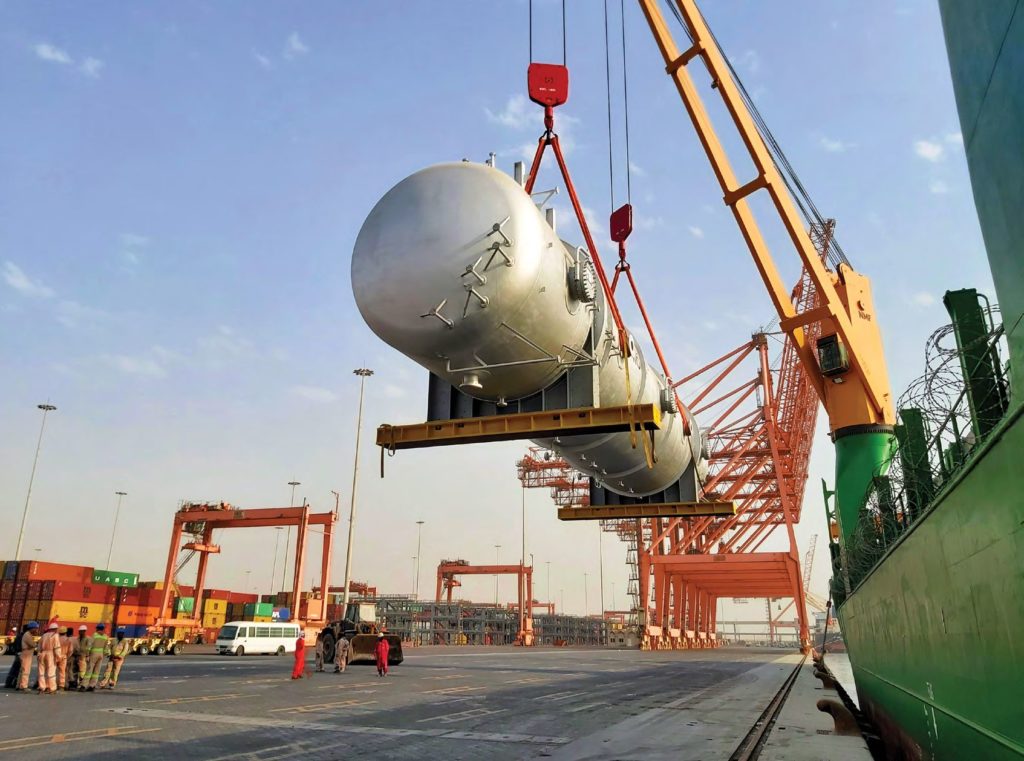
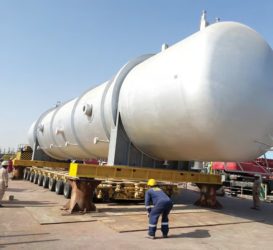
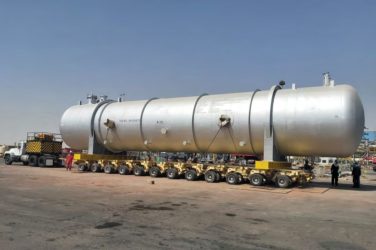
The Water Treatment Package embarked on its journey to KSA from Kuwait , CSS Industrial Project Team moved this beautiful piece of Over Dimension Heavy cargo weighing 96 tons with dimensions of ( L26.19m x W5.34m H6.07m) which posed the main challenge for the move of city and port approach roads.

This OOG unit movement was facilitated with precise planning of CSS in co-ordination with our sub contractors after removal of overhead signboards / gantries en-route to port and the move was enabled under close coordination with Police for permission and escort. The move was accompanied by CSS private escorts / boots on ground supervision and delivery was made under the hook of the vessel at Shuaiba port using suitable multiaxle trailers.


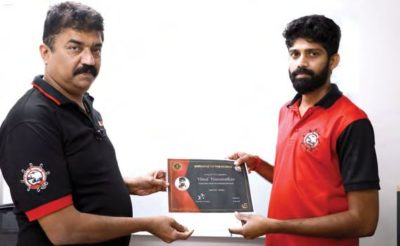
EMPLOYEES OF THE MONTH


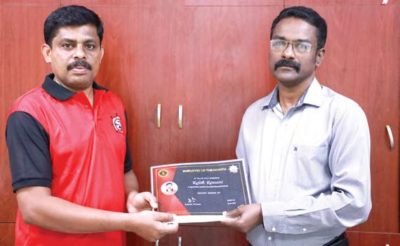
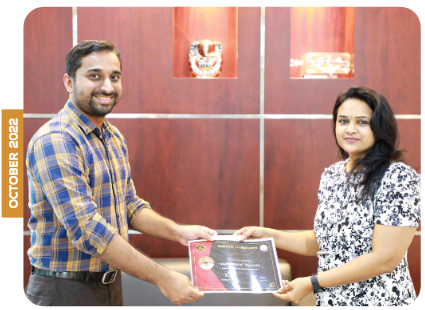
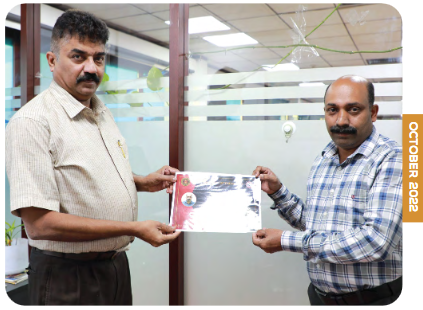
REJITH REMANI -Coordinator (CFS) Awarded by Jayandan PI -Team Leader (CFS)


PRAHLADAN KESAVAN – Sr. Forklift Operator (CFS) Awarded by Manish Kesavan, Manager, Operations-NVOCC & CFS


VINOD VISWANATHAN – Driver (Transport) Awarded by Jayasankar Vasudevan- Manager (Transport)

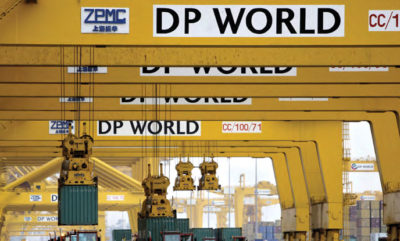
DP WORLD AND SAUDI PORTS AUTHORITY SIGN DEAL TO BUILD $133M LOGISTICS PARK AT JEDDAH PORT

Saudi Arabia, the Arab world’s largest economy, is focused on diversifying its economy away from oil as part of its Vision 2030 program. The kingdom is forecast to be a vital driver of global trade growth. Its exports are projected to expand at an average annual rate of more than 7 percent to $354 billion by 2030, Standard Chartered said earlier this year. “The strategic Vision 2030 framework includes the development of a prosperous and sustainable maritime transportation ecosystem that supports the Kingdom’s socio-economic ambitions and consolidates its status as a global logistics hub,” said Sultan Ahmed Bin Sulayem, Group Chairman and CEO of DP World. The Jeddah Islamic Port, which is strategically located on the Red Sea, has historically played a pivotal role in facilitating the movement of trade between the East and the West.
Logistics Park at the Jeddah Islamic Port

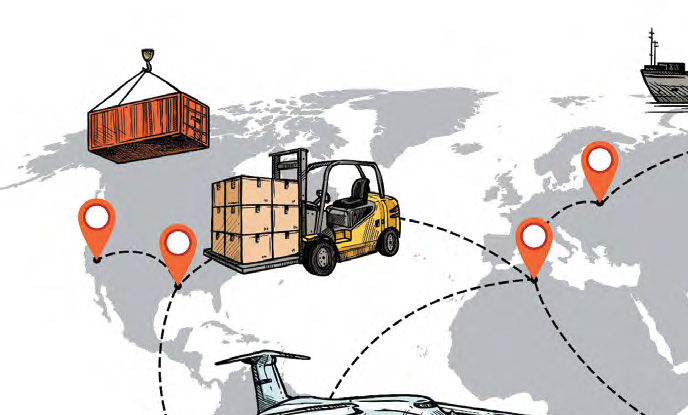
Further strengthening the deep ties shared between the UAE and Saudi Arabia, DP World and Saudi Ports Authority (Mawani) have signed a 30-year agreement to build a state-of-the-art, port-centric logistics park at the Jeddah Islamic Port. An investment value of more than Dh490 million ($133.4 million) aims to establish a 415,000 sq. m logistics park with an in-land container depot capacity of 250,000 TEUs (twenty-foot equivalent units) and a warehousing storage space of 100,000 sq. m.
The Authority’s move to develop a holistic logistics park will enhance the competitiveness of the Jeddah Islamic Port. The park will boost Jeddah Islamic Port in terms of:

  • Re-export activities
  • Help to reduce the time and cost of logistics for importers and exporters
  • Provide an integrated service platform linking port operations with last-mile activities.
  • Enable to offer processing, consolidation /deconsolidation, labeling, and fulfillment
  • Offer temperature-controlled storage for cargo
  • Advanced and eco-friendly e-services by integrating the operations of the South Container Terminal with the new logistics park.
  • Help raise the quantity of trans-shipped goods

DP World Managing the South Container Terminal

In April 2020, DP World signed a new concession agreement with Mawani to continue operating and managing the South Container Terminal at the Jeddah Islamic Port for 30 years. DP World has committed to investing more than Dh2.94 billion to expand and modernize the terminal. The overhaul project will take place over four phases and be completed by 2024.
The project will involve:

  • New infrastructure upgrades
  • Broadening of draft depth and quay
  • Installation of advanced equipment and technologies
  • Automation and digitalization programs
  • Decarbonization initiatives

The revamped terminal is projected to increase Jeddah Islamic Port’s container handling capacity from the current 2.5 million TEUs to 4 million TEUs. This will enhance Jeddah Islamic Port’s status as a major trade and logistics center on the Red Sea coast.

Metals and minerals, plastic and rubber, chemicals, and pharmaceuticals will dominate the kingdom’s exports over the next decade, with India, China, and South Korea being the principal export markets.

DP World makes inroads across the world

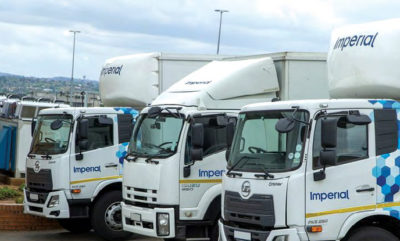
DP World is one of the world’s biggest operators of marine ports and inland cargo terminals, with gateways from London and Antwerp and hubs in Africa, India, Russia, and the Americas. The Dubai-based company has been on an acquisition spree as it attempts to become a more diversified and integrated logistics company. In the recent past, they have signed agreements with the Angolan government to develop the country’s trade and logistics sector and acquired South Africa’s Imperial Logistics to strengthen the port operator’s position in Africa.
The agreement to build a “port-centric park” at the Jeddah Islamic Port was signed under the patronage of Eng. Saleh bin Nasser Al Jasser, Saudi Arabia’s Minister of Transport and Logistic Services and Chairman of Mawani. The logistics park will expand DP World’s regional footprint and bring multi-modal logistics solutions to the nation. DP world being an end-to-end supply chain provider, will help build logistical services that will bridge the existing market gaps. This port-centric logistic park will empower to provide the best-in-class logistical services by collaborating with leading service providers.
“This partnership will connect the port’s operations to the new logistics park to offer end-to-end logistics services with high efficiency,” Omar Hariri, president of the Saudi Ports Authority, said.

HOW THE METAVERSE WILL REDEFINE THE SUPPLY CHAIN

What Is the Metaverse?

Metaverse has become very trending since Facebook changed its name to Meta. Though it was acknowledged as simply a name change initially, it did not confine itself merely to that factor alone. The Metaverse technology includes virtual and augmented reality, digital and physical worlds, and VR and AR. The Metaverse device’s access to PCs, game consoles, and mobiles are significant. This point defines Metaverse’s ability to revolutionize consumer behavior- a unique blend of gaming, social, entertainment, and e-commerce. Metaverse gives the user a store experience as well as comfortable customer service, all at the convenience of shopping at home.
Let us take the example of a customer buying a TV online. In a 3D immersive world, he gets to visit digital stores, get served by store employees, and personally interacts with the TV set he intends to purchase. Some big fashion houses like Ralph Lauren have their digital store to sell digital clothes and collections on the platform called Roblox which has an active 47 million users daily.

The Metaverse Effect on Digital Supply Chain

Many supply chains have already been engaging in certain digital transformations. Interestingly, with the coming of the Metaverse, these digital transformations seem so outdated as they are limited as they are only physical meaning. They do not give us the see and feel option, unlike the Metaverse, whose goal is to create a digital space that gets translated into the physical world. In this context, the question that arises is whether Metaverse will completely takes over and diminish the importance of the supply chain or will it enhance and redefine the supply chain experience. Let’s find out how Metaverse could bring a redefinition to the existing technology.

Metaverse Effect on Manufacturing

With the Metaverse making available 3D and virtual tools accessible to general consumers, it will ignite the ability to digitally simulate products, production processes, and factories to optimize the allocation of assets across the supply chain. It can also run production scenarios and provide operator training in a more immersed environment. It will facilitate a stop to physical manufacturing facilities, long downtimes, and learning curves in factories. Instead, it will push forward for more customized products that were challenging to produce cost-effectively in traditional factories involved in mass manufacture.

Metaverse Will Create Shortened Product Life Cycle

As the Metaverse helps in sharing ideas and ideals for collaboration, it will shorten the product life cycle for new products and increase the speed of development of a workable design

How the Metaverse Can Help with Efficient and Transparent Purchasing

The introduction of the Metaverse takes collaboration up to the next level. It improves collaboration across all tiers in the supply chain, not just with direct vendors vendor for innovating and cost engineering but also limitless and concurrent collaboration up the value chain. This connectivity makes the end-to-end chain more transparent and efficient, including effective cost negotiations between buyers and vendors. This wide-scale collaboration, detailed production optimized designs, and reduced margin of error for production leads to improved product quality and service and reduced customer churn and return rates. Furthermore, there are more chances of efficiencies owing to less travel to vendor locations and reduced costs for quality control.

Metaverse Brings Supply Chain Transparency

Both corporate and consumer customers opt for transparency on the environmental and collateral impacts of the supply chains. Here, the Metaverse will enhance supply chain transparency with 3D representations of how products are made, distributed, and sold. This leads to stakeholders gaining visibility into lead times, transit times, shipping delays, and even real-time shipping costs. This transparency and visibility will only increase trust and effectiveness in supply chains.

Metaverse Will Improve Warehouse Operations

As the Metaverse is a 3D World, the unlimited collaboration offered by the Metaverse will mean that every stakeholder, from worker onions to ESG and sustainability teams, will be involved in a better and more efficient warehouse design and optimal location, thus having a dynamic voice. This can be simulated, experienced, and improved in the Metaverse before the physical build, thus saving money and time from concept to reality.
If local bodies adopt Metaverse, they could review and approve new designs and proposals and copy the final approved design version to their records for archives as it provides a realistic environment where key operator training can take place without any disruption in the day-to-day operations and also test adjustments to warehouse flow and layout.
The use of Metaverse does not end there as better dynamic space modeling, slotting, and racking optimization are observed due to growth in SKUs or product characteristic change.
The immense capabilities of the Metaverse offer potential for huge benefits and applications. Its true worth happens only on how it improves the experience of its users and customers.

THE SEVEN RULES THAT WILL HELP IN UNDERSTANDING THE WORKINGS OF THE SUPPLY CHAIN

The pandemic threw the supply chain out of gear, making people sit and take note of the supply chain industry and how it can impact their lives.

So, what exactly is a supply chain?

Supply chains are networks that link producers to consumers, often with dozens of steps from beginning to end. The core job of supply chains is to match supply with demand; when things are going well, we tend to take them for granted. But as we have seen over the past 2½ years, this process can break down under stress.
We can understand why supply chains are in such turmoil if we know the seven fundamental principles that rule every supply chain.

Rule #1: The Presence of Several Layers in a Supply Chain

Supply chains have two parts – a production side and a distribution side. The production is where the final assembly of a product takes place, while the distribution side is where the products reach the buyer.
The disruption in the supply chain is evident at both ends, i.e., at the manufacturing or production side and the distribution side. In the case of the production side, where multiple parts are involved, companies turn to several suppliers to provide components. One of the best examples that can be cited is the case of a notebook computer that uses different companies to make the microprocessor chips, memory chips, display screen, keyboard, disk drive, battery, charger, etc. With several suppliers being involved and most of them not knowing exactly who is concerned, it’s hard to track the right supplier.
It’s almost like a layer cake. Companies end up with several tiers of suppliers. Layer-one firms supply them directly, layer twos supply layer ones, layer threes provide layers twos, and the train can be extended. The lower layer supplier might have shut shop at the start of the pandemic. However, the manufacturer might not be aware of this fact until the layer 1 supplier refused to deliver the parts.
On the distribution side, a simple supply chain might have several steps that connect a manufacturer to a retailer. The steps are bound to get compounded if the factory is far away. The hassles in the supply chain have happened on both the distribution side and the product side because companies ran out of parts, and on the distribution side, where shipping companies ran into bottlenecks due to such factors as labor shortages and congested ports.

Rule #2: Misinterpreting Sudden Spike in Demand

Demand forecasting is done based on past histories. But the pandemic created a spike in haywire. This was primarily because most people were into panic buying. This was the case with toilet paper and later exercise bikes. Also called the “bullwhip effect”, because of the amplification and oscillation in product volumes moving along the chain, looking like the cracking of a bullwhip. This is primarily because people make erroneous judgments about demand signals. The manufacturers add capacity, and suppliers stockpile the raw materials. With the delays in the chain, a flood of products comes down to retailers, which is when they decide to reduce future orders. The manufacturers slash production, leading to future shortages, and suppliers are left with raw materials.

Rule #3: The Just in Time Versus Just in Case Prediction

The bullwhip effect triggered the just-in-time production strategy. This was okay in cases where the suppliers and factories are closer geography-wise. This meant lean supply chains with better quality and less money getting tied up in inventory, leading to lower costs and better financial performance. However, this could not be worked on in scenes where the suppliers are spread worldwide. Scheduling deliveries just in time failed here. When demand spikes, bottlenecks start disrupting the international cargo shipments, and parts get delayed, which automatically results in higher costs.

Rule #4: Excess Demand Leads to Frantic Shortages

Ordering the raw materials over what is needed gives rise to two scenarios. First, they move in short supply or become harder to get. The second one is where the company gets stuck with excess inventory. Either way, much money gets spent. This does not mean you need to get off with the just-in-case prediction. It only means the right balance needs to be maintained. Communication is key here. It’s best if you are in open communication with the suppliers. It’s when people are guessing that they end up messing up the forecast signals.

Rule #5: Longer Distribution Tend to have more disruptions

Most of the distribution supply chain has several series of steps. This invariably results in many disruptions happening along the way. Before the pandemic, there was fair timing. But with labor shortages and several other bottlenecks, delays at one or two steps rippled the whole distribution chain.

Rule #6: Congestion Clogs Capacity

During the pandemic, container lines assigned more ships and containers to the trade lane owing to the high demand from US customers. But the increased number of ships and containers only froze the speed and capacity, which was otherwise on track. This resulted in higher freight rates and stuck inventory in the ships due to the traffic.

Rule #7: Unidentifiable Bottlenecks

Bottlenecks come in as ripples. When 100 ships are waiting to offload, it is easy to think that the problem is at the Los Angeles or Long Beach ports. But in reality, the problems caused by the distribution centers were closer to the consumers. Trying to increase ports’ capacity by running them 24 hours a day didn’t help because the problem was there was no place for the containers to go. Many warehouses were and are still chockablock with inventory, so they have difficulty unloading containers. That backs up the whole chain—to the ships sitting at sea.
The above seven principles will help understand how the supply chain works and disruptions. Several phenomena, from misread demand spikes to congestion and bottlenecks, have led to hindrances.

IMPERIAL’S STAKE INCREASES DOUBLE FOLD IN BOTSWANA

DP World-owned logistics firm Imperial has doubled its PST Sales & Distribution stake. PST is Botswana-based enterprise offering services like supply chain management, financial and administrative management, and sales and branding. With its origins in Botswana, this home-grown company has more than 30 years of experience in the field. Imperial has raised its stake from 38 percent to 72 percent, which came into effect on July 1, 2022.

Mohammed Akoojee, the Chief Operating Officer of DP World Logistics and Group CEO for Imperial, spoke about this move, “PST’s sound knowledge of the consumer landscape in Botswana, coupled with its comprehensive distribution and sales solutions, aligns well with DP World’s strategic objective of leveraging assets and logistics to create an integrated global supply chain – from the factory floor to customer door.”

He added, “PST further entrenches Imperial as the leading distributor of consumer goods in Southern Africa, providing brand owners with informed and unparalleled access to their end consumers by leveraging our in-market networks and in-country infrastructure.”
Johan Truter, the CEO of Imperials Market Access business, emphasized that PST has the infrastructure to provide a nationwide route to market solution and a team of product specialists that enables it to serve the entire trade universe and has unmatched local knowledge with all employees being local including top management.
Autash Arora, the Managing Director at PST, underlined, “This transaction further cements PST’s relationship with Imperial and bodes well for our vision of being the best FMCG distributor in the country and delivering well-known brands and household names to the people of Botswana.”
Imperial has highlighted that PST has the infrastructure to provide a nationwide route-to-market solution. PST also has an expert team of product specialists, enabling the business to participate in every category of the FMCG industry.

BOUNCED CHEQUES AND THE LATEST AMENDMENTS IN THE UAE

The new amendment to Federal Law No. 18 of UAE’s Commercial Transactions Law, 1993, regarding the decriminalization of bounced cheques and the partial payment of cheques, took effect from January 2, 2022, as per the directive of the UAE Central Bank. These changes align with the practice in countries such as France and the USA. Being a criminal offense before the amendment, the modifications have been enacted to make it a civil offense where people can discuss and settle the case amicably.

Cheques returned due to insufficient funds ha been decriminalized to a large extent, and criminal liability will only accrue in cases where the cheque has been issued for an illegal purpose, bounced as a result of being delivered in bad faith, or as a result of fraud or forgery, or has been deliberately written or signed in a way that makes them untenable. It may also accrue criminal liability if proven that:


1. The drawer had ordered the bank not to cash the cheque before the due date;
2. The drawer had closed the account or withdrawn the available balance before the due date.

Moreover, the previous beneficiaries of bounced cheques must notify a police station regarding the situation, providing details of the drawer, drawee, the cheque, and the bank where it was to be cashed. Before visiting a police station, the complainant should first ascertain in which area of the city the cheque was first submitted for clearing, as it is the police station in the corresponding area where the cheque was first submitted that shall have jurisdiction over the complaint.
Once the complaint is accepted, after review of the original cheque along with the return memo and other relevant documents, the cheque issuer, or the counterparty, in this case, will be notified by the police to come to the station for questioning. Once the police record the statements of all parties involved, they will prepare their report, and the complaint will be transferred to the Public Prosecution. The Public Prosecution has exclusive jurisdiction to initiate and prosecute criminal proceedings under AED 200,000/- by issuing a fine only. For cheque amounts over AED 200,000/-, the Public Prosecution will have to transfer the case to the criminal court for their review. If the amount is less than AED 200,000/-, then the case would be transferred to a civil court that could force him to pay the amount mentioned in the cheque along with a fine. At this point, the courts would determine whether or not an element of bad faith existed.

On the contrary, the new amendment enables the beneficiary to directly approach the court’s execution judge, after obtaining a certificate from the bank, to order payment of the full or partial payment of the cheque’s value or even enforce the right to seize the drawer’s assets, in an accelerated and easy procedure that preserves the rights of all parties involved. To that extent, partial payment of cheques has also been made mandatory, with the bank required to pay the drawee the partial amount if the amount in the account is less than the value mentioned in the cheque unless the drawee rejects such payment. In such cases, the bank shall follow the protocols for partial payment of Cheque value, as stipulated in the new amendment law.
As part of the changes, administrative penalties for issuing cheques without funds will also be toughened, including withdrawal of checkbooks from the transgressor, denying them the right to receive new checkbooks for a maximum of five years, and suspending their professional or commercial activity.
This move to amend the Commercial Transactions Law that decriminalizes bounced cheque cases are expected to come as a huge relief to hundreds of businesses that earlier had to pay hefty fines at risk of imprisonment without trial in the UAE.

BETTER COMMUNICATION IS THE SOLUTION FOR MEETING THE AIRFREIGHT VOLUME CRUNCH

Worsening ocean freight capacity issues is continuing without a pause.
Brandon Fried, executive director of Airforwarders Association (AfA) has spoken about the dire situation, The forecasted surge in demand for US air cargo capacity will be largely driven by a lack of sailing with ocean suppliers, but air cargo forwarders must “learn to be adaptable” in the current climate of already constrained airfreight capacity.
Better communication can help in managing an oncoming air cargo capacity crunch.

lighthouse-better-communication The US capacity crunch is expected to be driven by a perfect storm of canceled China to US sailings, congestion at US airports, limited warehouse space, labor shortage, and rising inflation, said Fried. Fried has, in fact, emphasized this factor to the Los Angeles Air Cargo Association (LAACA).
“The challenges for ocean carriers are well documented, and we understand that they are looking after profit margins, but multiple factors already constrain air capacity. Congestion at major airports exacerbates the strain on supply chains across the US.
To tide over these challenges, the air forwarding community should communicate well and learn to be adaptable.” said Fried.
The AfA launched its Airport Congestion Committee (ACC) to formulate realistic solutions to relieve airport congestion. The ACC is responsible for presenting findings to private, public, and government entities as workable policies for urgent new legislation.

Chairman’s Message

“An organization’s ability to learn, and translate that learning into action rapidly, is the ultimate competitive advantage,” remarked Jack Welch, the former CEO of General Electric. This adage gains more significance today than at any other time in history.

The pandemic has ruthlessly exposed the systemic vulnerability of the global supply chain over the past few years. Global indicators tell us that the supply chain scenario may worsen in the coming months. The war in Ukraine and the re-emergence of new Covid variants have further constrained cargo movement. The invasion of Ukraine has complicated the logistics world map. We see major shipping lines avoiding the Baltic and Black Seas, insurers hiking premiums, and major European ports flagging Russian vessels.

Further, Singapore’s world’s largest refueling port has seen a 66% increase in marine fuel price from last year. Port level inefficacy continues. We expect air and sea freight rates to remain high until the middle of the year. All these have a domino-like negative compounding effect across various markets.

Be Future-Ready!

While we wrap up the second quarter, let us look at what lies ahead for us in the next season. The disruption caused by Covid has been experienced in full force by the emerging markets. We can be optimistic that some of the factors contributing to this will unwind by the end of the year. Experts predict some uneven recovery for emerging logistics markets shortly.

At CSS, we must prepare for the very first sign of recovery. Taking a cue from Jack Welch’s statement, the ability to learn and unlearn quickly builds stronger organizations. The key to healing and growth in the next ten years would be technology adoption. And this will be particularly relevant for emerging markets like the UAE.

Transport Intelligence and Agility research reveal that the UAE tops the Digital Readiness ranking for adaptability and preparedness for the digitally-driven and sustainable post-pandemic global economy. Emerging markets rely heavily on technology, innovation, skills, and sustainability to unlock a country’s potential and integrate into global value chains.

Digitization – The Game Changer

Digitization and innovation will be the game-changer. Smaller and medium-scale companies lacking scale can attain competitive advantage with a digitally skilled workforce, a globally compatible and future-oriented mindset, and entrepreneurial risk culture.

This is an opportunity beckoning us. Today, CSS is a quarter of a century strong. Steady with our experience, resolute with our determination, and distinct in our value offering. We have consistently adapted to changing economic scenarios. While we brace ourselves to weather this rough season, let us make it a season of opportunity. An opportunity to look for new avenues, unlearn old ways, learn new skills, innovate, and think differently. Our agility is the reason why we stand tall today. It is best summed up in the quote by the futurist Alvin Toffler, “The illiterate of the 21st century will not be those who cannot read and write, but those who cannot learn, unlearn and relearn.”

Once again, let’s come together, learn, and unlearn. And together, we will emerge all the stronger.

CSS TEAM PARTICIPATES IN BREAKBULK, EUROPE 2022 AT ROTTERDAM

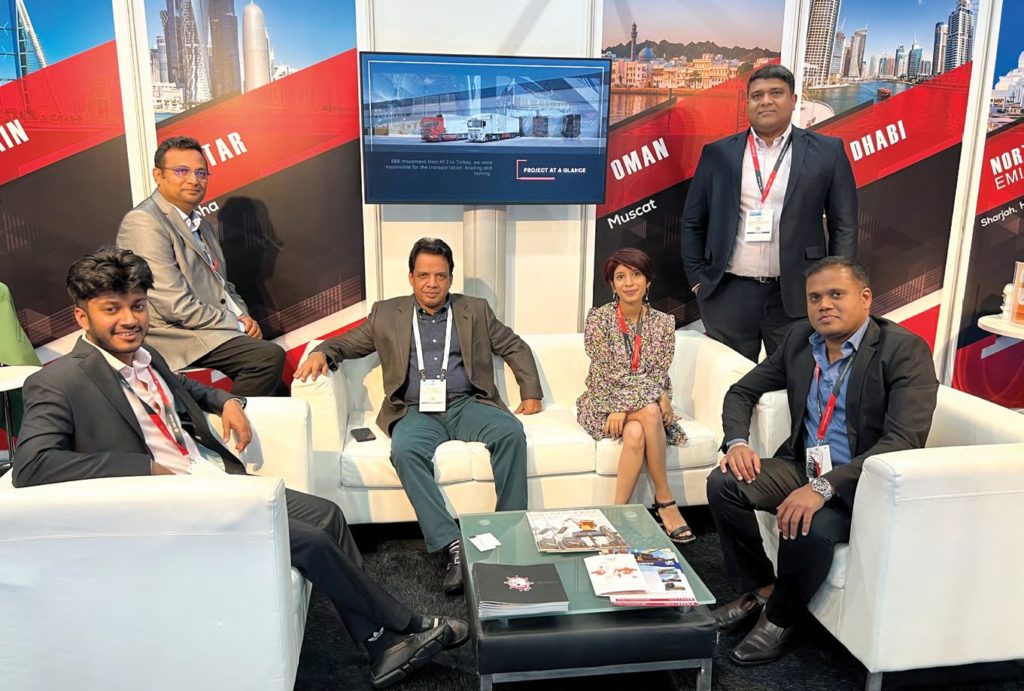
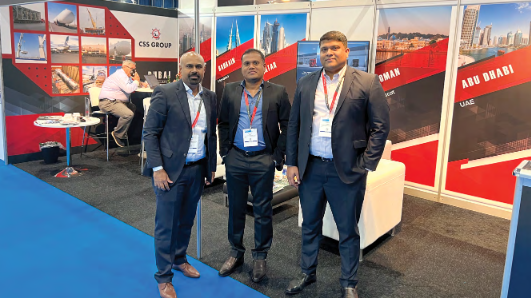
After a break due to the pandemic, Team CSS participated as an exhibitor in the prestigious and the biggest project cargo Breakbulk event at Rotterdam. The team was helmed by Chairman T.S Kaladharan, Krishna, Chandrakala, Ramesh, Sunny, Robin and Renjith.

At this landmark event, a few freight forwarders represented the Middle East region, and CSS was one of them. “The customer interaction, meetings ( both scheduled and Adhoc), and connecting with the networks were encouraging and having our team of experts made it extra special.” Sunny commented.

Strategic Networking and Deep Learnings

The Breakbulk exhibition offered an opportunity for forging strategic alliances and networking with companies worldwide. The event also provided a platform for deep discussions on the latest developments and new trends in handling breakbulk and project cargo. At CSS, the project team has well-versed and experienced personnel with in-depth knowledge of the domain. Adeptly skilled at handling breakbulk and project cargo, we have been able to tap into several opportunities from across the Middle East region. The exhibition has further cemented the team’s prowess with several prospects in the pipeline. The team will also leverage the learnings and key takeaways from the Breakbulk event to forge new ideas and innovations in handling future projects.

Breakbulk Europe – 2022

The International Exhibition of Transport, Logistics, and Transport Innovations, Breakbulk Europe – 2022, was held at Rotterdam in the Netherlands. Held from May 17th to May 19th, thousands of companies from 118 countries took part in the exhibition. The top representation was from countries in Europe and also from the United States of America. Nearly 9000 attendees were present at this event in Rotterdam.

Exhibitors and sponsors included cargo owners, ocean carriers, freight forwarders, ports/terminals, heavy haulers, equipment companies, specialized freight forwarders, and other associated service providers. More than 500 exhibitors and 4000 companies took part in Breakbulk Europe-2022. The event fosters an atmosphere for building new business opportunities for all its participants and a marketplace for port companies, shipping companies, and logisticians who focus on transporting, handling, and storing breakbulk and project cargo.

The program was driven by the Breakbulk Europe Advisory Board, an exceptional group of leaders from across the supply chain spectrum. An event was birthed by several notable organizations like the Rotterdam Ahoy, Rotterdam Partners, the Municipality of Rotterdam, Rotterdam Port Promotion Council, and the Port of Rotterdam Authority. Hosted in six large inter-connected halls, the international visitors were welcomed at the breathtakingly impressive entrance of the building. The focus feature was the touchscreen which could be used to navigate the respective ports using a remarkable 360° tour.

Key Areas of Discussions

The three-day event, held in Rotterdam, was the first of its kind, providing a platform for numerous visitors to exchange ideas. An important topic discussed at the event was “optimal marine fuel to power the current and future generation of cargo vessels.” Ship owners should consider next-generation, scaled-down nuclear-powered engines and wind asset technology as the future fuels.There were 66 keynote speakers across 26 sessions. Popular sessions included Managing Rates & Capacities, Breakbulk and Project Market Outlook, Global Economic Conditions and Breakbulk, Women in Breakbulk, and Digitising End to End.

Breakbulk Europe was the largest event for the project cargo and breakbulk industry, bringing the industry leaders to congregate in the port city of Rotterdam. It was an expo for the industry, offshore wind, oil and gas companies, carriers, ports, logistics companies, specialized freight forwarders, and other associated service providers. In keeping with this scale of the show, the event slogan was “Bigger Better Breakbulk.”

Now for Breakbulk 2023

According to Port Authority Breakbulk Director Danny Levenswaard, the Breakbulk Europe will be held in Rotterdam Ahoy next year between June 6th to 8th. In 2023, Breakbulk Middle East is slated to be held between 13th-14th February. The team at CSS has expressed our earnest interest in being part of this landmark event by offering our service and being the industry leaders in the logistics landscape of the region we operate in.

The 2022 Breakbulk event was an unparalleled opportunity to connect with colleagues, new business partners, and project cargo decision-makers. The event helped forge new ties and a much-needed impetus to expand our business horizons.


CSS CELEBRATES THE SPIRIT OF RAMADAN WITH IFTAR MEAL DISTRIBUTION

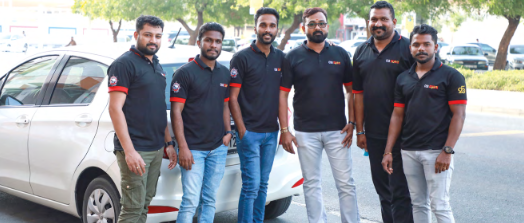
As part of our Ramadan initiatives of giving, this year, CSS took a step forward by distributing iftar meals to the needy, reflecting the true essence of the holy month. We conducted the iftar food distribution drive on 29 April 2022 distributing 101 iftar meals to blue collar workers who toil hard under the hot sun during Ramadan

The team that went on the streets to fulfill the initiative included Alan Ramesh (Marketing Assistant), Rajeesh Rajendraprasad (Operation Co-ordinator), Chuchu Viswanathan (Operation Executive – Forwarding), Amal George (Operation Co-ordinator), Aneesh Leela (Messenger) and Babu Krishna Pillai (Messenger). The iftar meals were distributed in the Karama and Burjuman areas of Dubai.

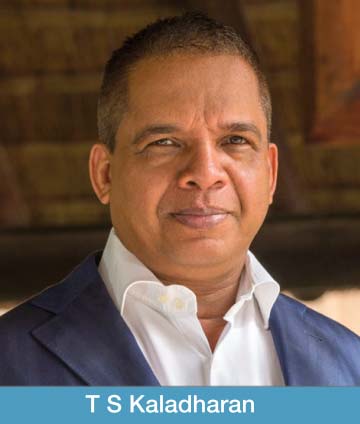
The iftar initiative reflects CSS’s continued commitment to the community we operate in. Speaking about the Ramadan initiative, T S Kaladharan, Chairman of CSS, explained, “It is essential to foster a culture of caring and giving to inspire the next generation to be community builders.”

The Ramadan initiative extends CSS’s strategic corporate social responsibility goals and fosters a spirit of volunteerism within the organization. Kaladharan emphasized, “We are inspired by the spirit of giving exemplified by the great leadership of his wonderful nation. We want to drive  home the message of charity and social responsibility that is embedded in its tenets of our country.”

Ramadan is the holy season where goodness abounds, and CSS would like to show that we are not just about business, we also mean business regarding community building.

Click here to watch the video of the CSS Ramadan initiative:

www.youtube.com/watch?v=gyfgSNyBz3U


CSS CHAIRMAN T S KALADHARAN FELICITATES QADRI TRANSPORT FOR THEIR 20 YEARS OF SERVICE


In recognition of their entrepreneurial success, Chairman Mr. T. S. Kaladharan felicitated Mr. Qamar Sultan Qadri, Managing Director, Qadri Transport, commemorating the company’s long and reputable service in the industry.

20 Years of Operations

Recently, Qadri Transport completed 20 years of commendable operations in the UAE. Beginning with the forklift rental and repair business, Qadri Transport expanded into various business verticals in 2002. The business specializes in heavy transport, forklift rental and repairs, packing and packaging, and trade. The company has been associated with CSS for a long time, being a valued stakeholder in CSS operations. Apart from CSS, the company provides its services for several multinational companies, including Aramex, DHL, UPS, Caterpillar, Continental Alloys, Hellmann Worldwide Logistics, and Expo 2020.

Qadri’s Journey So Far

The young Qamar Sulthan Qadri has reached this enviable position after considerable hardship. Having lost his father at 16, Qadri had to step in to work to bring in income for his family. He started as a forklift operator and worked his way up to being an owner of forklifts. His success can be attributed to his rock-solid values of honesty, integrity, and hard work. He also has an impeccable track record and, therefore, enjoys amicable relationships with his clients and also his team. Today, Qadri has a strong footing in the UAE, especially in the Jebel Ali Freezone. He has also added a brand-new mobile crane to his fleet.

Kaladharan Congratulates Qadri for the UAE Golden Visa

This timely recognition from the Chairman comes when the UAE government has awarded Mr. Qadri the Golden Visa. In an interview with Emirati TV Channel and Khaleej Times, Mr. Qadri has been distinguished as the first Pakistani recipient of the Golden Visa. He is also the youngest business person in his field.

The Golden Visa is a long-term residence visa that enables foreign talents to live and work or study in the UAE while enjoying exclusive benefits. Investors, entrepreneurs, scientists, outstanding students and graduates, humanitarian pioneers, and frontline heroes are eligible for the Golden Visa.

On this heartening occasion, CSS team joins the Chairman in wishing Mr. Qadri and his company more tremendous success.

CSS TAKES PART IN NEPTUNE CARGO NETWORK’S FOURTH ANNUAL PARTNERSHIP SUMMIT

2 DAYS OF INSPIRATION, NETWORKING, AND LEARNING!

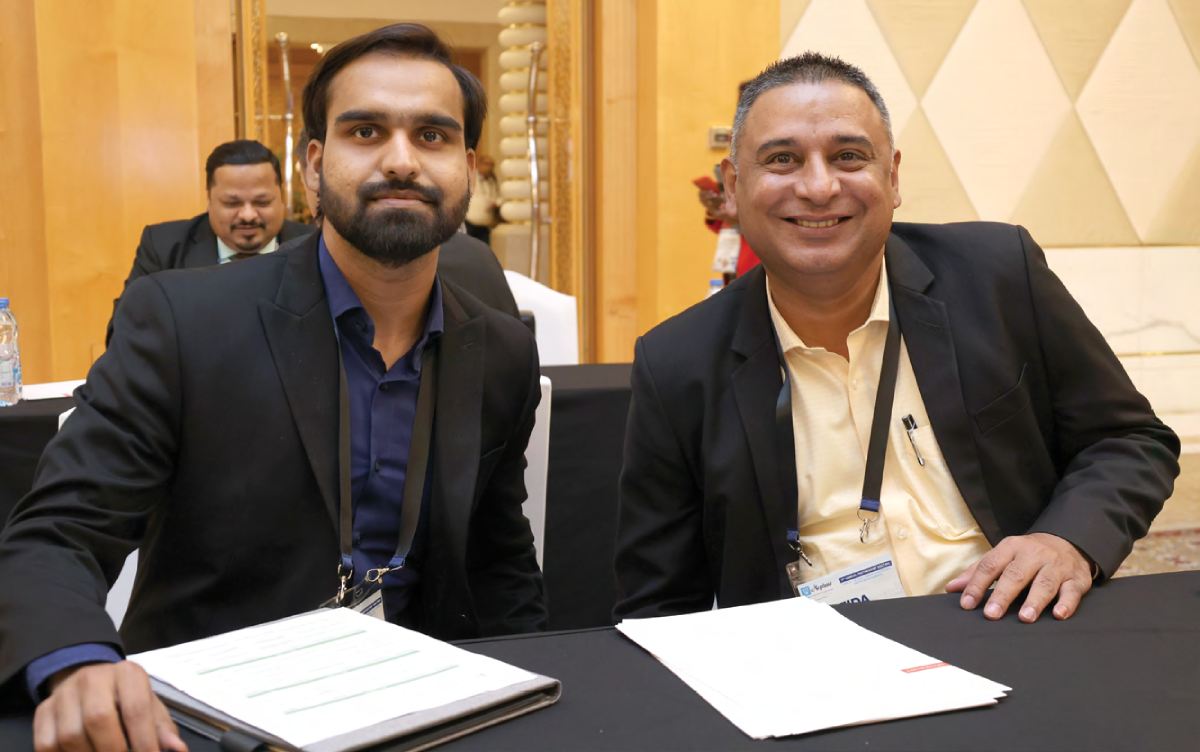
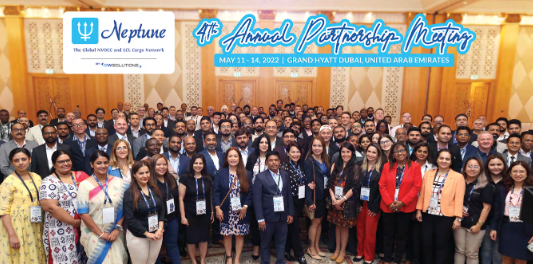
CSS Group took part in the Neptune Cargo Network’s Fourth Annual Partnership meeting held on May 11-14th at the Grand Hyatt, Dubai. It was attended by approximately 210 consolidators , NVOCC, and LCL forwarders from 41 countries.

After a two-year hiatus, the in-person networking summit kicked off with a fun-filled and hi-octane welcome cocktail party which was sponsored by our UK consolidation agent Cardinal. Day Two of the event was all about opportunities to learn, get inspired, and connect. The opening session was ably headed by Nils Walle, Director, and Co-founder of Neptune Cargo Network. Mr. Walle presented network updates from Neptune. This was followed by the exhilarating “Newbie Open Mic segment,” where the new members introduced themselves and their companies.

A Stellar Key Note Address by Mark Millar

The inspiring and informative keynote address was delivered by Mark Millar, one of Asia’s foremost speaker on supply chain and logistics industry. With over 30 years of global business experience spanning four continents, Millar has worked for leading service providers, including DHL and UPS. Focused on the key shaping of the logistics industry, especially in the air and sea sectors, his approach made the attendees think laterally as he provided relevant information based on key industry insights.

Millar compelled the attendees to confront and analyze tomorrow’s most significant supply chain challenges. Attendees left the session empowered with the knowledge, confidence, and motivation to implement innovative solutions for their companies.

The Ice-Breaker Session

Several well-crafted video presentations by sponsors followed the thought-provoking keynote address. In one of the ensuing sessions, consolidators and LCL forwarders took the opportunity to express their immense pleasure and gratitude to other members. This was indeed the “ice-breaking” event of the conference. The customary Neptune group photograph for this year’s conference was taken as this was not possible in the past two years.

The delegates also went on a desert safari to experience the sandy dunes of the Dubai desert. It was another opportunity to forge ties and friendships within the industry.

Mashie Escando, Marketing Manager of Neptune Cargo Network, expressed the sentiment of every attendee, “It was our much-awaited event after the long 2-year hiatus of staying at home and attending virtual meetings, so it was a huge success and indeed a memorable and extraordinary experience.”

About Neptune Network

The Global NVOCC & Consolidators Network, Neptune Consol, addresses the massive gap between consolidators, forwarders, and sea freight professionals. Many sea freight consolidators face the challenge of finding the right partners worldwide. The Network allows consolidators to forge lasting partnerships and secures a reliable global platform for logistics companies to grow and flourish. The members are guided by a standard code of ethics and guidelines. In the first year of its launch, the Consol had just above 100 members, which grew to 200 participants in the following year.  The third meeting hosted in Manila, Philippines, had more than 230 Consolidators & LCL Forwarders were present.

CSS group has been an active member of the Consol and has enthusiastically participated in Neptune Network’s conferences in the past years. Being a part of the Network has helped Team to equip themselves with specific tools and solutions that aid us to excel in the industry.


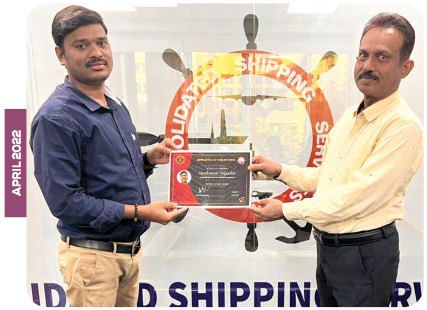
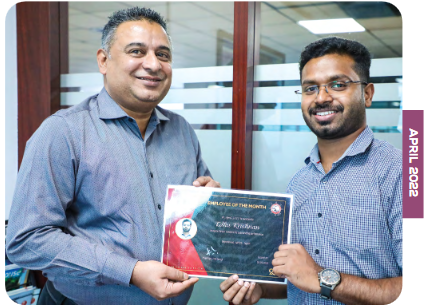
EMPLOYEES OF THE MONTH

MOHAMMED MARVAN – Team Leader, Operations Forwarding awarded by Ambili don, Manager, Forwarding Operation
PRAMOD KUMAR – Coordinator, FCL Transport awarded by Jayasankar Vasudevan, Manager, Transport
SHIVAKUMAR- Operation Assistant, Airfreight awarded by Baiju Sadanandan – Manager, Airfreight Operations
EDHU KRISHNAN – Coordinator, NVOCC, awarded by Fida Asghar, General Manager, NVOCC Sales

SHIPMENT OF TOYOTA SUPRA

CSS on “Fast and Furious” lanes!

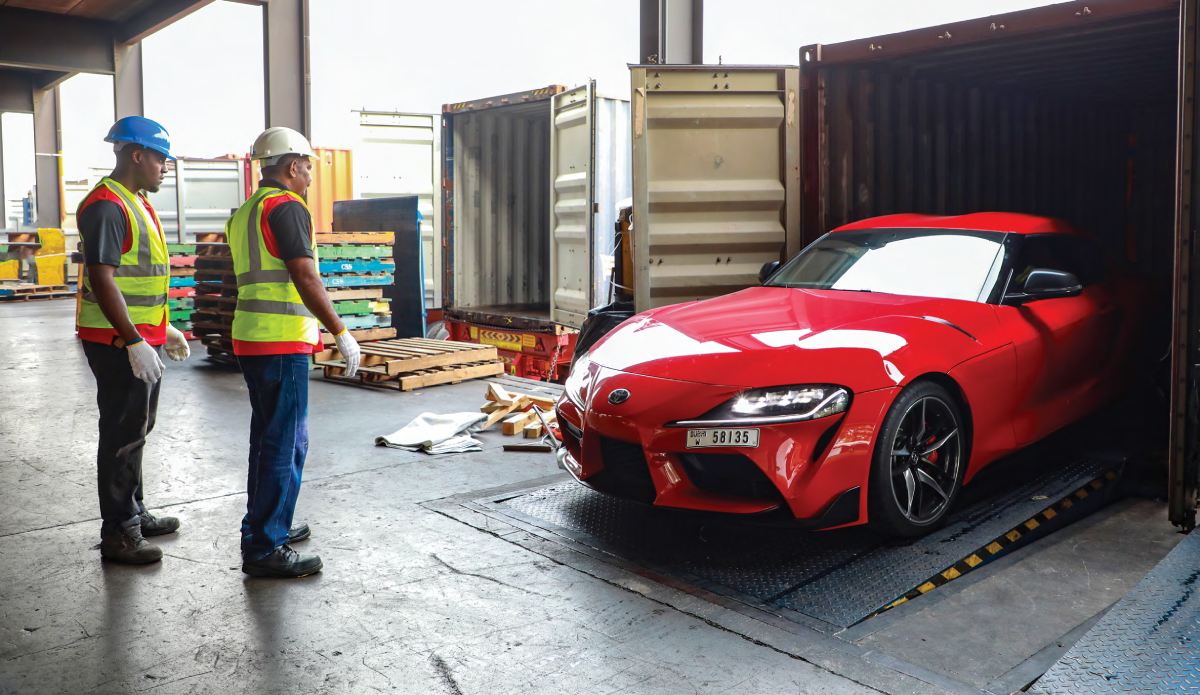
CSS Group’s Automobile Logistics wing had yet another opportunity to undertake an across-the-ocean shipment of a luxury vehicle to Kerala, India. This time it was to transport the luxury sports car Toyota Supra 2022 from Dubai port to Kochi. The Toyota Supra is a car with a 335-horsepower inline six-cylinder turbocharged engine that is paired with an eight-speed automatic transmission and rear-wheel drive. The orange 1993 Supra driven by the late Paul Walker in the original ‘Fast and Furious’ movie sparks a love for this Toyota model amongst the millennials.

CSS Automobile Logistics Does It Again… And Again

The CSS Group’s Automobile Logistics division specializes in handling shipments of high-end vehicles. In the past, it has undertaken many successful shipments. In 2020, CSS facilitated the shipment of the vlogger Shakir Subhan aka “Mallu Traveller’s bike which was stuck in Azerbaijan due to the COVID-19 pandemic. Later, a Ford F150 Raptor was safely shipped from Dubai to Cochin. In the recent past, CSS handled the shipment of a Ford Mustang from Jebel Ali to Cochin on 19th January 2021. On 18th October 2021, there was an air shipment of a Lamborghini Huracán belonging to a Dubai-based businessman from the Malappuram district of Kerala. It was even returned to Dubai after the stipulated time of six months.

ATA Carnet – The Passport for Goods

For transporting vehicles across borders, the ATA Carnet is vital. ATA Carnet, referred to as the “Passport for goods,” is an international customs document that permits the tax-free and duty-free temporary export and import of non-perishable goods for up to one year. It has all the unified customs declaration forms that can be used at every border crossing point.

Smooth sail for Toyota Supra

Upon receiving this carnet, the “Toyota Supra” undertook its voyage from the Dubai port. The transit time across the Arabian Sea from Dubai to Kochi is around five days. On arriving at the Kochi port, the CSS office in Kochi sprang into action. They provided all the support and guidance needed to release the vehicle along with clearances required by the Customs department. The luxury sports car was delivered to the esteemed customer with minimum wait time and zero hassles. The customer also remarked that they were delighted with the whole process and were impressed by the smooth flow. The CSS Group’s Automobile Logistics division has once again proved its prowess in handling shipments of automobiles seamlessly.

Despite being a Non-Vessel Operating Common Carrier, CSS possesses a unique combination of talent, resources, and partners across the globe. With facilities in Dubai, Abu Dhabi, Sharjah, Bahrain, and Oman, CSS has an exceptionally strong worldwide network. With large storage facilities, specialized racking of vehicles, and a technology team that fully manages the end-to-end operations, CSS has become a trusted name in Auto Logistics. CSS arranges for door-to-door delivery of the vehicles under carnet, including the return shipment to Dubai within carnet validity and destination clearance, thus assuring customers have a smooth sail and hassle-free loads all the way through.

CSS remains committed to delivering efficiency and seamless movements of high-end cars through its trusted network operations year after year.


CONFIDENCE IS NOT THAT THEY WILL LIKE ME. CONFIDENCE IS THAT YOU WILL BE FINE IF THEY DON’T!

By: Abhilash Nair

Global CEO of ISS Relocation

Self-confidence is the belief in one’s own skills, goals, and ability to succeed:

†      A confident person doesn’t think what others think of them and tries everything to full capacity.

†      Confident individuals set the bar high, aim high and try new things.

†      They can stand up for their beliefs and values.

†      They Believe in success. Confident people are 25% more likely to overcome challenges at work.

†      They perform better than their less-confident peer.

†      Living with low self-esteem and confidence can harm mental health, leading to problems like depression and anxiety.

†      The lack of confidence affects the ability to reach full potential.

If you feel low confidence, you may indulge in:

†      You socially withdraw yourself or hide away from social situations. Hesitant to meet any new person

†      You are unwilling to take on challenges, have fears of failure, fear the unknown

†      Don’t speak up in a group conversation. They are afraid of what others think

†      Need approval, validations for small things

†      Don’t trust their judgment.

†      Rely on your phone in social situations.

†      Always back down during disagreements.

†      Take constructive criticism personally.

†      Blame others.

†      Make excuses.

†      Use defensive body language. like crossing arms or giving a stern facial expression, sweating face

†      They are a pessimist. Afraid of the future

†      They are ashamed.

†      Apologize easily

†      Avoid eye contact.

†      They have anxiety and emotional turmoil.

†      They are unable to accept compliments.

†      They neglect themselves. Indulge in negative self-talk

†      If someone else looks directly in the eye, they feel uncomfortable.

†      They are looking around or down at their feet. You aren’t comfortable or confident in the situation.

†      They have self-deprecating humor.

Causes

†      Unhappy childhood where parents, teachers, and classmates were highly critical of poor academic performance, personality, nature, habits, etc. They don’t feel loved and appreciated.

†      Appearance, image issues.

†      Abuse

†      Career Issues

†      Lack of Confidence at Work

†      Peer pressure

†      Sibling rivalry or comparison

†      Not able to meet social standards of a successful person like- high qualification, high salary, a job in a reputed company, happily married life, etc.

How to Overcome Low Confidence

†      Confidence isn’t an accident. On the contrary, it has to be cultivated over a period of time.

†      You might not see results immediately, but the longer you practice, the more you gain confidence.

†      Confidence can be inculcated through small practices throughout life.

†      We can rewire our brains with focus and intention and genuine efforts.

†      And although our fears and limiting beliefs won’t completely disappear, over time, they lose their power over our daily thoughts and actions.

Here are a few ways through which you can boost your self-confidence

†      Practice Personal Grooming

†      Take the time every morning to properly groom yourself and look presentable for the day.

†      It is surprising how much of a difference it can make when you feel like you look your best.

†      You can also dress nicely, so your clothes look presentable and appropriate for whatever you do that day.

†      Appearing confident can help us get on better in our lives.

†      If required, do a personal grooming course online.

Change your thinking patterns:

†      Be Positive – It is also essential to think positively. Replace your negative thoughts with positive ones by learning to become aware of your self-talk and your actions. Instead of telling yourself that you can’t do something, allow yourself to look forward to the challenges. Repeat some positive statements.” I am the best,” “I can do it,” I know this,” “I shall win, “…etc.. Each day create a small task to stretch beyond your comfort zone. Do something unexpected on purpose to let go of your inhibitions. Achieve small and easy-to-attain goals to help you feel successful. Don’t depend on external validation.

†      Be Grateful – Another way to stay positive is to take a few minutes each day to reflect on what you’re grateful for. Being grateful can reduce stress hormones in your body by 23%! Never envy. When you’re thankful for what you already have, you appreciate new accomplishments even more. Never compare yourself with others. Feel from the core of your heart that You are Unique. You have your destiny. Write five things daily you are grateful for and feel confident to have.

†      Fake confidence – A cool thing about confidence is that it can be faked. If your fake confidence, not only does your mind begin to believe that you’re confident, but other people also begin to see you as confident. This, in turn, makes you feel more confident, making other people see you as confident. Eventually, this will result in inner confidence. Confidence doesn’t compensate for lack of skill or hard work, but it helps amplify those qualities to take you further than you’d get without it.

†      Do Eye Contact – Do eye contact when speaking to others. Averting your gaze entirely sends a very different message. It can mean that you’re lying or even thinking you’re better than the person you are talking to. Initiating and keeping eye contact is a quick way to boost how confident you appear to others instantly.

†      Challenge Your Inner Critic – Often, the biggest hurdle to increasing our confidence is that little nagging voice in the back of our heads. “You’re going to fail this.” “The client won’t like your idea. “When your brain starts this to you, stop right there. Tell it you’ll do great, and the client will love your work. This is more likely if you’ve done your homework. Silencing your inner critic takes much practice. Make a good image of yourself—no harm in indulging self-appreciation at times.

†      Think Yourself as a Brand – Create your own set of values. Think of yourself as a brand. What do you believe in? How do you look at the world? What do you want people to think about you or feel when they see you? Regardless of how you answer those questions, ensure your actions align with them?

†      Pay Attention to Your Body Language – Your body language gives away a lot about your true level of confidence. If you’re trying to impress someone, like in an interview, how you carry yourself has a lot to do. Body language is up to 13 times more influential than spoken words! “Don’t slouch!” or, “Stand up straight! Science has discovered several postures that can boost your confidence.

†      Find Self-Care that Helps You Relax – When you’re stressed out, you will not feel confident. You should relax by dining out, watching a movie with friends, or doing anything you love to do.

†      Be True to Yourself – Doing what everyone else is doing won’t do anything for your confidence.

It would help if you were yourself to feel truly confident. Admit when you’re wrong, be genuinely interested in people you talk to, and be passionate about what you do.

Page1 … Page5

CSS Newsletter

In this issue:

Quick Links

  • Home
  • About
  • Services
  • News Media
  • Careers
  • Contact us
  • Corporate Brochure
  • CSS Corporate PPT
  • Lighthouse
  • News Hub
  • Privacy Policy
  • Cookie Policy
  • Disclaimer
  • T&C’s

Locations

  • Dubai
  • Abu Dhabi
  • Sharjah
  • Ras Al Khaimah
  • Bahrain
  • Oman
  • Qatar
  • Saudi Arabia
  • Kuwait
  • Kenya
  • Turkey
  • India

Subscribe to our bi-monthly newsletter, Lighthouse

  • Follow Us
© 2026 CSS Group. All rights reserved. Crafted with by Netventure