Skip to content

Lighthouse

Bi-monthly publication of CSS Group

Lighthouse
  • Call +971 4 8872333
  • Mail info@cssdubai.com
  • Menu
    • Home
    • About
    • Services
      • Global Freight forwarding
      • Ocean Freight Management
      • Supply Chain Management
      • Land Transportation Management
      • Industrial Packing, Crating & Lashing
      • Air Freight Management
      • Projects Oil & Energy
      • Exhibition Event Logistics
      • Automobile Logistics
      • Art Logistics
      • Non Vessel Operating Common Carrier (NVOCC)
      • Hospitality & Hotel Logistics
      • Multi-modal Operations
      • Container Freight Station (CFS)
      • Yacht & Marine Logistics
      • E-commerce Fulfillment
    • Locations
      • Dubai
      • Abu Dhabi
      • Sharjah
      • Ras Al Khaimah
      • Bahrain
      • Oman
      • Qatar
      • Saudi Arabia
      • India
      • Sri Lanka
    • Careers
    • Track & Trace
    • Login
      • Customer / Agent
      • Employee – Portal
      • Employee – Dashboard
      • CSS India Login
    • More+
      • Lighthouse
      • Media Hub
      • Feedback
    • Contact Us
  • Login
    • Customer / Agent
    • Employee – Portal
    • Employee – Dashboard
    • CSS India Login
  • TRACK & TRACE
  • NOTICES
  • LIGHTHOUSE
Lighthouse
  • Call +971 4 8872333
  • Mail info@cssdubai.com
  • Menu
    • Home
    • About
    • Services
      • Global Freight forwarding
      • Ocean Freight Management
      • Supply Chain Management
      • Land Transportation Management
      • Industrial Packing, Crating & Lashing
      • Air Freight Management
      • Projects Oil & Energy
      • Exhibition Event Logistics
      • Automobile Logistics
      • Art Logistics
      • Non Vessel Operating Common Carrier (NVOCC)
      • Hospitality & Hotel Logistics
      • Multi-modal Operations
      • Container Freight Station (CFS)
      • Yacht & Marine Logistics
      • E-commerce Fulfillment
    • Locations
      • Dubai
      • Abu Dhabi
      • Sharjah
      • Ras Al Khaimah
      • Bahrain
      • Oman
      • Qatar
      • Saudi Arabia
      • India
      • Sri Lanka
    • Careers
    • Track & Trace
    • Login
      • Customer / Agent
      • Employee – Portal
      • Employee – Dashboard
      • CSS India Login
    • More+
      • Lighthouse
      • Media Hub
      • Feedback
    • Contact Us
  • Login
    • Customer / Agent
    • Employee – Portal
    • Employee – Dashboard
    • CSS India Login
  • TRACK & TRACE
  • NOTICES
  • LIGHTHOUSE

TEAM CSS ATTENDS THE PRESTIGIOUS IDEX AND NAVDEX EXHIBITIONS

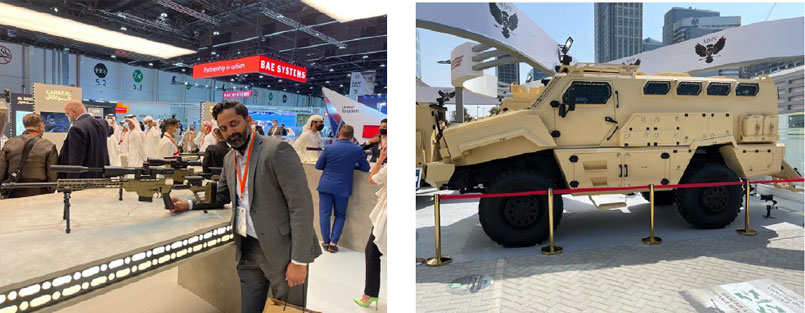
Represented by Mr. Bitto – Senior Business Development Manager and Mr. Roshmon – VP Sales and Marketing of the Sales and Marketing Team, Team CSS attended the International Defence Exhibition (IDEX) and the Naval Defence Exhibition (NAVDEX). Hosted under the patronage of His Highness Sheikh Khalifa bin Zayed Al Nahyan, President of the UAE, the event was held at the Abu Dhabi National Exhibition Centre – ADNEC, Abu Dhabi from February 21st – 25th, 2021.

CSS decided to be part of this path-breaking event in line with its growing capability in handling defense cargo. Over the past year, we have a proven track record of successfully providing logistical support to mission-critical projects across the region. Our reliable and strategic logistics have gained us a reputation in defense shipments, and we continue to build our capability in this arena.

UAE – A critical role in the global defense industry

His Excellency Mohammed bin Ahmed Al Bowardi, Minister of State for Defence Affairs in the UAE, inaugurated the conference. His Excellency highlighted how the UAE plays a critical role in advancing global defense industries. Subsequently, four main sessions were held, with the participation of a group of Emirati and international figures specializing in defense affairs, advanced technology, and the fourth industrial revolution.

Both local and international participants attended the five-day events. The event was a huge success, especially as it is the first global defense event during post-pandemic times. Strictly adhering to COVID protocols, the event was attended by 62,445 attendees at the venue across five days. There were 900 exhibitors, 59 countries, and 35 international pavilions at the IDEX and NAVDEX 2021. With five new countries participants – Israel, North Macedonia, Luxembourg, Portugal, and Azerbaijan, there has been an estimated USD 5.7 billion worth of deals that the UAE Armed Forces inked.

An exceptional event

The closing ceremony of the events was held in the esteemed presence of His Excellency Major General Pilot Faris Khalaf Al Mazrouei, Commander-in-Chief of Abu Dhabi Police, Chairman of the Higher Organizing Committee for IDEX and NAVDEX exhibitions, and His Excellency Major General Staff Pilot Ishaq Saleh Muhammad Al Balushi, Assistant Undersecretary for Industries and Development of Defence Capabilities at the Ministry of Defense, Vice Chairman of the Supreme Committee, and Humaid Matar Al Dhaheri, Managing Director and CEO of Abu Dhabi National Exhibitions Company ADNEC and its group of companies.

Commenting on the conclusion of the exhibitions, His Excellency Major General Staff Pilot Faris Khalaf Al Mazrouei, Chairman of the Higher Organising Committee, said, “The 15th edition of the IDEX and NAVDEX exhibitions has been nothing short of exceptional. These events continue to strengthen their global position, providing exhibitors and participants from around the world with an integrated global platform, despite the challenges imposed by the COVID-19 pandemic. IDEX and NAVDEX drive and enable innovation, in line with the rapid development of the fourth industrial revolution.”
He emphasized that these exhibitions’ success has been rooted in the stalwart and visionary support of UAE’s wise leadership. It is their confidence that has enabled the committee to host the world in Abu Dhabi.

With 2021 marking the Golden Jubilee Year of the foundation of the United Arab Emirates, the committee has a renewed commitment to cultivate and expand the nation’s defense infrastructure and technological systems, using them to ensure security and peace across the Middle East.

His Excellency explained at length the strict implementation of all precautionary protocols to ensure the health and safety of all participants, exhibitors, and visitors. IDEX and NAVDEX have also provided a boost to the tourism sector. These exhibitions ensure that UAE products are globally competitively, both meeting the nation’s needs alongside reaching new markets.

Mr. Bitto spoke on attending this landmark event, “With several high-value deals being sealed during the exhibitions, CSS can play a pivotal role in providing reliable and trustworthy supply chain management services to both local and international clients.”

Echoing his words, Mr. Roshmon concluded, “CSS’s logistics capability and successful track record will help us provide optimal solutions for challenging and complex defense cargo movements in the region and beyond.”
DP WORLD SIGNS PACT TO BUILD $1.2B CONTAINER PORT AND LOGISTICS PARK IN INDONESIA

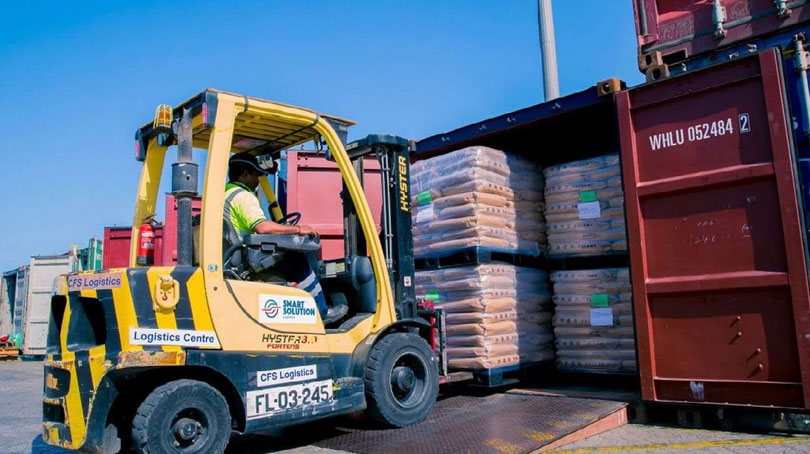
Alongside its partner Caisse de dépôt et placement du Québec (CDPQ), DP World signed a long-term agreement with Indonesia’s Maspion Group to begin the construction of an international container port industrial logistics park in Gresik, within East Java Province of Indonesia.


The signing ceremony was held in the presence of the Suhail Al Mazrouei, UAE Minister of Energy and Infrastructure, and LuhutBinsarPandjaitan, Coordinating Minister for Maritime and Investment Affairs of the Republic of Indonesia, in Jakarta at the Indonesia-Emirates Amazing Week 2021 Building Path Towards Economic Recovery business forum. The signatories of the formal agreements are Sultan Ahmed bin Sulayem, Group Chairman and CEO of DP World, and Dr. Alim Markus, Chairman, and CEO of Maspion Group.

With a total investment of up to US$1.2 billion, the work on the project is expected to start in the third quarter of 2021. The project will enhance East Java’s position as a key trade gateway for Indonesia.

A Joint Venture

Ushering in a new season in the Indonesian transportation sector, the project involves a foreign direct investor (FDI) partner and a private sector Indonesian company. Under the agreement, a joint venture company will be established between DP World and CDPQ’s global investment platform and Maspion Group.

With a design capacity of up to three million twenty-foot equivalent units (TEU), DP World Maspion East Java will become the sole operator of a modern international container port.

Integrated industrial and logistics Park

DP World and CDPQ will also work with Maspion Group to develop an integrated industrial and logistics Park adjacent to the Container Terminal, with an initial land area of 110 hectares with scope for future expansion. The Park will provide a world-class trade environment for domestic and international businesses to help drive economic growth and create jobs.

Indonesia is rapidly developing as one of the world’s most important economies. “The partnership with Maspion Group is an important development in developing global ports and logistics network. This project will create modern, efficient infrastructure, as well as an industrial zone that provides quality logistics,” said Sultan Ahmed Bin Sulayem, Group Chairman and CEO of DP World.

Port Investments

Since its launch four years ago, the $8.2 billion DP World-CDPQ platform has invested in 10 port terminals globally and across various stages of the asset life cycle. This investment will allow the partnership to pursue its objectives to further diversify its reach in terms of geography and trade lanes.

“Maspion Group is committed to supporting Indonesia’s sustainable economic development to be aligned with President Jokowi’s grand plan to make Indonesia the fifth largest economy in the world. Surabaya is an important gateway in Indonesia. The existence of this Container Port will further enhance economic development and investment opportunities in Indonesia,” spoke Dr. Alim Markus, Chairman, and CEO of Maspion Group.

Ground-breaking on the Container Terminal is expected to take place in 2021, with commercial operations scheduled to begin in 2023.

Source: www.gulfnews.com

WALMART OPENS E-COMMERCE MARKETPLACE TO NON-US VENDORS

Walmart rolled out its third-party marketplace to foreign sellers, who no longer need a U.S. address or business tax identification for trading. Walmart Inc. has removed rules requiring sellers on its marketplace website to be registered in the U.S. — an attempt to close the e-commerce gap with Amazon.com Inc. and tap into China’s vast network of manufacturers.

Walmart is looking to expand its marketplace, where suppliers can offer their products via its website and its allied services, like fulfillment and advertising. For retailers, marketplaces are attractive because they provide revenue from fees without the cost of storing inventory. Last year, Walmart began offering fulfillment services for its marketplace sellers, a move that Amazon made 15 years ago. Sellers can also purchase advertising on Walmart’s websites, supporting the company’s new Walmart Connect media platform. The vendors still will be carefully vetted, both locally and by Walmart’s global trust and safety team, to prevent the listing of unsavory items. The new sellers will make up just a fraction of Walmart’s total seller population, which is mainly based in the U.S.

Chief Executive Officer Doug McMillon has said that Walmart’s marketplace business is a “huge opportunity” for the retailer. In February 2020, he told investors that Walmart would make a “greater push” to expand new services like fulfillment. “We have strong relationships with many reputable companies around the world, and we have some of the most rigorous seller requirements in the industry,” Walmart said in an emailed statement. “As a result, we are opening our U.S. marketplace to a limited number of international companies who share our commitment to customer trust and safety.”

Hurdles in the Way

However, the opening of the doors poses several risk factors as well. Walmart’s marketplace has faced flak for carrying offensive items that hurt sentiments for certain segments of society. A while back, Walmart had to take down about 20 million items off its marketplace as it failed to meet its quality standards. AS opposed to the Amazon’s marketplace, which is open to anyone who registers, Walmart is invite-only, allowing the company to vet its sellers. Walmart has also made deals with Shopify Inc. and BigCommerce Inc. over the past year to widen its reach.

Rise of the Chinese Manufacturers

Chinese manufactures have tapped into the American customer base by reaching out to them through online marketplaces. According to researcher Marketplace Pulse, Chinese merchants represented 75% of new Amazon marketplace sellers, an increase from 47% a year earlier.

Walmart also foresees this same trend to be replicated in their online marketplace as well.

“This will get Walmart more selection, more affordable goods that already dominate Amazon best-sellers lists,” said JuozasKaziukenas, founder and CEO of Marketplace Pulse. “To an investor, that reads as positive news.”

Amazon vs. Walmart

More than 60% of the $532 billion global shoppers will spend on Amazon this year will go to marketplace merchants, according to researcher eMarketer. Amazon charges a commission — typically 15% — on each transaction plus additional warehouse storage, packing, and delivery fees. Amazon also charges its marketplace merchants to advertise on the popular website. Amazon’s advertising business will grow 30% this year to reach $23 billion in sales, according to eMarketer.

Walmart doesn’t disclose how many marketplace sellers it has, but Marketplace Pulse pegs it at about 80,000. Walmart carries more than 80 million unique items online. Not all of the new vendors will be based in China. While the company is opening up its marketplace to international sellers, it’s also making a push to stock more U.S.-made products in its aisles. Walmart Inc. ranks No. 3 on the Transport Topics Top 100 list of the largest private carriers in North America.

Source: www.ttnews.com

CSS ENABLES THE MOVEMENT OF THE ICONIC FORD MUSTANG FROM JEA TO KOCHI

CSS has once again proved itself by providing top-notch logistic services for customers aiming at vehicle shipments across destinations across countries. As a Non-Vessel Operating Common Carrier, CSS possesses an inimitable combination of talent, resources, and partners across the globe.

The CSS Group’s Automobile Logistics division specializes in handling shipments of high-end vehicles. With large storage facilities and specialized racking of vehicles, CSS has become a trusted name in Auto Logistics.

CSS handled a single unit of the iconic performance car, Ford Mustang, from Jebel Ali to Cochin 19th Jan 2021. Ably managed by Mr. Bitto, the consignment was sent across under ATA Carnet.

What is the ATA Carnet?

While transporting vehicles across borders, the ATA Carnet is vital. The ATA Carnet is an international customs document that permits tax-free, duty-free temporary export and import of non-perishable goods within a year. This guarantee covers up the otherwise customary practice of paying the security deposit to customs authorities.


CSS Capability in Vehicle Movements

CSS arranges for door-to-door delivery of the vehicles under carnet, including the return shipment to Dubai within carnet validity and destination clearance, thus helping the customer have a smooth sail. CSS assures its customers no headaches and completely hassle-free shipments all the way through.

We have a proven track record of completing vehicular movements in the past as well. The year 2020 saw us helping the avid vlogger Shakir Subhan aka Mallu Traveler, reunite with his trusted steed, which he had to leave behind in Azerbaijan due to the pandemic.

CSS remains committed to delivering efficiency and seamless movements of high-end cars through our trusted network operations.

CSS QATAR – A 3PL PROVIDER PAR EXCELLENCE

With a GDP of $308.6 billion, Qatar is a marvel of ultramodern architecture and a burgeoning economy. Qatar has managed to top the list of the world’s wealthiest nations for 20 years.

Qatar’s 2017 blockade in its standoff with the neighboring countries has turned for its good. Qatar shaped its logistical and supply chain operations to be self-sufficient. This turned out to be beneficial in the post-Covid era when countries tried to be self-contained to decelerate the pandemic’s spread.

With FIFA choosing Qatar as the next destination of the 2022 edition of the World Cup, all eyes are on this tiny and wealthy nation. Though the pandemic effects were severely felt in Qatar, the economy is projected to keep growing with a rise in gas production and investment in preparation for the 2022 World Cup.

CSS Qatar – a Provider of Third-Party Logistics (3PL)

CSS has its presence in Qatar as Console Shipping Services W.L.L. Well-equipped with the cutting-edge infrastructural facilities, CSS Qatar has a talented team of logistical experts to meet any logistics challenge. As one of the leading Third-Party Logistics Provider (3PL), CSS Qatar stands poised to offer all the shipping and logistics requirements that might arise in this region.

As a 3PL provider, CSS Qatar offers the following services:

†     Non-Vessel Operating Common Carrier (NVOCC)

†      Ocean Freight Management

†      Air Freight Management

†      Land Transportation Management

†      Industrial Packing, Crating & Lashing

†     Multi-modal Operations

†      Container Freight Station (CFS)

†      Yacht & Marine Logistics

†      Projects, Oil & Energy

†      Exhibition & Event Logistics

†      Supply Chain Management

†      Automobile Logistics

What’s 3PL?

3PL service allows customers to focus on their operations’ core areas as they outsource operational logistics from warehousing through to delivery. Taking care of all the steps involved in supply chain management, the 3PL provider offers everything from transportation, warehousing, picking and packing, inventory forecasting, order fulfillment, packaging, and freight forwarding.

Benefits of partnering with CSS Qatar as 3 PL Provider

One of the most significant benefits of partnering with CSS Qatar as a 3PL provider is that businesses can focus on the key aspects like sales, marketing, and product development.

Here are some of the top benefits:

†     Cuts your operational expenses.

†     As businesses experience ups and downs in demands, partnering with CSS Qatar as 3PL allows companies to manage highs and lows more effectively.

†     It allows companies to provide improved customer service.

†     Flexibility to test new markets without the commitment of large capital investments.

†     Mitigate risks as you will be protected against damage and loss of goods.

†     Gain from the knowledge and experience provided by the 3 PL providers.

†     Save on warehousing and ensuring the cost of maintaining staff.

It is always crucial to entrust the logistics to an experienced provider. With more than 25 years of hands-on logistics experience, clients can rest assured as they outsource their logistical operations to CSS.

CSS SRI LANKA VENTURES INTO REEFER SHIPMENTS

World over, there is hot demand for cold boxes.

According to the Drewry, the shipping analysts, this demand rises out of the need for fresh food. The volume of fresh food shipped across the oceans is twice as high as other products.

“Reefers” or refrigerated ships and shipping containers transport perishable commodities by sea. Put simply, reefer containers are large fridges carried by container ships to move temperature-sensitive goods such as meat, vegetables, and fruits, dairy products, pharmaceuticals, etc.

Reefer containers maintain the cargo at the required temperature (usually between -30°C and +30°C) for the whole duration of the transit either in chilled, frozen, or controlled temperature.

CSS Capability in Reefers

CSS has been into reefer container shipping and has sufficient experience in this field. When facilitating the shipment, we arrange the freight, coordinate with all suppliers paying close attention to critical logistical details to ensure a seamless transportation process for our clients. All the relevant documentation and operational procedures are handled at the origin with the utmost care to ensure compliance at all levels.

The reefer container ship is fully equipped with reliable power and backup power sources. The temperature-sensitive and perishable goods are packed carefully to allow proper air circulation throughout the transit. Monitored throughout the entire transportation process, we track the reefer shipment in real-time so our clients can enjoy complete peace of mind once they entrust their reefer movements to CSS.

CSS Sri Lanka Ensures Global Foods Fresh at Your Doorstep

In July 2020, CSS Sri Lanka rolled out the reefer project, this involved the reefer movement of fresh potatoes, garlic, and grapes from China and pomegranates and dates from Egypt

Based in Colombo, the CSS team, Sri Lanka meticulously planned and coordinated with the suppliers for potatoes, garlic in Mainland China and, grapes, pomegranates, and dates from Egypt. The documentation and other operational procedures for transit from China to Sri Lanka were done as per the stipulated laws and regulations.

Ms. Menusha Srilankeshwara, the Branch Manager at CSS Sri Lanka, says, “CSS has handled reefer containers all along, and I have about 10 to 15 years’ experience in doing reefer movements. Having handled commodities such as coconut water and all coconut-based products along with fresh seafood like prawns to fruits, vegetables, and other perishables, CSS Lanka has the capability to bring fresh food from across the world to your doorstep.”

The plans are in the pipeline to handle shipment of sugar from India as well. At CSS, we are well versed in the critical elements involved when it comes to refrigerated cargo.

Need for Fresh Food and Hot Demand for Reefers 

Today, consumers across the world expect to have the freshest produce and goods throughout the whole year. Refrigerated containers or “reefers” can keep food fresh for more than a month, allowing distributors to safely send everything from orange juice to lobsters around the world.

The growing affluence of the global population, especially in Asia, has boosted demand for international foods. The affluent class in Asia has an increasing demand for fresh fruit, vegetables, and fresh meat. This demand is pushing the logistics industry to move more products under cold management.

The uncertainties of 2020 have made one thing clear – fresh fruit, vegetables, frozen foods, and pharmaceuticals are ‘essential,’ and moving them to where they are needed is vital.

CSS REUNITES VLOGGER “MALLU TRAVELLER” WITH “AMINA,” HIS RIDE COMPANION

As a Non-Vessel Operating Common Carrier, the CSS has the best talent, resources, and partners across the globe to provide top-notch logistics to our customers looking for vehicle shipments across the nations.

The avid vlogger from the South Indian state of Kerala, Shakir Subhan, with a YouTube channel called Mallu Traveller, airs his budget travels worldwide. His Instagram handles @mallu_traveller boasts his motto, “Spend less, travel more.” Having traveled to more than 24 countries, his channel has 1.31 million subscribers today. He gained fame with his viral videos documenting his stay at a Corona isolation ward at Kannur, Kerala.

The globe-trotter was on “a solo world bike tour” when he was forced to discontinue his landmark journey in Azerbaijan when he was about to enter Georgia due to the global coronavirus outbreak. Shakir had to leave his trusted steed, a TVS Apache RTR 200 motorbike, in the care of the customs at Baku, Azerbaijan, and travel back to his home state of Kerala in India. He has fondly named the customized TVS Apache RTR 200 ‘Amina‘ as a tribute to his mother, Kunjamina.

While Subhan was in Kerala, he yearned to be reunited with ‘Amina.’ That was where CSS stepped into the picture to reunite Subhan and his trustworthy companion on many journeys worldwide.

CSS was instrumental in transporting the TVS RTR 2004V from Baku in Azerbaijan. With the COVID protocols delaying shipment across most countries, CSS undertook the stupendous task of planning out the motor bike’s shipment, Amina.

CSS undertook this task when most flights were canceled, and cargo movement was highly restricted due to the COVID protocols. The bike was air-freighted from Baku (GYD) Airport to the Dubai International Airport via SILK WAY Airlines (ZP) cargo flight carrier and then later trans-shipped from the Jebel Ali Port to the Cochin Sea Port through CSS LCL console service. The seamless logistics provided by CSS enabled the smooth movement of the shipment. The much-loved bike and its owner were once again reunited after more than six months.

Here’s CSS wishing Shakir Subhan many more miles of safe travels around the world!.

CSS BAHRAIN CELEBRATES 1ST ANNIVERSARY WITH IMPRESSIVE PERFORMANCE

On the 1st of October 2020, CSS Bahrain successfully completed one year of its operations in the island nation OF Bahrain. Surmounting all the odds that ensued in the wake of the COVID-19 pandemic, CSS Bahrain has managed to exceed expectations to reach this triumphant milestone.


RESTRUCTURING OF OPERATIONS IN 2019

As a part of restructuring our operations in Bahrain, we restarted our operations under a new brand name called Console Shipping Services W.L.L. Console Shipping Services W.L.L Bahrain works as a neutral NVOCC with its service offerings in the areas of Air & Sea Freight, Land Transport & Projects. Maintaining excellent relationships with leading carriers, Console Shipping Services W.L.L Bahrain is the preferred partner for many Bahrain businesses. This advantage has enabled us to provide competitive rates and services to our client base.

Part of the CSS Group, Console Shipping Services W.L.L Bahrain, offers turnkey project forwarding solutions to worldwide destinations, with hands-on management and highly experienced project professionals.

2020 – A CHALLENGING YEAR

The year 2020 was indeed a challenging one for businesses across the world. Despite these grim challenges, CSS Bahrain has emerged victorious, even surpassing the predictions and forecasts for the past year. This has proved to motivate the CSS Bahrain team, instilling within them a distinct sense of confidence to face fresh challenges and a thirst for new conquests.

CSS Bahrain Team is still to reach a wide customer base in Bahrain due to the COVID-19 protocols’ restrictions. However, the team at CSS Bahrain is slowly yet steadily extending our support to all our customers while strictly adhering to the COVID-19 safety regulations within the country.

Enabled by cutting-edge technology, the teams were working remotely throughout the lockdown. They were able to stay in touch with the customer base by providing them with superlative customer support, along with cost-effective solutions. This is reflected in the high levels of customer satisfaction that have been reported from Bahrain. Backed by the unstinted support from the CSS Group Management, every member of Team CSS Bahrain has played in a crucial role in attaining this achievement during this pandemic season.

MARCHING FORWARD

From Bahrain Customs, APM Terminals to the Shipping Lines, CSS Bahrain has developed and sustain good relationships with the stakeholders in the country. This has enabled us to provide seamless and efficient services to our customers.

CSS Bahrain understands individual projects’ specific requirements and customizes its services according to our client’s prerequisites. With its remarkable footprint across the Middle East and the Indian sub-continent, Console Shipping Services W.L.L. is proud to be part of the CSS Group’s unparalleled global agency network.

UAE EXPO 2020: RECONNECTING WITH THE WORLD

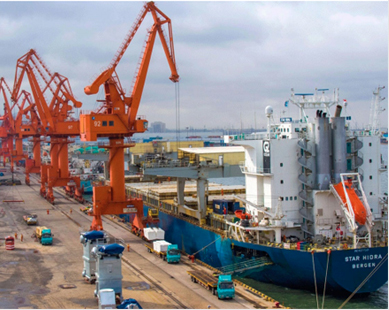
Expo 2020 aims at a global celebration of humanity’s resilience, creativity, culture, and innovation – a tribute to humanity’s resilience in its ability to innovate and achieve the pursuit of optimism in times of adversity. Expo 2020 Dubai is slated to start on October 01, 2021, to build a strong, sustainable future for the global community in a spirit of innovation.

The UAE Minister of State for International Cooperation and Director General Expo 2020 Dubai Bureau – Her Excellency Reem Al Hashimy expressed, “Our leadership has spared no effort, has guided us and provided all resources to ensure that our World Expo will be a true expression of the UAE’s values, reflecting its ambition to build a better future for us, the region and the world – a future of which the upcoming generations will be proud of.”

“Our World Expo has a mission to inspire hope, and in the coming weeks, we will begin to share new details and ideas on space, health and wellness, travel and connectivity, and other matters that are at the heart of this Expo.” Her Excellency also added, “We hope that people will join us to achieve our objectives to bring the world together and put humanity and the planet on the right path towards dignity for all.” The UAE Minister of State for International Cooperation and Director General Expo 2020, Dubai Bureau, thanked all those who worked hard, passionately, and diligently to deliver an exceptional Expo. Her Excellency mentioned that the journey has been worth it, and in the coming days, we will be sharing the excitement and passion with millions.

The progress at the Expo site has moved at an astounding pace, covering more than 210 million work hours up to date. The year 2020 focused on landscaping work and fit-out of Expo owned buildings.

The construction of Country Pavilions is set to be finalized by the end of the year. The first World Expo in the Middle East, Africa, and South Asia (MEASA) region is set to start from October 01 2021 until March 31 2022 and aims to bring together more than 190 countries to explore new ideas, form new connections and collectively tackle some of the greatest global challenges of our time.

GLOBAL SHIPPING INDUSTRY NEEDS TO BE EARLY ADOPTERS TO MOVE AWAY FROM FOSSIL FUELS FOR A GREEN MARITIME FUTURE

A new report entitled “Zero Carbon for Shipping” from an international conservation organization – Ocean Conservancy, launched at a virtual gathering of world leaders at the climate week in New York highlighted the global shipping industry’s tragic role in the climate crisis. The report mentioned that the worldwide shipping industry is poorly regulated when it comes to meeting climate targets.

The report pushed the need for shipping industries to ditch fossil fuels urgently to achieve the planet’s climate goals. The emissions have been growing significantly year after year and are expected to grow 50% higher by 2050. In this regard, a panel of international shipping experts, government, and civil society aim to meet the International Maritime Organizations (IMO) voluntary goal to reduce the total annual greenhouse gas emissions to at least 50% by 2050 compared to 2008 and at the same time aiming to remove them entirely.

A Move Towards Total Decarbonization

Dan Hubbell, Ocean Conservancy’s Shipping Emissions Campaign Manager, remarked, “To achieve IMO’s goal and also to halt climate change, the first zero-emission ships must be on the water by 2030”. This also helps achieve total decarbonization by 2050. The move for commercial production of Zero carbon ships is on so that this need is met by 2030. Some ways for the industry to transform new clean energy sources are electrofuels derived from hydrogen or ammonia.

Few alternatives fuels considered for making better fuel and infrastructure choices are

Electrification of the shipping fleet: China, Germany, Sweden, and Norway are pioneers in various forms of electric shipping. China and Norway are not far and have begun trials on a range of new large-scale electric vessels as these are currently restricted to small ferries and coastal vessels.

Hydrogen fuel cells: Some ships produce their hydrogen from seawater and, in the process, can operate without emitting greenhouse gases or dust pollution

Ammonia: Ammonia is undoubtedly a green fuel, but the Port of Beirut’s incident questioned the safety protocols that need to be rewritten, given the fuel’s higher explosive risk.

LNG: Liquified Natural Gas as fuel has methane leaks that happen along the supply chain. Methane is more dangerous than carbon dioxide in the atmosphere and has been growing 150% in 5 years. Hence the use of LNG is considered to be controversial.

According to a report for the IMO by the International Council on Clean Transport, it has been cited that the 150% growth in methane emissions from 2012 to 2018 was largely due to a surge in the number of ships fuelled by liquefied natural gas (LNG). The choices made in the next decade 2020-2030, demands immediate action as this holds the key towards a green maritime future. The Zero Carbon for Shipping report submitted by Nick Ash from Ricardo Energy and Environment noted that the IMO’s current goals are not ambitious enough. The adoption of electrofuels will lead to additional benefits like reducing the cost of renewable energy, long term jobs in infrastructure and sustainable industries, decarbonization of supply chains, and reduced reliance on imported fossil fuels.

WORLD’S FIRST INTELLIGENT VIRTUAL ASSISTANT – TIA POWERED BY MICROSOFT TO LOOK INTO FREIGHT

“TiA, the world’s first intelligent virtual assistant for freight, empowers teams with conversational Ai to automate repetitive, coordination tasks. 90% of the calls, messages, and emails exchanged in freight are done for data gathering and dispersal, be it for rate discovery, quotations, or status updates, thus making the ecosystem prone to data drop, delays and errors. TiA was an obvious choice to start the automation journey by tackling these redundant tasks“, said Abhinav Chaudhary, Co-founder, and CEO, Fero.Ai.

The company built the world’s first Siri/Alexa for freight and logistics – Fero.Ai. It is defined as an enterprise SaaS venture that builds advanced freight automation, optimization, and orchestration products using narrow Ai systems recently announced global expansion plans starting with India this month. This decision was set off due to their selection in the 2020 Microsoft Startups Accelerator program for high tech startups.

“Microsoft for Startups is a free, global program dedicated to helping B2B startups successfully scale their companies. We were impressed with the passion the Fero.Ai team showed in bringing the power of Ai to the freight & logistics space, and we look forward to supporting the impact that the team has envisioned, “said Roberto Croci, Managing Director, Microsoft for Startups MEA.

Fero.Ai’s products provide plug and play uberization for large freight forwarders as well as the IVA (Intelligent Virtual Assistant) in creating autonomous collaboration, coordination, communication channels for those last-minute direct shippers who may be involved in the distribution operations. Fero.Ai believes that there are two means to solve the issues faced due to a lack of hyper-connectivity between all the moving parts and stakeholders. The first alternative is through technology, and the second is through human intervention. The industry has been solving most inconsistency issues, errors, data leaks, restricted processing inventories, and archaic user experience by the second alternative.

Arjun Bhasin, the Co-founder & CTO of, Fero.Ai reiterated, “To optimize hyper-connectivity through technology, we have built products that eliminate tech siloes, decrease onboarding struggles and increase adoption through integration and intuitive usability. We have consciously adopted the path of device-agnostic solutions. TiA can be accessed on any smart device. We will be using our partnership with Microsoft to prepare our tech infra to support advanced computing capabilities and exponential scale-up“.

The Co-founder and CSO, Fero.Ai, Naseer Ahmed expressed that the MfS team understands the needs of hyper-growth tech ventures and is pivotal to Fero.Ai in becoming a part of a larger tech ecosystem.

With TiA in the picture, seamlessly integrating all major freight ERPs thus forming a lateral automation layer eliminating tech and process siloes while supercharging teams through the power of automated collaboration, Fero.Ai’s customers can cut several pricey situations with 100% improvement in visibility and usability

DEDICATED TRANSHIPMENT TERMINAL PROMISED AT GREAT NICOBAR ISLAND

The Indian Prime Minister, Narendra Modi, has stated that India is considering investing Rs 10,000 crore for building a transshipment port at Great Nicobar Island in the Bay of Bengal to provide shippers with an alternative to similar ports in the region.

The 2,312 km long first undersea submarine optical fiber cable from Chennai to Andaman and Nicobar Islands costing Rs.1,224 crore is set to provide high-speed internet to Andaman and Nicobar Islands, thereby providing better and cheaper connectivity.

A transshipment terminal enables big ships to anchor and raise India’s share in maritime trade because of its advantageous geographical location, promising proximity to the east-west international shipping route with shorter distances at reasonable prices. This would also help create new job opportunities, emphasized PM Modi.

He also stressed that the government’s focus is on promoting ease of business and simplifying maritime logistics to strengthen the network of waterways and ports. India is at the forefront to establish itself as an important player in the global supply and value chain. For this to be achieved, every legal measure is being taken to remove bottlenecks hampering the port infrastructure’s development.

The Prime Minister further stated that Andaman and Nicobar will be developed as a hub of port-led development as it is at a competitive distance from many parts of the world. The undersea cable will help boost tourism as it will provide better mobile and internet connectivity on the Islands.

“From Chennai to Port Blair, Port Blair to Little Andaman and Port Blair to Swaraj Dweep, this service has started in large part of Andaman Nicobar from today,” said Modi, also adding that it will boost 4G mobile services and digital services like tele-education, telehealth, e-governance services and tourism on the Islands. Besides Port Blair, it will connect other islands, namely Swaraj Dweep (Havelock), Long Island, Rangat, Little Andaman, Kamorta, Car Nicobar, and Greater Nicobar. As per official data, an internet speed of 400 gigabytes (GB) per second will be provided at Port Blair and other islands, at 200 GB per second. BSNL supported the work of laying the undersea cable in a record time of lesser than 24 months.

Physical connectivity through road, air, and water is also being worked on. PM Modi highlighted the National Highway No. 4 to improve the road connectivity between North and Middle Andaman. Port Blair is undergoing a major transformation to handle a capacity of 1,200 passengers along with big-time reformations taking place in airports in Diglipur, Car Nicobar, and Campbell Bay.

Modi also mentioned that few ships are being built at the Kochi Shipyard and will be delivered soon to improve the water connectivity between the islands and the mainland, thus hinting that seaplane services will start once the passenger terminal and floating jetty gets ready at Swaray Dweep, Shaheed Dweep, and Long Island. India is interestingly moving forward with a resolve of self-sufficiency and is establishing itself as an essential player in the global supply and value chain along with a strengthened network of waterways and ports.

SRILANKA SEEKS CHINESE SUPPORT TO BECOME A TRANSSHIPMENT HUB IN THE INDIAN OCEAN

To cut down the voyage cost, shipping companies move towards using larger container vessels as the voyage cost per twenty-foot equivalent unit (TEU) would be reduced by using high capacity vessels. But this view results in large container ships making fewer port calls due to draft restrictions. Though there are few ports calls, there are larger box exchanges.

From the maritime point of view, mega-ships become profitable only when fully utilized with limited port calls. This leads to ports losing direct calls for trade lanes with limited amounts of cargo. Transshipment of cargo is an alternative here that could cover up this loss. Trans-shipment normally happens in the following cases:

†     When there is no direct shipping route to any specific destination

†    The port is unable to accommodate big vessels.

†    When moving the cargo from one country to another to evade trade restrictions.

Ports as Transhipment Hubs

The majority of transshipment cargo are containers and roll-on-roll-off cargo. Containers are utilized for transporting merchandised goods, while roll-on-roll-off cargo (also called RORO) are mostly wheeled cargo such as cars, trucks, semi-trailer trucks, trailers, and railroad cars.

While selecting a port as a trans-shipment hub port, certain factors are taken into consideration:

†    Location

†     Port accessibility

†     Port superstructures

†    Port traffic

†    Number of services calling at the port

†    Availability of dedicated/own terminal

†    Performance of the port

†     Frequency of delays

†    Record of damages

†    Port handling charges

†    Financial clearance capability

†    Efficient husbandry services

†     Marketing efforts and personal contacts

Sri Lanka on the Transhipment Map

Out of the 200 ports in South Asia, concentrated in India, 20 of them handle more than 9000 TEU’s of containerized cargo annually. Sri Lanka is a market dominated by trans-shipment and is the 2nd largest player in the region with a throughput of more than 6 million TEUs in 2018. The Port of Colombo is the main transshipment hub, with 80% of throughput coming from transshipment. In 2018, India was recorded as the largest container market moving more than 16 million TEUs, followed by Pakistan at 3.2 million TEUs and Bangladesh at 2.8 million TEUs. Interestingly, Maldives handled less than 100,000 TEUs in 2018.

Sri Lanka will be able to take advantage only if their ports can cater to the large container ships’ requirements that the shipping lines keep adding to their fleet. Sri Lanka renders low quality than counterparts like Hongkong, Singapore, and Dubai in terms of logistics services, physical infrastructure, technology, and a sufficient number of qualified professionals and international participants. LPI (Logistics Performance Indicator) rated Sri Lanka 92nd out of 167 countries in the World bank 2018 aggregated Logistics Performance Indicator. Sri Lanka scored 2.64 in logistics competence that includes competence and quality of logistics services compared to India’s score of 3.18, UAE scored 3.83, Hong Kong 3.94, and Singapore at 4.08. From this rating, it is clear that Sri Lanka has to improve physical infrastructure and human resources development.

Chinese Investments in Sri Lankan Ports

The Hambantota Port in Sri Lanka started its operations in 2011 after completion of its phase one. But its operations failed to generate sufficient revenue to match the debt obligations on the loans obtained for the project. This port was then leased out to the China Merchants Port Holdings Company Limited (CM Port) who have been on their feet trying to ramp up the Sri Lankan port by employing exceptional operational skill, market power, commercial relationships, marketing skills, technological expertise, and access to cheaper finance sources.

As per the ranking, the Port of Colombo stands as the 13th best Connectivity Port globally in the 4th quarter of 2017 and is voted to the top best connectivity port in South Asia. A joint venture $500 million Colombo International Container Terminal (CICT) operated by China and Sri Lanka at the Colombo South Terminal in the Colombo Port handled 2.9 million TEUs in 2019. The CICT feels Ultra Large Container Carriers that makes up for 72% of the terminal and is the first and only deepwater port in South Asia capable of handling the large vessels afloat.

The Sri Lankan government had signed a diplomatic “memorandum of cooperation” (MOC) with India and Japan for a tripartite effort to develop the strategic East Container Terminal (ECT). With Japan and India’s presence in the Colombo Port with China’s CICT will improve its business outlook and value through transshipment activities. Hence partnering with a global maritime player like China is the most practical way to fulfill maritime development and connectivity

USHERING IN A NEW ERA OF ISRAELI-UAE RELATIONSHIPS

In August 2020, high-level delegations from Israel and the United Arab Emirates (UAE) signed a historic US-brokered peace deal at the White House. Bahrain’s foreign minister signed another agreement to normalize relations with Israel.

Called as the Abraham Accords, President Trump called the deal between Prime Minister Netanyahu and Abu Dhabi Crown Prince Mohammed bin Zayed Al Nahyan “a truly historic moment“.

The international community has welcomed the move, and under the terms of the deal, Israel has agreed to suspend its controversial plans to annex parts of the occupied West Bank.

What are the Abraham Accords?

†    The Israel–UAE normalization agreement is officially called the Abraham Accords Peace Agreement.

†    It was initially agreed to in a joint statement by the United States, Israel, and the United Arab Emirates (UAE) on August 13, 2020.

†    The UAE thus became the third Arab country, after Egypt in 1979 and Jordan in 1994, to formally normalize its relationship with Israel and the first Persian Gulf country to do so.

†    Israel has agreed to suspend plans for annexing parts of the West Bank. The agreement normalized what had long been informal but robust foreign relations between the two countries.

The “Abraham Accords” is a significant shift in the balance of power in the Middle East.

Communication Links

Israel and UAE established telephone links and direct communication channels with UAE’s telecom providers unblocking calls to numbers with Israel’s +972 country code. The Israeli foreign minister Gabi Ashkenazi called his Emirati counterpart Abdullah bin Zayed al-Nahyan and exchanged greetings following the historic peace accord.

Strategic Agreements

The leading business and logistics hub in the UAE, Jebel Ali Free Zone (JAFZA), has signed a strategic agreement with The Federation of Israeli Chambers of Commerce (FICC) in a focused effort to support businesses and encourage economic cooperation. Sultan Ahmed bin Sulayem, Group Chairman and CEO of DP World, and Uriel Lynn, President, FICC signed the agreement virtually. As part of the Memorandum, the entities intend to foster and boost partnerships between the two nations to increase and promote bilateral trade ties.

What are the Benefits?

The recent development in the UAE’s and Israel’s bilateral agreements has opened up new avenues in various sectors. This development will lend an impetus to economic growth, transforming the business landscapes in both countries.

Israel has phenomenal innovation and technological capabilities, whereas the UAE holds a prime position in global trade and is one of the greatest business hubs in the world. Building trade ties will be beneficial for both sides. The countries intend to strengthen ties to usher in a new level of prosperity.

The Israel-GCC synergy

†    With defense and security cooperation as one of the strong points, both sides are ready to realize their economic complementarity’s full potential.

†    The UAE and Bahrain can become the entrepôts to Israeli exports of goods and services to diverse geographies.

†    Israel has niche strengths in defense, security and surveillance equipment, arid farming, solar power, horticultural products, high-tech, gem and jewelry, and pharmaceuticals.

†    Tourism, real estate, and financial service sectors on both sides have suffered due to the pandemic and hope for a positive spin-off from the peer-to-peer interactions.

†    Further, Israel can supply skilled and semi-skilled workforce to the GCC states, particularly from the Sephardim and Mizrahim ethnicities, many of whom speak Arabic.

†    Even the Israeli Arabs may find career opportunities to bridge the cultural divide. Israel is known as a start-up nation, and its stakeholders could easily fit in the various duty-free incubators in the UAE.

†    Israeli cyber surveillance manufacturers are eager to tap into the large GCC market.

†    Israel is working on potential joint projects that could improve UAE’s food security, such as water desalination and crop cultivation in the desert.

Logistics

There have been considerable developments in the field of logistics as well. DP World, one of the world’s largest port operators, has announced its plans to make a joint bid for Israel’s Haifa Port.

DP World has also made strategic alliances with the Israeli Bank Leumi to explore potential logistics sectors’ potential opportunities. DHL has already completed the first shipment from UAE to Israel. Other logistics service providers have been exploring ways to tap into opportunities.

CSS introduces UAE-Israeli service

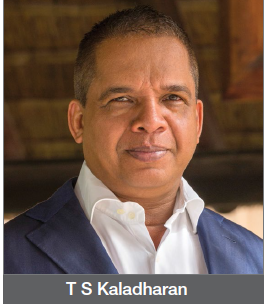
CSS has been one of the first logistics providers to step into this new arena by opening new trade avenues between Israel and the UAE. We have established logistic routes to ensure seamless and speedy shipments between the UAE and Israel. Speaking on the newly rolled out services, Chairman T.S. Kaladharan emphasized. “At CSS, we are thrilled to carry cargo between Israel and the UAE. We are sure that our new logistic services to Israel will benefit businesses in both countries with the seamless flow of goods.”

News sources state that the bilateral trade could initially be worth $4 billion a year, and this could soon be tripled or quadrupled.

CAN AN ADMIRALTY COURT STOP A JUDICIAL SALE AFTER JUDGEMENT AND AFTER AN ORDER FOR SALE OF A VESSAL”?

The special division of the High Court; the Admiralty Court, whose jurisdiction includes shipping and maritime disputes; apart from hearing cases relating to vessel collisions, salvage, vessel mortgage-related disputes, and various other marine-related claims/disputes. It also has the power to arrest vessels to stop them from moving and to order their sale, which is broadly referred to as claims in rem, or claims against the vessel itself.

This article focuses on the procedure being applied while deciding on the sale of a Yacht, with an unusual turnaround at the end.

The underlying question was, “Can the English Court stop a judicial sale after judgment and an order for sale of a vessel”? The same was decided on 25th March 2020 by Mr. Justice Teare. In the case of Qatar National Bank QPSC v Owners of the Yacht Force India [2020] EWHC 719, however, with a few comments, warnings, and caveats.

Brief of the case are as follows:-

The claimant bank (QNB) had a mortgage over the motor yacht “Force India.”

The loan had been taken out by a legally unrelated company to finance the purchase of a substantial property in the South of France, which was not at all related to purchase or re-finance the acquisition of the yacht. The yacht owner Force India Ltd. agreed to mortgage its vessel as additional security for the loan because the loan’s property value had dropped, and the bank required additional security.

Due to default in payment, on 29th January 2020, the claimant bank had obtained a judgment against the yacht in respect of sums outstanding under its mortgage (Circa €5million) over the yatch. Accordingly, the Admiralty Marshall was instructed by the Court to sell the yacht, and purchase bids were to be lodged by 10th March 2020.

On 10th March 2020, the successful bidder QNB, and the defendant applied to the Court to set aside the sale order. However, the Court turned down the application, but suspended the sale from conducting a full hearing and making a proper determination in the matter, and sought certain undertakings to protect the Admiralty Marshall’s position, its sale broker, and certain other claimants.


What caused the claimant and the defendant to file an application to set aside the order to sell the vessel?

As per Court’s ruling, around the pertinent time i.e. around the time of the original QNB sale application, and subsequently, a company (can be referred to as buyer) with no links to the owner of “Force India.” They were agreed to purchase the shares in the company which owned the French property, which is at the center of the loan in question. A French court approved a continuation plan for the property holding company (as it had been placed under judicial receivership). In early March 2020, an agreement was reached between QNB and the said buyer, whereby the buyer would pay a certain sum of money to QNB in exchange, amongst other things, for an assignment of the mortgage on the yacht. As part of that agreement, QNB was to apply to the Admiralty Court to have the order of sale revoked by noon on 10th March 2020.

As the buyer had repaid the relevant monies owed to QNB rather than the owner, the Court concluded that “the judicial sale of the vessel is no longer required.” This made it quite unusual as it was the successful claimant who asked for the sale to be revoked.

The matter was fully heard on 25th March 2020, where the order for sale was set aside. The reason for doing so was simple, i.e., in circumstances where a third party had, in effect, paid the sum secured by the mortgage, judicial sale of the vessel was no longer required.

It is indeed surprising to see the official sale procedure halted so far into the process, and so near its conclusion and the concern is shared and duly recorded by Mr. Justice Teare, which can be referred to in paragraphs 10 through 13 of the judgment which is worth a read:

Sales by the Admiralty Marshal of vessels arrested in an Admiralty action in rem are the means by which, failing the provision of alternative security, claims in rem are enforced. The Marshal’s sales are free of pre-existing maritime liens, statutory rights of action in rem, or other encumbrances. To ensure that the market price is achieved, the vessel’s value is appraised before the sale. The Marshal cannot sell for less than the appraised value without the permission of the Court. These features of an Admiralty sale are well known to the market. If it became the practice for orders for sale to be set aside, those willing to incur the time and expense involved in making a bid for a vessel ordered to be sold may feel disinclined to do so. That might lead to vessels being sold for less than their market value and might tarnish the Court’s reputation. In the long term, the Admiralty Court’s service to the maritime community would or might be damaged.

These concerns suggest that the Court should be reluctant to set aside a sale, particularly when the application is made as late as the application in this case was made. In his witness statement the Marshal has stated that, according to his broker, Paul Wilcox of Kellocks, around 20 potential bidders had carried out inspections and investigations during the sale period. If it became widespread knowledge that parties can stop a sale process, it would make interested parties “more cautious about bidding for vessels being sold through the court’s process.”

The setting aside of sales should certainly not become a practice.

However, there are very few instances of such applications being made. The only reported instance appears to be The Acrux in 1961. That such applications are rare is apparent from the witness statement of the Marshal in which he said that he had been informed by his broker, Mr. Paul Wilcox of Kellocks, that in his 40 year association with court sales he had never known such an application being made to halt a sale at such a late stage.”

“I was therefore persuaded that unusual and perhaps exceptional circumstances brought about the need to set aside the order for sale in the present case. So long as the market understands this, there should not be any damage to the reputation of the Court or to its ability in future cases to achieve a vessel’s market value when an order for sale is made.”

As rightly stated by Mr. Justice Teare, this case was unusual and perhaps exceptional because it is quite rare that an independent third party would be prepared, effectively, to “discharge the judgment debt and so render the sale unnecessary”, but that is exactly what happened in the case of “FORCE INDIA”.

DIGITAL TECHNOLOGIES WILL POWER THE SUPPLY CHAINS OF THE POST-COVID ERA

With China, the factory of the world, being the epicentre of the pandemic, supply chain networks in all industry segments across the globe have been affected. What Covid-19 has revealed is the lack of a contingency plan in the face of disruptions.

Post-COVID: The rise of the new ‘digital’ world

The positive repercussion of the post-COVID-19 era will be a fast ushering in of digital transformative practices across all industry segments. Technology-driven business models will become more important than ever before and they will define the global supply chain strategy of tomorrow.
COVID-19 has made us realize the need to reduce our dependency on physical labour across transportation, logistics and warehousing sectors. Enabled by latest technologies like Internet-of-things, blockchain, control towers, artificial intelligence/machine learning-enabled demand forecasting, rule-based and self-adjusting stock allocations, autonomous devices such as AGVs and drones, among others, they will go a long way in creating a robust supply chain networks in the post-COVID era.
The five most important aspects that will be essentials for supply chains of the near future are:

1.Smart procurement practices: Advanced machine learning algorithms can help companies understand where and when to source, based on their previous purchases, commodity prices, agro and industrial trends and other factors

2.Supply chain control tower: A single source of information about sourcing to delivery for all trading partners to see and adapt to changing demand and supply scenarios across the world.

3.End-to-end information management: Supply chain data management with intelligent automation and analytics which captures supply chain transactions accurately with high consistency and minimum redundancy. This allows for in-depth insights regarding supplier performance, supply chain diagnostics, market intelligence and risk management.

4.Supply chain simulation: Helps in forming new supply chain strategies for business or operating model change, demand and supply changes or logistic disruptions or constraints. Helps to validate and identify the best cost-efficient network to achieve the necessary service level across the value chain.

5.Supplier risk management: N tier risk management helping organizations model cost structures, trend performance data and visibility into the extended value chain to keep abreast of any supply disruptions and secure capacity. This could help companies avoid sudden disruptions in the supply chain and deal with lack of information.

We can implement the learnings from the COVID period to come back stronger. the post-COVID era is going to be rife with challenges across the business landscape, from a liquidity crunch to disruptions in the supply chain to increase in trade barriers, and a shifting consumer mindset. Technology is going to be a key enabler by improving existing supply chains to be more resilient ones and enhancing customer experiences, the new era will usher in more intelligent and optimized processes for improved business outcomes.

THE 5-R’S TO GET BACK FROM COVID-19

The coronavirus pandemic is first and foremost a human tragedy that will be marked on the pages of history. It will reshape a “new normal” in every sphere in the post COVID era. Affecting millions in almost every country on the globe, the outbreak has had a devastating effect on the global economy as well. Dealing with the coronavirus crisis and its aftermath is the imperative of our times.
Here are 5 steps of how organizations can adapt to getting back to “business as usual”.
The McKinsey article calls organizations to act across five stages, leading from the crisis of today to the next normal that will emerge after the battle against coronavirus has been won:

1. Resolve
2. Resilience
3. Return
4. Re-imagination
5. Reform

Resolve

The need to determine the scale, pace, and depth of action required at the state and business levels. As one CEO told McKinsey, “I know what to do. I just need to decide whether those who need to act share my resolve to do so.”

Resilience

The pandemic has spawned a worldwide financial and economic crisis. A McKinsey Global Institute analysis, based on multiple sources, indicates that the shock to our livelihoods from the economic impact of virus-suppression efforts could be the biggest in nearly a century. Near-term issues of cash management for liquidity and solvency are the foremost challenges at the present. But soon afterward, businesses will need to act on broader resilience plans as the shock begins to upturn established industry structures, resetting competitive positions forever.

Return

For companies to return to business as usual, the supply chain needs to be reactivated. It is extremely challenging after a lockdown that spans the globe. With the coronavirus impact spreading across geographies, supply chain disruptions are inevitable in multiple locations. . The weakest point in the chain will determine the success or otherwise of a return to rehiring, training, and attaining previous levels of workforce productivity. Leaders must therefore reassess their entire business system and plan for contingent actions in order to return their business to effective production at pace and at scale.

Re-imagination

The post-Covid era will define how we live, work and play and how technology can be harnessed. Contactless commerce with online transactions will be rule of the day. The pursuit of efficiency will have to make way for the need for resilience and the global supply chain might have to be reframed with production and sourcing moving closer to the end user. This is also the time to tap into opportunities to improve business processes and performance. Technology adoption will be accelerated by quick assimilation of what it takes to improve productivity. In the end, we will have an understanding of how businesses will become more immune to shocks resulting in better productivity and improved service quality.

Reform

The pandemic has opened doors for a wide variety of innovations and experiments like working from home to large scale surveillance. If we adopt these innovations on a permanent basis, we could provide an improvement on the socio-economic development of our society and also help in stopping the virulent virus in spreading.
The pandemic has inadvertently caused a restructuring of the global economic order. How this crisis evolves is still yet to be seen. These five steps can help leaders beat a path to return to a “new normal”, that is unlike anything that was before.

CHAIRMAN’S MESSAGE

I’m always buoyed-up with enthusiasm as we approach another occasion for our Strategy Meet. Over the years I’ve seen the same enthusiasm, in my colleagues, as we prepare for this eagerly anticipated in-house business get-together.

Taking full advantage of this opportunity we have designed and put into action, strategies devised to overcome critical issues which have arisen during the growth process of Consolidated Shipping Services. Our enlightened thinking, stimulated by a united rationale, guided us to significant triumphs even when the global business scenario was somewhat disappointing.

However nowadays we allow outside influences to drive us on, without realizing their impact. New technology has pushed us to unforeseen levels of accomplishment. Artificial Intelligence, 3D Printing, Nano Technology, Genetics and Robotics quickly spring to mind just in this century. Whilst information is at our fingertips dependence on these innovations means that many have lost the ability to undertake basic calculations without relying on them.

Working out a simple two-digit number sum, without the aid of a calculator, has even become impossible for some. Such consideration leads me to ask, “What has happened to our critical thinking?” I recall a quote from Albert Einstein – ‘The important thing is not to stop questioning. Curiosity has its own reason for existing’. Few are able to match Einstein’s capacity for critical thinking but this is no reason for not trying. It seems to me that our generation is rapidly losing the capacity for this style thinking.

Fired-up with fervent passion for our Strategy Meet, I am confident that our get-together is destined to visualize ‘out of the box’ by applying critical thinking. This gives me confidence to believe that our in-house business get-together will design new strategies to action more success for CSS. Accordingly, it gives me pleasure to extend my best wishes to all participants.

MAHABALI CRYSTAL AWARD

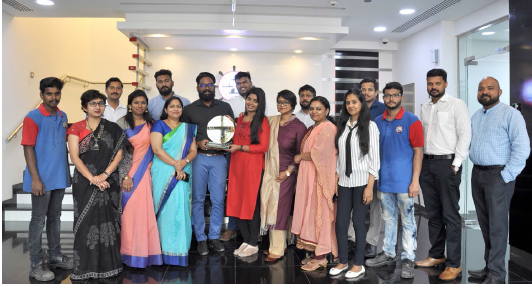
The enthusiastic team at the CSS Head Office, Jebel Ali, won this year’s Mahabali Crystal Award for the best Pookkalam (Kerala Traditional Flower Carpet) created in connection with the Onam celebrations.

A Pookkalam competition is organized every year, amongst CSS Group divisions, and the winner carries with them the Mahabali Crystal Award which is a rolling prize. Each office engages their best creative team to make amazingly beautiful flower carpet designs. The creatives will be judged by a panel of professionals, who announces the winners on a later date. This year’s winners and their creatives are shown here.

MAHABALI CRYSTAL AWARD WINNER:

CSS Head Office! Fantastic job, well done Congratulations to the CSS Head Office TEAM!!!! Amazingly done design. The particulars are nicely shown and the props well placed.

Below is a quote from the Judges.

“Amazing design, the colors were well done and they gave so much importance to details!”

FIRST RUNNER UP:

CSLC 1

Congratulations!!!! You all did an amazing job, really appreciable…….

Below is a quote from the Judges.

“The color gradation was done brilliantly, but could have gained more points if the boat was not used with a help of a nonliving material!”

SECOND RUNNER UP:

CSS Homeward Bound
Congratulations team!!!! You all did a good job, and this could have only been done through your team work and creativity.

Below is a quote from the Judges.

“Good design- The Pookalam was neatly done and the truck and the boat design was innovative!”

MBA STUDENTS FROM THE US VISIT CSS


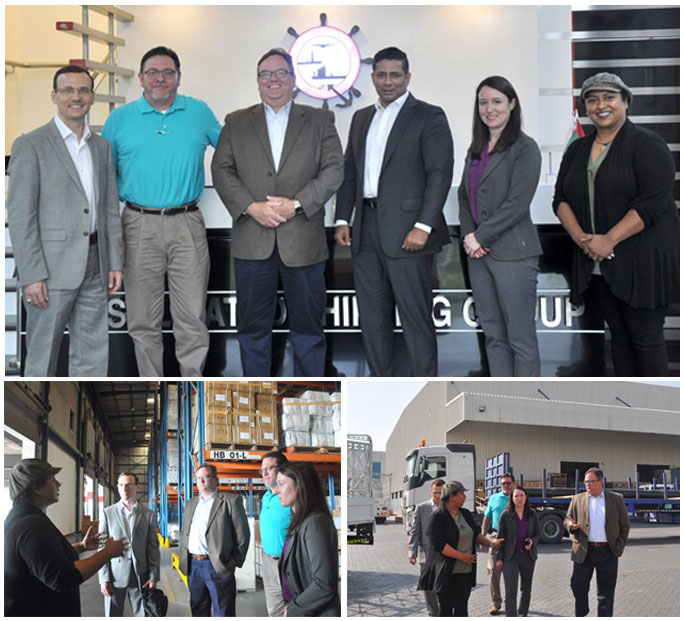
CSS Dubai office recently welcomed a group of Business Management students from the Texas Christian University, USA. As part of their study abroad programme, the Executive MBA students; Stephanie Kuntz, Dwayne Roberts, Keith Harris and Sam Jordan spent time at the CSS facilities in Jebal Ali to learn about best practices in the logistics and freight forwarding industry in the UAE. Their trip was aimed at knowing more about conducting business globally, with a focus on the three countries they visited, which were India, UAE & Hungary. “We thoroughly enjoyed our meeting with CSS and learned a great deal about the freight forwarding industry in the region,” mentioned the students’ team in one voice.

They had a one-on-one session with Ajay Krishnan, COO of Freight Forwarding at CSS who shared with them in-depth insights on trading patterns, customs and trade procedures and individual customer/vendor’s processes with regard to how they are aligned to country regulations and trade practices. “A refreshing discussion, allowing us and our visitors the chance to impart experience/knowledge of both on the ground realities as well as concepts, forthcoming. We at the CSS Group have always welcomed these opportunities, and are open to more such discussions going forward.” Mentioned Ajay.

Page1 … Page5

CSS Newsletter

In this issue:

Quick Links

  • Home
  • About
  • Services
  • News Media
  • Careers
  • Contact us
  • Corporate Brochure
  • CSS Corporate PPT
  • Lighthouse
  • News Hub
  • Privacy Policy
  • Cookie Policy
  • Disclaimer
  • T&C’s

Locations

  • Dubai
  • Abu Dhabi
  • Sharjah
  • Ras Al Khaimah
  • Bahrain
  • Oman
  • Qatar
  • Saudi Arabia
  • Kuwait
  • Kenya
  • Turkey
  • India

Subscribe to our bi-monthly newsletter, Lighthouse

  • Follow Us
© 2026 CSS Group. All rights reserved. Crafted with by Netventure