Skip to content

Lighthouse

Bi-monthly publication of CSS Group

Lighthouse
  • Call +971 4 8872333
  • Mail info@cssdubai.com
  • Menu
    • Home
    • About
    • Services
      • Global Freight forwarding
      • Ocean Freight Management
      • Supply Chain Management
      • Land Transportation Management
      • Industrial Packing, Crating & Lashing
      • Air Freight Management
      • Projects Oil & Energy
      • Exhibition Event Logistics
      • Automobile Logistics
      • Art Logistics
      • Non Vessel Operating Common Carrier (NVOCC)
      • Hospitality & Hotel Logistics
      • Multi-modal Operations
      • Container Freight Station (CFS)
      • Yacht & Marine Logistics
      • E-commerce Fulfillment
    • Locations
      • Dubai
      • Abu Dhabi
      • Sharjah
      • Ras Al Khaimah
      • Bahrain
      • Oman
      • Qatar
      • Saudi Arabia
      • India
      • Sri Lanka
    • Careers
    • Track & Trace
    • Login
      • Customer / Agent
      • Employee – Portal
      • Employee – Dashboard
      • CSS India Login
    • More+
      • Lighthouse
      • Media Hub
      • Feedback
    • Contact Us
  • Login
    • Customer / Agent
    • Employee – Portal
    • Employee – Dashboard
    • CSS India Login
  • TRACK & TRACE
  • NOTICES
  • LIGHTHOUSE
Lighthouse
  • Call +971 4 8872333
  • Mail info@cssdubai.com
  • Menu
    • Home
    • About
    • Services
      • Global Freight forwarding
      • Ocean Freight Management
      • Supply Chain Management
      • Land Transportation Management
      • Industrial Packing, Crating & Lashing
      • Air Freight Management
      • Projects Oil & Energy
      • Exhibition Event Logistics
      • Automobile Logistics
      • Art Logistics
      • Non Vessel Operating Common Carrier (NVOCC)
      • Hospitality & Hotel Logistics
      • Multi-modal Operations
      • Container Freight Station (CFS)
      • Yacht & Marine Logistics
      • E-commerce Fulfillment
    • Locations
      • Dubai
      • Abu Dhabi
      • Sharjah
      • Ras Al Khaimah
      • Bahrain
      • Oman
      • Qatar
      • Saudi Arabia
      • India
      • Sri Lanka
    • Careers
    • Track & Trace
    • Login
      • Customer / Agent
      • Employee – Portal
      • Employee – Dashboard
      • CSS India Login
    • More+
      • Lighthouse
      • Media Hub
      • Feedback
    • Contact Us
  • Login
    • Customer / Agent
    • Employee – Portal
    • Employee – Dashboard
    • CSS India Login
  • TRACK & TRACE
  • NOTICES
  • LIGHTHOUSE

TALENT WINS GAMES, BUT TEAMWORK AND INTELLIGENCE WINS CHAMPIONSHIPS

With IPL fever in the air, cricket seems to be ruling the roost everywhere. And when employees are in a cricket frenzy, can corporates be far behind? CSS Play Club comfortably sealed yet another championship by winning the finals against Dubai Tellicherians.

It was a classy batting display by our one and only star player, Rowhmas, who was also adjudged as the Man of the Match for the Finals. Seventy-nine runs in a quick span ensured CSS had a good start. This was followed by firecracker innings by our captain, Riyas. Other teammates like Shahir, Shajil, and Shibith also pitched in with their innings, helping CSS Play Club register an impressive total score of 228 runs.

All of our bowlers did a decent job by taking wickets at regular intervals to restrict the opponents to the score of 150 runs. Prashob PK was awarded the best bowler of the finals with three quickies, well supported by Ranjith Haridas with two key wickets.

Kudos to Shajil Balan, Reji Mohan, Prashob PK, Mohammed Rowmahs, and Mohammed Shahir for their contribution throughout the tournament.

At CSS, we are passionate about cricket. We believe that it helps with team building as we encourage our employees to continue with their passion for the gentleman’s game.

The Chairman, Mr. Kaladharan, emphasized, “As our employees represent the company in corporate tournaments, it makes winning these tournaments immensely satisfying.”

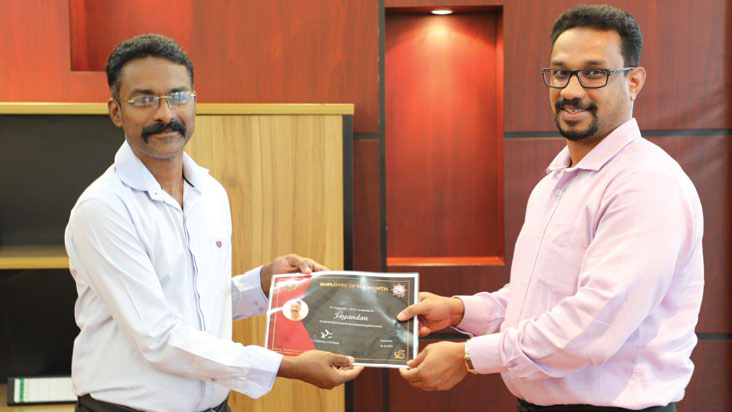
EMPLOYEES OF THE MONTH


JAYANDAN –Team Leader, CFS,
CSLC awarded by Manish Kumar,
Manager Operations-NVOCC & CFS


CHUCHU VISWANATH –Operation
Executive, Forwarding, Jebel Ali
awarded by Chandrakala(CK),
COO, NVOCC, CSS Group


MUHAMMED JINSHID –Import
Operation, NVOCC
awarded by Manish Kumar,
Manager Operations-NVOCC & CFS


WHAT ARE THE REAL REASONS BEHIND THE RISING FREIGHT RATES?

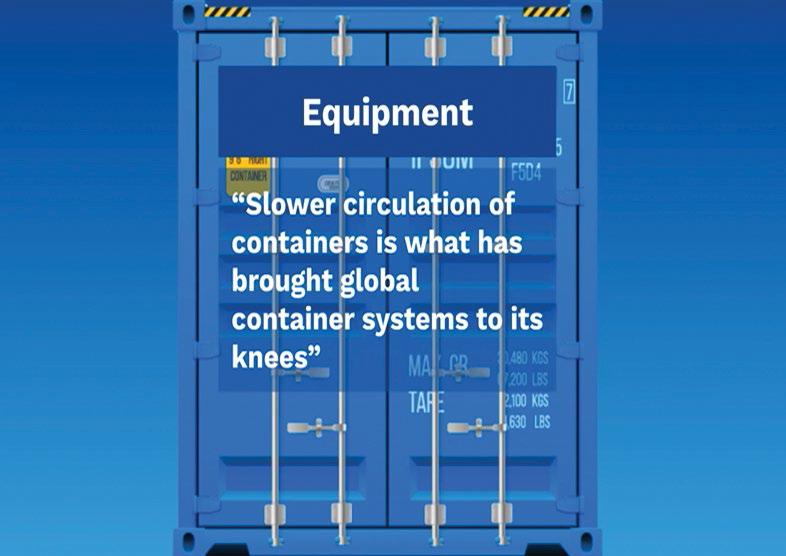
In a recently organized webinar by the HSBC group, Brian Hay, the Chief Executive of the Cardinal Group from the UK spoke about the real reasons behind the rising freight rates worldwide. He said that while the coronavirus pandemic continues to disrupt the natural rhythms of global container freight, he expects demand for consumer products to drive the industry forward. He emphasized, “The ships are full, and freight rates are high, not just because of demand, but also the fact that equipment has been displaced as a result of COVID-19.”

Brian Hay revealed that freight rates have risen from USD2000/40’ high cube container to today’s market rate of USD20,000.00. There are several real challenges, but he expects freight rates to improve towards mid-2022 till 2023. With the capacity growing year on year, this could bring down freight rates as it eases the demand for space on shipping vessels.

Real Reasons for the Sky High Rates

He threw light on the four key areas for this pricing behavior, influencing the dramatic rise in freight container prices:

1. Reduced velocity in the usage of equipment

2. Consumer behavior and the surging demand for space

3. Port closures and congestion

4. Shipping line behavior

It is also to be noted that the pandemic has fueled all these factors.

Usage of Equipment

From relatively small to larger vessels of 22,000 TEUS, about 5.5 K container ships are in operation now around the globe. Shipping lines have been painted as the bad guys, making hay while the sunshine. However, most shipping fleets are in full circulation, and the parking of ships is not driving the demand.

Shipping vessels are not available mainly due to the pandemic, interruptions in scheduling, and problems in the WHAT ARE THE REAL REASONS BEHIND THE RISING FREIGHT RATES? deployment of empty units. It is more of care of slower circulation rather than deployment of empty containers. For example, Hapag Llyod, one of the largest shipping companies in the world, needed 300,000 units to reach their pre-pandemic levels and fulfill pre-pandemic bonds. This requirement is not due to the rising consumption and demand for space in ships. However, it is just to manage their pre-agreed bonds.

According to Hay, the current situation is not driven due to equipment shortage but due to slow circulation, rescheduling, port congestion, and general in-availability of vessels.

The freight rates are expected to remain at record levels for a more extended period impacting the sector as it is susceptible to rate volatility, weak economic recovery, and trade protectionism. The Q42020 and Q12021 supply chain disruptions involved container box shortages and port congestion, resulting in frenzied container freight rates. Most shipments during the period are being booked at higher rates than recorded and add on priority load surcharges.

All freight and logistic companies worldwide face operational nightmares as they try to secure container space for their clients.

Brian Hay mentions that they are often fighting for equipment as they are reallocated elsewhere due to the slow circulation of the containers due to the pandemic. Typically a container is used in deep-sea service six times per year, and it could be even below 4 in 2021.

Consumer Behaviour and Demand for Space on Ships

The consumption resulting from the pandemic is phenomenal and will continue to remain so unless we switch our behavior from products to services. Since almost everyone worldwide has been cooped up at home, people have been on a buying spree to make their living and working spaces more comfortable. Most retailers are trading beyond their expectations. The freight liftings in the USA in Q4 of 2021 are 35% higher than in Q1 2020. The deployment has been more to the USA as the demand has been more.

Port Congestion

Port Congestion has been phenomenal in pandemic times and can be seen even from outer space. Currently, all ports, particularly in Asia, are saturated due to a strong rise in inactivity. Ports are also operating from lower productivity rates due to pandemic restrictions. For instance, the port of Liverpool is struggling to meet increased demands due to a severe lack of manpower. In China, Yantian port was closed due to a COVID outbreak. The sky-high freight rates are all a result of these contributing factors.
Shipping Line Behavior

Shipping liners made a combined profit of $16.2 B in the first three months of 2021. What is astounding is that all their Q1 earnings are more than they did in the same period of the previous ten years combined. Mr. Hays noted that their action destroys years of collaboration and loyalty and might be fuelled by profits. He also reiterated that logistics companies are working on their values of integrity and are not increasing the freight rate to take advantage of the situation.

How shipping lines used to sell out a vessel typically was long-term contracted rates, the large volume moves, named account deals, and the rest on the spot market. But the pandemic has reversed the ratios. Service agreements have been put aside, and most of the deals are on the spot market. It does not allow freight operators to operate the way they want to.

It is next to impossible to provide the right service in the current situation with no real prospects of rates easing in the near future. Usually, rates soften in July and August and go into a peak with the Christmas shipments. There might be a leveling by the end of the Chinese New Year, between Feb and March 2022.

With people moving to more experiential services rather than products, inflationary pressures due to rising prices may ease demand and decrease freight rates. Brian Hays pointed out that the rates will not return to the old levels of $1000-#2000 – for a container from Asia. He believes that being forewarned is being forearmed, and the figures can be pegged at $5000-$10,000 per container. Brian Hays is the CEO of Cardinal Global Logistics, the UK’s fastest growing logistics service provider with 22 offices worldwide and over 400 staff, with its head office located in Manchester. Cardinal provides integrated end-to-end supply chain solutions to businesses ranging from SMEs to large-scale multinational entities. Known for designing and implementing transformative supply chain solutions, Cardinal provides customized innovative approaches for each client.

VIRTUAL ADMIRALTY CASE: SETS THE RECORD OF MANY FIRSTS IN ITS NAME

The last year 2020 accelerated the concept of “Work from Home” and helped to realize that even the Civil Court Proceedings can also be done virtually. With the pandemic, the Court proceedings had to switch completely to virtual hearings, without any Judges, Lawyers, or the Parties to the suit, being personally present in the courtroom. Many countries even introduced new regulations or rules to regulate remote hearing.



Amid all this chaos, the year 2020 also marked its first virtual admiralty case, and interestingly, its hearing took place by telephone due to the COVID crisis.

In the case, Qatar National Bank (QPSC) vs. The Owners of the Yacht “Force India” (No. 2) [2020] EWHC 719 (Admlty), the claimant bank had a mortgage over the Yacht following a default under an underlying loan agreement and even obtained a judgment for the sale of the Yacht in the Admiralty Court for the sums secured by the mortgages. Interestingly the unusual arrangement, in this case, was that the Mortgage was not in place to secure a loan taken out by the owner of the Yacht. Instead, the loan was taken out by a related company to finance a property purchase in the South of France. The Yacht was mortgaged as additional security concerning that property purchase. However, following the order made by the Admiralty Court for the sale of the Yacht, the claimant bank applied to the Court to have the order for sale set aside, on the final day for bids to be received. The Court declined this request instead gave some time to enable a hearing to take place, allowing the Court to consider the arguments of all the interested parties. The order was set aside on the basis that a third party had paid the sum secured by the Mortgage, and so the judicial sale of the vessel was no longer required. Where the sum secured by the Mortgage has in effect been paid by a third party, the judicial sale of the vessel was no longer required.

Under English Law, there are no specific rules as to how the sale should be organized. In most of the judicial sales, the Marshal invites the potential purchasers to send written tenders that usually include the bidder’s name, its agents, the bid validity period, and the person/company who submits the highest bid above the appraised value purchases the ship. After the highest bid has paid the purchase price into the Court, the person/ company shall sign the conditions of sale. Subsequently, the Marshall will deliver the ship and the documents along with its certificates to the new buyer. This being the normal procedure of “Judicial Sale of the Vessel,” the Court also emphasized that this setting aside of sale should certainly not become a practice because if it becomes a practice, then those willing to incur the time and expense involved in making a bid for a vessel ordered to be sold, might feel disinclined to do so and this might lead to Vessels being sold for a value less than that of its Market Value, which might tarnish the reputation of the Court.

Mr. Justice Teare concluded the judgment of the aforementioned case to be “Special and Perhaps Exceptional” as it was a rare incident where an independent third party would discharge the judgment debt and render the sale unnecessary. That is what happened in this case.

Though there are few instances where application being made to set aside a sale, the Marshall and his Agents, in relation to this case, has commented that in their 40 years of association with the Court for conducting judicial sale of vessels, they have never known such an application being made to halt a sale at such a late stage and the only reported instance appears to be almost sixty years old.

CONTAINER CONGESTION IN THE USA – CONTAINERS PILE UP AT WEST COAST PORTS

Preparation for the holiday season has brought in container congestion across the USA, as demand surges and retailers pile up stock, as containers pile up across the West Coast ports, especially in Los Angeles and Long Beach.

Container xChange, a leading neutral online platform for container logistics, has published data on inbound and outbound containers at the US West Coast ports – Los Angeles and Long Beach ports.

“Our CAx (container availability index) data reveals 60% increase in the inbound outbound ratio at the ports of US West Coast, surpassing the pre-Covid levels, indicating that there is excessive stress on the ports, and therefore indicating further congestion is expected in the coming months as we approach the holiday season in the latter part of the year.”, commented Dr. Johannes Schlingmeier, Co-founder and CEO, Container xChange.

Domino effect

The cargo congestion seen in the ports on the US West Coast is a domino effect of the global supply chain disruptions. With demands driving up the need for containers, the situation has been aggravated due to infrastructural and human resources issues faced by logistic companies worldwide. All these factors combined lead to exacerbated delays in cargo arrivals.

There is an average increase of 60% in the CAx values during August 2021 compared to the same period in 2020. This explains why the inbound containers at the LA port have increased 60% from the last year during the same time the previous year.

CSS PROVIDES EXEMPLARY AUTOMOTIVE LOGISTICS TO KERALA-BASED YOUTUBE INFLUENCER

CSS was instrumental in providing automotive logistics for YouTube Influencer Mallu Traveler. The Kannur-based Shakir Subhan’s globetrotting YouTube vlog, ‘Mallu Traveler,’ is all about worldwide budget travels.

Ford Raptor’s Journey from Dubai to Kochi
The close-fit Ford F150 Raptor was safely shipped from Dubai to Cochin ably executed by the CSS team. The shipment was done under carnet, and the whole process has been documented on the Mallu Traveler’s YouTube channel. This video has reached record viewership levels of 1.2 million views.

Carnet is also known as the passport for goods. This international customs document permits the tax-free and duty-free temporary export and import of non-perishable goods for up to one year.
After securing the carnet for the Ford Raptor, the truck was first safely loaded onto a 20 feet container at the CSS facility at Jebel Ali, Dubai. It was secured with lashing to ensure a safe and secure transit across the Arabian Sea. With a transit time of 5 days by sea from Dubai to Kochi, India, auto-racking and lashing are done for damage-proofing the vehicle.

The CSS office in Kochi provided hands-on support and guidance to see that the vehicle is released without any delays or complications. With our strategic connections with the Customs departments, we guarantee that the whole process remains 100% hassle-free for the customer. Even though there were many minor roadblocks in releasing Shakir’s much anticipated Ford Raptor, we were able to unite the excited owner with his vehicle within a short span of two days.

CSS and Automobile Logistics
The CSS Group’s Automobile Logistics wing has proven its seamless shipments of automobiles from one country to another.

CSS’s Automobile Logistics wing offers effective and environmentally friendly loading of the vehicle. Bitto Babu, Sr. BDM spoke on CSS’s competence and proficiency in handling Automobile Logistics, “With specialized handling of high-end vehicles, we have become a trusted name in the auto logistics field today.”

Our facilities are available in Dubai, Abu Dhabi, Sharjah, Bahrain, and Oman, with an exceptionally strong worldwide network. The CSS Group technology team fully manages the end-to-end operations.

Mallu Traveler is a repeat customer as CSS also helped facilitate the shipment of the vlogger’s bike in the year 2020 after it got stuck in Azerbaijan due to the COVID-19 pandemic.

The services offered by CSS Automotive Logistics include:

  • Specialized racking of vehicles
  • Carnet for vehicles
  • Auto-racking for loading multiple vehicles in containers
  • Experience in handling luxury & sports cars
  • Large storage facilities
  • Technical services on request
  • In-house documentation and clearance facilities
  • Door-to-door services offered

Festival Of Memories BONDING A BRIGHT FUTURE

Radhakrishnan
ISS Relocations

ONAM is the National Festival of Kerala, celebrated during the Malayalam month Chingam. It is a time to welcome the harvest festival and the homecoming of the Hindu mythological King Mahabali. They are celebrated with get-togethers, traditional performances, floral decorations, Feast, etc.

With CSS Group’s 25th Year celebrations, it is indeed a pleasure indeed to write about a festival which blossoms Memories representing the newest entrant of the Group ISS Relocations….

OrmakalundayirikkaNAM  (ഓർമ്മകളുണ്ടായിരിക്കണം) is ONAM ഓണം…

Memories should be rich to blossom always!!

ONAM is a celebration of a rich Past in the Present for the Future!!!

His slogan was to celebrate the homecoming of a King who ruled Kerala who was undoubtedly passionate about the well-being of his “Prajas” without any discrimination and “equality.”

Togetherness (Onnavuka); Be better (Nannavuka); Celebrate (Aaghoshikkuka); Be Human (Manushyanavuka)

For me, ONAM represents as above.

Competitions within the group frame us to join together; August 19, 2021, was a day of Celebrations & Competitions within the CSS Group.

The Oneness within us challenged each one of us to compete amongst each other, giving us the confidence to win over!

We carry this competitive mindset in Business, Sail through the ripples with confidence. We Celebrate the Oneness as we grow Better day by day.

Last but not least; Thank you “Suja’s Kitchen,” Lunch was mouth-watering!

Happy Onam…

POOKALAM COMPETITION BACK IN FULL FORCE

After a year of hiatus due to the pandemic, the Pookalam competition was back this year. And the enthusiasm and excitement from all our branches were seen.

The intricate design and the team effort was seen in all the arrangements, and we congratulate all the participates. But after all, it’s a competition, and only one can take the trophy.


PREDICTIVE AI WILL REINVENT THE SUPPLY CHAINS OF TODAY

With highly reactive and disruptive supply chains, planning ahead is simply out of the question. They are continuously reacting to the number of orders, the position of the shipment, the state of production, and so on. That is the primary reason why the COVID-19 pandemic took us by surprise. Prior to the pandemic, there were always large-scale shortages, waste, and losses in millions of dollars. The pandemic has not just exacerbated the problem but also highlighted the major flaws of inventory-heavy supply chains.

Predictive Artificial Intelligence (AI) and Machine Learning (ML) has the capability in not just identifying the growth in demand across different nodes in your supply chain, but vastly reduce response and decision-making processes and the time taken to do it. A proactive approach, adopting these technologies is a prerogative to future-proof your supply chains for black swan events like the COVID-19 pandemic.

A Proactive and Lean Supply Chain
Using Predictive AI technology to optimise the various supply chain processes will improve your Supply Chain’s ability to respond effectively across the network to any disruptions, vulnerabilities, and also help you mitigate the effects of Black Swan events.

Knowing demand and predicting how events will affect demand, will aid in the management of all the moving parts of the supply chain, from manufacturing to distribution. This is precisely where a more proactive supply chain has an advantage.

While data analytics is based on past events, predictive analytics identifies patterns, tests assumptions, and employs Machine Learning algorithms to re-evaluate and adapt the model for the most accurate results. AI-powered predictive analytics has numerous applications in all supply chain processes, beginning with Demand Forecasting and progressing to Automated Production Planning, which is based on sensing demand at the distributor level and using that to forecast near-future demand.

This, in turn, has the potential to make production much leaner than the current inventory-heavy production model that is the norm across sectors and verticals. Companies will be able to meet 20%-30% more demand with the same or lower production capacity by applying the lean methodology throughout the supply chain, beginning with suppliers, vendors, and ending with distributors and retailers.

How can Predictive AI be implemented across the supply chain?
Supply Chains assist in making accurate decisions in near real-time and can be widely adopted across the value chain. With numerous applications, AI-powered predictive analytics can provide you with insights that you can use to further optimise various supply chain processes as listed below:

Inventory Management
Once you have insight into the granular demand, businesses can manage their inventory across warehouses, distribution centers, and retail outlets. Supply and demand must be balanced to avoid waste and stockouts. AI-powered solutions can calculate safety stock levels by analysing past trends, market signals, and inventory levels.

Transport Logistics Management
In countries like India, the distribution network has to reach small neighbourhood stores that dot the rural areas. Predictive analytics can analyze traffic patterns, reachability, lockdown constraints, weather, and other events to determine the best route of transportation to deliver products from distribution centers to retail stores.

Lean Supply and Production
Accurate demand predictions can assist manufacturers in prioritising and focusing their efforts on rationalising their product line and lowering production costs. AI can also be used to improve procurement and supply planning by identifying the best raw material supplier.

Promotions and Pricing
The insights gained from demand forecasts will assist you in optimising your promotional activities and pricing models, as well as shaping demand. You can run simulations for multiple scenarios with Advanced Scenario Planning to see how different promotions or pricing models affect your sales and consumer behaviour.

How to future-proof your business
Today’s hypercompetitive and volatile market demands superlative technologies like AI and Machine Learning (ML). Relying on older predictive methods is bound to throw you out of gear. During the pandemic, many companies failed to adapt their predictive capabilities, resulting in excess wastage and stock-outs in manufacturing and distribution. However, companies who have adopted AI and ML technologies for their forecasts were able to optimise their operations to the COVID-affected markets. Such companies have managed not just to survive, but thrive.

A recent McKinsey Report reveals that early adopters who successfully implemented AI-enabled supply-chain management were able to reduce logistics costs by 15%, inventory levels by 35%, and service levels by 65% when compared to slower-moving competitors. The implementation of organisation-wide AI practices will not just make your company resilient and ready for the future but also agile with improved processes in place.

However, simply adopting any AI technology is not the answer. Organisations should focus on integrating new technologies into their existing workflows in a simple and timely manner. The majority of businesses continue to invest in outdated technologies or in costly advanced solutions that take months to implement, resulting in opportunity loss for the organisation.

Predictive AI should simplify the already existing processes and not overburden the system. It should have the ability to stabilise forecasts, and allow businesses to identify opportunities immediately. It should help in facilitating teams to shift their focus to shaping demand. This is how we will transition from a purely reactive to a proactive and flexible supply chain.

RISING US IMPORTS FROM ASIA IN JUNE POINT TO A SURGE IN SUMMER IMPORTS

From late July 2021, the ports on the Western Coast of the USA have been preparing for a surge in import volumes as the accumulated backlogs in US imports from Asia have started arriving from Yantian and other Chinese ports.

While June saw an increase in imports, the volumes slightly dipped in May, but import volumes were still up almost 24 percent from a year ago. With retail inventories low, this might indicate that the second-half volumes are unlikely to let up.

From Los Angeles and Long Beach, carrier executives alert terminal operators at these ports to expect a spike in Chinese imports. This will also add to the traditional peak shipping season in the eastbound trans-Pacific that runs from August through October.

US imports from Asia touched a total of 1.52 million TEU in June. This figure showed an 8.8 percent drop from 1.67 million TEU in May.

This June showed the busiest first half ever in the largest US trade lane. Imports from Asia totaled 9.52 million TEU, up 38 percent from 6.9 million TEU in the first six months of pandemic-wracked 2020 and 24.5 percent higher than the 7.65 million TEU imported in the first half of 2019.

SSA Marine, which operates three terminals in Long Beach and the largest container terminals in Oakland and Seattle, was told by its carrier clients to expect a spike in imports later this month and into August.

An adviser to non-vessel-operating common carriers (NVOCCs) has stated that an import surge is on the way now that Yantian is digging out of its backlog. Other Chinese ports that had picked up some of Yantian’s business during the COVID-19 outbreak are also clearing out their backlogs.

“West Coast ports are expecting to be besieged by vessels delayed at Yantian at the same time we enter the peak surge. This comes at a time when NVOCCs are facing possibly the worst backlog of unshipped containers from China ever,’ he further stated. He said Yantian had experienced the worst backlog, but vessels also backed up in Shanghai and Ningbo.

Retailers trying to rebuild inventories

The increased import volumes are largely driven by US retailers trying to build back their inventories. According to the US Census Bureau report, the retail inventory-to-sales ratio, which was down to 1.07 in April, had never dropped below 1.34 in the 28 years before the COVID-19 pandemic.

The terminals at Los Angeles-Long Beach are bearing the brunt of the almost record-breaking import volumes in the last six months. For much of the year, the officials have to navigate problems like vessel bunching, congested yards, long truck queues, equipment shortages, and record rail container dwell times. However, the terminal officials said that the situation has improved over the past two months, and they hope to continue to do so.

E-SIGNATURE FOR THE EXECUTION OF DOCUMENTS IN THE NEW ERA OF REMOTE WORKING

The current restrictions on travel, businesses and social distancing due to the current pandemic COVID 19 has made the simple process of signing and witnessing the legal documents or the business contracts very difficult, with the signatories either working from home or in isolation. In the last year, 2020, we see that most of the businesses have started to have virtual meetings instead of in- person meetings as it is not feasible to conduct business meetings in the same room, and then to circulate the hard copy of the signed documents in the current scenario. Since the traditional face-to-face meetings and signing of documents are no longer possible, the contracting parties had started looking for other alternatives to execute the agreements and contracts to take forward their businesses, and gradually, they have started thinking of using E-Signature to finalize/execute the deals, even when working from home.

An E-Signature or Electronic Signature is a legal way to get consent or approval on an electronic documents or forms by replacing a handwritten signature, virtually. The ESIGN Act of USA, defines the term electronic signature as “an electronic sound, symbol, or process attached to or logically associated with a contract or other record and executed or adopted by a person with the intent to sign the contract or the record.” The UNCITRAL Model Law on Electronic Signature was adopted in 2001, to enable and facilitate the use of electronic signature by establishing criteria of technical consistency for the equivalence between electronic and hand-written signature. This Model law applies where electronic signatures are used in the commercial activities and in order to legally recognize the electronic signatures, it should be reliable and appropriate for which the data message is generated and communicated. Further, to consider it as reliable, it should meet the 4 conditions – (1) it should be linked solely to the signatory; (2) it should be under the sole control of the signatory; (3) any alteration of the electronic signature, made after signing, shall be detectable; (4) where the purpose of the signature is to provide assurance as to the integrity of the underlying information, any alteration of that information shall be detectable. It also imposes a duty on the signatories to use reasonable care to avoid unauthorized use of their electronic signature.

Though most of the countries have adopted the UNCITRAL Model Law into their legislation, it is very important that the contracting parties are familiar with the law in the relevant jurisdiction to make sure that an agreement or contract bearing an electronic signature is legally binding in their respective countries. Most notable countries that have accepted the E-Signature through their local law: for eg., The Information Technology (Amendment) Act, 2008 in India; The Federal Electronic Signature in Global and National Commerce Act in the United States of America; The E-Commerce Law [Law No (1) of 2006 on Electronic Commerce and Transactions in United Arab Emirates; The Electronic Signatures and Certification Business (Act No. 102 of 2000) in Japan; Electronic Commerce Act, 2006 in Malaysia and considers E-Signatures as equivalent to the hand written signature.

When we note that almost all Countries have Statutes regarding E-Signatures, the Companies were/ are still hesitant in adopting electronic signatures mainly due to its legality, cost of implementation and effort involved in it. The legality of the E-Signature is one of the main reasons which stop the companies to fully trust the E-Signature.

When all these above mentioned countries confirms that the E-Signature is considered in the same legal capacity as that of a hand written signature, they also allows an electronically executed agreement to be presented as evidence in a Court and also prevents the denial of its legal effect, validity or enforceability solely because it is in electronic form. However, it is also very important to note that none of the aforementioned countries would accept documents or negotiable instruments like Promissory Note or a Bill of Exchange; Power of Attorney; Trust Deed, Wills or any other testamentary dispositions, Real Estate Contracts, or any other Agreements that requires Stamping/Attestation/ Notarization if it is executed electronically, with an E-Signature.

Further, when using an E-Signature, there is an underlying presumption that any document that is signed with an E-Signature is under the sole responsibility of the concerned party who has affixed the E-Signature. The owner of the E-Signature must be very careful because the E-Signature can be used to sign any legal transaction and the burden of proving the non- authenticity of the signature is on the person, who owns the E-Signature.

Usually, if a document with hand written signature is challenged before the Court of Law, the Court compares the copies of the signature along with the testimony of the handwriting experts or witnesses present at the time of signing the document to establish the validity of the signature. For E-Signature, there is no need for going through this expensive and time consuming process, since it can be proved with the help of IP address, Date, Time and Location, when the document was received, viewed and signed. As per experts, this is a more credible method of establishing evidence than a sworn statement of whether a document is sent through E-Mail.

This being the facts about the use of E-Signature, an emerging trend in the new era, while executing a commercial agreement, it is always suggested to include / fulfill the below points in the electronically signed agreements, for protecting the interest of the contracting parties.

  1. Include a clause that suggests the consent of the contracting parties to sign the Agreement electronically and that it shall be considered as hand written signature for the purpose of enforceability;
  2. Make available to the respective contracting parties, a fully executed copy of the Agreement.
  3. Include a suitable governing law and jurisdiction clause, which provides the widest protection for E-signature.

With the current drastic shift in the business environment, the use of E-Signatures provides a way to enhance and simplify work. Trust and relationships built up over time would play an important role as deals are structured while face to face meetings remain constrained.

WASH PLEDGE

We, Consolidated Shipping Services are proud to be a WASH Pledge signatory and commit to implementing access to safe Water, Sanitation and Hygiene (WASH) for all our employees in all of our premises. Under the pledge, we also commit to addressing WASH across our value chain, including amongst our suppliers, as well as in the communities that surround our workplaces and/or where our employees live.

Access to WASH is a fundamental human right and key to realizing the UN Sustainable Development Goals. Today, over 785 million people are still without access to safe drinking water and estimate 4.2 billion lack access to safely managed sanitation services. The WASH Pledge is an initiative created by the WBCSD (World Business Council for Sustainable Development), to engage companies to contribute to the implementation of the UN’s Sustainable Development Goal No 6 (for all people to have access to safe water and sanitation by 2030).

“As businesses, we can lead the way to significantly increase the number of people to have access to safe, affordable and sustainable drinking water, sanitation and hygiene. We call on all businesses and stakeholders to join this commitment to address one of the most pressing public health challenges of our time. We look forward to promoting social, environmental and economic well-being through our commitment to the WASH Pledge.

We would like to thank our client Xylem and WBCSD (World Business Council for Sustainable Development) for inviting us to be a part of this and hope to encourage others to participate as well. Water is our most valuable commodity on this planet and being responsible for this precious commodity is high on our priority list.” commented Anitha – GM CHR Networks & Special Projects.

CSS KINGSTON LOGISTICS FZC EXTENDS HAND OF SUPPORT IN INDIA’S COVID CRISIS

India is still reeling under the devastating second wave of the COVID-19 pandemic. Despite the prediction of a second wave, India surely could not fathom this level of impact. Within days, the counts reached staggering proportions, and India’s daily count of COVID-positive patients overtook even that of Brazil and the USA.

The healthcare system in the metro cities of the country was stretched beyond their capacity. With an increasing number of COVID patients requiring oxygen and ventilator support, there was a dire need for medical oxygen supply. In the initial days, several hospitals raised SOS alarms on social media for oxygen supply.

The crisis has prompted an outpouring of international support, offering to supply drugs, equipment, and oxygen to the country. The UAE was one of the first countries to provide unstinted support in India’s time of need.

CSS KINGSTON LOGISTICS FZC acts as the helping hands

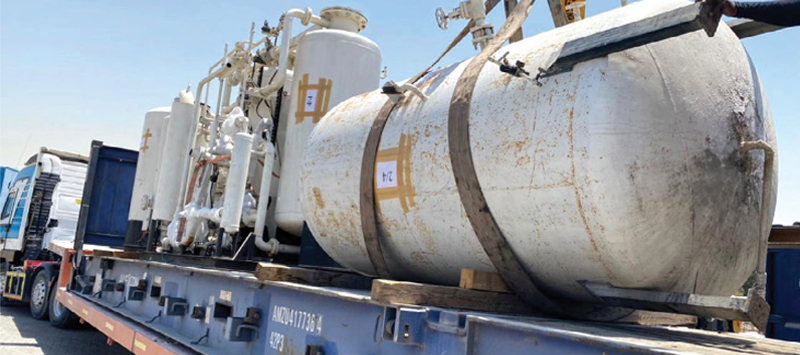
CSS KINGSTON LOGISTICS FZC acted as the helping handing to reach out to the nation of India in this dire situation. With our capability and hands-on experience in time-bound shipments, CSS KINGSTON LOGISTICS FZC could step in and ensure that the critical shipment happened without any glitches or roadblocks. With the scope to arrange cargo from door to port using the low hydraulic bed, the requirement was to ship from Sharjah to Mumbai. Three oxygen tanks and one processing unit were part of the consignment.

Mr. Firosh, Senior Sales Executive at CSS Kingston echoed the sentiments of the CSS Family as a whole, “Team CSS KINGSTON LOGISTICS FZC feels extremely proud that we could be part of the UAE’s compassionate response to the second wave of the pandemic in India.”

CSS PROVIDES LOGISTICAL SUPPORT IN THE RETURN OF HELICOPTERS TO COLOMBIA

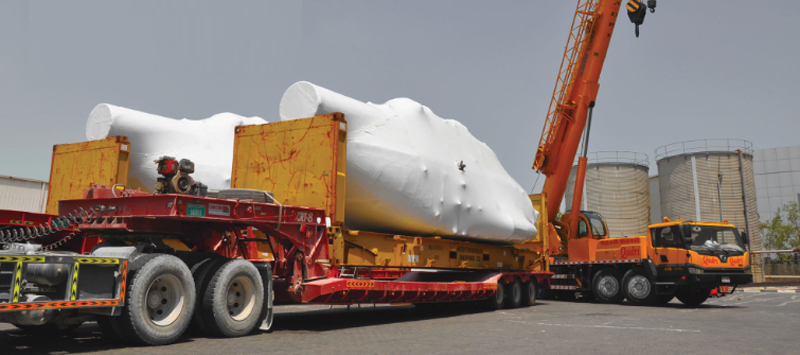
On the 9th of June 2021, CSS played a vital role that facilitated the movement of Mi-8 helicopters from Jebel Ali Port in Dubai, UAE, to the Republic of Colombia.

Specialized Care for Special Shipments

The operations commenced with the transportation of the two Mi-8 helicopter units from Dubai World Central Airport to the CSS CFS in Jebel Ali. The cargo units were offloaded using a 50-ton crane and then heat shrink wrapped to ensure damage-free transportation across the oceans to their final destination. Flexible and durable, heat shrink wrapping ensures that the cargo is completely weatherproof and tamperproof, regardless of its size. The helicopters were loaded onto 40’ Flatrack units and then dispatched to Jebel Ali Port after securely loading and lashing them onto the specialized air suspension low bed trucks.

One often thinks that helicopters are flown from the point of origin to their destination. However, it is more likely that helicopters are shipped either by sea or air freight. Flying the helicopters to their destination proves to be much more expensive than shipping them as you need multiple fuel stops.

CSS Capability in handling Complex Cargo

Helicopter shipments require specialists to attend to their loading and offloading and are carefully monitored every step of the way. The helicopters also require secure and proper packing. They need to be loaded under deck, or else the ocean spray can be very corrosive to this type of cargo on long transatlantic voyages, which is where the shrinkwrapping comes into play.

With its impeccable track record of carrying out the logistical requirements of several large and complex cargoes, CSS was brought on board to play the critical touchpoint in the UAE to enable the safe transit of the helicopters to Colombia. Through meticulous planning and teamwork, CSS’s operations team supervised by Suresh S and Don Raveendran made this move a successful mission.

CISCO WORKING ON 14 DIGITISING PROJECTS ACROSS SEVEN INDIAN PORTS

Cisco, the USA-based hi-tech company, has partnered with some of the largest Indian seaports and inland waterways to usher in an era of transformation by digitizing their processes.

The ports and waterways authorities that have come on board in this digitation drive include Visakhapatnam, Deendayal, Kolkata Port, and IWAI (Inland Waterways Authority of India).

Cisco has been working on 14 projects across seven ports in India, of which three projects have been completed, and 11 are in various stages.

Maritime Vision 2030

The partnership has been rolled out to enable India’s Maritime Vision 2030, which focuses on boosting the productivity and performance of the nation’s maritime sector over the next ten years.

The Indian Prime Minister, Mr. Narendra Modi, unveiled the Maritime India Vision (MIV) 2030 in March 2021 while inaugurating the three-day Maritime India Summit 2021, which had participants from 24 countries all over the world. A 10-year blueprint, the Maritime India Vision-2030, is drawn out to overhaul the Indian maritime sector. With a plan for Rs 3 lakh crore investment in the port project, the plan envisages generating employment for 20 lakh people.

“Shipping and Waterway, it also promises to unlock annual revenue potential for major ports worth over Rs 20,000 crore,” according to the Ministry of Ports, Shipping and Waterway

Digitization – Four Key Focus Areas

Digitizing Indian ports and waterways can help reduce overall logistics cost while enhancing its competitiveness to transform it into a global manufacturing powerhouse

Cisco’s initiative to digitize ports and waterways is centered on four focus areas.

1.Improve turnaround time: Cutting down on turnaround is the first primary positive outcome. This will directly impact the capacity and revenue of the ports and inland water authorities.

2.Prevent the loss of revenue and equipment: Digitization enables real-time equipment monitoring, which helps in preventing loss of revenue and equipment failure.

3.Improve efficiency: Cisco also plans to help improve efficiency through energy management and analytics.

4.Employee safety and communications: Cisco is also increasing employee safety and communications through a multi-channel communication and collaborative platform.

Some of India’s largest ports are positioned to improve turnover times, prevent loss of revenue and equipment failures through real-time monitoring, increase efficiency through energy management, logistics, and improving employee communications and safety.

Dave West, president for the Asia Pacific, Japan, and Greater China (APJC) at Cisco, said, “India has a goal to be a manufacturing powerhouse. To get there, they need efficient logistics.

Cisco’s strategic partnership will help India move closer to becoming a $5 trillion economy by 2025. Even though the COVID crisis has affected the economy of the land, it has spurred a rethinking of what the future is likely to be. Dave West added, “Cisco will continue to play our part to help our customers leapfrog in this region.”

Source: www.itln.in, www.economictimes.indiatimes.com

THE INDIAN RAILWAYS DELIVER 150 TONNES OF OXYGEN IN 24 HOURS

Severe Shortage of Medical Oxygen

A severe shortage of medical oxygen was experienced by hospitals in the Indian states that were severely hit by the second wave of the COVID-19 pandemic. It also led to the loss of several precious lives. India has a sufficient supply of medical oxygen however, the unavailability of containers and tankers was the culprit behind the severe scarcity.

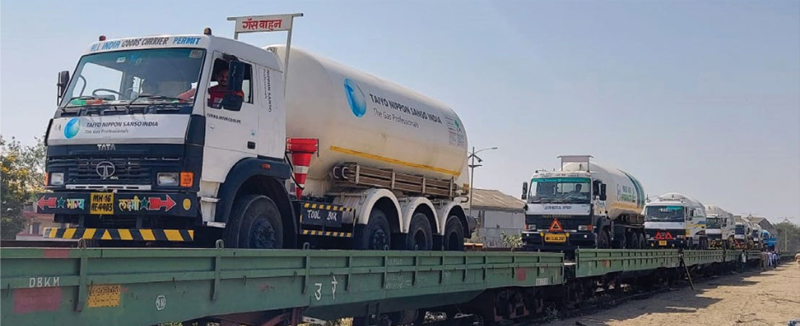
Within 24 hours, the oxygen Expresses of Indian Railways transported Liquid Medical Oxygen (LMO) tankers with over 150 tonnes of oxygen across the country amidst the severe shortage of medical oxygen in different parts of India. A total of 10 containers having nearly 150 tonnes of oxygen have been carried so far,” said the official press release by the Ministry of Railways.

The Oxygen Express by the Indian Railways

Railways ran the first oxygen express from Kalamboli in Maharashtra to Vizag in Andhra Pradesh and then back to Nasik in Maharashtra. With a distance of more than 1850 km between Kalamboli and Vizag, the railways were able to move the oxygen tankers within 50 hours.

To enable the smooth movement of oxygen supply, Indian Railways created ramps at stipulated places so that the liquid medical oxygen tankers could be moved easily. Seven tankers with more than 100 tonnes LMO were loaded in 10 hours and transported back to Nagpur within a short span of 21 hours.

“For the movement of Ro-Ro service, Railways had to map the entire route considering the various constraints like ghat sections, the road over bridges, tunnels, curves, platform canopies, overhead equipment, etc. at certain locations. Because height is an important aspect of this movement, Railways mapped the route via Vasai. The model of road tanker T1618 with a height of 3320 mm was found feasible to be placed on flat wagons. The longer route via Vasai was charted as Over Dimensional Cargo (ODC) is not permitted to travel in ghat sections over Mumbai division,” explained the official release by the Railway Ministry.

Severely affected states like Andhra Pradesh and Delhi had requested the Railways to operate more Oxygen Express trains. Liquid Medical Oxygen is filled in tankers at Visakhapatnam and Bokaro were transported through the Ro-Ro service of Indian Railways.

Indian Government Moves into Action

The Indian Prime Minister, Narendra Modi, chaired a high-level meeting to review steps taken to boost oxygen availability across the country. PM Modi emphasized the need for all ministries and departments to work in tandem to ensure the seamless supply of critical oxygen and medical supplies.

The Ministry of Finance announced, “The government of India has taken many measures in the last few days to improve the supply of oxygen and medical supplies. IAF planes are bringing in cryogenic oxygen tanks from Singapore. IAF is also transporting oxygen tanks in the country to reduce travel times.”

Green Corridor

As the Indian state of Uttar Pradesh also had a dire need to fulfill the requirements of medical oxygen in Uttar Pradesh, a green corridor was created between Lucknow to Varanasi for the movement of the train. The distance of 270 kilometers was covered by the train in 4 hours 20 minutes with an average speed of 62.35 km per hour.

Oxygen being cryogenic and hazardous, Indian Railways had to be extra cautious while transporting this vital lifesaving commodity. It is critical to avoid sudden acceleration or deceleration. To make sure that the movement happens without any incidents, the pressure had to be monitored at regular intervals, especially when the containers were filled and loaded.

Having taken it up as a challenge to be met during this dark hour in modern Indian history, the Indian Railway made meticulous preparations. For this purpose, the entire route was mapped, people were trained to transport the special tankers to the route that traversed through Vizag, Vasai, Nagpur, Bhusaval, and Surat.

The movement of oxygen over long distances is much better through trains as it can move much faster than road transport. While it can take up to three days by road, transportation through rail takes just two days. The time difference is because trains can run nonstop through the day and night while truck drivers need to take halts for rest and refreshment along the route.

Source: www.itIn.in

BLOCKCHAIN-ENABLED PRECIOUS METALS REFINERY AT DMCC, DUBAI

DMCC has announced signing a sale and purchase agreement (SPA) with REIT Development to establish the largest precious metals refinery and storage facility across the GCC. This refinery will be the first to be entirely enabled by blockchain in the GCC.

As part of the agreement, REIT Development has acquired industrial land strategically located in DMCC’s Jumeirah Lakes Towers (JLT) vibrant business district. The facility will refine and store precious metals, including gold, silver, platinum, palladium, and rhodium, which will be tokenized on goldexchange.com.

DMCC- the world’s flagship Free Zone

DMCC (Dubai Multi Commodities Centre) was established in 2002 by the Government of Dubai to provide the physical, market, and financial infrastructure required to establish a hub for global commodities trade. DMCC Free Zone is the largest Free Zone in the UAE, with more than 18,000 registered members as of 2021.

In 2018, DMCC was named the number one global free zone for a fourth consecutive year by the Financial Times.

DMCC is made for trade and has established Dubai as a leading center for trading international commodities. DMCC is also the world’s fastest-growing Free Zone. Promoting and facilitating trade across various goods from gold, diamonds, and precious metals to tea, food, and industrial materials, the DMCC is home to major multinationals and start-ups.

Gold Exchange DMCC

Gold Exchange DMCC is a secured trading platform. This platform will provide access to financial assets in stablecoins namely GoldCoin, SilverCoin, PlatinumCoin, PalladiumCoin, and RhodiumCoin.

Each Ethereum-based token will represent the current value of one gram of each metal and can be traded on the exchange. The tokens will be physically backed by the precious metals at DMCC’s secure storage facility, meaning they can be traded with confidence.

Ahmed Bin Sulayem, Executive Chairman and Chief Executive Officer, DMCC, said: “The gold and precious metals industry is at a tipping point, but without a doubt, there are boundless opportunities that lie beneath the uncertainty of a post-pandemic world.

He further emphasized, “The gold and precious metals industry is expected to witness significant growth in the coming period, and through similar agreements, we can advance the industry as a whole.”

Enabling Blockchain Technologies in Dubai

With the inking of this agreement with REIT Development, DMCC will continue to play a crucial role in pinpointing the UAE on the world map as a leader in the precious metals industry. Deployment of cutting-edge technology such as blockchain is the added advantage to the quotient.

In February 2021, Ahmed Bin Sulayem, the Executive Chairman of DMCC, and Jumeirah Lakes Tower joined the advisory board of the Swiss Government-supported blockchain investment company CV VC following an earlier agreement between DMCC and CV VC and CV Labs.

This partnership will bring a leading blockchain and cryptographic technologies ecosystem to Dubai.

First-of-its-kind facility by REIT Development

REIT Development is one of the leading organizations that is specialized in precious metals and blockchain technologies. This agreement is the first of its kind and will be completed in the last quarter of 2022. This new facility will strengthen DMCC’s position as a global hub for precious metals and a leader in technological advancements.

Mike De Vries, Chief Operation Officer, REIT Development, said: “Blockchain technology can enable more transparent and accurate tracking of precious metals, ensuring there is no ‘dirty gold’ in circulation and illicit trades.”

The 100,000 sqft precious metals refinery and storage will create a decentralized, immutable record of all transactions, making it possible to track all precious metals refined in our refinery and eventually sold internationally to over 150 countries. Customers who buy the products or use the storage can verify all the information in the blockchain.

This will set a precedent for metals trading of the future as blockchain will be the norm of the future. By the year 2025, it is predicted that every precious metals refinery and storage facility will be on a blockchain.

Paul Ashton, Executive Director – Property, DMCC, said: “The appeal of Dubai as a prime destination, combined with our world-class market infrastructure, state-of-the-art facilities, business-friendly environment and unparalleled investments in digital solutions, provide the ideal proposition for any business looking to grow and set operations in the region.”

Source: www.transportandlogisticsme.com, www.dmcc.ae

DEATH AND RESIGNATION

Rahat Talreja
Vice President – CSS India Operations

Yes, the topic is strange. At least the way it has been related. But do you know that resigning from a company has the same effect as a person’s death? Let’s evaluate.

Qualities of Death :

a) The person who dies suddenly becomes much greater than he was in real life. Or considered much worse than he was. Look around, and you will see the most prominent names in politics are either shown as super great or super useless, depending on which party the living person belongs.

b) Death brings along with it a sense of guilt to the living. Therefore they overcompensate by glorifying the deceased and crucifying those alive, almost to the extent of blaming them for the deceased’s problems and sometimes even calling them the reason for his death. A famous actor of Bollywood, who died last year, is experiencing this currently. None of his movies did as well, and suddenly once he passed away, supporters emerged from all holes, enough that if today he were alive, he would be bigger than any superstar, but when alive, he wasn’t even a fraction of the greatness by the same fans.

c) Victim mentality plays out within those living, and they start blaming the living powerful for their sorrows and empathizing with the dead. A man was always unhappy with his life and kept saying it’s better to die than to live like this. Then god heard him, and he died finally. But the moment he died, he started cribbing about the life of the dead. Roaming here and there over morgues, walking through doors without feeling them, being invisible to all living beings except their brethren and dogs ( who can see ghosts) So then god got confused and again gave them a rebirth. Since they came with so much misery, they already had health issues the moment they were born and caused great stress to their family from birth itself and again started cribbing about life and its better to be dead, so their cycle continued.

d) Those who die always have reasons like coronavirus, heart attack, grief, stress, cancer, etc, but that is what they focus on. What they forget are the several years they even lived. Death was just one moment, the rest of it was life. The focus suddenly is on the reasons for death. Till you were alive, god was great. When you die, god was mean.

Now let’s see the similar qualities when you resign or leave a company. You can compare with similar points above example a-a, b-b and can relate:

a) The person who resigns suddenly becomes greater than he was or considered worse than he was. The discussion revolves around how good he was by the naysayers within and how bad he was by the bootlickers within. The reality is that they existed with their good and bad when they worked for the company, and once they leave, the discussion is polarised, but the person isn’t. So futile to discuss.

b) After you resign, you have a sense of guilt, so you overcompensate it by glorifying the new company you join and crucifying the company you left. I once heard on youtube from the great investor Mr. Samir Arora of Helios Capital that: Warren Buffet decided to buy a company after reading 50 balance sheets over 50 years. This was regarded as a high conviction by all. But if it was a high conviction, why didn’t he buy it in the 49th year then. Why did he wait to read the 50th and only then buy? It is a case of no conviction since the rejection was 49 times. Similarly, if the new company you join is so great and the old one was bad, then why did you work for the old one for all these years?

c) A similar victim mentality plays out within the ones who are still working, who also are fed with the exiting employee’s negative pointers and their own anti-incumbency, and they start blaming in their hearts or private gossip- the management or boss for their grave sorrows and how they are enduring it with great pain. These people are similar to the dead than born, then dead, then born again type of livers.

d) Those who resign have several reasons like no growth, curtailment of their power pursuits, feeling worthless, primarily to hide their shortcomings and lack of sincere effort. So till they work and aren’t questioned, the boss is god. And when they are asked a little if they go astray, the boss is the devil.

So, friends, I hope you can read the overt and covert meaning of this article and walk on the path of true wisdom to reach a stage of neutrality where zero and infinity are the same, and you keep doing what’s required to be done without overthinking. Great leaders always follow this path!


UZBEKISTAN: A COUNTRY THAT IS RIPE WITH BUSINESS OPPORTUNITIES

The Republic of Uzbekistan has been opening up to the world in recent years. Uzbekistan has strengthened its relationships with foreign partners in trade, investment, innovation, green energy, tourism, and other fields on the path of dynamic economic development. Noted as the largest consumer market in Central Asia, Uzbekistan is on the way to accelerated growth.

Following the President of Uzbekistan Shavkat Mirziyoyev to the UAE in 2019, UAE has become an important trading partner of Uzbekistan. Both the countries signed a joint statement including inter-governmental, inter-departmental documents, and investment agreements to implement 11 collaborative projects.

Food Exports

The largest share of the Dubai-Uzbekistan non-oil market comprises the food market that involves the production and export of apricots, carrots, cherries, etc. In 2020, the figures showed a steady rise of AED.1.42 billion of food exports, pointing to Uzbekistan as a leader in this position. The country is also developing its logistics and transport corridors to supply Uzbek fresh, and processed fruit and vegetable produce.

The average annual growth rate of agriculture, forestry, and fishery production for 2016 to 2020 showed an increase of 2.6 percent, with 7.2 percent coming in from the agricultural sector alone. This resulted from the structural reforms and implementation of measures that helped support sustainable development and modernization of the agricultural sector.

The UAE company that strongly supports this venture is Abu Dhabi based Sura Holding. Sura Holding has invested in projects designed to modernize the agricultural scene in Uzbekistan. Several other UAE-based companies have invested in agricultural projects across Uzbekistan.

The Energy Sector

The high potential market segment that UAE has invested in Uzbekistan is energy. UAE’s investments in energy projects reflect a growing interest and confidence in the energy market.

During the Uzbekistan President’s visit to the UAE in March 2019, UAE agreed to develop a 500-Megawatt wind farm project in Uzbekistan. This project was set to be developed by Masdar. Later in April 2021, the 500-megawatt project increased its capacity to 1.5-gigawatts.

In December 2020, Masdar completed its financial closure of the first PPP project, the Nur Navoi Solar Project. In recent news, the Dubai-based Phanes Group has inked a power purchase agreement and Investment agreement for a 200 MW grid connector solar PV plant in Uzbekistan that includes technical and commercial terms for building owning and operating a 200MWAC solar PV project including facilities connecting to Khimiya 220/110 kV substation.

Frontiers for Tourism

Uzbekistan has developed the regulatory framework for modernizing and expanding its tourism industry. Some of the plans laid down include introducing halal certification, training of halal tourism guides, and construction of halal hotels.

With the implementation of visa-free tourism in 2018 for Indonesia, Malaysia, and Turkey, tourists can come over to visit the Muslim shrines of the country without any hassles.

In 2019, the visa-free allowance was extended to UAE citizens and residents, which will positively facilitate business and tourism exchange between the two countries in the post-COVID years to come.

Retail Opportunities

Interestingly, UAE’s retail giant, the Majid Al Futtaim (MAF) Group, has already established its footing in Uzbekistan by opening several Carrefour supermarkets in Tashkent. The entry of the region’s leading mall operator highlights the retail sector’s potential in the country for UAE companies.

This move is an indication that the retail market in Uzbekistan is ready to be tapped. UAE-based retail companies can maximize the opportunities and play a crucial role in developing modern retail in the country and creating value for the industry and the Uzbek economy.

UAE-Uzbekistan – A Win-Win Partnership

The Expo 2020 in Dubai is ideal for Uzbekistan’s economic potential as Uzbek companies leverage the platform provided to market the Uzbek potential to a world audience.

The country’s embassy in the UAE will continue to work closely with public and private sector stakeholders to ensure that bilateral relations continue developing and flourishing. The Government-led reforms have brought positive changes to the nation’s business landscape, with the retail sector seeing growth from foreign investors and multi-national companies.

Source: www.transportandlogisticsme.com

UAE ALLOWS FOREIGNERS TO HAVE 100% OWNERSHIP OF BUSINESS

From June 1st, 2021, people from other countries are allowed 100% business ownership of companies. Earlier, to start a company, expats had to have an Emirati shareholder or an agent. 

 The previous foreign investment law in 2018 permitted foreigners to own 100% of certain businesses outside of the free zones. With the new law being implemented in June, expats can now own businesses across the UAE and are not limited to the free zones.

The Minister of Economy-Abdulla bin Touq Al Marri said, “The amended Commercial Companies Law aims at boosting the country’s competitive edge and is a part of UAE government efforts to facilitate doing business.”

The amendment to the law was proposed in the year 2020 and the government of UAE has decided to bring it into effect from the month of June in 2021. 

This move will be a boost in the arm for the economy of the region and will improve the prospects of the region’s trade and industry.

Source: www.transportandlogisticsme.com

Page1 … Page5

CSS Newsletter

In this issue:

Quick Links

  • Home
  • About
  • Services
  • News Media
  • Careers
  • Contact us
  • Corporate Brochure
  • CSS Corporate PPT
  • Lighthouse
  • News Hub
  • Privacy Policy
  • Cookie Policy
  • Disclaimer
  • T&C’s

Locations

  • Dubai
  • Abu Dhabi
  • Sharjah
  • Ras Al Khaimah
  • Bahrain
  • Oman
  • Qatar
  • Saudi Arabia
  • Kuwait
  • Kenya
  • Turkey
  • India

Subscribe to our bi-monthly newsletter, Lighthouse

  • Follow Us
© 2026 CSS Group. All rights reserved. Crafted with by Netventure