Skip to content

Lighthouse

Bi-monthly publication of CSS Group

Lighthouse
  • Call +971 4 8872333
  • Mail info@cssdubai.com
  • Menu
    • Home
    • About
    • Services
      • Global Freight forwarding
      • Ocean Freight Management
      • Supply Chain Management
      • Land Transportation Management
      • Industrial Packing, Crating & Lashing
      • Air Freight Management
      • Projects Oil & Energy
      • Exhibition Event Logistics
      • Automobile Logistics
      • Art Logistics
      • Non Vessel Operating Common Carrier (NVOCC)
      • Hospitality & Hotel Logistics
      • Multi-modal Operations
      • Container Freight Station (CFS)
      • Yacht & Marine Logistics
      • E-commerce Fulfillment
    • Locations
      • Dubai
      • Abu Dhabi
      • Sharjah
      • Ras Al Khaimah
      • Bahrain
      • Oman
      • Qatar
      • Saudi Arabia
      • India
      • Sri Lanka
    • Careers
    • Track & Trace
    • Login
      • Customer / Agent
      • Employee – Portal
      • Employee – Dashboard
      • CSS India Login
    • More+
      • Lighthouse
      • Media Hub
      • Feedback
    • Contact Us
  • Login
    • Customer / Agent
    • Employee – Portal
    • Employee – Dashboard
    • CSS India Login
  • TRACK & TRACE
  • NOTICES
  • LIGHTHOUSE
Lighthouse
  • Call +971 4 8872333
  • Mail info@cssdubai.com
  • Menu
    • Home
    • About
    • Services
      • Global Freight forwarding
      • Ocean Freight Management
      • Supply Chain Management
      • Land Transportation Management
      • Industrial Packing, Crating & Lashing
      • Air Freight Management
      • Projects Oil & Energy
      • Exhibition Event Logistics
      • Automobile Logistics
      • Art Logistics
      • Non Vessel Operating Common Carrier (NVOCC)
      • Hospitality & Hotel Logistics
      • Multi-modal Operations
      • Container Freight Station (CFS)
      • Yacht & Marine Logistics
      • E-commerce Fulfillment
    • Locations
      • Dubai
      • Abu Dhabi
      • Sharjah
      • Ras Al Khaimah
      • Bahrain
      • Oman
      • Qatar
      • Saudi Arabia
      • India
      • Sri Lanka
    • Careers
    • Track & Trace
    • Login
      • Customer / Agent
      • Employee – Portal
      • Employee – Dashboard
      • CSS India Login
    • More+
      • Lighthouse
      • Media Hub
      • Feedback
    • Contact Us
  • Login
    • Customer / Agent
    • Employee – Portal
    • Employee – Dashboard
    • CSS India Login
  • TRACK & TRACE
  • NOTICES
  • LIGHTHOUSE

DUBAI EXPO 2020: “CONNECTING MINDS, CREATING THE FUTURE
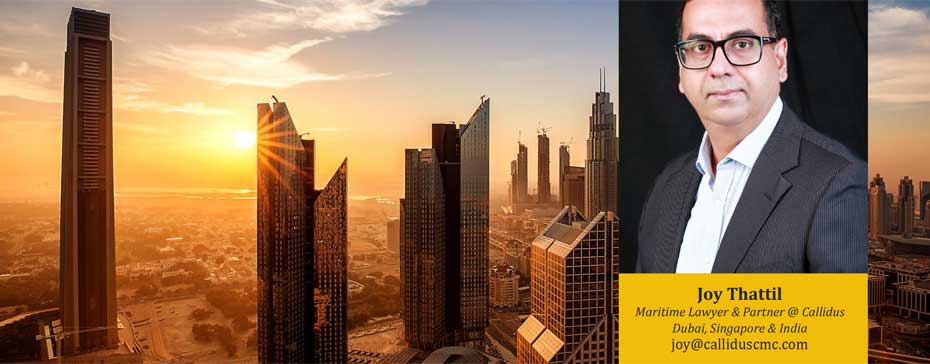
An Expo is a world fair or an extravagant international exhibition designed to showcase achievements of nations. The word Expo was derived from the French word “Exposition Universelle” which means Universal Exposition. There are two types of Expos that are conducted in different parts of the world; one being World Expo (formally known as International Registered Exhibitions) and other being Specialized Expo (formally known as International Recognised Exhibitions). Since the 1928 Convention Relating to International Exhibitions came into force, the Bureau International des Expositions (BIE) has served as an international sanctioning body for international exhibitions. As per the norms, a bidding process began in 2011 between four different Countries and Dubai was declared the winner. This triumph and jubilation led to the massive event called Dubai Expo 2020.

Theme of Expo 2020:
Expo 2020, is the First World Expo that is being conducted in the Middle East, Africa and South Asia (MEASA) region;
1. starting from October 20, 2020 to April 10, 2021. The event which is hosted in the heart of Dubai shall welcome 200 international countries and about 25 million or more visitors. It will be one big step towards efficient development.
2. The Expo will be held in the name of ‘Connecting Minds, Creating the Future.’ The goal is to connect people and innovative ideas, leading the people of the world towards a better tomorrow.
3. Opportunity, Mobility and Sustainability shall be the core themes of the Expo and it will connect nations, multinational corporations, non-government organisations and millions of visitors from all over the world, providing an opportunity to see future innovations, marvel at unique architecture, experience diverse cultures, taste cuisines from all over the world, and enjoy live performances, art and other entertainment.

Initiatives in the Expo 2020:
1. Al Wasl Plaza is one of the biggest initiatives taken in the Expo and it is said to bring together a physical manifestation of the main theme of the Expo; it is the site where the event will be conducted and each participating country will have its own pavilion to showcase their achievements and innovations.

2. World Majlis is a dialogue programme aimed at facilitating global conversation and creating connection between people and ideas. It brings together various government, professional, academics and cultural backgrounds in a meetings space where people will share informed opinions to help shape decision for communities.

3. Expo Live is an innovation and partnership programme launched by Expo 2020 to promote creative solutions that improve
lives while preserving the planet. Expo Live will support to demonstrate the power of a World expo in bringing a progressive and a prosperous future.

4. Global Best Practice Programme is a series of best practices from around the world have been selected to be showcased in the event. A total of 25 Best practices in five different categories have been selected by an international jury that can be replicated, adapted and scaled for a greater global impact.

Interesting facts on the Expo 2020

  1. Expo 2020 Dubai will have a dedicated metro station capable of carrying 23,000 passengers per hour in each direction.
    Dubai’s metro system is driverless.
  2. The Expo site is 4.38sq km in size, or 613.5 football pitches if you prefer.
  3. There will be a ‘Superstore of the Future’ on site which will be 3,000sqm in size.
  4. 25 million visitors are expected to visit Expo 2020 Dubai, Australia’s population is a similar number.
  5. Expo is expected to create almost 300,000 jobs. The majority in the tourism sector.
  6. 90% of the materials used to construct the site will be used to create legacy buildings after the event.
  7. Uber has signed an agreement with Dubai’s Roads and Transport Authority to test flying cars during the event.
  8. The Expo 2020 Dubai logo was inspired by a ring found in the UAE at 4000-year-old archaeological site.


EXPO 2020: A massive phenomenon for the Country and the people
Each new beginning, every new initiative, any new product brings a lot of changes and development in the society and and the Expo is no different, it also aims in bringing the best for the people and the residents of UAE.

  1. According to Expo 2020 Executive Body, Dubai’s Expo 2020 is expected to yield $24.2 billion in revenue;
  2. Expo 2020 will provide 277,000 new job opportunities and will have a positive impact on small and medium enterprises
    (SMEs);
  3. It is predicted to boost the economy of the Emirates by an average of 6.4 percent every year from 2014 to 2016 – ultimately increasing to 10.5 percent by 2020;
  4. The UAE government has predicted that revenues of up to $17.7 billion will be generated if the Expo is a success, which organizers feel is certain;
  5. Some analysts have predicted that by 2020, the UAE could garner as much as $150 billion in foreign direct investment in sectors such as real estate, hospitality, and tourism;
  6. The Expo 2020 is expecting 25 million visitors, 17 million of which will be international, this naturally will give a big thrust to the tourism and hospitality industries;
  7. For the Expo, Dubai is constructing a massive new city over an area of 1,082-acre. This project itself has generated 15% of the city’s new jobs. The figure is expected to double as the city gets closer to 2020.


Conclusion:
Thus Expo 2020 Dubai will be a celebration of human brilliance and achievement and an opportunity for people to connect from different corners of the world, to experience the best of art, culture, geography, science, technology, innovation and invention and to set into motion millions of new thoughts and ideas that will make a lasting impact in our lives.

Throughout its history, UAE has shown the world what is possible through its remarkable development. With Expo 2020 Dubai, Dubai will go a step further in inspiring the next generation to spark innovations that will underline the next 50 years of human progress.
SPICEJET & GULF AIR COLLABORATE TO COORDINATE CARGO SERVICES

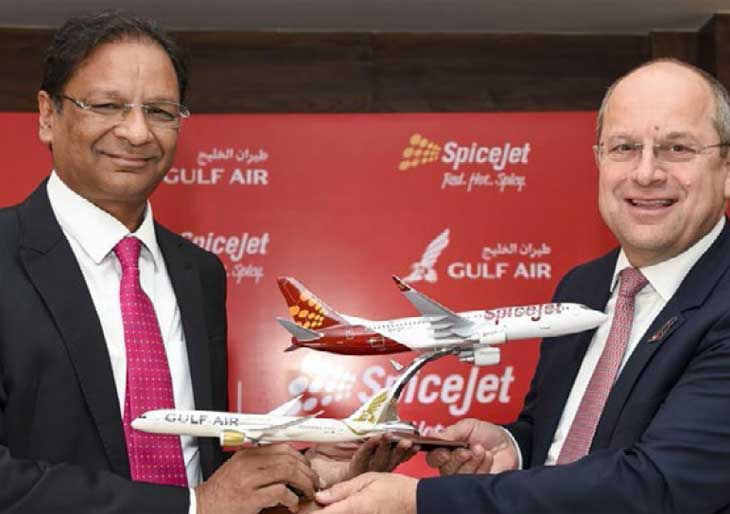
SpiceJet and Gulf Air have signed a Memorandum of Understanding (MoU) to examine areas of potential synergy, including looking at co-ordinating cargo services, interline or codeshare agreements, shared engineering services and pilot training. The MoU was signed by Ajay Singh, Chairman and Managing Director, SpiceJet, and Krešimir Kucko, Chief Executive, Gulf Air. Singh comments, “This agreement is going to play a very important role for airline’s next phase of growth as we continue to explore the innumerable opportunities around us.”
SpiceJet’s cargo division, SpiceXpress, took delivery of its first 737-800 Boeing Converted Freighter (BCF) earlier this autumn. The standard-body freighter, the first 737-800BCF to be operated in south Asia, was leased from NGF Alpha Limited, a division of Spectre Cargo Solutions.

LI LIAN INTERNATIONAL LTD V. HERPORT HONG KONG LTD (MOL COMFORT) [2019] HKCFI 826 [2019] HKEC 964 – A REVIEW

This decision of the Hong Kong Court illustrates one of the potential risks associated with acting as a Non Vessel Owning Common

Carrier and the importance of protecting time in all potential jurisdictions when it comes to claiming indemnity.

Facts:
An NVOC (Herport) issued bills of lading in Hong Kong for carriage of cargo on ‘MOL Comfort’ from Hong Kong to Le Havre. Ocean bills were issued (by NYK) also in Hong Kong, indicating Herport as the shipper.
Unfortunately, the ship fractured amidships in the Indian Ocean, split into two halves and drifted for several days before sinking together with all goods on board.
Cargo interests and their insurers claimed against Herport under the NVOC bills; Herport issued a third party indemnity notice against NYK.

Contentions:
The main issue was conflict of law arose due to the exclusive clauses added in both B/L.
The Herport’s B/L provided exclusive jurisdiction to Hong Kong Courts whereas NYK’s B/L provided exclusive jurisdiction to Tokyo District Court in Japan under the following terms:
The contract evidenced by or contained in this bill of lading shall be governed and construed by Japanese law except as may be provided for herein, and (b) notwithstanding anything else contained in this bill of lading or in any other contract, any and all actions against the carrier in respect of the goods or arising out of the carriage shall be brought before the Tokyo District Court in Japan to the exclusion of jurisdiction of any other courts whilst any such actions against the merchant may be brought before the said Court or any other competent court at the carrier’s option.
NYK argued over the jurisdiction of the case stating that as per the clause in their Bill of lading the Jurisdiction would be Tokyo District in Japan and shall be governed and construed by the Japanese Law, also there were already two legal proceedings in Tokyo in relation to the subject damage thus NYK submitted that Hong Kong had no jurisdiction over the matter.
Herport disputed that the clause mentioned on the NYK BL is not valid as the clause is restricted only to claims under Japanese law and no other indemnity claims would fall under the same provision. They had placed the burden on NYK to prove that Hong Kong was not the right forum for the case.

Judgement:
Judge went by NYK’s contention stating that the clause on NYK bill of lading was very clear and it carried no ambiguities. The Court Stated that Herport had not submitted strong reasons to prove that the Court had jurisdiction and also Herport had to be aware that he may have to proceed against NYK in Tokyo as expressed in the Bill of Lading. The argument of Herport on forum non conveniens was also not accepted by the Court. The Court took a generous interpretation of the exclusive jurisdiction clause.
Thus the case was ruled in favour of NYK. The decision was inconvenient for Herport as the claim was time barred under Tokyo jurisdiction.
Having said the above, the judgement has missed out addressing if the claim can be acceptable under Tokyo Court as per 3 (6 bis) of Hague Visby Rules, to which both Japan and Hong Kong are signatory and this clause would have assisted Herport to fight the issue.

RENNEL ISLAND OIL SPILL AN OVERVIEW

Rennell Island, one of the country’s outlying islands in its southern Rennell and Bellona Province, is geographically remote with little infrastructure and few services. The Solomon Islands is part of the marine biodiversity-rich Coral Triangle and has one of the world’s most important coral reef systems, home to 485 coral species and 1,019 fish species.
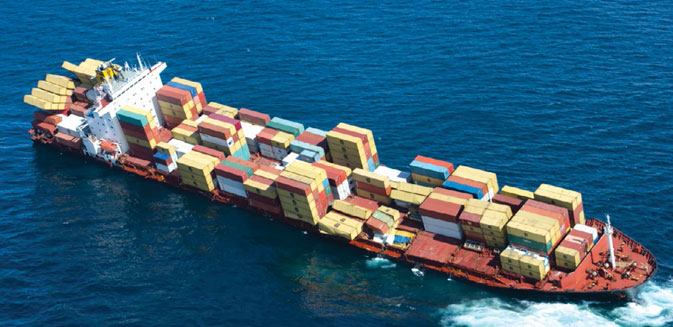
On February 5 2019, a Hong Kong-based bulk carrier, the MV Solomon Trader, ran aground off a remote island in the Solomon Islands. It spilled heavy fuel across coastal waters, beaches and a sensitive coral reef system not far from a UNESCO World Heritage Site., eventually spilling more than a hundred tonnes of heavy fuel oil into the ocean.

The country’s president has described it as the worst man-made environmental disaster in recent times. Although the International salvage crews has now contained the oil spill, a massive clean up operation is still underway following which questions of liability and damages is also put forward. However, the scale of damage is still being reckoned. Scientists report that oil spills can kill fish and invertebrates directly, while toxic compounds can curtail coral growth and reproduction and diminish coral and fish biodiversity.

In the latest twist of events the Indonesian miner Bintan Mining Corporation, which chartered the stricken MV Solomon Trader, is suing the ship’s owner King Trader Ltd. And says they were suing the shipping company as the charterer on behalf of the people of the island.

The Rennell islanders were having a hard time availing consumable water and has thence been relying on clean water shipments. The Solomon Islands Maritime Safety administration acting director Jonah Mitau said the government is looking at changes to the Shipping Act following the incident. He said currently the laws only cover safety but will be extended to cover insurance and commercial responsibility for damages.

Reports suggested the damage is estimated to be over $US50 million and the Solomon’s caretaker Prime Minister Rick Hou has confirmed that a review of environmental and mining laws is needed to deal with such emergencies.

The World Heritage Centre is determined to support Solomon Islands and Australia in exploring all options to hold the responsible company, owners and insurers to account.

What is an Oil spill? It is basically when large quantity of liquid petroleum hydrocarbon is released into the water bodies. Oil wastes that enter the ocean comes from various sources. These spills mainly occur due to human activities in coastal areas, shores and oceans, more specifically, the activities involving tankers carrying crude oil, drilling rigs, wells and offshore platforms. These oil spills have adverse ill effects on the ocean and the life in the ocean, which can last for decades. The largest oil spill occurred in 1991, in Gulf of Mexico, in which around 240 million gallons of crude oil was spilled. The oil spilled in this accident went deep into the sea, burrowing up to 40cm in the sand and mudflats, it remains there to this day. This is only one example of how oil spills can be such a menace. In the year 2018 alone, six incidents of oil spill occurred, three large oil spills and three medium oil spills. The oil spill at Solomon Islands leaked 600 tonnes of heavy fuel oil, which implies that it is a medium oil spill. Even though it is a medium spill, it cannot be taken lightly, because it has occurred in one of the UNESCO World Heritage sites, which also happens to be the world’s largest raised coral atoll. The spill is likely to cause long term significant damage to the coral reefs and the local ecosystem. When the corals come in contact with the oil, it can sometimes kill it directly or effect its reproduction and growth. The International Maritime Organisation is a United Nations specialised agency which focuses on the safety and security of shipping and the prevention of marine and atmospheric pollution by ships. IMO plays an important role in promoting the Sustainable Development Goals of the UN. The IMO regulates principles that can be used in situations like these.

GENERAL AVERAGE AND THE IMPORTANCE OF MARINE CARGO INSURANCE

General Average is a principle of maritime law, whereby all stakeholders in a sea venture proportionally share any losses resulting from a voluntary sacrifice of part of the ship or cargo to save the whole in an emergency.

The principle underlying General Average is generally regarded as having been first codified, in the Rhodian Law sometime in the 9th century B.C based on the principle “That which has been sacrificed for the benefit of all shall be made good by the contribution of all”.

In recent times, recognizing the need to formulate the principle to create uniformity across seafaring nations, a set of rules were laid down following conferences in York and Antwerp in the late 19th century, resulting in the York-Antwerp Rules, which is the standard rules relating to General Average in modern times.

The one crucial element that makes all the difference, when a General Average is declared is whether the cargo is insured or not and whether such insurance cover General Average and Salvage Claims. Marine Cargo Insurance can make all the difference in a General Average. The importance of Marine Cargo Insurance is twofold. The same not only indemnifies the policyholder for loss or damage to the cargo, but will also respond to General Average and Salvage Claims.

When a General Average is declared, an Average Adjuster is appointed to co-ordinate the claims, who formulate the extent of the loss which can include repairs to the vessel, salvage and towage costs, loss or damage to cargo survey costs etc. These costs, whilst not impacting directly on some parties, needs to be shared. The Average Adjuster approaches the parties to the voyage for contribution towards these costs in line with the principle of General Average.

If the cargo is insured, the insurers will deal with the Average Adjuster and provide a Guarantee to satisfy the claims of the General Average; leading to the release of the undamaged goods to the owner.

On the other hand, if the cargo is not insured, the Average Adjuster will request a cash deposit from the owner before releasing the undamaged goods. In certain circumstances, this can be a significant amount of money, which can put a great strain on the cargo owner.

It is therefore of paramount importance that the cargo is insured, prior to the shipment and special care should be taken to ensure that such insurance covers General Average and Salvage Claims. This will not only protect you for loss or damage to the cargo themselves, but will deal with any General Average and Salvage Claims, should such a situation arise.

Release of The Cargo without The Presentation of Original Bill of Lading

Risk Factors Involved in Non-Presentation of OBL
It is quite evident by now that there is risk associated with delivery of cargo with the Letter of Indemnity and not the original Bill of Lading. The below listed are some of the basic risks that are involved in the same:

1. Mis-delivery of Cargo:
It is well understood a bill of lading, amongst other functions, acts as a “key” to the warehouse which, when available at the discharge port, is presented to the Master in order to release the cargo to the “bearer” of the bill of lading. Where such a “key” is not available at the discharge port, it must be remembered that an LOI will not absolve the carrier from liability if the cargo is delivered to the wrong party.

2. Insurance Cover:
It is well understood that liabilities arising as a consequence of mis-delivery are not covered under all P&I Club rules unless the Directors of the club in question otherwise agree. The LOI is designed to try to alleviate such risk, so far as it can, but it must be understood that an LOI effectively substitutes an Owner’s P&I cover for mis-delivery claims and there are certain insurance policies that do not cover the claims arising out of non- presentation on BL.

3. Creditworthiness of the Party:
This is one of the most important factors while delivering cargo with letter of indemnity. In some cases, the party that presents the letter of indemnity may not be related or connected to the cargo or the shipment in actual. In other cases, the parties may represent themselves as the agent of the cargo interest, but they could be deceitful and later the carrier may be held liable by the actual cargo interest. In some cases, the consignee may have failed to pay the shipper the value for the cargo which could also lead to non- receipt of the Bill of lading. So, the carrier/ shipping line must always ensure to check the creditworthiness of the party claiming the cargo with the letter of indemnity.

Reasons for non-presentation of BL:

  • Consignee has not received the Bills of Lading from the shipper in spite of cargo on board.
  • Consignee has only received an electronic copy or the telex message.
  • Consignee has not paid the buyer yet for the cargo bought and has existing dues.
  • Consignee or agents have misplaced the documents or the Bill of Lading.
  • The party representing the consignee or the cargo interest may be fraudulent and not acting in good faith.

Conclusion:
The practice of delivery of cargo without presentation of original bills of lading is very familiar, and is here to stay as long as shipping exists. Delivery of cargo without presentation of an original bill of lading, although not recommended, is a reality of international trade and if the parties act cautiously then no one would suffer a loss in the business. It is therefore important to remember the risks involved in such operations and to act cautiously in order to minimise risks to shipowning interests.

Release of The Cargo Without The Presentation of Original Bill of Lading

A bill of lading is a document issued by a carrier (or their agent) to acknowledge receipt of cargo for shipment. Although in England, the term once related only to carriage by sea, a bill of lading may be used for any type of carriage of goods. A bill of lading must be transferable and serves three main functions:

  • It’s a conclusive receipt i.e. an acknowledgement that the goods have been loaded;
  • It contains or evidences the terms of the contract of carriage; and
  • It serves as a document of title to the goods.

As much as it is the most important document for shipment of goods from one place to the other, it has become very common for the cargo interest or their agents to demand the release of cargo without submission of the original bill of lading.

At the outset, the answer to whether the cargo can be released without the presentation of the OBL is a big NO! as this involves a lot of risk both for the carrier and the cargo interest since the reasons for the non-presentation are enormous. In spite of this being wrongful there are some carriers and P&I that do release the cargo, subject to certain exclusions and exemptions.

P&I releasing the cargo without presentation of OBL
In general P & I club exclude cover for release of cargo without production of Original Bill of Lading by incorporating an exclusion in their policy. However, certain P&I clubs include an omnibus clause in their Rules which do permit some flexibility by allowing the members to provide cover in some circumstances. At the same time with respect to commercial insurers providing P&I cover, this flexibility is not available to override any specific exclusions provided in the policy wordings.

P&I will be involved in such cases under various roles and various circumstances. When P&I represents the carrier, if the Principals or their agents have released the cargo without the OBL the shipper would be the claiming party. On receiving the claim from the shipper P&I club would reject the claim on the ground that there was no personal negligence. Similarly, when P&I represents the cargo interest, the carrier may have released the cargo without the OBL yet P&I would continue to reject the claim as the fault is off the carrier.

Thus, certain P&I clubs provide a wider cover with respect to release of cargo with Bill of Lading subject to certain specific exclusions already mentioned in the Insurance policy.

Carrier/Shipping Line releasing cargo without the presentation of OBL
When it comes to the carrier, they deny taking responsibility of the cargo that is to be discharged without the presentation of the Bill of lading as it causes a lot of trouble for the shipping line/ carrier eventually.

Although the above is what the carrier mostly follows, there are some cases where the carrier releases the cargo without the Bill of Lading for the following reasons:

  • To maintain a cordial and business relationship with the customer.
  • To reduce the unavailability of the containers.
  • To avoid the destruction cost that would eventually fall on the Carrier in case the consignee has not taken delivery.
  • The time and cost the carrier/ shipping line has to invest in claiming the detention and demurrage charges.

The carrier/ shipping line accept a document called the Letter of Indemnity in which the party including the consignee, delivery agent or any other accepts to indemnify the consignor in case of any consequence that arise in the future.

Letter of Indemnity
It is common in a lot of trades, whether bulk or oil, to accept a Letter of Indemnity (“LOI”) for non-production of bills of lading. A letter of indemnity (LOI) is a document which the shipper/ consignee indemnifies the shipping company against the implications of claims that may arise from the issue of a clean Bill of Lading when either the goods were not loaded in accordance with the description in the Bill of Lading or when the original document is not available.

It is absolutely essential that Members get the wording of the LOI right and ensure that proper procedures are in place to demonstrate compliance with the LOI.Members must also actively weigh up the counter party risk of accepting an LOI. An LOI is only as secure as the party providing it.

When this occurs, the carrier invariably agrees to deliver the cargo in consideration of receiving a Letter of Indemnity (LOI) from their charterer/ receiver. In many cases, a delivery of cargo in this way will proceed without incident. However, whilst the practice is familiar, familiarity can sometimes lead to complacency.

to be continued…

Redefining Indian Law On Arrest of Non-Owned Ships: Sunil B. Naik V. Geowave Commander:- A Review

The Supreme Court of India, on 9th March 2018, marked a milestone in the field of Admiralty law while deciding the case, Sunil B. Naik v. Geowave Commander by incorporating the principle that there cannot be an arrest or restraint of a vessel in possession of a non-owner, but owned by a complete third party, for a maritime claim against the former. The Admiralty law in India regarding this was silent. It was this huge uncertainty that was set aside by the apex court through the above decision.

The facts of the case are as follows-Oil and Natural Gas Corporation Ltd. awarded a contract to one Reflect Geophysical (a Singapore based company) to carry out seismic survey off the coast of Gujarat near Okha port in 2012. Reflect Geophysical then entered into a bareboat Charter Party Agreement dated 29.06.2012 to charter the vessel ‘Geowave Commander’ from Master and Commander AS, registered in Norway, for 3 three years.

Later, Reflect Geophysical contracted with one Yusuf Abdul Gani (on 01.10.2012) and one Sunil B Naik (on 30.10.2012), to give on hire the vessel ‘Orion Laxmi’ to work in support (like towage duty) and 24 fishing trawlers being the chase vessels to assist in survey operations to be conducted by chartered vessel Geowave Commander respectively. When payments due to Yusuf Gani and Sunil Naik were defaulted by Reflect Geophysical, they approached the Bombay High Court to enforce their claim against Reflect Geophysical by arresting the vessel Geowave Commander. Even though the court gave an ex parte decree to arrest the vessel, later it refused to order arrest, holding that Reflect Geophysical was not the owner of the vessel Geowave Commander, and hence the claims against Reflect Geophysical could not be enforced through the arrest of the chartered vessel.

On appeal by the two aggrieved parties, the Supreme Court bench consisting of Justice J. Chelameswar and Justice Sanjay Kishan Kaul, considered three important principles while adjudicating the matter. One being the precedent set by the SC itself in the landmark decision of MV Elisabeth &Ors. v. Harwan Investment & Trading Pvt. Ltd. “The foundation of an action in rem against a ship arises from a maritime lien or claim imposing a personal liability upon the owner of the vessel.” Here the claim was only against the charterer of the vessel and not against the de jure owner of the vessel. Thus the chartered ship cannot be arrested for a claim against its charterer. The court observed that “the crucial test would be of ownership, which in the present case clearly does not vest with Reflect Geophysical and the de facto ownership under their bareboat charter cannot be equated to a de jure owner, which is necessary for an action in personam”.

The second point that crossed the Hon’ble Court was Article 3(3) of the International Convention on Arrest of Ships, 1999, which forbids the arrest of ships not owned by the person liable for the claim, except under a judgment based on a contrary law of the respective state. The Indian Admiralty law is silent on that matter, hence no judgment for arrest of such a ship could not take place. The SC itself has stated in the Elizabeth case (supra) that in the absence of any specific statutory provisions, maritime laws of the world can be adopted and adapted by Indian courts. Therefore, though India is not a signatory to the above convention the principles of the same can be utilized appropriately.

Finally, despite the fact that the court considered the plea of “beneficial ownership”, it didn’t really agree to it while adjudication. In Medway Drydock & Engineering Co. Ltd. v. M.V. Andrea Ursula, it was observed that “a ship would be beneficially owned by the person who, whether or not he was the legal or equitable owner or not, lawfully had full possession and control of her, and, by virtue of such possession and control, had all the benefit and use of her which a legal or equitable owner would ordinarily have”. But the fact that the above judgment was dissented by the Queen’s Bench itself in l Congreso Del Partido was duly noticed by the court. From the latter case, the court concluded that “mere possession of the ship, however, complete and whatever be the extent of the control was not found good enough to confer the status of ownership. The “beneficial use” of a chartered ship would not ipso facto convert the status of a charterer into a “beneficial owner.”

Hence, the Apex Court of India laid down a strong precedent that there cannot be an arrest or detention of a vessel in possession of a non-owner, but owned by a complete third party, as a security for a maritime claim against the former. The fact that the most significant admiralty case of Elisabeth v. Harwan Investment & Trading was cited and International Convention on Arrest of Ships was referred, where India not being a signatory, are all fascinating points to be noted. It is also interesting to look into, how the plea of “beneficial ownership” wasn’t really given importance for adjudication.

MARITIME INDUSTRY IN THE DECADE OF DIGITAL TRANSFORMATION

(continued from July edition)
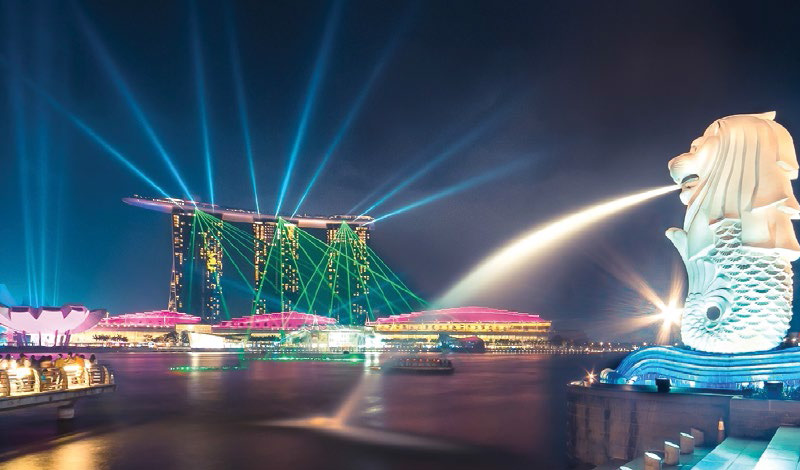
Challenges and Opportunities – Singapore’s journey towards digitalization in 2018

Innovative players are bypassing the traditional shippers with new and cost-efficient digital business platforms that deliver more benefits to customers. In 2018 the Maritime Industry is reinventing itself, ushering in containerization, larger vessels, and electronic data exchange. The industry is also poised to make a drastic progress and growth in maritime financial recovery overcoming some of the constraints like fuel costs, entry of larger vessels in the market and also the new environmental regulations and standards.

Progressive ports are also embracing the digital breakthrough. Digitalization has helped the transformation of ports and terminals. Smart technologies have replaced the old systems that support the basic infrastructure and tools that handle cargo, manage traffic, customs dealings, safety assurance, and monitoring energy use, thus reducing wastage. Some ports worldwide have tied multiple individual systems into a single interconnected port-wide platform.

On 16th April 2018 the United Nations Maritime Organization has approved a strategy to eliminate carbon dioxide emissions altogether by 2020. The Maritime Singapore Green Initiative  also have made efforts to reduce the environmental impact of shipping and shipping related activities to promote clean and green Shipping in Singapore. In 2011 the Maritime and Port Authority of Singapore had decided to invest up to S$100 million over 5 years in Maritime Singapore Green Initiative, followed by the support from the maritime industry this was enhanced and extended till 31st Dec 2019. This initiative also makes Singapore’s efforts to a responsible flag and port state to clean and green shipping thus making it the most preferred Shipping hub globally.

The Singapore Budget announced on March 2018 that it will top up its Maritime Cluster Fund by S $100 million to help more transition to Digital and Automated maritime future. Senior Minister of Transport, Dr Lam Pin Min said that the latest amendments will lift the total investments in the MCF to $285 million. He also added that the introduction of the Maritime Transformation Map (MTP) will be rolled out over a period of few months and will co-fund the same with matching investments from industry partners, for the development of technology with high potential for industry applications. The Maritime and Port Authority of Singapore also have signed five Memorandums of Understandings (MOU) and two Agreements with local and international partners at the recently held Singapore Maritime Technology Conference (SMTC). These MOU’s are also aligned with the Sea Transport and Transformation Map that are designed to strengthen Singapore’s connectivity and help Singapore to take its Maritime Industry to be at par with the latest developments and adaptations of areas such as automation, data analytics, intelligent systems and cyber security. Thus Singapore has emphasized the importance of digital technology and innovations and is getting ready for a journey towards a better future for its Maritime Industry.

MARITIME INDUSTRY IN THE DECADE OF DIGITAL TRANSFORMATION CHALLENGES AND OPPORTUNITIES – SINGAPORE’S JOURNEY TOWARDS DIGITALIZATION IN 2018

The rapidly developing digital technologies are embarking on a significant transformation of the Shipping Industry across the globe. The implementation of Digitalization, the innovative cyber security systems and technological solutions, autonomous mobility and artificial intelligence has helped in transforming the developments in the shipping industry. With the inputs of accurate, updated and secure data insights, delivered on time, the achievement of a more strategic and cost effective productivity along with maximum performance is possible. The ability to centralize the decentralized digital transformation on a digital platform creates a great potential for organizing markets efficiently. The exchange data and digital platforms enables the companies to have a control of and also organize the logistic chains delivered on time, by reducing the waiting period and predicting the arriving time of the vessels accurately, thus opening up the possibility of unmanned ships in future.

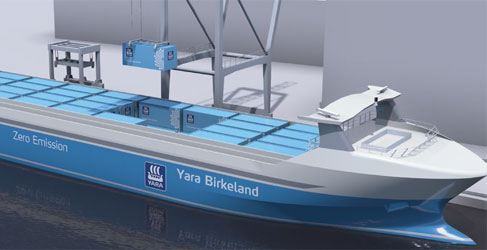
The world’s first crewless cargo ship will be delivered in 2018 under the name and fame of Yara Birkeland and the operations is assumed to commence in 2020. These Unmanned Ships are also referred to as “Unmanned Sea Surface Crafts” and these vessels are either remote controlled by shore- based controllers/officers, or controlled completely by complex algorithms with no human existence or a combination of the above mentioned two. The challenges that will be faced by these are guidelines and legal regulations to be followed in case of any violations, or maritime incidents involving any damage to the vessel, the cargo, human life, environment and property. The existing legal framework is that of the UNCLOS82 regulations by the International Maritime Organization. The present legal system and maritime regulations are designed for manned vessels so this will make it a difficult task for the legislators and jurists to decide upon the best and effective legal resolution in case of a violation or dispute. Therefore many countries are already considering amendments or integrations in the existing regulations and also drafting of fresh shipping guidelines and laws.
Digitalization has brought in many challenges as well as opportunities. According to the IMO over 90% of the world’s trade is carried out by sea as this is the most cost-effective way to move goods and raw materials across the world. One of the important factors is that it reduces cost and increases efficiency. The data inputs and interconnected technologies are emerging to create a revolution in the maritime industry. Systems like Radio Frequency Identification System (RFID) are used to track the movement of the vehicles cargo and people, and ensure timely delivery of cargo. GPS navigation system, automated electronic data exchange from ship to ship and ship to shore increases the efficiency, safety and accuracy in navigation and communications.
There are many challenges to overcome, and one of them is that of marine liability. The Question of liability is considered to be more complex as the vessel travel through different national waters and of different jurisdictions. The insurance industry will also face similar challenges in resolving disputes and also the difficulty to analyze the resources to risk management as well as to understand loss occurred. Thus, it becomes a necessity to ensure maximum data security for preventing a risk or loss. Cyber attacks on unmanned ships also can be problematic as container vessels reliant on digital navigation systems could be potentially manipulated and a small failure in a system can result in dangerous consequences in an interconnected digital environment. The networking of vessels and ports is an enormous opportunity for shipping. This also helps in reducing the ongoing over capacity paired with a relatively soft global demand, and the existing pressure on the rates and profit margins of the industry.

Understanding an Arbitration process, and its Scope in Singapore

Singapore is today one of the most illustrious and renowned seats of Arbitration because of the well-developed infrastructure, modern national legislation, and a strong position as a financial and commercial centre in Asia. Singapore has a wide spectrum of efficient arbitrators from across the globe ranging from seasonal dispute resolution generalists to highly specialized practitioners and expertise covering the entire legal and technical area of intellectual property. The Courts of Singapore is famous for its integrity, cost-efficiency, neutrality, competency and impartiality and also offer a high level of support for arbitration with minimum intervention. Moreover Singapore has many renowned local and overseas law firms and professionals who expertise in arbitration.

The obsequious nature of the people of Singapore towards the legal system is a notable factor. Singapore also welcomes foreign arbitrators and allows them to arbitrate in Singapore without a work permit and without withholding tax. According to the Singapore laws only a Singapore qualified lawyer from Singapore law practice can appear before the High Court for International arbitration related matters even though the original contract which was the subject matter of the arbitration may have been governed by a foreign law. Singapore also ensures that the arbitration legislation is kept responsive to the global legal and commercial developments. A recent study shows that Singapore is challenging the established centres of arbitration like London, Paris and Stockholm. Another factor that favours Singapore is its geographically convenient location and this makes it a neutral venue for parties from different parts of the globe.

The United Nations Commission on International Trade Law (UNCITRAL) the Model Law recognizes the incorporation and the enforcement of the arbitral award provisions by giving effect to the New York Convention of 1958 within its ambit. As Singapore is a signatory to the 1958 New York Convention, the Arbitral awards issued in Singapore are enforceable in over 150 UN Member states, and also in certain Commonwealth jurisdictions under the Reciprocal Enforcement of Commonwealth Judgement Act. The Awards are final and binding in nature and have no right of an appeal. In fact if parties to an arbitration can appeal it defeats the sole purpose or “raison d’etre” of arbitration.

UNDERSTANDING AN ARBITRATION PROCESS, AND ITS SCOPE IN SINGAPORE

Arbitration is an alternative dispute resolution process, in which the parties to a contract, present the arguments and evidence to an independent and neutral third party known as the “arbitrator” who is appointed by mutual consent or a statutory provision. This arbitrator who acts as a judge makes a determination named as an “award” which is legally enforceable and binding on both the parties.
The arbitration process is similar to going to courts, but is distinct in various forms of other non-binding dispute resolutions like mediation and conciliation. Arbitration is the best alternative to court-based litigation and it is more expedient, neutral, efficient, enforceable and confidential. The next question that arises in one’s mind is, “Which laws will be applicable here?” Well, usually the arbitration agreements seldom make any provisions for the governing law of the arbitration agreements. In International arbitration what needs to be perused are a number of factors like, the laws that govern the contract, the arbitration agreement, the arbitration procedure or the legal seat of arbitration and the law of the States where the award will stand enforceable.
The arbitration agreement is a contract in its own right, and is separable from the substantive contract entered into by the parties .This depicts the doctrine of separability which means that the arbitration agreement can be governed by a different law than that of the governing law of the substantive contract. It is always advisable to incorporate a governing law clause in the arbitration agreement to obviate in future, and in case if it’s not specified in the agreement, then the guidelines laid down by the Court of Appeal in the English courts are referred to. Arbitration is preferred to litigation because the parties can select neutrals of appropriate nationality and choose the applicable law, language, venue and the Seat of arbitration.

Seat of Arbitration:

The seat of arbitration is also known as “the place” of arbitration or “the locale” and plays a significant role in arbitration as it determines the governing procedural law of the arbitration and the enforceability of the award. It is the legal jurisdiction to which the arbitration is tied and will determine the procedure or rules which govern the arbitration and also makes the mandatory national laws of that country applicable. The canonical model for arbitration is based on “lex arbitri” which means ‘the law of arbitration’ and this varies from country to country. It also contains provisions that regulate the internal and external elements like the composition and appointment of the tribunal, requirements for the arbitral procedure and due process, the enforceability of award, the neutral nature, and many more.
The Geneva Protocol on Arbitration Clauses 1923 exemplifies an early perception that the law applicable to the arbitration should be that of the arbitral seat, and the arbitral procedure including the constitution of the arbitral tribunal shall be governed by the will of the parties and the law of the country in whose territory the arbitration takes place. The basic approach of the Model law is that the law applicable to each arbitration (the lex arbitri) will be the law of the place where the arbitration takes place (the lex loci arbitri) and the selection of the “Seat” of arbitration ordinarily results in the arbitration being conducted in accordance with the jurisdictions legal framework, with such derogations or variation as may be permitted. So if Singapore is selected as the “seat” of arbitration, it mandatorily and automatically adopts the Singapore Arbitration Act or the International Arbitration Act. The place of arbitration is different from the physical venue of arbitration which is the place where the arbitral tribunal carries on the hearing witnesses, experts or the parties. Traditionally the most popular seats of arbitration were London, Paris, New York and Geneva, where the oldest arbitral institutions are based, but the latest surveys shows Singapore growing to be one of the most popular preferences.
The International Arbitration Survey, conducted yearly by the School of International Arbitration since 2006 has depicted improvements and innovations in International Arbitration practices and trends worldwide. It has Ranked Singapore as the fourth most preferred and widely used seat in the 2015 International Arbitration survey, making Singapore a leading venue for international Arbitration. Asia has seen a significant growth in Arbitration due to the global economic evolvements making the two financial centres of Asia, Singapore and Hong Kong major seats in that region.

VALUE ADDED TAX TO BE IMPLEMENTED FROM JANUARY 2018

1st January 2018 will witness the implementation of Value Added Tax (VAT) law in UAE which was a topic of discussion within the companies and individuals since last one year. The implementation of VAT will provide a new source of income to the UAE Government which they will be contributing to improve the services to public. The VAT shall be made applicable on all the import and / or supply of goods and / or services at every stage of production, distribution, at a rate equal to or less than 5%.
As per the VAT law, published by the government, the VAT will not be charged on the following categories:

1. Exports of Goods and Services to outside GCC;
2. International Transportation, and related supplies;
3. Supplies of certain sea, air and land means of transportation (such as aircrafts and ships);
4. Newly constructed residential properties, that are supplied for the first time within 3 years of their construction;

IMPACT OF VAT ON DIFFERENT SECTORS:

1. EDUCATION:
No VAT shall be imposed on the Private and Public School education (excluding higher education) and related goods and services provided by such educational institutions, higher education provided by any institution owned by Government and / or 50% funded by government; after school activities supplied by the teachers and school trips where is the actual purpose is educational and within the curriculum. All the above mentioned categories are exempted from VAT.
However, the education provided by private higher educational institutions, School uniforms, related stationeries, electronic equipments like tablets, laptops etc; school trips of recreation and not within the curriculum shall impose VAT at the rate of 5%.

2. MEDICAL & HEALTHCARE
Though basic healthcare and related services including but not limited to Dental Services, Vaccinations etc will not attract VAT, the medical insurance products like Medicines, Medical equipments will not be exempted. Hence the VAT shall be payable on annual premiums.

3. TRANSPORTATION:
Although VAT will be added to the price of petrol, the supply of local passenger transport, such as taxis, buses and the metro will be zero-rated, and consumers will not be affected. International transport, whether by air, sea or road, will also be free of VAT, though with the cost of the supply of these services set to increase in many circumstances, this will no doubt be passed on to the consumer in the way of price increases.

4. TELECOMMUNICATION :
The VAT shall also be made applicable to the telecom service providers in UAE. Starting from January 2018, most of the telecom services shall be subject to 5% VAT in compliance with the Federal laws and regulations.
With the introduction of VAT from January 2018 and the imposition of Excise tax from October, 2017, the Country is considering to impose new taxes in the future in order to increase its revenue and thereby making them less dependent on the revenue from the production and export of Crude Oil, which played a huge role in increasing the Government revenue.

MARITIME ARBITRATION: A Global Analysis


The arbitration process in the Middle East is developing in a way which is quite promising. The Middle East region is reasonably well-equipped with arbitration facilities. There are a number of significant regional arbitration centres – for example, Dubai International Arbitration Centre (DIAC); DIFC/LCIA situated in the Dubai International Financial Centre; the Abu Dhabi Commercial Conciliation and Arbitration Centre (ADCCAC); Qatar International Court and Dispute Resolution Centre (QICDRC); and the Bahrain Chamber for Dispute Resolution/American Arbitration Association (BCDR-AAA). However, the judicial intervention and uncertainty in the enforceability of arbitral award is a matter of great concern. It has been noticed that the judiciary in the Middle East has not achieved the same standards of excellence in arbitration as others in more favourable jurisdictions. There have been instances where the lawyers conducting arbitration were subjected to prosecution for unfavourable outcomes. As a consequence, they were sometimes declining appointments and even resigning from ongoing cases as they were unhappy about the risks they were running. Under DIAC Rules, there was no appeal process. Further, as awards had to be signed within Dubai itself, this sometimes meant arbitrators having to fly in and out solely for this purpose.

India has huge potential to develop maritime arbitration but it would be a long and difficult ride before it is fully achieved. There have been significant improvements in recent years in India’s provision for structured arbitration. It was noticed that a properly functioning arbitration system was necessary if the country was to attract more trade and investment. The Indian Arbitration and Conciliation Act, amended in 2015, had introduced changes in respect of interim relief, public policy considerations, High Court involvement in arbitration and 12-month time limits to determine awards. This was aimed at countering concerns that arbitral awards in India were taking too long. However, the 12 months could be extended by agreement between the parties. The whole package has been improved. The Mumbai International Arbitration Centre’s Rules were approved in June 2016 and the Centre opened for business in October. The aim was to establish a cost effective and transparent process, focusing on procedures for multi-party and multi-contract cases, expedited arbitration and the scrutiny of awards.

China is a relatively young player in the international shipping arbitration scene. The Maritime Arbitration Commission (MAC) is the predecessor of the present China Maritime Arbitration Centre (CMAC). It seems that the MAC was more experienced than that the maritime courts in China in terms of handling maritime disputes. Also, maritime disputes in China are predominantly settled by conciliation and mediation. The attitude of the maritime court towards this organization is somewhat hostile exemplifying unfriendliness and competition. CMAC had revised its Rules in late 2014. The new CMAC Rules came into effect on 1 January 2015. CMAC’s Revised Rules allows an arbitrator much freedom in choosing the appropriate procedure. It also stresses that the parties are to be given reasonable opportunity to make submissions and arguments.

International arbitration is on the rise in all these regions, generating an increasing interest in the practice. Thus, there is an increasing trend towards convergence of arbitral institutional rules and rise in the number of arbitral seats where parties can expect a modern and pro-arbitration approach from the judiciary.

Maritime Arbitration: A Global Analysis

Maritime arbitration is being increasingly preferred as an alternative method of dispute resolution by the stakeholders in the maritime industry. Major maritime countries in the world have been upgrading their legal system with much emphasis on arbitration with the intention to project their country as an arbitration friendly forum. The contracting parties while deciding on the forum for arbitration basically seeks to resort to jurisdictions which provide for cost effective and speedier adjudicating procedure with finality of arbitration award, ensuring certainty in results.
London continues to dominate the maritime arbitration scene. It has been noticed that the London Maritime Arbitrators Association stood head and shoulders above all other dispute resolution centres. One of the advantage of the arbitration in England is that unlike other jurisdictions, the English courts usually allow you to raise questions on a point of law. This right of appeal can in a way prove advantageous to the parties.  The full implications of Brexit for arbitration in the UK are being closely monitored by the industry, but it does not appear to have had any immediate impact. For a number of reasons, London remains a very attractive venue for parties to choose as a seat for arbitration. Apart from London, Paris and Geneva are also much sought after arbitration jurisdictions.
Commercial arbitration in the United States originated in New York which has a long and rich history of supporting maritime arbitration and continues to be a leading maritime and commercial arbitration centre. Party autonomy is the hallmark of New York maritime arbitration. The parties are free to determine most procedural rules, and to select arbitrators (or the method of their selection) and the law to be applied. The arbitration awards are final and not subject to appeal save on narrow, largely procedural, grounds. A great majority of maritime arbitrations in New York are conducted under SMA (Society of Maritime Arbitrators) rules. Awards are enforceable in any country which is a signatory to the New York Convention on the Recognition and Enforcement of Foreign Arbitral awards and the Inter-American Convention on International Commercial Arbitration. Maritime awards in New York are usually final and binding. There are very few specific grounds under which an award can be vacated, and these are confined to the fairness of the arbitration procedure. A mistake in law or fact is generally not a ground for vacating an award. Motions to vacate, modify or correct must be made within three months of the date of the award.
Singapore is gaining global footprint in respect of maritime arbitration. Its established record of neutrality has contributed to its development. The courts in Singapore have offered maximum judicial support to arbitration and minimum intervention. The Singapore International Arbitration Centre (SIAC) stands out above the other regional arbitration centres. The country boasts a state of the art, integrated dispute resolution centre that houses first class hearing facilities and offices of top ADR institutes and dispute resolution professionals. Furthermore, Singapore has a judiciary that supports arbitration and there is a constant re-examination of legislation to ensure arbitration-friendly laws and processes are in place to promote and support arbitration. According to the International Chamber of Commerce (ICC) 2015 Report, Singapore has consistently been ranked as the number one preferred seat for arbitration in Asia and among the top five preferred seats globally. The International Arbitration Act and the Arbitration Act only set the framework governing arbitrations in Singapore. Consequently, the provisions are generally not mandatory insofar as parties are free to agree on the specific rules and procedures that bind them. This is in line with the fundamental principle of party autonomy in arbitration proceedings. However, the provisions relating to the enforcement, setting aside and/or appeal of the arbitral award are mandatory. The main arbitration organisations in Singapore are the Singapore International Arbitration Centre (SIAC), International Chamber of Commerce (ICC) and the Singapore Chamber of Maritime Arbitration (SCMA).The Singapore government has built an impressive infrastructure to support international arbitration in Singapore and has actively been behind efforts to promote Singapore as the obvious and best choice for arbitration in the region.

New Sulfur Emission Norms A Boon Or Curse?

International Maritime Organization’s ship pollution rules are contained in the “International Convention on the Prevention of Pollution from Ships”, known as MARPOL 73/78. On 27 September 1997, the MARPOL Convention has been amended by the “1997 Protocol” which includes Annex VI titled “Regulations for the Prevention of Air Pollution from Ships”. MARPOL Annex VI sets limits on NOx and SOx emissions from ship exhausts and prohibits deliberate emissions of ozone depleting substances.


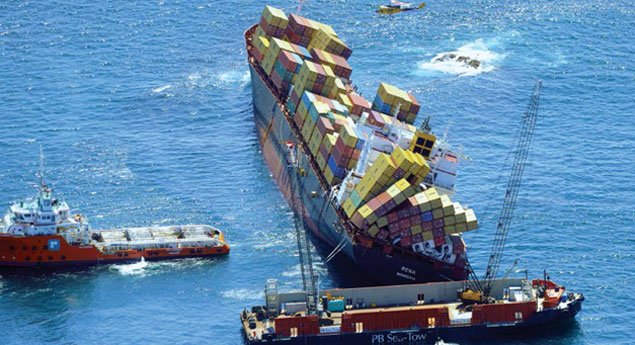
IMO has stipulated new cap on the sulfur emission (Sox), which is now reduced to 0.5 % from 3.5%,and which is to be enforced by 2020 by all signatories making respective jurisdiction its responsibly for its compliance. Its Compliance with the provisions of Annex VI is determined by periodic inspections and surveys. Upon passing the surveys, the ship is issued an “International Air Pollution Prevention Certificate”, which is valid for up to 5 years.

It is important to note that under the “NOx Technical Code”, the ship operator (not the engine manufacturer) is responsible for its compliance, While it cannot be denied that this emission cap is essential to reduce the air pollution and for safe and clean environment as envisaged under MARPOL, there are certain repercussions, which cannot be ignored as a result of bringing this regulation.

These standards will be implemented on the world merchant fleet of approx 90,000 ships, which in turn will affect the entities associated with it viz. insurance, classification societies etc. Non-compliance with these regulations may lead to suspension of class, which in turn will affect their Insurance cover. Classification societies or class are non-governmental organizations doing periodical inspections, and have the standards for the construction and operation of ships as per the guidelines provided by IMO. The ships have to be class approved in order to get an insurance cover and therefore the retrofitting and upgrading of engines will be important to meet the specified standards.

For any type of insurance, be it P&I or Hull and Machinery, Ships cannot be in breach of regulations for the insurance cover and moreover companies are going to be reluctant in settling claims for ships which are not even eligible for sailing in the post 2020 emissions regime.

The sulfur emissions do not come under the insurance norms but changes made in engines to reduce the sulfur content can lead to damage to the insured H&M. Although at this stage, it is difficult to quantify the insurance-related impact of the new sulfur emission regulations, but can no doubt be a pinch to the insurers, if the claims are of high value. It is highly likely that the technology for reducing the sulfur content will be costly and older ships would be recycled or scrapped, paving the way for a new fleet making it another factor to be considered.

Keeping the above consequences in mind, the insurance industry is already grappling with lower revenues as the insured value of the ships is going down, in part due to a supply overhang. Also the fact that new clubs/companies are entering the insurance industry is also impacting the margins of some of the existing insurance players.

Also surplus supply of ships has already dragged down freight rates, reducing the ability of ship owners to take insurance covers consequently insurance premiums have declined eroding the earnings of underwriters thus under the circumstances can it be implied that new norms are creating a “perfect storm” like situation, as costs for ship-owner is rising among others expenses and risks, along with expenses associated with training and familiarization of crew for handling cleaner marine fuels? The question remains to be answered.


Perception v/s Reality

Rahat Talreja – Vice President – CSS India

You must have been accused of being a Robber (as in: You robbed me) or Lootera (as in: you looted me) or Fleecer (as in: You fleeced me) or Thieves / Thugs (as in : they thugged us or in Hindi: chor hai yeh log)

More so if you are in the business of airline, malls, multiplex, logistics, high end restaurant, airport shops and cafe’s etc. Let me elaborate.

Airlines

Perception:
Every peak season like Diwali, Christmas etc., you see articles in newspapers on how airlines are “looting” passengers with exorbitant sky high fares. Bombay to Delhi ticket at 25000 which normally is 2500.
Then same night, you put on the TV and the TV as always is broken into 6 frames – 5 guests/panellists and 1 host journalist – all arguing on : Are airlines right in looting innocent passengers with sky high fares?
What is the regulator doing? DGCA? Airlines Ministry on this loot? NGO view, political party view, customers view all are unanimous: They are looting.
Just 1 person would be representing the airlines who would also 75% agree to it that they are looting.
This is perception.

Reality:
Open the balance sheet, profit and loss account, sales / purchase registers, cost matrix of the airline.
95% of the time, every year, they fly passengers: Below cost.
Reason: no pricing power and uncontrolled competition.
95% time they lose money on every ticket.
5% time – they have some opportunity to cover up due to demand supply matrix
Yet, they guzzle the capital invested, have poor balance sheets, and have losses on operations.
In India, all airline promoters are billionaires starting from Govt of India run Air India to Tata’s Vistara to Naresh Goyal’s Jet airways to the 5 star ex. airline Kingfishers billionaire promoter Vijay Mallya to the Wadia’s Go air
Because to become a millionaire, you start as a billionaire. After the so called “loot”
This is reality.

Multiplex and Malls

Perception:
How can they ask 400 bucks for a popcorn,
200 bucks for corn and 600 bucks to see this useless movie which is like semi porn (remember I am a poet at heart)
150 bucks for the parking? 100 bucks for a bottle of water?
On TV, the argument goes again: where is the regulator? Why allow them to fleece customers?
Hushed comments: these guys make HUGE money

Reality:
Most malls shut down eventually. Most multiplex chains get sold or shut down. In India, it’s almost a monopoly with PVR. Space for none but one. But are they making that kind of money you think? The answer is: read their finances, that’s the truth and you will realise how the real estate and municipal taxes are what you pay for and not the popcorn, water, wafers etc.
And we are not even bringing in parameters like return on investment which are prime to businesses.

Logistics

Perception:
Your rates are very high
Your THC is high
No one is charging VGM
Your destination charges are high
Then, it gets more personal
You guys are looting
You are like thugs
Don’t take advantage
You guys are making huge money from us

Reality:
(applicable to most except the few top companies in the listed space)
No logistics company promoter lives on the expensive Mumbai Island City / South Mumbai, all live in the suburbs and farther than that. That itself is a sign of the high charges and loot.
None is in the millionaire list
Most are highly leveraged
Most started from scratch and are still scratching something to remain in business
Negative freight & Rebate are words and concepts holier than God himself for them
Most are poor enough to see travelling to a foreign country and sometimes by business class as a sign of “I have arrived“
A lot many “buy THAT car or THAT phone” and think they have arrived and many such poor think tales.
So the real money always eludes the glamorous businesses.

The Improvements In Salvage Law: Is The 1989 Salvage Convention Environmentally Dynamic?


The preamble of the 1989 salvage convention begins by elucidating recognition of increased concern for protecting the environment and the need to create a regime to incentivize salvage operations that incorporate environmental considerations. The convention enumerates duties and responsibilities owed by the salvage parties to the environment, but it is principally in two provisions, Article 13 and Article 14 that the regime to incentivize the undertaking of salvage operations for environmental protection purposes is found.

Article 13 provides that the salvage award shall be fixed with a view to encouraging salvage operations, taking into account the following criteria “without regard to the order in which they are presented below…” (b) the skill and efforts of the salvors in preventing or minimizing damage to the environment;

Article 14 provides for a form of special compensation for salvage efforts where there is a threat of damage to the environment in order to address the irreconcilability of the principle of no cure, no pay with incentivizing environmentally motivated salvage operations.

Though these articles were enacted to provide a responsive regime to incentivize environmentally motivated salvage operations, the force of the provisions is weak. A salvage reward under Article 13(b) is will always be qualified by provision 13(3) of the Convention, “The rewards, exclusive of any interest and recoverable legal costs that may be payable thereon, shall not exceed the salved value of the vessel and other property.” Environmental threats can have devastating consequences to a region. A large oil spill for example has the potential to significantly damage marine habitats, biodiversity, and local livelihoods. By limiting a salvage reward in this manner, no matter how devastating the environmental impact of a damaged ship may be, the salvage crew must engage in a balancing exercise to determine if it is profitable. Notably, this limitation was recognized by the International Salvage Union at the 2011 Comité Maritime International (CMI) colloquium; “…all too often the tribunal is unable to give full effect to this provision because of the low value of the salved property.”


Article 14 allows for special compensation claims as an exception to the general no cure no pay principle of salvage law. One of the most significant issues with Article 14 is that the ambiguous wording has created legal uncertainty for when the provision applies as there must be a ‘threat of damage to the environment’. The meaning of the phrase ‘threat of damage to the environment’ is unclear and requires significant interpretation. To give effect to the phrase, a decision maker must consider what constitutes a threat, whether the threat must be real or may be a reasonably perceived threat, what is the meaning of coastal waters found in the definition of damage to the environment, how is the word substantial as found in the definition to be defined, and how substantial must the threat be.

Joy Thattil

Maritime Lawyer & Partner @ Callidus Corporate & Maritime Consulting ( CCMC) Dubai & India

joy@calliduscmc.com

Enforcement of DIFC Judgment in Ras Al Khaimah Courts

On 12 December, 2016 a Memorandum of Understanding was signed between the Dubai International Financial Centre (hereinafter referred as “DIFC”) and Ras Al Khaimah (hereinafter referred to as “RAK”) Free Trade Zone Authority, RAK Investment Authority and RAK International Corporate Centre to enhance the efficient enforcement of the Judgment and / or Orders pronounced by the DIFC Courts.
Enforcement of DIFC Judgment in RAK Courts
Ras Al Khaimah aka RAK is one of the seven Emirates in United Arab Emirates. It is also one of the three Emirates which has their own Court System. The jurisdiction of these courts is set out in the UAE Constitution and the UAE Civil Procedure Law. Further, RAK Court has an independent legal system like the Dubai Courts and the entire proceedings in the Court including the documents to be submitted the Court are to be in Arabic Language.

The DIFC Courts are established under the Dubai Law No. 9 of 2004 and is an independent Common Law Judiciary based in the Dubai International Financial Centre with jurisdiction governing civil and commercial disputes. Further, unlike the other courts in the UAE, the language used in the proceedings of DIFC Courts is in English.

With the signing of this MoU, the companies that comes under the authority of RAK, can have the disputes resolved by the DIFC Courts and can enforce the English Judgment issued by the DIFC Courts through RAK Courts. However, in order to enable this provision the Agreement entered into by the parties shall explicitly contain the clause for DIFC Jurisdiction. All the RAK Government bodies, companies, Investors and individuals shall utilise this provision in their Agreements.

Registration of Will
Previously in May 2016, the Dubai Government had framed a new rule allowing all Non Muslim expatriates to register their Will in Dubai. In order to provide these services, the Government has even formed the Will and Probate Registry, a public entity of the Dubai Governement and an ancillary body of the DIFC’s Dispute Resolution Authority (DRA). This rule had been designed to protect the assets in Dubai.

However, pursuant to the new MoU signed between DIFC and RAK authorities, the above facility has been extended to those who have assets in RAK. The party who has asset in RAK can share the details with the DIFC Wills and Probate Registry about their shares, they own in any company or partnership firms in the Emirate of Ras Al Khaimah. They can also attach the business licences also to the Registered Will.

The DIFC Wills and Probate registry may share these information pertaining to the business licences and / or property with the RAK authorities like RAK Free Zone Authority, RAK Investment Authority, and RAK International Corporate Centre. Since, only the DIFC Courts have the exclusive jurisdiction over estates and succession for Wills which have been registered with DIFC Wills and Probate Registry, if the Testator passes away, the appointed executor may approach the DIFC Court for a Probate Court Order appointing him as the executor and allowing him to execute the Will, administer the estate and distribute assets to the beneficiaries. The probate order thus issued by the Court shall contain the powers and duties of the executor in relation to the deceased’s succession.

Further in order to carry out the execution of the Will, the executor shall present the “Execution writ” by the DIFC Courts to the Ras Al Khaimah Courts. The authorities as mentioned in the above paragraphs shall execute the Will without any delay on accordance with the applicable laws of RAK. However, there shall be applicable fees to be paid in this regard.

Conclusion:
Sheikh Saud Bin Saqr Al Qasimi, the ruler of the RAK Emirate, while signing the MoU has stated that “We understand that we live today in a World where not everybody speaks Arabic Language. We are proud of our language, but we are human beings. ……What we want to do is allow businesses, people who live here, to feel comfortable that they can speak as well in English”. Sooner or later the words of Sheikh Saud Bin Sagr Al Qasimi would come true since the three above mentioned Authorities are there to support the transformation and improving the business environment and thereby attracting foreign investors and business entities to Ras Al Khaimah.

Two Tier Arbitration Clause is valid – Supreme Court of India

joyIn the recent Appeal filed by M/s Hindustan Copper Limited against M/s Centrotrade Minerals and Metals Inc., the Honourable Three Judge Bench of the Supreme Court of India held that “the Arbitration Clause in the Agreement between the parties does not violate the fundamental or public policy of India by the parties agreeing to the Second Instance Arbitration”.

The brief fact of the case is that M/s Centrotrade Minerals and Metal Inc and M/s Hindustan Copper Limited entered into a sale Agreement wherein 15,500 DMT of Copper Concentrate was to be delivered at Kandla Port, Gujarat as two consignments. Though the consignments were delivered and payments were made, a dispute arose between the parties later and M/s Centotrade invoked the Arbitration Clause in the Agreement.

The Clause 14 under the heading “Arbitration” in the Contract between the parties is as follows:

“All disputes or differences whatsoever arising between the parties out of, or relating to, the construction, meaning and operation or effect of the contract or the breach thereof shall be settled by arbitration in India through the Arbitration panel of the Indian Council of Arbitration in accordance with the Rules of Arbitration of the Indian Council of Arbitration.

If either party is in disagreement with the Arbitration result in India, either party will have the right to appeal to a second arbitration in London, UK in accordance with the Rules of the Conciliation and Arbitration of the International Chamber of Commerce in effect on the date hereof and the result of this Second arbitration will be binding on both the parties.

Judgment upon the Award may be entered in any court in Jurisdiction”.

By an Award dated 15 June, 1999, the claim of M/s Centrotrade was dismissed by the Indian Arbitrator and a Nil Award was passed. Hence, M/s Centrotrade invoked the second part of the Arbitration Clause and thereupon an Award was made by the London Arbitrator upholding the claim of Centrotrade.

Further, M/s Centrotrade filed an application for the enforcement of the London Arbitration Award and the said application was allowed by the Calcutta High Court by an order dated 10 March 2004.

Aggrieved by this Order, M/s Hindustan Copper Limited, filed an Appeal before the Calcutta High Court, (AIR 2005 Cal 133) the Honourable Court allowed the said appeal and the impugned order was set aside. It was stated that the London arbitration Award was declared inexecutable so long as the Indian Nil Award stands.

While considering the Appeal, Hon. Supreme Court opined in Para 27, that “a combined reading of Subsection (1) of Section 34 of the Arbitration and Conciliation Act and Section 35 thereof, an Arbitral Award would be final and binding on the parties unless it is set aside by a competent court on an application made by a party to the Arbitral Award. This does not exclude the autonomy of the parties to an arbitral award to mutually agree to a procedure whereby the arbitral award might be reconsidered by another arbitrator or panel of arbitrator by way of an appeal and the result of that appeal is accepted by the parties to be final and binding subject to a challenge provided for by the Arbitration and Conciliation Act. This is precisely what the parties have in fact agreed upon and that the Court see no difficulty in honouring their mutual decision and accepting the validity of their Agreement”.

This Judgment can be marked as a landmark Judgment wherein the Hon. Supreme Court has accepted the Two Tier Arbitration as agreed by the Parties to the Contract and hopefully, this can be a turning point to the international community.

Page1 Page2

CSS Newsletter

In this issue:

Quick Links

  • Home
  • About
  • Services
  • News Media
  • Careers
  • Contact us
  • Corporate Brochure
  • CSS Corporate PPT
  • Lighthouse
  • News Hub
  • Privacy Policy
  • Cookie Policy
  • Disclaimer
  • T&C’s

Locations

  • Dubai
  • Abu Dhabi
  • Sharjah
  • Ras Al Khaimah
  • Bahrain
  • Oman
  • Qatar
  • Saudi Arabia
  • Kuwait
  • Kenya
  • Turkey
  • India

Subscribe to our bi-monthly newsletter, Lighthouse

  • Follow Us
© 2026 CSS Group. All rights reserved. Crafted with by Netventure