Skip to content

Lighthouse

Bi-monthly publication of CSS Group

Lighthouse
  • Call +971 4 8872333
  • Mail info@cssdubai.com
  • Menu
    • Home
    • About
    • Services
      • Global Freight forwarding
      • Ocean Freight Management
      • Supply Chain Management
      • Land Transportation Management
      • Industrial Packing, Crating & Lashing
      • Air Freight Management
      • Projects Oil & Energy
      • Exhibition Event Logistics
      • Automobile Logistics
      • Art Logistics
      • Non Vessel Operating Common Carrier (NVOCC)
      • Hospitality & Hotel Logistics
      • Multi-modal Operations
      • Container Freight Station (CFS)
      • Yacht & Marine Logistics
      • E-commerce Fulfillment
    • Locations
      • Dubai
      • Abu Dhabi
      • Sharjah
      • Ras Al Khaimah
      • Bahrain
      • Oman
      • Qatar
      • Saudi Arabia
      • India
      • Sri Lanka
    • Careers
    • Track & Trace
    • Login
      • Customer / Agent
      • Employee – Portal
      • Employee – Dashboard
      • CSS India Login
    • More+
      • Lighthouse
      • Media Hub
      • Feedback
    • Contact Us
  • Login
    • Customer / Agent
    • Employee – Portal
    • Employee – Dashboard
    • CSS India Login
  • TRACK & TRACE
  • NOTICES
  • LIGHTHOUSE
Lighthouse
  • Call +971 4 8872333
  • Mail info@cssdubai.com
  • Menu
    • Home
    • About
    • Services
      • Global Freight forwarding
      • Ocean Freight Management
      • Supply Chain Management
      • Land Transportation Management
      • Industrial Packing, Crating & Lashing
      • Air Freight Management
      • Projects Oil & Energy
      • Exhibition Event Logistics
      • Automobile Logistics
      • Art Logistics
      • Non Vessel Operating Common Carrier (NVOCC)
      • Hospitality & Hotel Logistics
      • Multi-modal Operations
      • Container Freight Station (CFS)
      • Yacht & Marine Logistics
      • E-commerce Fulfillment
    • Locations
      • Dubai
      • Abu Dhabi
      • Sharjah
      • Ras Al Khaimah
      • Bahrain
      • Oman
      • Qatar
      • Saudi Arabia
      • India
      • Sri Lanka
    • Careers
    • Track & Trace
    • Login
      • Customer / Agent
      • Employee – Portal
      • Employee – Dashboard
      • CSS India Login
    • More+
      • Lighthouse
      • Media Hub
      • Feedback
    • Contact Us
  • Login
    • Customer / Agent
    • Employee – Portal
    • Employee – Dashboard
    • CSS India Login
  • TRACK & TRACE
  • NOTICES
  • LIGHTHOUSE

Reduction in The Movement Of Empty Container Will Cut Down Co2 Emissions: Research Says
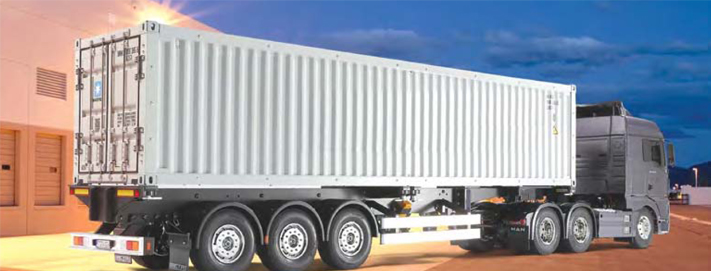
A research conducted by the Spain based Intermodal firm, Connectainer Intermodal Solutions, reveals that adoption of efficient means to put the empty shipping containers into effective use and thereby limiting their movement around the globe could significantly lower CO2 and other green-house gas emissions. Reports shows that about 21 percent of all containers moved per year are empty, and that the percentage stays fairly constant, so that as the total number of containers shipped each year increases, so does the number of empties.

Experts argue that if we calculate the CO2 emissions of a 40-foot empty unit repositioned from Algeciras, Spain to Shanghai, China, the result is around 328 kg per container in only one leg. In addition, normal movement within a port generates about 6 kg of CO2 per TEU (20-foot equivalent unit). And then here are these millions of units of containers that are moving across the globe generating huge quantities of CO2 on an annual basis. Thus there is an urgent need to find a solution to reduce the volume of empty containers that are being moved around the world.

Shipping companies are not unaware that moving empty containers represents a significant cost, and terminals can also be affected. In 2014, for example, both Manila’s main container terminals suffered serious overcrowding of empty containers as the traffic congestion caused by the City of Manila’s short-lived ‘truck ban’ made shippers unwilling to use the limited time they could access the port to move empty containers.

Shipping companies, who have experienced this situation for many years, have adopted appropriate measures to minimize the impact this situation causes them by optimizing the way of repositioning empty equipment to areas where more containers are needed at the least possible cost. But shipping is not ruled by a mathematical algorithm. Sometimes the planned operation has to be adjusted due to external factors, or sometimes even due to an unexpected market change, thereby bidding farewell to cost optimization.Experts suggests that simply working to reduce movements rather than optimizing costs would lead to more flexible repositioning management, as well as making a serious impact on reducing greenhouse gases. Even a small reduction in container movements would make a difference, given the huge number of containers being moved each year—in 2014, more than 560 million.

With better optimization of empty repositioning, which can be managed through improved real-time tracking systems being developed, both costs and emissions could be significantly lowered. If main shipping actors could reduce empty movements by 30 percent, there would be a saving of 145.8 million kg of CO2 per year.
The Impact Of Brexit On Shipping

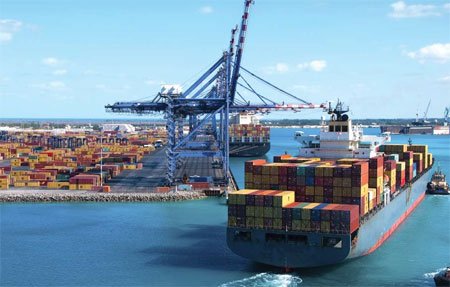
A much talked about topic these days is the exit of Britain from the European Union (EU). The European Union is made up of 28 member states and on June 23rd 2016, the people of Britain voted for the exit of Britain (also referred as “BREXIT”) from the European Union, after being with EU for almost 43 years.Since the finality of the process of exiting the EU, will take about 2 year; this is the perfect time for individuals and companies engaged in the shipping industry to have a better understanding of the “Impact of BREXIT”.
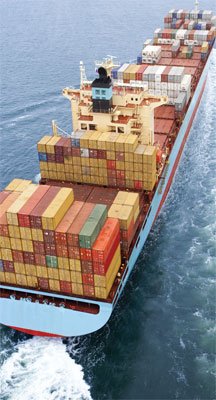
A number of major hubs of the shipping industry lie within the European Union, namely Rotterdam, Hamburg, Antwerp, and Piraeus; the world’s largest Container / Passenger Ports. As aforesaid the European Union consisted of 43 member states and these member states were exempted from taxes or duty while trading with the member states that are within the European Economic Area.. However, with the exit of Britain from the European Union, it is not clear, whether these trade exemptions would still be applicable with regard to the UK.

Further, the Contracts / Agreements have already been entered into by the Companies in the UK, with Companies in the European Union may now have to be amended. . For example, Shipping Contracts, that allow for trading within certain geographical areas in the EU, should now specifically define, if this area in the EU includes, the UK or not. Since the Contracts/Agreements are binding on the parties to it, there is a need to be vigilant while amending these Contracts/Agreements so as to avoid any confusion or ambiguity that would arise in the future.

In the past, when disputes arose, and the concerned parties approached the Courts, they were prohibited from conducting parallel proceedings in the Courts of more than one European Union member state. This rule was applicable to proceedings that were initiated on the same issue concerning the dispute. This is based on the legal principle of “Res Sub-judice”, which in Latin means ‘under judgment’. It denotes that a matter or case is being considered by court or judge; when two or more cases are filed between the same parties on the same subject matter, the competent court has power to stay proceeding. However, with the exit of Britain from the European Union, it is not clear, whether Britain would elect to apply the Res Sub-judice rule to the parties, with regard to disputes both within and outside the European Union In order to avoid any such ambiguity in the future, it is advisable to have a clear mention of the Jurisdiction Clause, in all legal documents.

Conclusion:

As stated before, the process of Britain’s exit, is currently only on paper and would take a minimum of two years, to come into effect, hence these two years can be prudently utilised to understand the two “W’s” – “WHO” & “WHAT” shall be affected with the exit of Britain? We can further apprise ourselves of the legal implications and take possible and necessary steps to overcome the impact.

Maritime Arbitration As An Alternative Recourse

Arbitration is emerging as a viable and preferred recourse to dispute resolution even in maritime matters owing to the international and cross border nature of the subject matter.. The traditional and usual methods of approaching national courts of the parties, independent of each other, choosing one of the courts of the parties or choosing a neutral national court or resorting to mediation or conciliation, so on and so forth, have their own setbacks. For instance, the National courts of independent parties may be perceived to be partial, corrupt or incompetent by the other, while a neutral national court of a third country and its procedures, though assuring, might seem foreign and alien to both the parties. Mediation and conciliation on the other hand may have no final result as they are just  forms of further agreement. In relation to all of the above, Arbitration tends to sort out the ambiguities and drawbacks of the conventional solutions pragmatically.

There are an array of advantages for the parties in using arbitration, such as, the ability of the parties to choose the identity of the arbitrator, or the mechanism of choosing the arbitrator, the place or venue of the arbitration, the procedure of the arbitration (including the degree of confidentiality involved), the law to govern the dispute, the law to govern the procedure of the arbitration and the court to supervise the arbitration are all important benefits which gives the parties greater degree of freedom and flexibility in resolving the dispute relating to them. It is also a way to escape the mundane and complex legal systems of ordinary jurisdictions, which international parties are forced to interact owing to commercial interest in maritime industry. Still further Conventions like United Nations Convention on the Recognition and Enforcement of Foreign Arbitral Awards 1958 (the New York Convention) and the UNCITRAL Model Law on International Commercial Arbitration 1985 (the Model Law) have cemented the recognition of international arbitrations globally; thereby making Arbitration awards conformably with these conventions far more widely enforceable than the judgments of national courts.

Container Shipping – Celebrating its 60th Year!!!

This year, celebrates the 60th anniversary of the Container Shipping on 26th April, 2016.
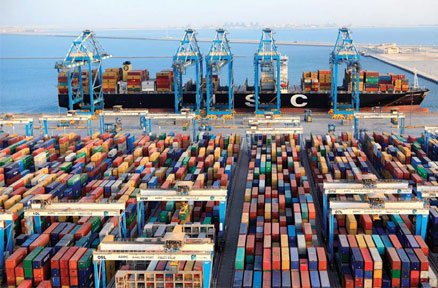
Even before inventing the Container Shipping, for many thousand years, mankind has shipped goods across the sea, from one land to another. But the process was not easy, as on today. The goods were loaded and unloaded by the individuals, in barrels, sacks and wooden crates from the land transport to the ship and back again on arrival of the vessel were a real slow process. However, this was the only known way to transport the goods in ship until the second half of the 20th Century.

However, 60 years ago, back in 1956, Mr. Malcolm Mclean used a converted tanker to move the first containerised cargo by Sea, from Port of New Jersey to Port of Houston. It opened to a land mark invention by connecting each and every corner of the world and increased the trade and commerce via sea route.

One year later, M/s Matson Navigation Shipping began its container shipping in the Pacific, carrying 20 containers from Alameda to Honolulu. The First Ship specifically designed for transporting containers, The Gateway City, made is maiden voyage on 4th of October, 1957 from Port Newark to Miami. It required only two gangs of dockworkers to load and unload, and could move the cargo at the rate of 264 tons an hour. Short later, The  Santa Eliana  operated by Grace line, became the first fully containerised ship to enter the foreign trade when she set her sail for Venezuela in January 1960.

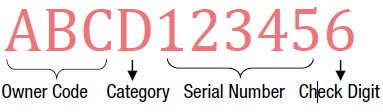
It was between 1968 – 70, that an ISO regulation for the shipping containers was decided. It shall be interesting to the people outside the marine sector to know that all commercially used shipping containers have a serial number, just like a number plate’s identification for the Motor Vehicles. The Serial number for the shipping container is made up of 4 letter prefix and a seven digital number. The first three letters signifies the owner, the next letter is the category of the Container which is followed by a six digit serial number and finally a check digit. And there is a mathematical formula that works out the check digit for each shipping containers.


The two most important and most commonly used container sizes today, are the 20 foot and 40 foot lengths. The container sizes need to be standardised so that the containers can be most efficiently stacked, one on top of the other and that the  ships, trains, cranes at the port can be specifically fitted or built to a single size specification. As above said, ISO works to set the standard sizes for all the containers, globally. Shipping containers are also available in variety of types in addition to the standard dry cargo containers often referred to as the special equipment. These special containers include open end, reefer, flat rack and many more.

Let us all celebrate together the 60th Year of Container Shipping!!

Rise of Iran in Various International Sectors

The year 2016 marked a new rise of Iran in the International Trade when the European Union along with the UN entities announced the lifting of sanction over Iran. The sanction imposed by US and European Union had limited Iran’s International trade including its sale of Oil and Gas.

What is the Restriction imposed on Iran?

In 1979, it was United States who first imposed restriction on Iran following the Iranian Revolution. It was later expanded in 1995 to include the firms dealing with the Iranian Government. In 2006, the UN Security Council passed resolution and imposed sanction after Iran refused to suspend its Uranium enrichment program. US restrictions initially targeted investment in Oil, gas, petrochemicals, export of refined petroleum products and business dealings. This encompasses banking and insurance transactions, shipping, web hosting services for commercial endeavours and domain name registration services. In addition to this, the European Union also imposed restriction on co operation with Iran in the year 2007  in foreign trade, financial services, energy sector and technologies, banned the provisions of insurance and reinsurance by member states to Iran and Iranian Owned Companies. Over the years, these restrictions have taken a serious toll on the Iran’s economy and people. The Iran sanctions were the toughest in among those imposed by the World Community on any Country.

The Turning Point on 16th January, 2016

The Lift of sanction on 16th January, 2016 (also known as the Implementation Day) can be literally considered as the turning point for Iran by re opening Iran’s door into the International economy. While most of the US sanctions will remain in place, the lifting of EU Sanctions will benefit a number of Industries like Energy, Finance and International Trade.

Energy/Oil/Gas: It is said that Iran has the Fourth largest crude oil reserve and second largest natural gas reserve. Now with the lifting of the sanction, they have opened business opportunities in this Industry.  It is stated by the experts that by 2017, following the lifting of sanction, Iran’s Oil production would rise to around 4 million barrels a day.

Finance/Banking: Iran would also have access to the Money that was left frozen overseas. Iran could not transfer their monies abroad and this also affected Iran’s International Trade. By lifting the sanction, now the foreign companies are allowed to deal with Iran’s market and thereby, they are expecting a huge increase in its revenue from the sale of the oil and gas to the Asian Countries

The lifting of banking sanctions means that Iran is once again re connected to the World Financial network. Money will be able to move between the European Union and Iran without any special authorisation or Notification.

International Trade: International Trade is the next major industry that would benefit from the lifting of sanction. Now since Iran can easily step into the international trade and that now there is no difficulty in transferring the payments abroad, the Iran’s Shipping Companies and Port would definitely increase their foreign trade and thus the shipping industry is expected to rebound within no time.

Shipping and Transport:  The European Union shall allow the trade to Iran of naval Equipment and technology for ship building. European Union would also allow the cargo flights from Iran to access member state airports. But it is reported that US will not sanction non US Citizens who are part of the shipping sector in Iran or to have financial dealings with it.

The Aircraft industry is the only one sector wherein US has fully allowed to do business in Iran. US Companies will now be allowed to sell the commercial aircraft and parts to Iran.

With the lift of sanction, countries are looking forward to build up a friendly relation with Iran. To support this fact, it was reported that the business delegations from various European Countries have already travelled to Iran to assess the business opportunities.

A Mandatory Container Weight Verification Requirement

A MANDATORY CONTAINER WEIGHT VERIFICATION REQUIREMENT- AN INTRODUCTION OF NEW PROVISION IN SOLAS CONVENTION

The International Convention for the Safety of Life at Sea (hereby referred as SOLAS Convention) shall make a mandatory container weight verification requirement in its Chapter VI, Part A, Regulation 2 which shall come into force on 1st July, 2016. As per this Regulation 2, the person who is transporting the shipment / Shipper or a third party arranged by the Shipper is responsible to provide the weight of their packed container in any of the following methods:
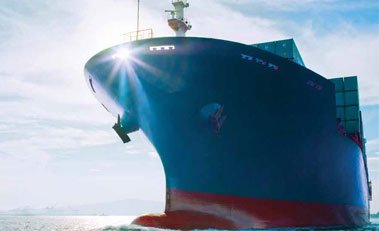
1.    Weighing the loaded containers;

2.    Weighing the cargo and adding the tare weight of the container which can be seen on the door of the container.

Once this provision enters into force, the requirement to provide the Verified Gross Weight (hereinafter referred as VGW) shall become mandatory and the Shipper has to make sure that he provides the VGW prior to the shipment. If the Master or the Terminal Representative has not obtained the VGW, then the container shall not be loaded on to the vessel .

How the weighing may be done?

The Port of Loading may facilitate itself with equipments to weigh the containers. The Shipper shall use either one of the two methods to calculate the actual weight of the packed containers. For this, the Shippers can make use of the weighing equipment, if available at the Port. But the Port authorities has the duty to make sure that these equipments shall meet national certification and calibration requirements. Is there any alternate remedy available to the Shipper if the Port of Loading does not have the weighing equipment?

SOLAS does not say that the Port of Loading should have a weighing equipment to weigh the packed containers or shipments. It only mandates the shipper to issue a verified gross mass of the shipment. In case the Port of Loading does not have the weighing equipment, then the shipper shall find any alternate way to weigh the shipment / packed containers.

In case the Shipper does not provide the weight verification, then the vessel and the terminal operators would have the option of weighing the packed container at the Shipper’s expense to obtain weight and thereby keep the commerce moving.

How the new provisions would affect the parties concerned? 

1. Shipper

All the expenses with regard to the weighing of the packed container shall be borne by the Shipper. Now the problem arises if the Carrier receives the packed container without the verified gross mass. If the loading port does not have any provision to weigh the packed containers, then they will have to arrange to weigh the container at somewhere else.  In such a case, the shipper might have to take the consignment or the packed container to somewhere else to get the actual weight or the carrier may have to make arrangements for the same at Shipper’s expense.

However, it would be difficult for a shipper to weigh a packed container if the weighing equipment is not easily available. Under such circumstances, the Shipper can opt for second method available under SOLAS Convention instead of the First Method.

2.  Carrier

This provision will be boon to the Carriers who are especially engaged in the transportation of the Container cargoes. The actual mass of the packed container would definitely help the Carriers in the loading of the Containers efficiently. This can for an extent reduce the accidents caused to the vessel due to the instability.

Also this provision would help the personnel who are engaged in loading. There are incidents were workers have died while loading of containers. Due to the miscalculation of the actual weight the Containers  have fallen down on the workers while trying to load them on board. This new provisions might help the stowing of the Container in a better way thereby reducing accidents.

3. The Government.

The Shipping Industry plays an important role in funding the economy of the Country. When the mandatory provisions enter into force, the Government shall make available the certified equipment for weighing the Containers and to make a smooth movement of commerce.

Conclusion

This is a very relevant and important provisions incorporated in the SOLAS Convention. Usually, the Shipper/Consignee who are engaged in domestic or international trade when transports a shipment, would never give out the actual weight of the consignment. This has caused many accidents in the industry as the misdeclared weight would affect the stability of the vessel, cause damage to the container stacks etc.

Arrested Vessel Escapes Maltese Waters

In today’s day and age there are many advanced tracking methods introduced to monitor the movement of vessels in the territorial waters;  However, despite the same, there have been occasions when arrested vessels manage to flee from their specific jurisdiction, thereby tricking the automated tracking systems. The most recent incident being, MV Madra which escaped the Maltese waters.

Malta imposes penalties on corrupt ship owners who break the law and escape the Maltese waters.  Pursuant to Article 865 of the Code of Organisation and Civil Procedure, when a vessel subject to arrest warrant escapes, a penalty of Euro 116,470 shall be paid by the following parties, namely, the owner, bareboat charterer or the person who is in possession of the vessel during the time of breach. In a recent case “Cassar Fuel Limited vs. MV Madra”, the Maltese Civil court examined the application and interpretation of the said Article.

Facts:

The vessel MV Madra was arrested due to default in payment to M/s. Cassar Fuel Limited and subsequently it absconded.  The Master of the ship along with the crew switched off the vessel’s automatic id system, which was the only security that Cassar Fuel Limited had and escaped the Maltese waters.  Cassar Fuel Limited initiated the proceedings in rem against the vessel for the penalty payment as stipulated in Article 865 of the code.  One of the key issues in question was whether an action could be brought against the vessel or the person(both legal and natural) who fled the vessel from Malta in violation of the court order.

Findings:

Jurisdiction of the Courts was determined on the following factors:

  1. 1.The subject vessel should be in Maltese waters
  2. 2.If the ship owner remits the claim amount as alternative security in court, then it would be an exception to the first rule
  3. 3. If an alternative security has been remitted in the court instead of the vessel, then the ship owner could leave the territorial waters.


However, in this case no such deposit was made by the vessel that jumped arrest.  Further the proceedings under Article 865 would be based on the presumption that the vessel is no more within the territorial waters of Malta, which by itself would defy the requisites for jurisdiction in rem.  Therefore, the court held that the claim for penalties under Article 865 could not be initiated against a vessel in rem.
Decision:

The Maltese court concluded that the proceedings be commenced in personam against the ship owner, the bareboat charterer or any other person in possession of the vessel during the time of breach.  The court concluded that the right to claim the penalty under Article 865 is totally independent from the underlying claim, and as such the proceedings should be commenced in personam against the individual(s) who removed the vessel from the Maltese water.

Conclusion:

After a thorough interpretation of Article 865, the court confirmed that the said Article provides a partial remedy to the Creditors where the vessel escapes the territorial waters.  An arrest warrant could be recognized as a kind of security granted by the courts when it is yet to determine the case based on merits.  However, the court confirmed that, as it is rightly explained in Article 865 of the Code, the right to claim penalty is without prejudice to the creditor’s alternative right to chase behind their claim.

The Wreck Removal Convention, 2007 – The Commercial & Legal Implications

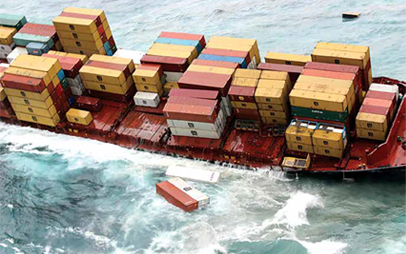
Shipwrecks are a growing concern with typically a 1,000 casualties attributed to shipping globally each year. MSC Napoli, The Container Ship Rena and The Costa Concordia are a few examples of the most notable wrecks. The total cost of the top 20 most expensive wreck removals from the past decade currently stands at $2.1B and is set to increase over time.

The Convention

The Nairobi Convention was drafted to provide the legal basis for States to remove or have removed shipwrecks that may risk the safety of lives, goods and property at sea as well as the marine environment. This finally came into force in April 2015 with Denmark being the 10th state to ratify the convention to law.

The Convention applies only to wrecks located in the Member States’ Exclusive Economic Zone (EEZ).  However, a Member State may choose to extend the scope of the Convention to its own territory, including its territorial sea.

Under the WRC, claims may be made against a shipowner/club/insurer within 3 years from the date the hazard was determined. However, an action can also be brought against them within 6 years of the date of the maritime casualty that resulted in the wreck. Where the maritime casualty consists of a series of occurrences, the 6 year period shall run from the date of the first occurrence.

Legal Implications

The WRC, has brought about consistency and fairness in its approach to wreck removal, though it may be limited it has however created a uniform and enforceable regime to be followed around the world. Under the WRC, a vessel would not be allowed to enter the waters of a ratifying state unless she was properly insured and had a certificate to prove it. If the vessel’s flag state had not ratified the convention yet, then another Flag State may provide the certificate. Additionally, P&I clubs can no longer walk away from a wreck if the owner/member was unable to pay. This practice is now abolished under the WRC and a claimant can bring any associated/simultaneous action directly against the P&I Insurer.

The usual coastal state law that normally applied required any harbour authority issuing a removal order to first prove that a wreck would in fact be a genuine navigational hazard if it was not removed and this was often used as an escape hatch to legitimately ignore such an order. However, this hatch will be closed as the Convention provides an alternative entitlement to demand removal if the wreck creates the “potential” for substantial damage to the environment.

Liability is excluded in the event of an act of war or due to exceptional natural phenomena and if a state can be proven to have failed properly to have maintained navigational aids.

Commercial Implications

From the salvors’ viewpoint, there would be an increase in the amount of work and profits. The price for all of this will be paid by the P&I Clubs, insurers and re-insurers throughout the world with the cost then being passed back to ship owner insured’s and their customers.

The WRC offers increased financial certainty with strict liability on the shipowner for the costs of reporting, marking and removing the wreck if required by the coastal state. The shipowners have a freedom to contract with their choice of wreck removal contractors with direct action against the insurers.

The Nairobi Convention & India

The ratification of the WRC is definitely a step forward by the Government of India. India had earlier acceded to this convention which required at least 10 member states to ratify. Wreck removal came under the subject of the Merchant Shipping Act 1958 & Indian Ports Act, 1908. Previously, under these two acts, ship-owners were legally liable to remove wrecks only within the territorial water if the wreck was a hazard in a shipping lane or close to a navigation channel. Cases like the Rak Carrier, Tanker Pavit and many more, which were abandoned by the owner/club due to absence of the appropriate regulatory framework may now come under the purview of the WRC.

Build Your Business

INVEST IN A GENZ YARD MANAGEMENT SYSTEM (YMS)

Basically, a yard management system (YMS) is a software system designed to oversee the movement of trucks and trailers in the yard of a manufacturing facility, warehouse, or distribution center. YMS provides real-time information on the location of trailers in the yard and allows yard employees to move trailers from staging to docks to fill orders in an efficient manner. The terms YMS is at times used concurrently with Warehouse Management Systems (WMS) or Transportation Management Systems (TMS).

Opposed to traditional methods of managing loads/containers at the yards, today with the assistance of latest technology, there is not only effective time management but a lot of double guessing can also be eliminated. For instance the elaborate procedure of filling and filing in paper work has been drastically reduced by adopting online procedures. This not only avoids time lags but also speeds up the process, as all essential information with regard to the load are available in the system and hence when the trailer arrives, the details not only pop up, but from the gate in time itself, the warehouse is alerted that the load has arrived. Still further with the use of modern technology it is easier to track the location of the container, the kind of container, ie refer or normal etc, its contents and to also monitor the priority for loading etc.
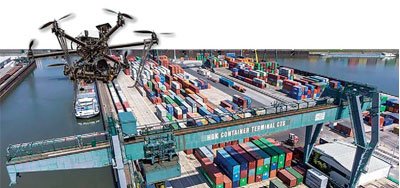
For instance the latest technology that is being adopted to assist YMS is the use of drones or unmanned aerial vehicles (UAVs) flying around a yard, either autonomously or controlled by a remote. The drones enable to survey large areas of densely-packed assets for the purposes of inventory reconciliation or pinpointing where certain inventory is located, producing such information with accuracy and in a matter of minutes. Some drones are also equipped with real-time location system capabilities which facilitate the uploading of real time video data via wi-fi upon return to their ground stations.

With technological assistance, the planning, execution and movement in the yard is made simple and easy.

Another plus point with the use of drones is that long standing containers can be identified and dealt with in a timely manner. This also simplifies the task of updating demurrage and detention charges which is critical for efficient management and operation of any yard.

When a yard maximizes on the use of technology to assist its growth, it can capitalize on utilizing its space to the fullest. The most difficult task for any yard manager is to keep a tab on the number of daily ins and outs it’s the yard. This is especially crucial when yards are in prime locations and their operational cost is relatively much higher. Hence the combination of improved dock door scheduling, and visibility of empty trailers sitting idle in the yard, enables yard output to increase drastically.

Hence smart logistics operators, by using generation – Z technology, to bridge their supply chain gaps, can also attain better control over yard equipment, track assets in real-time, locate perishable loads, effectively manage waiting time and schedule their operations better, which is a win-win situation.

Forbes Forbes Campbell & Co. Ltd. VS. Board of Trustees, Port of Bombay

THE DECISION OF THE INDIAN SUPREME COURT IN “FORBES FORBES CAMPBELL & CO. LTD. VS. BOARD OF TRUSTEES, PORT OF BOMBAY” IS WORTH PONDERING UPON.

A review of the order and its implications on the vessel owners and steamer agents

Facts of the Case

In the case at hand the consignee of the goods had not taken steps to clear the consignment. Hence the Port Authorities issued notices to the consignee and then resorted to their remedy to publicly auction off the goods. However despite provisions in the Port Trust Authorities Act, 1963, wherein the auction may take place after a lapse of 60 days of landing the Port Authorities finally auctioned the consignment only after the expiry of four years; On auction of the goods the amount received was less than the amount towards the total charges payable to the port authority, which consequently led to the institution of the suit, whereby the Port Authorities sought to recover the balance cost from the Steamer Agents as the consignees could not be traced. At first instance, the suit was in fact dismissed however; on appeal the Hon’ble High Court reversed the decree holding the steamer agent liable.

Interpretation of the law

The steamer agent’s argument was that the provisions of the Major Post Trust Act of 1963, impose no statutory liability on them to pay the said charges to the Port Trust Authorities. They further argued that they did not fall within the definition of “Owners” under Section 2 (o) of the Act.  As the said definition has no mention of the owner of the vessel or the steamer agent, thus the liability imposed by the Port Authorities was illegal and unjust.

The Port Trust Authority however took the contention that there existed a relationship that of a bailor and bailee between themselves and the agent from when the goods are delivered to the Authority till the point when the said goods are duly endorsed to the consignee by way of transfer of the bill of lading.  The Port Authorities further argued that existence of this relationship has been established under Section 42 of the Act along with the basic principles of bailment as laid down under The Indian Contract Act.

The Supreme court after considering the arguments and the decision of the High Court took a more understanding view towards, the contention of the Port Authority. They relied on the decision in the case of the Trustees of the Port of Madras v. K.P.V. Sheik Mohamed Rowther & Co ,which held that once the bill of lading is endorsed or the delivery order is issued to the consignee or endorsee, it is then that the consignee would be liable to pay the demurrage charges and other dues of the Port Trust authority. In all other situations the contract of bailment is one between the Steamer Agent (bailor) and the Port Trust Authority (bailee). This would then impose liability on the Steamer Agent for such charges, till such time that the bill of lading is indorsed or delivery order is issued by the Steamer Agent

Implications of the Decision

The Decision of the SC to quash the appeal preferred by the Steamer agents will undoubtedly have several significant implications on the future of consignment shipping and storage transactions, in similar circumstances. As per the interpretation should a vessel owner or their steamer agent fail to endorse the consignment to the consignee or a consignee fail to clear their consignments across the various ports of India, the Steamer agent /vessel owner will be liable for cost incurred due to non clearance of the same. Thus the decision now in fact poses as a dagger hanging over the heads of the owners of vessels and their steamer agents in the form of unlimited liability should a consignee not comply with his duty toward the cargo.

This unlimited and unbridled liability placed upon the vessel owners and steamer agents unfairly stretches beyond the extent of their services. Owing to the decision held by the SC, the owners/steamer agents must ensure that all the consignments unloaded onto a Port premises must be cleared by the consignee in time or else they could face arrest of their vessels /sister vessels be the Port Authorities to recover their outstanding . Thereby Ship owners who are often faced with a number of expenses in relation to maintenance and running of their vessels will have to factor in this additional responsibility of clearance of consignments as well.

For now thought the decision by the SC has finally put the question of liability of the steamer agent for demurrage and other charges to port authorities, to rest; only time can tell of the impact of this decision on the maritime industry.

Beware and Be Aware of Packing of Flexible Tank

(“Flexible tanks” or “Flexitanks” are a kind of storage equipment for liquids such as water, oil, wines etc.) continued …
PART 2
A Shipper in a standard bills of lading is responsible for the “Load, Stow and Count” of his cargo/consignment and hence if the Shipper intends on using a Flexitank to transport his consignment he should discuss with a flexitank operator the most suitable type of flexitank that will be compatible with the product to be shipped. Here the Shipper must also provide vital information detailing of the nature of the product and whether it could ‘solidify’, ‘taint’ or ‘damage’ the container in the event of a leakage, etc.

Though the carrier has a duty to “properly and carefully load, handle, stow, carry and keep, care for and discharge the goods carried” the task of proving the same is a different matter; in the event you are able to prove that the carrier is liable, keep in mind that most carriers have a limitation of liability clause in their respective Bills of lading which will not be sufficient to cover the claimed amount.
Therefore it is upon the Shipper/Freight Forwarder/packers to protect their interest by take pictures of the empty container and at various stages during stuffing. As these photographs can be relied upon, in the event of a claim and to prove that special attention and measures were taken in relation to packing, securing and protecting the Flexitank and consignment within the container. Further it is also essential to insist on adequate Insurance to be obtained for the cargo/consignment
It is far easier for the carrier to tactfully rid themselves of liability by taking a defense that the consignment was inadequately packed. In such instances all valid information that precautions were taken can definitely help to rebut this defense.
In the unfortunate event of leakage or a potential claim the party receiving the consignment must accept delivery under protest and immediately put the carrier and insurer on notice, calling upon them to attend a joint survey. As an added precaution it is also advisable to put the shipper, consignee and all parties involved in the carriage on notice.
As far as possible it is also better to open the container only at the time of the joint survey, in the presence of all concerned parties. Ensure that all the details pertaining to the damage are inspected and recorded before the container is returned.
In most claim cases pertaining to Flexitanks the carriers will also claim all incidental cost in relation to damages, cost for clean up, and other charges caused due to the leakage of the consignment; from the shipper and/or consignee and/or the booking party.
A note of caution to all freight forwarder and Non Vessel Operating Common Carrier (NVOCC), is to bear in mind that even though you may not be involved in the packing or stowing of the consignment, you can be faced with a claim for damage not only from the Shipper and/or Consignee but also from the Carrier. Hence it is always advisable to have an adequate insurance cover for such cases.
Ultimately the claims arising from the use of Flexitanks can be mitigated to a great extent by taking abundant caution and care and by engaging the services of a professional while exporting consignments using Flexible Tanks. It addition it is high time to have a statute to govern all aspects pertaining to Flexitank from the material to be use for manufacturing such tanks, to the packing, stowing, loading requirement, the specification on the load limit and the kind of container, proper labeling, etc, with the ultimate aim of roping in the packers and also holding them liable in case of potential claims.

Page1 Page2

CSS Newsletter

In this issue:

Quick Links

  • Home
  • About
  • Services
  • News Media
  • Careers
  • Contact us
  • Corporate Brochure
  • CSS Corporate PPT
  • Lighthouse
  • News Hub
  • Privacy Policy
  • Cookie Policy
  • Disclaimer
  • T&C’s

Locations

  • Dubai
  • Abu Dhabi
  • Sharjah
  • Ras Al Khaimah
  • Bahrain
  • Oman
  • Qatar
  • Saudi Arabia
  • Kuwait
  • Kenya
  • Turkey
  • India

Subscribe to our bi-monthly newsletter, Lighthouse

  • Follow Us
© 2026 CSS Group. All rights reserved. Crafted with by Netventure