Skip to content

Lighthouse

Bi-monthly publication of CSS Group

Lighthouse
  • Call +971 4 8872333
  • Mail info@cssdubai.com
  • Menu
    • Home
    • About
    • Services
      • Global Freight forwarding
      • Ocean Freight Management
      • Supply Chain Management
      • Land Transportation Management
      • Industrial Packing, Crating & Lashing
      • Air Freight Management
      • Projects Oil & Energy
      • Exhibition Event Logistics
      • Automobile Logistics
      • Art Logistics
      • Non Vessel Operating Common Carrier (NVOCC)
      • Hospitality & Hotel Logistics
      • Multi-modal Operations
      • Container Freight Station (CFS)
      • Yacht & Marine Logistics
      • E-commerce Fulfillment
    • Locations
      • Dubai
      • Abu Dhabi
      • Sharjah
      • Ras Al Khaimah
      • Bahrain
      • Oman
      • Qatar
      • Saudi Arabia
      • India
      • Sri Lanka
    • Careers
    • Track & Trace
    • Login
      • Customer / Agent
      • Employee – Portal
      • Employee – Dashboard
      • CSS India Login
    • More+
      • Lighthouse
      • Media Hub
      • Feedback
    • Contact Us
  • Login
    • Customer / Agent
    • Employee – Portal
    • Employee – Dashboard
    • CSS India Login
  • TRACK & TRACE
  • NOTICES
  • LIGHTHOUSE
Lighthouse
  • Call +971 4 8872333
  • Mail info@cssdubai.com
  • Menu
    • Home
    • About
    • Services
      • Global Freight forwarding
      • Ocean Freight Management
      • Supply Chain Management
      • Land Transportation Management
      • Industrial Packing, Crating & Lashing
      • Air Freight Management
      • Projects Oil & Energy
      • Exhibition Event Logistics
      • Automobile Logistics
      • Art Logistics
      • Non Vessel Operating Common Carrier (NVOCC)
      • Hospitality & Hotel Logistics
      • Multi-modal Operations
      • Container Freight Station (CFS)
      • Yacht & Marine Logistics
      • E-commerce Fulfillment
    • Locations
      • Dubai
      • Abu Dhabi
      • Sharjah
      • Ras Al Khaimah
      • Bahrain
      • Oman
      • Qatar
      • Saudi Arabia
      • India
      • Sri Lanka
    • Careers
    • Track & Trace
    • Login
      • Customer / Agent
      • Employee – Portal
      • Employee – Dashboard
      • CSS India Login
    • More+
      • Lighthouse
      • Media Hub
      • Feedback
    • Contact Us
  • Login
    • Customer / Agent
    • Employee – Portal
    • Employee – Dashboard
    • CSS India Login
  • TRACK & TRACE
  • NOTICES
  • LIGHTHOUSE

Mood Music

Multitude types of sound – office chatter, crowds cheering, car horns blaring, babies crying, dogs barking, birds singing and waves breaking on the shore, all affect us in different ways. Often we fail to recognise their impact as we relegate them to the backdrop hubbub of what we are doing. However all these sounds influence us, and the way we feel within our environment, especially when we are unable to control them.

Sounds have long been thought to influence human emotions and the significance of music has raised considerable interest amongst researchers. Understanding music-induced emotions, and its capability of influencing our moods, has gained greater importance. Music has been a part of our inheritance over many years. Classical music has an unbroken living tradition which goes back over a thousand years. Music played an important role in William Shakespeare’s plays. In ‘Twelfth Night’, written in 1602, Duke Orinso considers his infatuation with music might cure his obsession with love. He compares how eating too much food quells one’s appetite by musing;

‘If music be the food of love, play on’.
Whilst Shakespeare recognised music as feeding the emotions, scientific study of this phenomena have been rare until relatively recently. There is now significant interest amongst the science and medical professions. Businesses that also need to make a connection with their customers, in order to make their product attractive, now focus on the impact music makes.

So how and why does music affect us?
The initial impact is the beat. This fundamental driving component actually causes our hearts to start to beat in synch with the rhythm. This happens as the music starts to encroach into our personal environment. With background music it is an almost stealth-like. If we are immersing ourselves in the sounds the effect is more immediate. A slow beat causes our heart to slow and, depending on the ‘key’ of the song, it may either convey love or sadness. The ‘key’ is just as important as the beat because the choice of ‘key’ influences the feel a tune. A ‘major key’ tune will usually feel cheerful and convey an upbeat message to our brains but a ‘minor key’ will cause sadness. Equally a fast moving tune, depending on the key, can make us feel excited and full of joy or frightened.

Why does this happen?
When we listen to music our brains produce the chemicals serotonin and dopamine. It’s their combination that influences our emotions. This is why music may make us feel sad, hyped-up, tranquil or angry. Indeed the wide-ranging scope of music may end up blending our emotions in many ways.

Once we realise this connection we can choose the music to reflect our mood.

Indeed it seems that we have a habit of choosing the music based on the moods we are already feeling. We do this deliberately for specific or special occasions. Religious and political gatherings, weddings and funerals, anniversaries and parties, all immediately bring our own favourite music to mind. However if we want to change a negative current mood, choosing music that is more upbeat will lift us out of depression. It therefore becomes important not to choose music which encourages our depression. This link also explains why those dancing at raves become higher and higher. The participants are continually lifted upwards, as the beats and rhythms are constantly boosted.

Music communicates through beat and melody. It is therefore a universal means of communication. This is why we can travel the world and find enjoyment experiencing the musical feeling of another culture. A country’s culture influences their basic formation of music. The most obvious example of this is a comparison Western pop music and Indian Bollywood style tunes. The only really recent cross-over tune was from the film ‘Slumdog Millionaire’ with ‘Jai Ho’ (You Are My Destiny). However the Internet is causing the different styles of music to become integrated. Even the ethics that move composers and musicians are becoming similar as these quotes show:-

‘One good thing about music is when it hits you, you feel no pain’ – Bob Marley
‘I love appreciating all kinds of music’ – Taylor Swift
‘Music is about transporting people, speaking a language which languages fail to express’ – A. R. Rahman.
Music development and its ability to impact on moods relies on new talent so it was interesting to find this quote:-
‘I bridge the gap between music and life and now my heartbeat swings as sweet as a melody’ – Aloysha Peter.
Now in his twenties, his quote shows empathy with other musicians.

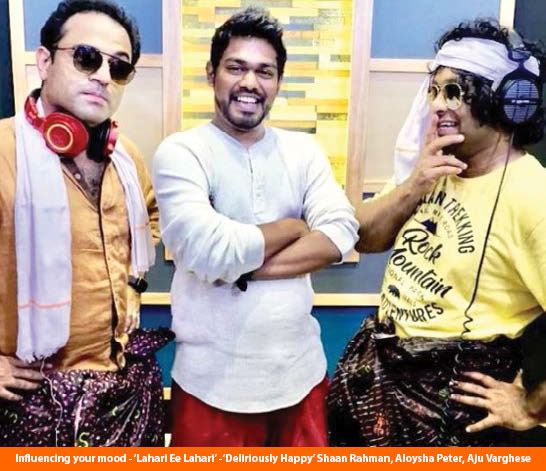
Experiences in our own lives invariably influence our future and Aloysha’s first musical adventures started when singing in a Trivandrum church choir – Kerala. His latest song, which he composed, arranged and produced, is called: ‘Lahari Ee Lahari’ – appropriate English translation – ‘Deliriously Happy’. It features Aju Varghese, a popular actor and comedian and Shann Rahman a music composer and singer. Both are well known for their work in Malayalam cinema. Its enthusiastic fun beat and melody has an infectious feeling which demonstrates how music can uplift our moods. Sometimes just being told about a piece of music may alter our mood. If you hear an artiste’s name it may conjure-up a tune in your mind and suddenly your mood is altered. So choose your music to create, enhance or change your mood because hopefully it may make you deliriously happy. The choice is yours.

A Unique Presentation

If you think that presentation is all about how others see you, then perhaps it’s time you reassessed your opinion. You may well ask, “Why” because surely the importance of how others receive your presentation is paramount? Well this was undoubtedly the case before the advent of the internet. In simple terms, if you presented someone with a fancy and beautiful box of chocolates, they were more impressed than if you gave them exactly the same chocolates in a brown paper bag. Case proved – presentation matters!


So, what has the internet done to change this? Basically, it has stopped many of us thinking about the actual presentation and made us more focused on ourselves. Facebook, Twitter, Instagram, LinkedIn and Snapchat etc., constantly bombard everyone with information about others. In many cases this creates jealousy within us. Why can’t we have the lifestyles of David Beckham, Deepika Padukone, Emma Watson or Shahid Kapoor etc.? Consequently, instead of naturally thinking about the effect our presentation has on the recipients, the focus has shifted. There is now a tendency to place more importance on our own importance. The internet has been educating us, through our on-going interactions with social media, that we are all equally unique and correspondingly important. Otherwise, how do you explain the need to gain more followers on Twitter or more likes on Facebook than anyone else?

It used to be accepted that people might normally have a unique talent in one particular skill. Consider the university professor who was brilliant at maths but known to be quirky and eccentric in most other things. However, many now believe that being unique, in one area, allows them to claim some right to have a valued opinion in others. This has led to celebrities, who are only known for their singing or acting abilities, telling us how we should vote politically or what toothpaste we should use!

It is true that the meanings of words change over time but let’s look at ‘unique’. Its original meaning was: –
‘Being only one of a particular type or having no equal’.Obviously such a definition completely excludes the possibility of there being more than one. Applying this logic how can we all be unique?

This idea of uniqueness and individuality, with its implied sense of self-importance, has worryingly started to result in the breakdown of team spirit. You only have to look at football and the way a main celebrity player attracts all the credit, as well as the money! Invariably their ‘uniqueness’ causes friction, within the team, who have to live under the celebrities shadow. In our workplaces, if we all believe we are unique then it restricts our ability to receive or give advice and perhaps come up with ideas, because others are afraid to compromise our uniqueness. This philosophy makes us more resistant to being told we might have got something wrong or that there is a better way of doing things.

The current global state of politics highlights this, especially in America and the United Kingdom. A topically trending ‘meme,’ (the name for an image, video or piece of text, typically humorous that is spread rapidly via social media) shows ‘NPC’ (non-player characters) protesting how they are all unique. The absurdity of computer-generated random characters having some sort of influential uniqueness is laughable. But consider this:- ‘Every snowflake is unique but it has totally no individual effect in a snowstorm’.

So where does this leave us? To adapt a famous quote:-‘No person is an island, entire of themselves, because everyone is a piece of the continent.’

In order to better ourselves, and also help others, we mustn’t allow the internet to suck us into being isolated from the needs of others. Not everyone is interested in knowing about our recent stay in hospital, even though we got hundreds of likes on Facebook. The recent pictures posted of a Seychelles holiday might have got hundreds of likes, however the chances are some were really envious and, even though they posted ‘like’ actually disliked them! Consequently, it would have been better not to post them because doing so caused envy. As the well-known logic goes, this negativity might well come back and bite you when you least expect it.

Good interactive presentation still relies on the premise that the importance of the recipient comes first and foremost. We must shrug off our feeling of self-importance and uniqueness. Resetting the threshold, raising the bar when self-importance kicks in, will give us a better perspective about our family, friends and colleagues. Interestingly the Victorian-era theatrical English partnership of Gilbert and Sullivan summed up the dilemma very well, in these lyrics from their 1889 comic opera, ‘The Gondoliers’. It’s probably well worth keeping them at the forefront of our minds.

‘When everyone is somebody, then no one’s anybody’.

Respect For Ones Elders?


If you are one of the many who regularly use social media, you will be aware of the gap which appears to be growing between the generations. The young appear to blaming the older generation for not making it easier for younger people to progress. Equally the older ones cannot understand why they are not shown the respect that they believe they deserve. After all they have, over many years, invariably contributed much to society.

It is true that different cultures treat the generation gap in dissimilar ways but generally, until recent times, the overall thrust encouraged respect for ones elders. Traditional Indian culture is a prime example of this. Equally the saying: ‘Learn from the people who have walked the path before you. Respect them because that chances are, sooner than you can imagine, you’ll be walking along a similar path’; is a truth not to be ignored.
However the growth of social media and its ability to link-up like minded persons has brought many traditional attitudes into question. Youth brings with it an assurance that simply wasn’t there, only three or four decades ago, when views use to be more isolated and not inter-related. Nowadays the sound of everyone shouting together cannot be ignored.

At sixteen it seems perfectly reasonable to say, “I am an adult and therefore I should be treated as one. Older people have no more rights to life, than I have, so why should I respect them? We’re just the same!” Of course, what this view overlooks is the fact that the passage of years gives plenty of time and opportunities to step up, screw up, take decisions and live with the consequences. This is why elders tell youth to respect their elders because they have already had the same experience. We’ve all probably said, at one time or another, “I am old enough to decide” only to regret it later on, because we had not taken the advice of those who were older. They have had the experience already, been there and done that, and therefore know the outcome regardless of the younger person’s deliberations. Experience is what matters and the longer we live the more we gain.

So that’s it sorted then is it? Young people should respect their elders? Well it isn’t as simple as this because if we defer to other well-known sayings:-
‘Mutual respect is the foundation of genuine harmony’ and ‘Respect will never be freely given, you must earn it’, it becomes clear that gaining respect is a two-way process. As a consequence the ironic part about gaining respect is that, in order to earn it you must give it!

This has never been truer than with our current generational demographics in terms of communication techniques and skills. Older people, in general, still prefer to chat and come to valued judgments; whereas youth has been brought-up on making more instantaneous responsive decisions. Of course an ability to take time to consider may well be seen, by younger folks, as the elderly slowing down. But coming to fully informed decisions based on experience usually does take time. It’s the way problems are avoided and contingency plans are made. Youth often doesn’t see the need to plan for other eventualities, because lack of experience often gives them a misguided full confidence in what they are doing. Quite rightly it is this confidence that makes young people unique and is an attribute which older people should never forget. We have all experienced this confidence, because it is part of growing up, and accordingly deserves respect.

So there it is; you have a summary about the need for respect between the generations, in a nutshell! But remember children always look up to their parents as role models. If mother and father have a way of life which shows respect, without discrimination to everyone, then their children will also start reciprocating. This accords with the a quotation from 18th century Irish novelist, Laurence Sterne, ‘ Respect for ourselves guides our morals, respect for others guides our manners’. Regardless of the influence of social media this style of family culture encourages generous, empathetic and self-respecting individuals who equally respect others, young or old. What could be better than this for all our futures?
Kaleidoscope desk

Failure Leads To Success

You may have it heard said that successful people don’t have failures. They view all events as a learning process towards achieving their goals. If this is the case why is there growing criticism that younger industry talent seem to have lots of knowledge and qualifications but lack the fire to grow their career? Could it be that they lack an ability, to take time, to assess failure as a step towards promotion and success? Whilst mistakes and ill-fortune happen, talented people demonstrate their real skills and true metal; by the way they mitigate such events, possibly turning them into an advantage.

So what, if anything, has given rise to this situation?

Well, turn the clock back only forty years and you’ll find a time when the principle source of learning general communication skills came from within a family. Meals, where all generations ate and interacted together, were a regular feature. Values, traditions, customs, courtesy, social and verbal skills were passed onto younger family members. They were then able to develop them as appropriate for their generation.

But the internet has changed everything. Its phenomenal growth has overtaken what was usually slow social development and replaced it with a potential for an immediate global response. News from all corners of the world impacts on us 24/7. ‘YouTube’, ‘SnapChat’, ‘WhatsApp’, ‘FaceBook’ and ‘Twitter’ are just some of the current social media resources which influence and create social trends. These are outside what were our usual family, community, state and even a Country’s ethos and ambience.

Our younger generation is being influenced in a way which has never happened before. Yes, all generations are impacted by these changes in communication but the great difference is that the older generations have more experience to deal with them. The values of parents invariably influenced their children. This aspect has now, in many societies, been subjugated by what youngsters learn from social media. Values are learnt from the internet which question and challenge views being taught by parents.

Considering this background and applying it in the workplace focuses minds on the way different generations react. Whereas the middle-range and upper-management, generally in their youth, were used to having at least 30 seconds to consider an issue, (as demonstrated by the length of television adverts), today social media and interaction is often limited to 5 seconds. No time for thinking, just an immediate reaction. This is often why tweets and emails sent, with a quick click, lead to instant regret. What is needed, especially in business, is forward planning and considered responses. However this flies in the face of the social environment in which today’s students find themselves. On one hand at university, being required to study for their degrees and on the other hand, being expected by their peers to give fast responses. Clearly there is a potential conflict as it is not realistically possible to completely separate social skills from business skills. They are all part and parcel of the same thing – an ability to communicate and take decisions.

There is also a growing tendency for educators being encouraged to highlight the uniqueness of students. Unfortunately if you focus on believing you are unique, especially when a team member, it has a tendency to set you apart from others. A belief in uniqueness impacts on a person’s assertive nature. Everyone has their own particular unique talent. This needs to be nurtured but not at the expense of it becoming an excuse for lack of success. The claim that ‘YOU’ didn’t nurture my unique talent enough, as a means of blaming others for one’s own failure, is not a sustainable proposition. However it’s a view which can comfort those who lack motivation and determination.

This brings us back to our opening question. The growing criticism, about younger industry talent seeming to have lots of knowledge and qualifications but lacking the fire to grow their career, needs to be addressed. This is an important consideration for a company determined to build on its success. Once we realise and accept how rapidly changing social media has altered the way different generations interact; planning, training, encouraging and coaching younger staff members, within a company’s ethos, can be seen as ‘must have’ approach. Undoubtedly it will add invaluable corporate value to a workforce.

Youth brings a vibrancy that companies need. How a company benefits from this is going to be judged on the way intergenerational trust can be fostered and developed. Personality, assertiveness, bargaining and negotiation skills cannot be successful asserted if they are limited by social media experiences. Short attention spans limit an ability to see beyond failures towards a successful horizon. Herein lies the challenge for a progressive company – how to unlock the social media box and encourage younger talent to take control of their own vibrant potential to flourish.

Your Decision or A Behavioural Response?

A friend recently commented on how everyone seems to focus on finding out reasons as to why we do things. When, in response, I mentioned ‘Behavioural Economics’ his eyes started to glaze over; rising towards the ceiling. “Not another trend?” he asked. So tried to explain why I felt that this particular approach deserved fuller consideration.

A six year old school girl invited her class mate round to her home.  Showing her round the other six year old asked, “Where is the rest of the house?” Now some might be offended with such a comment but remember it is said that ‘out of the mouths of babes’.  It just so happened that one of the girls lived in an ordinary suburban two bed-room home whereas the other was the daughter of a film star and she had only ever lived in an eight bed-room mansion estate. She had never known any other home so naturally and curiously she wondered why her school friend lived in such a small home – hence, “Where is the rest of your house?” Now, of course, as the little girl becomes older she will start to appreciate more the differences between all of us. She did not realise that, if she had been older, many would have been offended by her question.

This simple example basically illustrates what ‘Behavioural Economics’ is all about. It’s a method of economic analysis that applies psychological insights into human behaviour to explain economic decision-making. Subconsciously we are all influenced by our background and upbringing both socially, culturally and economically. Some of our experiences we remember and others are somewhere deep within our subconscious.  However when it comes to making decisions behavioural economics explains why often they are not totally rational. Behavioural economics explores why people sometimes make irrational decisions, and why and how their behaviour does not follow the predictions of economic models.

If you think about it you may come to the conclusion that the world in which we live is a communal institutional response to our own biology. We are collectively the creators and motivators of our own interactive future both consciously and unconsciously and it is the unconscious element that gives rise to unpredictable outcomes.

Additionally our nature means that we all are motivated by various degrees, depending on our upbringing, to focus on the ‘now moment’.  Given a choice which would you go for – $100 cash in your hand now or $110 cash in seven days’ time? You are the exception if you choose the future amount of $110! Accordingly when it comes to making decisions we have to remember that, to ensure that we are fully aware of our future plans and aims, we have to deliberately make our long-term goals a focused consideration. Otherwise the ‘now moment’ will prevail and obscure our forward-looking objectives.

As with the six year old school girls, as we grow older, we forget many influences which have become part of our make-up and consequently impact on us when we make decisions. A well-known saying is; – ‘If you want to become a millionaire first start mixing and socialising with millionaires’. The simplicity of this statement, in terms of behavioural economics, should be obvious. Those without money are clearly not able to think and act as those with money. If you mix with millionaires then ones thinking is bound to change and will influence the way you act and take decisions.

The boss of a United Kingdom holiday tour company recalled one of their mistakes, a lesson to be learnt, on the way to becoming a millionaire. Initially, starting the company from a small back-street office, they had always wanted a car with their own personal number plate. Eventually the day came and an article, in the national press, was published showing their picture in front of his car. It stated how he had paid $20, 00 for the one off number plate. He was happy but it turned out his customers were not as sales started to fall away. He had failed to appreciate that they might consider he was boasting about his success. Spending $20,000 on an apparent frivolous item, when clients had to save in order to pay for their annual holiday, created a negative two-way behavioural economics response, not least because established millionaires instinctively known the dangers inherent in flaunting ones wealth.

Behavioural economists also look at the roles of habit and trust in consumer choice. Proponents of behavioural economics realise that they do not have much to tell psychologists about how individuals makes decisions but rather they have a lot to learn from psychologists. The coming together of individuals from diverse backgrounds, is however, what behavioural economics is about. It endeavours to explain why we sometimes make irrational decisions, and why and how our behaviour does not follow the predictions of economic models.

So the next time you are at the supermarket check-out ask yourself, ‘Do I really want to buy that bar of chocolate or should I get an apple instead?” Train yourself to knowingly make a decision based on going along with the majority’s instinctive choice or planning for your own future with a healthy lifestyle because this will knowingly be behavioural economics – in action!

Good Bye Stress

We all know that whether our office is lively, dull or easy-going we have days when things just do not seem to go right. At such times our stress levels rise and as a consequence our work suffers. Let’s face it we would all appreciate a less stressful day at the office. On such occasions an extra bit of ‘umph’ to jolly us along, would be very welcome.  It’s therefore of little wonder that lots of ongoing research takes place to see how this ‘umph’ may be provided. So here are three suggestions, from many, that are designed to stimulate ideas which may enhance a work place environment.

PLANTS IN THE OFFICE

The first one is a simple solution arising from research carried out by an Australian University that focused on the benefits of having plants in our offices. It concluded that plants, being present in the work place, not only helped purify the air but also added focal points and created identifiable spaces. Plants are known to be a source of tranquillity where a casual, almost subconscious, look can trigger inner peace. The Australian study determined that plants in the office reduced the adverse effect of a whole range of feelings including anxiety, anger, depression, stress and fatigue. Just one plant, per work space, can provide a good lift to staff spirits whilst at the same time promoting wellbeing.  The choice of plant is important depending on how much time one wishes to devote to looking after them. Ideally plants which only occasionally flower are better avoided. Seeing them come into bloom is upwardly stimulating but when the flowers start to wilt the emotional uplift is dampened. However if an office has a team member with ‘green fingers’ then maintaining a regular recycling of floral greenery displays will be a welcome assignment.

HOLDING A COLOUR DAY

This second suggestion is more team focused and allows for fun without occasioning any direct impact on working practices. Having a day when everyone in your department agrees to wear something of the same colour is bound to bring some interesting surprises. If there is an overall feeling that a more determined approach is needed then everyone should be asked to wear something red. It could be red socks, shirt, tie, dress, shoes or even an item of jewellery – anything, as long as it is red.  The variations will no doubt raise at least a chuckle and woe betides anyone who forgets. The choice of colours for your work place colour day should be picked to suit a team’s emotional needs. This brief look at the emotional meanings of colours will give you the idea:-

RED – Strength, energy, determination, decision making.
YELLOW – Loyalty, light-hearted, attention impact.
ORANGE – Joy, enthusiasm, creativity.
GREEN – Safety, growth, finance.
PURPLE – Luxury, power, ambition.
BLUE – Wisdom, trust, confidence.
BLACK – Power, elegance, authority.
WHITE – Perfection, goodness.

Choosing a colour will let everyone else know, who is into the secret, what your objectives are for your colour day. It’s bound to favourably impact on success.

PETS AT WORK

The third suggestion is bringing a pet to work. A British pet food company’s research revealed that some 40% of UK workers said that having a pet in their office would make them feel less stressed. It may be impossible for an office to adopt a pet but a staff member, bringing in their pet for the day, can have a wonderful interactive effect on others. It’s said that the next time you are stressed, perhaps because of a monthly meeting deadline, then reaching down to stroke a cat or pat a dog sets aside any unhelpful stress.

Still, whatever ideas this article may have stimulated for you, eliminating stress completely is not realistically possible. However we owe it to ourselves and our colleagues to see how we may say ‘goodbye’ to stress. By trying meaningful ways of injecting some ‘umph’, into our day to day routine, we may help each other to feel more contented at work; not least because it’s never too late to start.

Healthier Lifestyle – An Easier Way…

There are two occasions when magazine articles seem to focus on lifestyle. The beginning of a New Year is the obvious one, when we all are encouraged to make resolutions. The other time is now, as the mid-point of the year, draws near. At this juncture enough time has passed for us to be able to assess what any resolutions have achieved. Invariably we all think about lifestyle but other demands seem to distract us. Living healthily all seems so simple but it is never this easy. Some of us have more will power and greater motivation whilst others struggle. If you start with a negative mind-set you are doomed to failure.  Hopefully this article will provide you with some tips to help you develop a technique which works.

It’s not that long ago that eyebrows may have been raised if a middle-aged person joined a gym or kickboxing club, took-up Pilates or even started dance classes. Nowadays in many cultures, almost anything goes in the quest for a healthier lifestyle.  What we need to ensure, in this pursuit, is that we enjoy it. If trying to be healthier brings us pleasure, both emotionally and physically, then we will carry on and achieve our goals.

The first step is to get a training buddy then set goals and find ways of making things fun. You have to have an objective and a real reason that will encourage you to take the first step. Having a training buddy, where you arrange to regularly meet someone, will provide encouragement and also means you will probably have a laugh egging each other on. Once this becomes part of your routine then you are on your way to success.

The second step is to remember to start with small steps. Booking a session with a trainer and finding yourself in roomfuls of strange machines and pounding bodies can be really scary. So start off gradually and don’t be pushed into trying too hard. Once you know how to use the various types of equipment you will begin to enjoy it. Being surrounded by others, enjoying exercising, spurs on motivation. Joining-in with various classes also provides welcome variation. Of course if gyms are not your thing then you’ll just have to accept it and discover an alternative.  Even simple things like taking breaks from sitting at the desk or doing press-ups and stretching whilst the TV adverts are showing all helps to break an unhealthy cycle of inactivity. Regularly playing sports, swimming, tennis and golf or even walking and gardening can all play their part as forms of exercise. Gyms are not the be all and end all.

The third step is the 5 minute rule. If you struggle to get into your exercise routine, after a tiring day at work, then give it 5 minutes. Often, in such situations, it’s not a physical tiredness which is holding you back but the mental left-overs from the stresses and strains of work. Chilling for 5 minutes can make all the difference.

The fourth step for many is the real fun – adding ‘the beat’ to your exercise! Boosting up your pace with a lively beat in your headphones really does make all the difference.

The fifth step is all about variation. Variety really is the spice of life and by combining cardiovascular activity, at your own level of fitness, with weight training will achieve the best results.  The different routines will provide a more interesting programme of training that will also bring better health rewards. Hopefully your gym will have its own qualified trainer or coach, so seek their advice and guidance

Finally the sixth step is to realise that a healthy mind and a healthy body are intrinsically interdependent. Remember that training your mind, as much as your body, is of equal importance. After exercise, good sleep, sufficient recovery time and nourishing food are necessary requirements. If you are ill or injured you must not trying pushing yourself. Similarly when you ‘on a downer’ and lacking motivation having a good mental attitude and emotional skills will help get back on track.

This brings us back to the first step because, with the help of your training buddy, you’ll be able to remind each other that where the mind goes the body follows. In the process you will both enjoy, reaping the benefits, encouraging each other to lead healthier lifestyles.

Have fun………

Have You Got Good Mobile Phone Manners?

You’ve probably experienced it whilst shopping, the intrusive discourteous behaviour of some mobile phone users. They stroll along the aisles, looking at what to buy, whilst at the same time talking loudly into their mobile. They have an attitude that speaking on their mobile gives them some right to ignore other shoppers, allowing them to push past everyone regardless. They also force a way along pavements apparently believing that, clamping a phone to their ear, gives them some absolute right of way. Even worse they speak into an invisible aura, using Bluetooth, to connect to a hidden device. Some users even seek to increase their importance by juggling several mobiles. “Hey look how important I am, I have all these people wanting to speak to me – NOW!” Do they realise how idiotic the look?

Heads down, eyes staring downwards looking for obstructions on the ground, our feet, lampposts, potholes and rubbish, whilst keeping their phone as the focus of their world, – beware – , it’s the “walking texting twit”. Oblivious to the rest of the world, if they bump into us they’ll look incredibly annoyed because we have interpreted them!  The list is almost endless when it comes to the places that provide an opportunity for mobile users to talking loudly, or more probably “SHOUTING”. On the bus or train, in the theatre or restaurant, even whilst talking face to face with someone, mobile discourtesy seems to know few boundaries.

Well the good news for those who find such actions unacceptable, the fight-back to regain some tranquillity has started. What began as a joke became something of a viral Internet story. It was announced that in China a “phone lane”, where a phone painted onto the ground, similar to the painted bike which indicates a cycling lane, had been inaugurated. Whilst it turned out to be in a theme park, it addressed an issue which annoys many. Now, in other countries including American, ideas are being considered that explore and experiment with solutions to reduce mobile phone intrusion.

Of course what really needs to happen is for these annoying offenders to realise that their actions make them look less important, rather than being some influential mover and shaker. Being always “on call” underscores an inability to delegate or plan ahead and a lack of confidence in others and oneself.   Obviously there are occasions when we really do need to use our mobiles when others are around so, hopefully, these mobile phone etiquettes, dos and don’ts, will help.

THE MOBILE PHONE ‘DO LIST’

Think about the choice and volume of your ringtone – your upbeat all dancing tune says more about you than you realise.

Keep your conversations about family, relationships, money and work private – you never know who may overhear.

Watch where you are walking when texting or emailing on the go – bumping into others is a “no-no” and it may just be your boss.

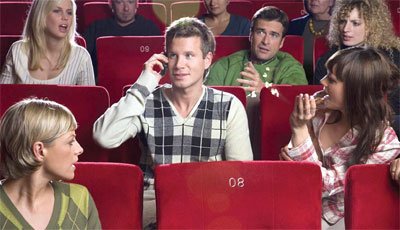
Turn off your phone when at important social occasions such as weddings, religious services and at the theatre, cinema or restaurant.

Watch your language when in a public space – you can be heard by everyone.

Realise where you are calling from – a train announcement or a bathroom echo is a dead giveaway. 

THE MOBILE PHONE ‘DON’T LIST’

Use your mobile when your attention needs to be 100% focused elsewhere. Even hands-free, in the car, adversely interferes with driving.

Carry on mobile conversations or check your phone constantly when you are supposed to be giving your full attention to others. Such actions are dismissive and ignorant.
Become an over-demanding attention seeker selfie addict.

Carry on phone conversations when making a transaction in a shop, bank or restaurant.

Use your mobile when eating with family or friends.

Texting while talking or during a discussion

Send more than two texts without a reply – it looks very insecure.

Leave caps lock on when texting or emailing – it’s shouting!

Use acronyms like ‘LOL’ – laugh out loud, ‘ATM’ – at the moment, for example – others might not understand the real meaning.

Allow anyone else to use your mobile, especially when you or they are drunk.

Finish any relationship, work or friends, by text – it’s cowardly.

So the overall message, when it comes to good mobile phone manners, is basically, “Think before using your mobile”, although it is often easy to forget this. Like the wife sending a text, to her husband, whilst out at lunch with her lady friends. “Darling I am sending you my lunch-time love thoughts. If you are sleeping, send me your dreams. If you are laughing, send me your smile. I love you.”

Everyone wanted to know what her husband texted back to her: –

“I’m on the toilet. Please advice.”

Bowie Changes

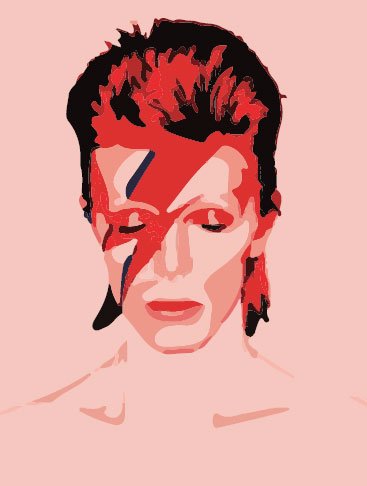
Being brought-up in England, as a youngster in the 60’s, meant one thing to an impressionable youngster and that was seeing David Bowie performing ‘Space Oddity’ on BBC TV Top Of The Pops programme. Bowie’s appearance seemed as far out as it was possible to be. Back then there was no way to record television so you could watch it later. Any one appearing had to make an immediate and lasting impact. Bowie’s first TV performance is still vividly lodged in viewers’ minds. This underscores his ability to command a following of fans, throughout a 60 year career, that may be credited to two main characteristics.


Coming from a working class back ground, Bowie provided an inspiration to many which is attributed to the fact that music leaps across all boundaries. Whatever your cultural, social, ethnic or economic background music is a universal means of communication. It mattered not that he was born in Brixton, south London. His mother – a waitress, and his father – a promotions officer, were unmarried at the time. What became more important was his reputation, which started to grow from when he attended Stockwell Infants School. Leaving, at the age of six, his reports said he was a gifted and single-minded child as well as being a defiant brawler!  Bowie was already displaying his first main characteristic that was to be so influential throughout his life. It was a determination to stand-up, defend and promote your own belief in yourself.

It became obvious, with his music, that he was saying that it was okay to be different. Just think how many people are ridiculed because they dare to be different? Bowie realised that standing out from the crowd helps others to recognise you and your brand. The more people know of you the better your chances of success. The difficulty, for those involved with creative people, is spotting potential and giving it room to develop. Too often creativity is smothered by the urge of others to conform. Being told to “act your age” is a response from those who just want to follow the rules. It is one of those truisms that winners never do what others do. That’s why they win!

Bowie’s second main characteristic demonstrated the benefits of adapting and evolving. At the age of nine, his junior school introduced innovative music and dance movement classes. His teachers described him as being strikingly imaginative and vividly artistic with a poise that was astonishing for someone of his age. Around this time his interest in music was further aroused when his father brought home some American records by artistes including Elvis Presley, Little Richard and Fats Domino. In interviews, later on in his career, Bowie expressed how much this had influenced him. So several years, groups, styles and management changes later; in 1969 “Space Oddity” was born. This record proved to be a quintessential start to Bowie’s illustrious career which saw him transform his image and music style to ones including Ziggy Stardust, The Thin White Duke, Pierrot, The Regular Dude and finally The Black Star. Over the years Bowie moved from persona to persona, with ease, creating an every changing fascinating image. This sounds easy but the clever part is staying in touch with your audience and being ahead of what they want. Sometimes changes happen because of what happens around us but Bowie seemed aware of this. Many of his fans will have treasured memories of events that influenced their lives. Even a concert ticket gives a chance to say “We were there” but importantly to remember that to succeed and survive we perhaps need to embrace Bowie’s motivational spirit.  His fans have enjoyed the merry dance on which David Bowie led us throughout his career. By grasping a belief in oneself and awareness for change we may achieve similar lasting success in our business adventures.  As Bowie sang early on in his career: –

Ch-ch-ch-ch-Changes, I said that time may change me!

Staying Focused

Perhaps you have pondered over the last few weeks if you should make any New Year’s resolutions, but how many of us can remember the ones we made last year? Unless we managed to achieve the outcome we resolved to attain, the chances are we have long since forgotten them. This is unfortunate because setting goals, by making resolutions, does work. The concept has never failed anyone. The only reason failure occurs is because the person, who may easily be you or me, has chosen to give up. What has let us down is our inability to stay focused. Research supports the view that over 78% of those making meaningful goal setting resolutions failed to stay focused and gave up.

For this reason, when setting any targets or goals, we have to accept that focus may become an issue and make plans accordingly to help us keep on track. There seems to be evermore distractions which demand our attention and steer us away from being focused. Our particular goal setting may be seen as unusual, so even our friends often want us to conform to what they see as normal. “Go on another piece of cream cake won’t harm you”. “You’ve been to the gym twice this week, time for you to have some fun”. “All work and no play makes Jack a dull boy – come on give yourself a break”. Perhaps they do not appreciate your need to stay focused when you have set yourself goals? The most important person when it comes to deciding this is YOU. Sometimes we need to put ourselves first and for many this is not an easy attitude to accept. Recall, if you will, what a flight attendant tells passengers before take-off.

‘If the oxygen masks deploy you should secure your own before attempting to help others with theirs.’ After all, unless you are getting enough oxygen, how can you help them? There are times when you have to stay focused on yourself because only when your needs are met are you able to help anyone else.

It was some fifteen years ago that a former Apple and Microsoft Executive coined the term, ‘continuous partial attention”, to describe the modern predicament of being constantly attuned to everything without fully concentrating on anything. How, in such an environment can anyone hope to stay focused? Today’s generation seem to have even more distractions, steering them away from being focused. Personally I cannot understand how someone can give an issue their full attention when holding a face to face conversation whilst at the same time juggling their mobiles, texting and allowing them to be interrupted by calls.

There are numerous ways to help stay focused but my favourite is to create a vision board made with a collage of pictures and slogans that represent my goals and dreams. I make sure I display it in a prominent place so as to remind me. When I set myself a weight loss target, I put a picture of a lean and toned guy, the same age as myself, on my fridge door. When planning a campaign I find pictures of winning situations, coupled with cryptic words, and mount them on a board near to my office desk.

To succeed you have to develop a mind-set which sees you attaining your goal. You also have to limit the number of goals that you set in order not to spread yourself too far. Ideally picking one to three goals and sticking to them, is usually a realistic target for most of us. It is also crucial that you do not bother yourself with other goals until you have achieved those you have already set. Of course the proviso to this, if your priorities shift and your goals no longer reflect what you want, is a reassessment is required.

Oprah Winfrey, American media proprietor, TV show host, actress and philanthropist tells us we should, “Take five minutes to centre yourself in the morning – set your intention every day”. Obviously this routine has worked well for Oprah and it is an appropriate start for our day if we wish to move forward, achieving our goals. Nevertheless, without determination and dedication, it is easy to be detracted from staying focused. This why my New Year’s resolution was; “Procrastinate more – Starting tomorrow! “

To Selfie or not ot selfie

Many years have passed since football legend Pele visited Kolkata and a lot has changed since then. A few weeks ago, when he was greeted by fans at Atletico de Kolkata’s ISL fixture against Kerala Blasters at the Vivekananada Yuva Bharati Krirangan Stadium in Salt Lake, Kolkata; one thing other than football was also uppermost in fans’ minds – get a selfie with Pele. This thought is so far removed from Pele’s first visit, thirty-seven years ago; no one would have predicted that the word “selfie” would have gained so much prominence. But fans, who managed to take selfies with Pele, soon started posting pictures of their memorable moment on social media. Twitter, Facebook and Instagram were soon full of selfies with Pele.
It is only two years ago that the Oxford English Dictionary, an icon of the English language, gave the accolade of “Word of the Year” to “selfie”. Since then the word has become a feature, for many of us, in our everyday language. For the uninitiated, and others will tell you that you had better get with it, a selfie is a self-portrait photograph, typically taken with a mobile phone camera, held in the hand or supported by a selfie stick.

Ranging from the flattering, casual and sometimes bizarre, most selfies are taken with the mobile held at arm’s length or pointed at a mirror so as to avoid using a self-timer. But the one indisputable fact of a selfie, which makes them so much in demand, is the overarching thought that if it happened then there must be a picture. No picture then it didn’t happen!

However the temptation to take a selfie and post it almost immediately on social media has brought its own problems. Just like pressing the send button on an email, and then regretting it soon afterwards, selfies are being posted without any thought to the unexpected consequences. Once posted on social media, selfies can soon attract reposts and retweets gaining so many views they are deemed to have gone viral. What the picture taker felt was a personal view of an event, to share with a few friends, becomes everyone’s property on which to make comment – good or bad.

When Danish Prime Minister Helle Thorning-Schmidt was shown taking a smiling selfie, sitting in-between US President Barack Obama and UK Prime Minister David Cameron, it probably never crossed her mind that she was going to create an international commotion. Although the selfie was taken at a memorial service for Nelson Mandela in December 2013 it is still, even now, doing the rounds as a selfie “in bad taste”.

Believe it or not more people have died, in recent years, while trying to take a “selfie” than from shark attacks. You may wonder how these unfortunate tragic selfies occurred.  There is the 66 year old Japanese tourist who fatally injured himself, after falling down some stairs, whilst taking a selfie at India’s Taj Mahal. Others have been killed getting too close to wild animals for that once in a lifetime selfie. In 2014, organisers of the Tour de France were compelled to ask spectators to “respect the riders” after a number of accidents occurred when spectators ran onto the roads to take selfies.

These situations arise because selfie takers frequently become so engrossed in achieving a “wow-factor” picture they forget about what they are actually doing. Of course as the selfie trend grows so do the opportunities for others to make money. Have you spotted the product placement which appears in many of the celebrity selfies? You can safely bet this is not by accident. But the image that the celebrity selfie encapsulates is one that today’s selfie generation is attracted to follow – to take part in what seems glamour and fun. Posting a selfie democratises the idea of celebrity and the dream of instant success. For one moment, as the selfie is taken, that person is making a self-confident statement.

However like many things it is all “ifs and buts” so as many of us will be tempted to take selfies, especially during festive celebrations, there is little point waiting on the side-lines as just one selfie might make YOU famous. Like the lottery saying, “You have to be in it to win it” and with fame should come some good fortune. So smile everyone please this “Kaleidoscope Team” selfie is about to go VIRAL!

Bouncing Back

Have you ever wondered why some people nearly always seem upbeat and motivated, whereas others feel stuck in a rut? Even when the troubles of life hit them, there are those who just seem to carry on and bounce back. Well if you do find yourself wondering, you may take comfort from the fact that you are not alone. Set-backs are all part of life and it is how we deal with them that limits our ability to be happy. If you want to know how to “bounce back” then read on……

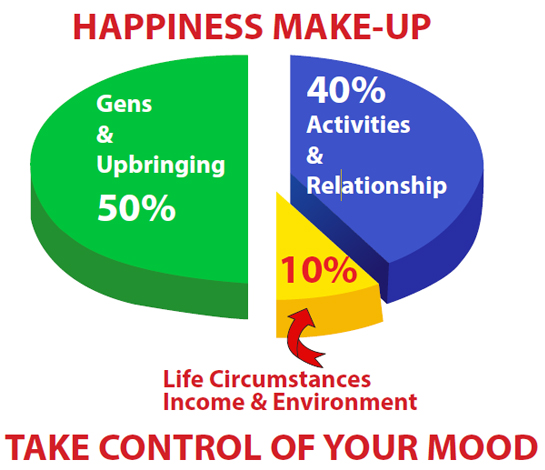
Happiness, and our ability to be happy, is known to depend on three main components. The largest of these, around 50%, are our genes, family background and upbringing. Obviously we are not in a position to change these but appreciating how they have influenced us brings a realisation that we must build on our experiences and not let them restrict our motivation.

A belief in one’s own self is what matters most. What others think of us should never take priority as a reason for holding back.

The second most important influence on our ability to bounce back and be happy, at 40%, is determined by our activities and relationships. It goes without saying that if you have a problem then do something completely different. Go for a run, play football, in fact anything energetic. The rush of blood through our bodies, our pumping heart and even the sweat detracts from a continued focus on negative thoughts. If we combine these activities with our friends then so much the better. Talking is easy but it does not really break the brain thinking cycle. Whereas spirited activity often proves to be a catalyst for breaking a downward defeatist cycle.

Surprisingly the least important of the main happiness factors, at only 10%, is shown as life circumstances, income and environment. Now come on, be honest, how many of us have said,

“If only I had more money everything would be so much better?”

In fact research shows that nothing could be further from the truth. Many have more money than any of us but they are still unhappy.

So taking these three main components into account, how do we bounce back and become happy? Well it is all about motivation – which is central to creativity, productivity and happiness. When we are motivated we act, create and change because we feel involved and able to influence not only ourselves but also those we love. This gives our lives purpose and as a consequence brings happiness.

When life becomes boring or some failure, disappointment hits us, then those who remain happy have a mind-set where they see the adversity not as a stumbling block; but as a stepping stone to greater success. They do not let feelings of inadequacy or even a fear of success, hold them back. Such negative emotions may arise from our upbringing, which is why we need to examine and understand our formative years. It is said that if you want to be a millionaire, firstly start mixing with millionaires. Similarly if you want to be happy and successful start mixing with others who are happy…..because success may then follow. It is worth noting that very few successful people are unhappy as they generally bounce happily forward on their success.

In conclusion therefore, the question arises as to how do you view your ability to bounce back?  A good example for you to ponder comes from an experiment with jumping frogs. These were placed in separate glass jars, then covered with glass lids to prevent them escaping. They were given food and water so they could survive. At first the frogs kept jumping, trying to escape, but they kept hitting their heads on the “invisible” glass lids. After thirty days the glass lids were removed. Even though the lids were not there anymore and it would have been easy for the frogs to jump out of the jars, they did not even try. Over the previous thirty days they had learnt they could not escape, so even when the glass lids were removed, they were still restricted by their self-limiting belief.

So if you find yourself, needing motivation to “bounce back” make sure you are not being fooled into believing you are limited by what was a glass ceiling that is now no longer there. Jump high and jump with confidence because you will probably find yourself leaping happily higher than you ever believed possible. Nothing ventured, nothing gained…so go on “Bounce Back”.

Shoes That Fit !

Invariably many things, in our day to day lives, change in a way that we just do not seem to notice. It was not that long ago that, in many countries, the small corner shop ruled. It not only provided personal service, it was also the centre of local gossip and news. The compulsive attraction of the shopping experience seems to rob most customers of good sense and reason. Impulse buying, influenced by the way store displays are arranged, often mean we return home with things we never really intended to purchase.
An internationally famous cut-price store group regularly has offers on totally unexpected items. Customers are known for going in to buy vegetables and come out having bought, unexpectedly, a new microwave! So strong is our desire to shop that the Internet has become the driving force. Unlike the corner shop, with which we tend to have a personal relationship, the big stores never get to know us in the same personal way. The Internet moves us even further away from meaningful individualised customer service because online vendors can only provide impersonal web suggestions. As online buyers we usually try to do all the research ourselves. The helpful comments and advice we use to receive from our corner shop have effectively vanished from the process.

I recently found, online, a wonderful pair of sports shoes at what was a great bargain price. However when they were delivered, even though I had ordered my usual size, they did not fit. Perhaps this represents an online equivalent of impulse buying but, there again, how could I check out if that style of shoe fitted me?

Unfortunately I had not read the website’s small print and only when I tried to return them did I discover that I was liable for the postage charges etc. The hassle and cost, in time and money, of doing this meant I ended-up giving the shoes away to a friend. But my friend’s gain was the online stores loss, because I never shopped with them again. What I had thought was an e-bargain turned out not to be the case. I learnt to only use online retailers who have a favourable returns policy.

So can you imagine a supermarket with no customers, no aisles to walk along, no checkout tills and certainly no shop assistants? In doing this you have just created a “dark store”, the name for something which exists to cater for the needs of the public’s demand for online shopping. Technology is rapidly reshaping the way we shop and also changing the way our town’s and city’s high streets look. Stores accept that many of us now spend our time ‘showrooming’ instead of doing real shops. We stroll through the stores whilst at the same time using our mobiles to check whether what we want to buy is cheaper somewhere else, maybe online. Probably most worrying for the supermarkets and shopping centres is that some 40% of the under-40s “showroom” and this proportion is set to grown.

Just like other changes, it has been almost unnoticed, that consumerism has become a principal pastime for the greater majority of us. We have become a generation of shopaholics believing that the more we consume the better our lives and social status will be. Some may think that we are destined to be slaves of online buying, where we don’t have any tangible confirmation of what we are going to get.

However we still value the opportunity to inspect what we want to buy, so it maybe that “showrooming” and online buying might be able to combine to provide more openness in the online shopping experience. This has already started in some areas, with “buy online – collect and inspect in store” and “book your holiday – pay balance at travel agent”. So maybe I should look forward to buying shoes that fit but there again perhaps it won’t be long before we have 3D virtual shoe fittings online!

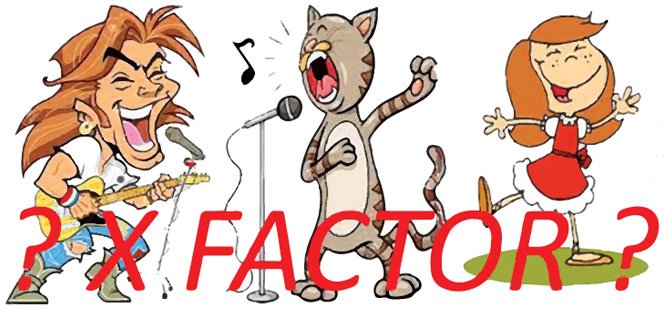
X Factor ?

It’s over 80 years ago that Sir Noel Coward, an English playwright, composer and performer, wrote:- Don’t put your daughter on the stage, Mrs. Worthington. Don’t put your daughter on the stage. The profession is overcrowded, And the struggle’s pretty tough.

But it appears that very few have taken his advice to heart as The X Factor television talent show, seen in over twenty countries, appears to have changed everything.  Across the world thousands of wannabes turn up for the open auditions.  From Australia to USA, India to UK, they all presumably have dreams of becoming the next multi-dollar international star.  Why is it that they all try when the chances of them achieving their dreams or even surviving, if they get on this showbiz whirligig, is so elusive and onerous? How many winners can you remember and as for those who were runners-up? Of course, as with anything, there is always the exception which proves the rule. In the UK 2010 X Factor whilst 1st place winner was Matt Cardle, runners-up in  3rd place were five guys known as “One Direction” and looked what happened to them!  The X Factor format ran into difficulties in the US, but even now those desperate to appear are signing petitions of support. Elsewhere the show takes on board the cultural and social demands of its TV audience. In the UK celebrity judge Cheryl Cole is compared with India’s judge Sonu Nigam, whilst in the US Britney Spears endeavoured to take on an identical role. From Pop to Punk, Bollywood to Bhangra, Rock to Reggae the show reflects a country’s musical heritage ensuring its mass appeal. Surely it must be true that a bad singer is a bad singer, no matter where you are in the world? So why is it so many want to appear when, in some cases, they just make fools of themselves?

As the impact of X Factor has grown so has the involvement of psychologists giving their views about the dangers of this type of reality TV show. It has been realised for many years that a successful show needs to generate the emotions of “Ooh”, “Arr” and “Ugh”, so as to appeal to viewers and correspondingly increase ratings. Just think of how many emotions a sports fan summons up whilst watching their favourite football or cricket team.

No wonder sports programmes are very popular. Well shows like The X Factor play similarly on people’s emotions, hope and expectations. Contestants, on being asked what taking part means to them, often results in heart-jerking tearful tales.  However after a couple of series we tend to be less sympathetic as we have heard it all before. This is why TV producers keep up the pressure by adding new twists and turns in the on-going format. Contestants equally start performing with more “off the wall” routines so as to attract attention. Eventually we become fed-up and the consequence is that the series starts to lose viewing figures.

So why do singers try to get on the show? Amongst contestants it’s a mixture of ambition, fun and determination jumbled in many variable ways. They have to have a belief in themselves which drives them onwards above everything else. The mass auditions are whittled down to another group, and so on, until only a few are left for the auditions viewers eventually see.  By the time any contestant is seen by the TV judges, they have already been through at least two auditions. The show’s originator and powerhouse Simon Cowell is reported as being upset that there are people who come on the show just because they want fame. They’ll do anything before and afterwards because that is why they’ve entered The X Factor.

So if you are everso slightly tempted to view The X Factor as your road to success and stardom, let’s finish with another thought provoking quote from Sir Noel Coward:-

Work hard, do the best you can, don’t ever lose faith in yourself and take no notice of what other people say about you !

The Importance Of Anniversaries

Similar to choosing other topics for Kaleidoscope, we usually start the ideas flowing by having a chat between ourselves. This month, one of the team said, “Well I hope you are going to mention that this will be the 20th anniversary edition of our corporate magazine; Lighthouse?”  How quickly the years seem to have passed. But arriving at this milestone for CSS started us thinking about anniversaries and why they are so important in our lives.

Just ponder for a while on the many different types of anniversaries which exist. Let’s, for example, start with some family and personal ones: – marriage, birthdays, deaths, commencing work, beginning university and perhaps baby’s first steps. Then we can move onto those which are cultural,  religious, historical and national:-  Diwali, this year falling on Wednesday 11th November; Neil Armstrong, first man on the moon, 20th July 1969; Mahatma Gandhi’s birthday, 2nd October.

Whilst all these occasions are dissimilar they all share one common attribute. They help us commemorate events and, in doing so, add more meaning to our lives.  It has been the same since humanity first started walking this earth. Not only have we always had a need to recognise time and its passing but also we have equally been a dedicated species of party animals. The Ice Age and cave dwelling seem totally alien when compared with our ability today to just stroll down to the local store to get food. It was a very hard existence so any excuse for a celebration was welcome, especially when food arrived. Bringing home a woolly mammoth called for a “Mammoth” Party.  Naturally these were bigger than other parties as a tribe could feed on a woolly mammoth for a long-time. No wonder party organisers today are keen to use mammoth as a descriptive adjective for their event. This focus on the ability to eat and the arrival of more family mouths to feed developed into recognising the bigger events like the beginning and end of nicer weather akin to Easter/Spring and Harvest/Thanksgiving.  As a tribe grew and waged war with others, or joined with them, the tradition of celebrating national events became into being. Equally it became important to recognise anniversaries relating to religious and cultural beliefs.

Soon, the party animals that we are, needed more reasons to mark occasions and celebrate. Consequently births, engagements, marriages and deaths started to become a focus for anniversaries. Probably the biggest change arose when individual marriage ceremonies started. Whilst the best available evidence indicates that the first organised marriage ceremony was about 4,350 years ago, not that too far distant really, they didn’t have much then to do with love or religion. It was a case of organising the tribe into a social structure. However since this date the trend was started. Weddings had become one of the social calendar’s most important occasions to show off a family’s importance within society. Forget a wedding anniversary and you were, and still are, in BIG trouble.

Anniversaries, of any type, also provide an opportunity to reflect on what has past and what we hope for the future. They invariably stir memories for us, good or bad, touching our emotions. This is why TV schedulers adjust their programme schedules to coincide with anniversaries because generally it ups their ratings.  Anniversaries take on a different slant within the work environment as it usually means an employment contract is up for assessment or renewal. Naturally if you want to ask your boss a favour, choose a date on which they are celebrating an upbeat anniversary and not a sad one.

So where does this leave us with Lighthouse magazine? Well no doubt the staff will be reflecting on how your CSS corporate publication has grown and developed in style, since its inception. They will also be taking into account your views, which have been expressed to them over the years. Successful magazines are never static in their format because, in order to appeal to their readership, they have to reflect your needs and aspirations. These are forever changing and it’s this impetus which drives us all forward. If Lighthouse is allowed a short blow of their trumpet, the perceived response is that it has been a success. So in the spirit of anniversaries – using the traditional gifts – they may be allowed to drink a toast held in wooden cups whilst using a silver knife to cut some sandwiches.  Enjoy!!

Euphemistically Speaking Have A Good One !

Well here we are having no doubt enjoyed unwrapping our seasonal presents. Whilst it is often said, when it comes to giving gifts, it is the thought that counts equally it is the conversation that the gift triggers that matters just as much. I recall a hospital patient, upon receiving several large boxes of chocolates, saying to her visitor: – “Oh you shouldn’t have spent your money on all of these for me”. But this was not the real meaning of her words. What she actually meant was: – “It makes me happy that you have done this”.  This difference in what we sayand what we really mean is euphemism in action!

The word euphemism originated from the Greek word “euphemia” meaning “the use of words of good omen.”Their use occurs in all languages but English is reputed to take the prize, as world champions, for using them the most. Whilst all languages have a plethora of abrupt short terms that emphasise big points, so as to make their meaning clear, it is sometimes preferable to soften the impact with a euphemism. Replacing possibly upsetting terms with a euphemism is generally considered to be polite.  For example the western world’s yearning for bodily perfection and longevity gives rise to, ‘cuddly’ really meaning ‘fat’ and ‘follically challenged’ meaning ‘bald’. You no doubt will agree that these terms sound more polite.

English is particularly difficult to understand,when it comes to the use of euphemisms, as the real meaning can change according to the pitch, speed and inflection of the spoken words. The late English novelist, George Orwell is quoted as saying that euphemisms can be sneaky and coercive.  A ‘major problem’ seems less alarming when it is called a ‘challenging issue’.

In politics, politically correct euphemisms now rule the roost and have become pervasive.  Instead of using, ‘good or bad’, politicians have replaced them with ‘appropriate or inappropriate’. They sound better don’t they?

Euphemisms are so firmly established in British speech that foreigners, even those who speak fluent English, may miss the true meaning.  Here are two of my favourite examples:-

When the British say: -“With the greatest respect”.
What is understood: – “Apologising for having a different opinion”.
What is meant: – “You are mistaken and being somewhat stupid”.
When the British say: – “I will keep it in mind”.
What is understood: – “They will probably do this”.
What is meant: – “I will almost certainly ignore this”.

There are so many examples in all areas of life and in all languages, but a particular saying at this time of year is: “It’s just what I always wanted”. In euphemistic circles this phrase is as hollow as any that was ever uttered by Charles Dickens’ Scrooge.  Funnily enough London has been namedas the capital of unwanted Christmas presents. New Year sees the pages of UK eBay full of unused and unwanted presents, being sold-on as second-hand bargains.

Realistically languages without euphemisms would be much more honest but at the same time they would be more brutal and upsetting.  Perhaps this New Year you might try getting through a whole day without using any euphemisms in your conversation. The results will undoubtedly surprise you. It simply isn’t that easy.

Fortunately there is an English phrase that, no matter how hard you try to say it differently, still keeps its real meaning.“Have a good one”, means exactly what it says. So to all our Lighthouse Kaleidoscope readers may we say to you, with totally no euphemisms implied or meant … “New Year 2015 – have a good one!”

Sledging is not Just for Children…

When I was a youngster I spent many happy hours, with my friends, building a sledge out of bits of wood. Somehow we managed to fly down slops, in summer sledging over short grass and in winter across firm snow, without breaking our necks! However, in recent years,‘sledging’ has gained greater prominence with cricket aficionados.This term apparently originated in the 60’s when Australian bowler Grahame Corling wasserenadedby some players singing ‘When a man loves a woman’- at that time a hit by USA soul singer Percy Sledge.  It was attempt to taunt Corling so as to distract him from focusing on his play. Since then this practice, of trying to weaken an opponent’s concentration, has taken on the surname of Percy Sledge by being called ‘sledging’. Other sports have methods of distracting a competitor’s attention but the technique in cricket is unique. To understand thisit is necessary to explore cricket’s history. Despite the apparent recent popularity of sledging, the practice of witty banter between players is as old as cricket itself. Therein lies the difference between cricket and other sports. Ever since John McEnroe’s infamous outburst, on the tennis courts in Stockholm in 1984, the nature of goading in sport has risen to a level at which no genuine cricket fan would approve. The reason for this is based in cricket’s past.  The first recorded cricket match took place in Kent, England in 1646. The game quickly became popular with the first ‘laws of cricket’ being established in 1744. The thrust of them focused on “gentlemen” playing the game. Subsequently conduct, on and off the pitch, required that all participants, players and spectators, behaved in an acceptable gentlemanly manner. Honour and integrity were at the forefront of play. A player never argued with the umpire. If you were given out – you walked! Generations of UK schoolboys had it drummed into them that,even if you felt you had been wrongly dismissed, you did not argue with the umpire’s decision. It probably made-up for all the times you should have given out and weren’t! Accordingly gentlemanly conduct ruled supreme. There is now an on-going debate, in the cricketing world, as to what constitutes poor sportsmanship or good humoured banter. Anything which descends to abuse is unacceptable. This is not what sledging is all about as it should never cross the sportsmanship line. Sledging should be kept to humorous, sometimes slightly off the wall remarks and clever verbal attempts in order to distract an opponent.

Sledging has always been a part of cricket as even the legendary W G Grace did it. Grace’s determination to stand his ground would have made Sunil Gavaskar proud. When a ball knocked off one of his bails Grace replaced it and told the umpire that it was the wind which took the bail off. The umpire replied, “Indeed Dr. Grace and let us hope the wind helps you on your journey back to the pavilion”. Grace walked with good humour.

Interestingly it is usually accepted that Indian cricketers, unlike the Aussies who love it, don’tsledge very much.  There is one notable occasion, when the tables were turned and Ravi Shastri sledged Mike Whitney who was the Australian 12th man. Trying to snatch a single run Whitney shouted, “If you leave the crease I’ll break your blinking head”. Shastri quickly retorted, “If you could bat as well as you can talk, you wouldn’t be the blinking 12th man”.  You do, of course, have my permission to assume that the language used was slightly more colourful!

I always prefer and chuckle at the short, sharp retorts. This is why I choose, as a favourite, one from‘Fiery Fred’ Trueman probably the most revered English bowler. As an Australian batsman was walking onto the field, he opened the gate and before he could shut it, Trueman shouted, “Don’t bother shutting it son, you won’t be here long enough”.

Cricket remains a game where many of us still hope our children are taught that it is not winning that counts the most.  Rather it is playing a sportsman-like match which matters more. An extract from a poem by former UK Prime Minister John Major, an ardent cricket enthusiast, sums up this cricketing ethos. It was written as a tribute to England test cricketer, Colin Cowdrey, who was born in Bangalore.

“The mellow sound of bat on ball,
The wherewithal to enthrall,
The master with a Corinthian touch,
To whom victory mattered, but not that much”.

Hopefully, with this in mind, you will agree that sledging should remain as witty banter that enhances the traditions of the cricketing spirit.

Emotional Flying Club

It’s jokingly said some airlines have become so focused on getting more money from passengers, using add-ons to the basic fare that soon we’ll be charged for emotional baggage. This idea might make you chuckle but the chances are your flying routine follows an excitable pattern. The somewhat unbelievable concept of being enclosed in a pressurised metal tube, flying 40,000ft above the earth, hurtling along at 500 miles an hour triggers all sorts of emotions. This usually means that our flying routine, that others make look so easy-going, triggers lots of emotion. But we are not as alone as we think. If your friends do any of the following, they are with you in: – “The Emotional Flying Club”. They are just better at hiding their membership card!

Before you even arrive at the airport you start worrying about how long it takes to get there. Do you doubly make sure you get up in time, for that early morning departure, and don’t oversleep? Go on, admit it, we’ve all set more than one alarm clock and also booked an alarm call. You have done the airport journey many times before. It only takes 30mins or is it 50mins? Well, let’s say an hour to be sure eh? On the way, and at the first of hint of any hold-ups we start thinking, “Will you get out of the way?” wondering why all the worse drivers are on the road at once. Arriving at the airport we are amazed at how the journey took such a short time. We have arrived with hours to spare. However it is an “airport travel” memory block, because next time we will have completely forgotten this and go through all the emotional panic again.

Of course, we now start double-checking if we have got all our passports and tickets. No chance of remembering where the passports were hidden for safety. Everyone in our party starts looking and things become more confused. Eventually the passports appear, as if by magic. We were so sure that the luggage was underweight but, as we get nearer the baggage drop, we become convinced that it must weigh at least 25kg and will be rejected for being overweight. Suddenly the security questions take on a new meaning. “Yes, no one could have interfered with my bags”. “No, I am not carrying anything for anyone else”. Easy answers, but why is it we try to avoid feeling and looking guilty? When it comes to security clearance, even though we are so organised, we worry if all liquids and gels are in the plastic see-through bag. On heck, I’ve not left that spray in the carry-on case have I? It goes without saying, that whichever security queue you join, the others will be quicker. Naturally we get annoyed at passengers who leave it, until the very last moment, to start removing belts, watches, mobiles and laptops. Admit it you look-on, with anticipation, as your case travels through X-Ray. Will it make it OK? As for walking through the security arch yourself – whoops, breathe again as no alarm sounded. If you have ever become annoyed with the others repacking their belongings so slowly, whilst you are ready to move on, then your emotions are certainly rising in the emotional baggage count. Now all you have to do is to make sure you don’t miss your flight and never leave your baggage unattended. Sounds easy – forget it!

Even if you are in a lounge, no flight ever seems to be shown on the screen when you are checking. No matter how many times you look, the boarding gate seems to appear just when you weren’t looking. If you find yourself late, your flight will be departing from the farthest gate possible from where you are. Have you ever boarded a flight that leaves from Gate 1? No, neither as anyone else! As to you having some luck, if you are allocated a middle seat, you can easily spot which passengers will be sitting either side of you. The two largest! If you are travelling on business, no matter what cabin class, the crying baby will be seated nearest to you. Another emotional moment, just as you are about to sit down, consider this conundrum. Why is it that, when there is less carry-on luggage space available, the more carry-on luggage the passengers will bring aboard? You end up having to stow your bags nowhere near your seat! By now, you’ll have realised that this article only touches on some emotional triggers. There are so many more, that it’s no wonder we all have enough experience to join the Emotional Flying Club.

So come on, admit and apply for membership. As a nervous elderly lady said to a pilot, “I’ve never flown before; you will land me safely down, won’t you?” “Well ma’am,” said the pilot, “I’ve never left anyone up there yet!” I bet this senior first-time flyer was already a bona fide Emotional Flying Club member! Happy travels………

Is it “Happy Handshake Day”?

It was a news item about National Handshake Day, being held in various parts of the world on 27th June, which prompted this Kaleidoscope article. No doubt we have all been brought up to be aware of the significanceof our handshakes. However, if like me, you thought handshakes are important then you will probably find it interesting to learn that I am beginning to have reservations. The deeper I researched the concept the more I became convinced that, when it really matters, trying to assess something from a handshake may well be ill-conceived.

The idea of National Handshake Day is to celebrate the most common greeting used between two people. It is believed that handshakes originated, in the western world, more than two thousand years ago. This is because as giving a handshake meant that the participants were holding no weapons, it was seen as a gesture of peace. Today, when meeting or leaving, it is viewed as an expression of goodwill, thanks and maybe congratulations. As with many things, which relate to our body language, expressions and their meaning, the physiologists and behavioural analysers have written an extraordinary amount about what different types of handshakes convey and imply. Many believe that they reveal something about the characters of the hand shaker. Simply put, a firm handshake reflects a confident person whereas a weak handshake a shy personality. But if we have all practised what to do to impress people, when we meet them, doesn’t this defeat the object of believing what different handshakes mean – hence my reservations? A good communicator will know what is expected and similarly will a cunning trickster. So it all really boils down to us understanding what the different handshakes emotionally emanates and try to avoid the ones that put us in a poor light. Here are some tips for a good handshake.

Whatever you do, never offer a handshake without some oral introduction. Extending your hand should be part of your introduction because without any vocal greeting you will appear nervous or somewhat aggressive. A business handshake should be brief just like a “sound bite” so holding on shaking for longer than three seconds or so is a “no-no”, unless you are already good friends with your business associate. Shake from your elbow and not from your shoulder. You do not want to risk jolting the arm of the other person or appear overbearing. In a similar manner do not use a forceful grip, not least because your greeting should be a friendly and respectful gesture and not a show of your physical strength. Bear in mind the “no-no” handshakes, the names of which are self-explanatory:-

Lady Fingers – Sometime in genteel social circles offering your fingers to a lady is deemed courteous but in business circles you are deemed to be equal not a “lady”.

Fish Hand – This is a limp handshake which conveys an impression of someone lacking confidence. You should return the other person’s grip but remember it is not a power struggle even if the other person thinks it is.

Sweaty Hands – Usually another’s sweaty hands mean a sign of nerves but do not embarrass them by immediately wiping your own. Do it discreetly afterwards.

Two Hands – The delight of many politicians who often fail to realise that this show of friendship falls flat when used with people we barely know. In business stick to using one hand unless you really “really” know the person you are greeting as also a very good friend.

When it comes to ending a handshake, remember after 3 – 4 seconds and no more than 2 – 3 pumps, in order to avoid any awkward moments, end your handshake before the oral introductory exchange finishes.

This leaves us with “National Handshake Day”. What can we do to take part, if we wish, on 27th June? Well it is very simple. If you usually arrive at work and greet others with a casual wave or “Hi” then choose the 27th June to be a day when you give them a nice firm handshake instead. Tweeting, blogging and posting things on-line seems to be overlooking the importance of “face to face” meetings and greetings. So go – post some picture of your handshakes! Who knows what response you may generate and no doubt it will all be fun. However as I have started to have reservations about the importance of the interpretation of handshakes, I’ll leave you with these two quotations to consider.

“The most important things in the first few seconds of a meeting are basically, a firm handshake and a smile, good eye contact and really paying attention”. – Pat Schaumann, 1950 onwards, American author “Guide to Successful Destination Management”.

“Experience teaches you that the man who looks you straight in the eye, particularly if he adds a firm handshake, is hiding something”. – Clinton Fadiman, 1904 – 1999, American author, editor, radio and television personality.

If you can work out when each quotation has the greater relevance, I will only need to wish you a “Happy Handshake Day”.

Who Wants to be a Millionaire?

It’s forty-eight years ago that the film “High Society” introduced Frank Sinatra and Celeste Holm, as Mike and Liz,  singing “Who wants to be a millionaire”. The attractions of having a livery chauffeur, a gigantic yacht, a country estate and wallowing in champagne were lost on them. All they wanted was each other. This highlights an important consideration if you hanker at being a millionaire. If you are not going to be happy – forget it!

If you don’t believe this “Happiness Rule” a look at the some worldwide lottery winners will change your mind. Visit a certain McDonald’s restaurant in Cardiff, Wales, UK and you may be served by a guy who became a lottery millionaire some18 months ago.  Luke Pittard celebrated, like many others, buying a new home, having a big expensive wedding and luxury honeymoon. However he realised that he missed his mates and enjoyed flipping burgers, at the place where he also met his future wife, so he’s back there working.

Janite Lee is an immigrant into the USA, from South Korea. Janite won $18 million in 1993 but only eight years later she was filing for bankruptcy. Her generosity was misplaced and the money soon vanished leaving her back where she started. Apparently she felt more relieved to be rid of the pressure of having money.

If we accept that your happiness in being a millionaire is a key requisite what comes next? Well here are some myths to dispel by confirming three facts.

1)     Most millionaires are self-made.
2)     Most millionaires have stopped short of obtaining the highest university qualifications.
3)     Most millionaires do not know a lot about investing in stocks and shares.

Right so YOU want to be a millionaire? Get ready to step outside your comfort zone and start believing in yourself. “Possibilities” and “If only” must vanish from your thought process. It is time to “Get real”. You need to be tenacious, focused and determined. Most millionaires live cost effectively and this means avoiding unnecessary expenditure. Nice things are to be enjoyed but not at the expense of spending overtaking your rate of saving. Living beneath your means is an important part of accumulating wealth. The majority of millionaires, in comparison to what their companies became, had frugal start-ups. There isn’t much point looking the part, if it costs an arm and a leg and you haven’t the customers to pay for it! A helpful idea is to find a mentor who has been there, done that and seek their advice. Consequently, “If you want to be a millionaire surround yourself with millionaires”.

When fourteen year old Suhas Gopinath started Global Inc ten years ago from a cyber café in Bangalore, the capital city of the Indian state of Karnatake, he was not aware that he had become the youngest CEO in the world. He also didn’t realise that he was demonstrating all the attributes of becoming a millionaire. Focused, stepping outside the usual comfort zone for anyone of a similar age, he was frugal with his start-up and still lives in the family home well within his means. Today, Global is a multi-million dollar company with offices throughout the world.

When he needed a computer, but his family couldn’t afford one, he spotted that his local Internet Café was closed in the afternoon. He offered to open and run the shop in return for being allowed to browse the net for free. It turned out to be his first great business deal. If you want some inspiration about becoming a millionaire I recommend reading about Susha’s road to success.

However never believe that being a millionaire will not change your thinking. I love the story of the self-made millionaire who told his church how, many years before; he left the same church penniless having given his last dollar in the collection. He said that having done it released him from all his worries. Soon afterwards good fortune blessed him and he became a millionaire. Everyone applauded as he sat down in the congregation, when an old lady sitting nearby turned to him and said, “I dare you to do it again!”

So go on…I dare you….to become a millionaire!

Page1 Page2

CSS Newsletter

In this issue:

Quick Links

  • Home
  • About
  • Services
  • News Media
  • Careers
  • Contact us
  • Corporate Brochure
  • CSS Corporate PPT
  • Lighthouse
  • News Hub
  • Privacy Policy
  • Cookie Policy
  • Disclaimer
  • T&C’s

Locations

  • Dubai
  • Abu Dhabi
  • Sharjah
  • Ras Al Khaimah
  • Bahrain
  • Oman
  • Qatar
  • Saudi Arabia
  • Kuwait
  • Kenya
  • Turkey
  • India

Subscribe to our bi-monthly newsletter, Lighthouse

  • Follow Us
© 2026 CSS Group. All rights reserved. Crafted with by Netventure