Skip to content

Lighthouse

Bi-monthly publication of CSS Group

Lighthouse
  • Call +971 4 8872333
  • Mail info@cssdubai.com
  • Menu
    • Home
    • About
    • Services
      • Global Freight forwarding
      • Ocean Freight Management
      • Supply Chain Management
      • Land Transportation Management
      • Industrial Packing, Crating & Lashing
      • Air Freight Management
      • Projects Oil & Energy
      • Exhibition Event Logistics
      • Automobile Logistics
      • Art Logistics
      • Non Vessel Operating Common Carrier (NVOCC)
      • Hospitality & Hotel Logistics
      • Multi-modal Operations
      • Container Freight Station (CFS)
      • Yacht & Marine Logistics
      • E-commerce Fulfillment
    • Locations
      • Dubai
      • Abu Dhabi
      • Sharjah
      • Ras Al Khaimah
      • Bahrain
      • Oman
      • Qatar
      • Saudi Arabia
      • India
      • Sri Lanka
    • Careers
    • Track & Trace
    • Login
      • Customer / Agent
      • Employee – Portal
      • Employee – Dashboard
      • CSS India Login
    • More+
      • Lighthouse
      • Media Hub
      • Feedback
    • Contact Us
  • Login
    • Customer / Agent
    • Employee – Portal
    • Employee – Dashboard
    • CSS India Login
  • TRACK & TRACE
  • NOTICES
  • LIGHTHOUSE
Lighthouse
  • Call +971 4 8872333
  • Mail info@cssdubai.com
  • Menu
    • Home
    • About
    • Services
      • Global Freight forwarding
      • Ocean Freight Management
      • Supply Chain Management
      • Land Transportation Management
      • Industrial Packing, Crating & Lashing
      • Air Freight Management
      • Projects Oil & Energy
      • Exhibition Event Logistics
      • Automobile Logistics
      • Art Logistics
      • Non Vessel Operating Common Carrier (NVOCC)
      • Hospitality & Hotel Logistics
      • Multi-modal Operations
      • Container Freight Station (CFS)
      • Yacht & Marine Logistics
      • E-commerce Fulfillment
    • Locations
      • Dubai
      • Abu Dhabi
      • Sharjah
      • Ras Al Khaimah
      • Bahrain
      • Oman
      • Qatar
      • Saudi Arabia
      • India
      • Sri Lanka
    • Careers
    • Track & Trace
    • Login
      • Customer / Agent
      • Employee – Portal
      • Employee – Dashboard
      • CSS India Login
    • More+
      • Lighthouse
      • Media Hub
      • Feedback
    • Contact Us
  • Login
    • Customer / Agent
    • Employee – Portal
    • Employee – Dashboard
    • CSS India Login
  • TRACK & TRACE
  • NOTICES
  • LIGHTHOUSE

THE PANDEMIC – A BOON FOR SHIPPING COMPANIES AND A BANE FOR SMES

The year 2022 does not indicate any likelihood of a sudden decline in ocean shipping rates. This means another year of booming profits for global cargo carriers. However, small businesses and consumers are paying the price. They are forced to pay sky-rocketing freight costs as cargo giants mint profits. The market shows the nature of a spot market where the price of a 40-foot container to the U.S. from Asia stood at $20,000 last year, inclusive of surcharges and premiums, which had initially been at $2,000 a few years ago.
Unlike the big giants like Walmart Inc. and Ikea, who can tackle the high rates, the small exporters and importers cannot easily pass through these costs or weather long periods of stretched cash flows. Amruth Raj, the managing director of Green Gardens, a vegetable processor, says, “Small and medium-sized enterprises are being badly affected. They exploit our desperation.”

The future spells 200% higher elevated prices as tight container capacity and port congestion have maxed up chances for long-term rates in contracts. Achil Yame, Cameroon National Shippers Council, stressed that this inequality is heavy on the African countries. “If nothing is done to reverse the trend, the risk in terms of inflation and food security can grow very, very high.”

Windfall Leading to Inflation

The British International Freight Association is one of the latest who has called on the U.K. government to investigate the “distorted market conditions” in the global container shipping market arena. The surging shipping transportation cost has been responsible for stoking inflation and clouding the recovery.

The Kansas City Fed economist Nicholas Sly has researched and found that a 15% increase in shipping cost leads to a 0.10 percentage point increase in core inflation after a year. He stated that shipping rates are currently a persistent challenge. “These types of shocks tend to last for 12 to 18 months.”

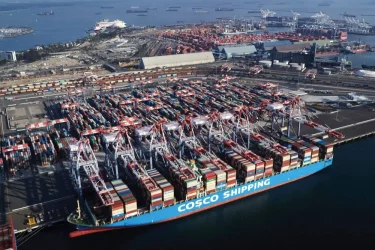
Twenty-five years ago, 20 companies controlled half of the global capacity. Today, it has come down to 10 container lines that contain nearly 85% of the capacity for shipping goods by sea. These lines are based in Asia and Europe, the more familiar ones being Maersk, MSC, France’s CMA CGM SA, and China’s Cosco Shipping Holdings Co. Nine of them operate under vessel sharing agreements called “alliances” though being competitors. These alliances allow them to coordinate schedules and share ship space.

Rising Freight Rates

The pandemic showcased how the carriers drove the market with a bullish frenzy by holding the economy and then ramping it with crazy rates. The contract rates on ocean freight locked in high shipping costs into 2023. A Pennsylvania-based importer MCS Industries Inc., filed complaints against MSC and Cosco, stating that they have been “Operating in tandem to exploit the Covid-19 disruption to profiteer at the expense of U.S. consumers.”

James Hookham, Global Shippers Forum Director, states, “We believe this market needs some investigation to make sure those customers are not being abused. This market is not working to the benefit of everybody.” Mario Cordero, former chairman of the FMC and Executive director at the Port of Long Beach, said it’s a “confluence of factors” that have led to the tangling of the global supply chain in the wake of the pandemic. He states that “I’m not suggesting we’re over this.”

During the first lockdown in March 2020, the Chinese and American economies reopened. Government stimulus payments began flowing, bringing consumer demand for goods such as exercise bikes and home-office desks. By the third quarter of 2021, world trade in goods hit a record $5.6 trillion and was on pace for an equally solid number in the year’s final three months.

Demand Driven by Shortages

The sudden demand disrupted the supply chains as most U.S. ports couldn’t process imports fast enough, trucking companies fell short on drivers, and warehouses ran out of space. Because of port congestion, fully loaded ships stayed put on California beaches for weeks. Suddenly everything halted.

In November 2021, the White House called on the Federal Maritime Commission (FMC) to “use all of the tools at its disposal to ensure free and fair competition.” Since then, the FMC has increased carrier alliances’ monitoring to better track trends and spot potential illegal behavior, such as artificially limiting supply or not competing on prices. The agency’s chairman, Daniel Maffei, says that there are little regulators can do to rein in more widespread potential under current U.S. law. “The fact is that it is very, very difficult, if not impossible, for the FMC to challenge these alliances for violating competition requirements,” said Maffei, noting that he has no evidence that they currently are. “We don’t have the practical tools necessary to challenge it.”

Last year a bipartisan bill was passed in the U.S. aimed to reform U.S. shipping laws. It would give the FMC greater authority, prohibit carriers from discriminating against American cargo, and give businesses more power to challenge carrier fees. The European Commission is “closely monitoring the container shipping industry and is aware that there have been large price increases,” the commission said in a statement. Lori Fullmer, vice president of logistics and carrier management at BassTech International, says she’s had shipments rejected multiple times, “In some cases, there was no getting space on a ship,” she said.

The Sri Lankan Scenario – Slumping Capacity

Exporters of the apparel manufacturing industries in Sri Lanka are struggling to meet orders as carriers shift their vessels to lucrative routes connecting China to the U.S. and Europe, said Sean Van Dort with the Joint Apparel Association Forum Sri Lanka. “Yes, they have to make money, don’t get me wrong — but when you have ten times, twelve times, sixteen times higher freight rates — there’s something radically wrong,” he said.
ROAD LOGISTICS IN INDIA SET FOR COMPOUNDED GROWTH OF $330BN BY 2025

The recently released ‘Inter-City Logistics Market Study’ has estimated a buoyant growth in the road logistics market in India in the next five years. The report by RedSeer’s early-stage research arm, RedCore, assesses a compounded annual growth rate (CAGR) of 8 percent, taking the inter-city road logistics to spend from USD 209 billion in 2021 to USD 330 billion by 2025.

Inter-city Road Logistics

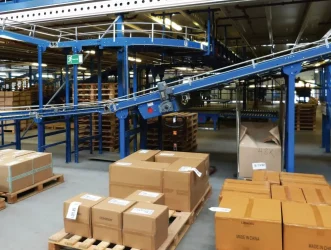
Today inter-city road logistics accounts for nearly 87% of the total road logistics spend. The study indicates that the swiftly growing e-commerce market and retail sales sector have fueled an upswing in road logistics. The on-demand/spot market currently accounts for nearly 63 percent of the total inter-city road logistics spend, and the contract market takes up the rest of the market share. On-demand/spot cargo transport caters to unfulfilled and urgent demands, such as freight associated with defense, agriculture, food, building material, FMCG, PSUs. Such clients usually engage in moving goods immediately and prompt settlements.

According to the RedCore study, metros bring in approximately USD 84 billion, nearly 40 percent of the total inter-city logistic market. Road logistics today make up for a sizeable 60 percent of the overall logistics spend, which accounts for nearly 14 percent of GDP in India. The research notes that the relation between logistics cost and GDP is a direct indicator of the business competitiveness of India concerning transport infrastructure, freight management, and ease of doing business.

Starts-up Rule the Roost

This sector that is ripe for the picking has seen an upsurge in the number of startups that are consciously addressing industry pain points and changing the rules of the game. Innovative business models have sprouted, disrupting the sector and delivering value throughout the operating cycle. From discovery and booking to value-added services and delivery, new businesses engage with consignors, freight carrier owners, and truck owners to take this massive economic opportunity.

According to the study, the basis of most of these new enterprises is leveraging technology to build an accessible marketplace connecting stakeholders. Startups are making the on-demand/spot freight market direct and easy to engage in, such as connecting truck owners with verified transporters with commission-free, instant bookings. Regulatory changes, and policy improvements such as Logistic Efficient Enhancement Program (LEEP), Digital India, and Make in India, among others, have also propelled growth in the sector, the study notes.

E-COMMERCE GROWTH PROPEL LOGISTICS AND WAREHOUSING DEMAND

The e-commerce sector will continue the unprecedented surge it witnessed in 2021. According to a JLL survey, this strong growth and increased express and parcel deliveries, third-party logistics, healthcare, life sciences, and construction and materials will generate significant demand for warehouse and distribution facilities.

The Certainty of Uncertainty

As the physical retail sector grapples with the new normal, consumers will continue to flock to online stores. A study conducted by First Insight and the Baker Retailing Center observed that 98% of retail executives surveyed expect supply chain challenges to continue to impact the retail sector throughout 2022. Today multiple variables affect the retail and logistics scenario.

Product shortages for critical components such as semiconductors and computer chips will affect m a n u f a c t u r e r s , d a m p e n i n g technological innovation. As businesses pass on increased operational costs to consumers, prices continue to be inflated. Further, labor shortages, regulatory implications, political embargos, travel restrictions will continue to jostle business plans.

Amidst this, customer expectations are still really high. Research by McKinsey & Company and RILA noted that more than 90% of consumers expect a 2 to 3 day delivery as the baseline, of which 30% of respondents expect same-day delivery. The retail sector had already embraced the digital shift. Nonetheless, the pandemic has propelled companies to revisit their speed, inventory stocking, and new technology. E-commerce has made the highest year-on-year growth globally, a standout performer in the logistics sector. The US, Europe, and China accounted for nearly 16%, 22%, and 30% of the total logistics and industrial leasing, respectively.

Last year, companies experienced a global shortage of transport capacity and delivery drivers. The companies that will outperform in 2022 will swiftly adopt new technologies and automation. The McKinsey report notes that the key imperative for retailers is to “become omnipotent on omnichannel”. Consumers will increasingly prefer retailers based on the end-to-end experience.

Key Forecast for Logistics

This strategic cognizance will fuel demand for 3PL services. Outsourced third-party logistics (3PL) services will continue to grow, offering multiple location-based distribution facilities that provide more efficient order processing and fulfillment. Growth of micro warehouses in urban areas and operating more than one distribution facility will enable better management of order volumes, inventory and delivery times.

There will be a conscious move by branded goods manufacturers in fulfilling direct-to-consumer (D2C) orders. Directly marketing and selling to their consumers offer manufacturers better control over branding, quality, and customer experience.

Optimizing reverse logistics will also be a crucial factor. E-commerce companies must rapidly grasp managing the flow of goods coming back as efficiently as the goods going out. The cost-benefit analysis of the value of the goods returned against the operating costs incurred in return must be assessed.

Last-mile logistics will also become a make-or-break strategy in e-commerce logistics. This critical process involves the conclusion of the delivery to the customer. The overall delivery experience and customer satisfaction are highly dependent on the last mile service. There is considerable involvement by 3PLs to focus on “last mile as a service” (LMaaS). Companies offer affordable rates by managing transport routes and providing live delivery updates to customers. Technology and innovation have made much progress in addressing the customer experience in the last mile challenge. Companies now use light electric vans, eCargo bikes, autonomous vehicles, and drones.

Sustainability in logistics is another emerging trend as businesses increasingly look at this as a strategic imperative. According to a recent survey by McKinsey, consumers prefer brands that have actively adopted sustainable means in production and delivery. More than 70% of respondents were willing to pay a 5% premium for products of equivalent quality produced by more sustainable means. E-commerce companies that have endorsed sustainability as their strategy and adopted greener with more efficient delivery methods will see a significant advantage today.

Sustaining the Growth Story

According to the JLL survey, space constraint and sustainability emerged as the top two concerns amongst respondents as obstacles in sustaining the present growth in logistics demand. The limited supply of entitled land for logistics has had firms already delaying decisions. In several cities such as Toronto, New York, and Los Angeles, availability is lower than 3%. A similar concern echoed amongst 65% of respondents in Germany, China, the Netherlands, and Australia.

Secondly, adopting sustainable solutions that yield cost savings has to become the focus. An overwhelming majority (nearly 73%)  of the respondents rated improving energy efficiency as the highest priority globally. Presently, larger occupiers and developers with global and regional networks have adopted methods towards decarbonization. However, 90% of global respondents believe in investing in automation and robotics for improving supply chains to reduce carbon footprint. Technology will continue to play a significant role in transforming the logistics sector’s future.

Craig Meyer, President, Industrial, JLL said, “The number of unique active tenants has surged as companies rush to build up their e-fulfillment capacities and, despite a normalization of the market as the effects of the pandemic wind down, we expect to see this trend hold strong over the next three years.” E-commerce will continue to propel an enormous wave of industrial leasing globally in the next couple of years, increasing demand.

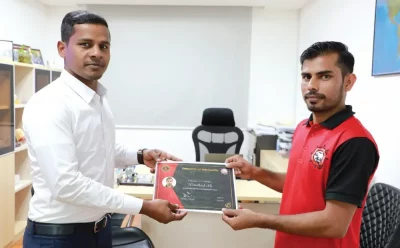
EMPLOYEES OF THE MONTH

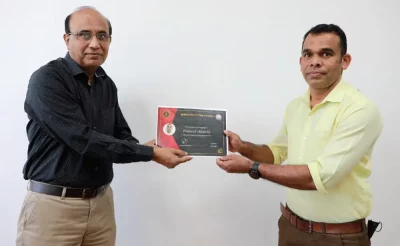
  HAMEED ABDULLA – Messenger, Documentation, CSLC1 awarded by Giridhar Achyuthan, Group finance controller


NAUSHAD ALI – Cleaner, HSE, CSS HQ awarded by Joyel Netilas, Coordinator – HR


BIJU VIJAYAN – Forklift Operator, SCM Operations awarded by Sunil Kumar, Warehouse Incharge, SCM


RESOLVE SUPPLY CHAIN ISSUES WITH DRIVERLESS TRUCKS

Software developers are creating a significant breakthrough, working hand in hand with shipping companies. Software experts have come up with the concept of driverless trucks to meet the driver shortage woes faced by the shipping industry. With the onset of the COVID pandemic, shipping companies have been among the worst hit. Like JB Hunt Transport Services Inc., Uber Technologies Inc., and FedEx Corp., a few big-timers have been testing automated trucks. This new solution seems to be a long-term solution to an intractable labor problem.



Driverless Technology – Under Scrutiny

Sterling Anderson, a co-founder of Aurora Innovation Inc., responsible for testing driverless truck software with Uber Technologies logistics section, states, “Human drivers, by our nature, have to eat, sleep, and take breaks. What that leads to is enormous underutilization of these trucks and much slower movement of goods.”Tesla Inc. has introduced the Autopilot feature with a driver assistance system, which is the closest to autonomous passenger service but is constantly under scrutiny as safety advocates call the technology risk to motorists. Safety advocates warn that the technology is still unproven and has more chances for fatal crashes.

Advocates for Highway and Auto Safety Cathy Chase say, “What we see playing out on the roads with some cars claiming to have self-driving capabilities is giving people some pause. We should not be putting test products on the roads.”

Ariel Wolf, general counsel to the Self-Driving Coalition, spoke in favor of the new technology, “Autonomous trucks serve as an active partner to companies trying to address the truck driver shortage. He stresses, “It has to be safe, but we have to get these vehicles on the road as swiftly as possible”, adding that the trucker shortage is projected to keep growing, leading to price increases and delays.

Autonomous Trucks Can Be a Game-Changer

TuSimple Holdings recently completed the first fully autonomous semi-truck drive on open public roads, traveling 80 miles on public roads without a human driver from Tucson, Arizona, to Phoenix, Arizona. Alongside Waymo, the autonomous vehicle unit owned by Google p a r e n t A l p h a b e t Inc., also tried out autonomous tests of delivery vans with United Parcel Service Inc. with driverless rigs carrying freight.

Aurora Innovation with Uber Freight connects shippers digitally and hauling loads between Dallas and Houston terminals. Anderson is positive and anticipates that a fully autonomous version of the software will be available by 2023. “The business benefit is huge.” While a human driver takes two to three days to move a cargo load from Los Angeles to Dallas, a self-driving truck could make the trip non-stop in 24 hours. “That’s a game-changer for the industry when they can move goods that quickly and efficiently,” he said.

Greg Regan, president of the AFLCIOs transportation trades department, says, “We would be naive to think we could stop technological advancement. That’s never been our goal. But we have to make sure it is implemented safely, and we have to make sure that we are also looking at the economic impact of deployment.”

SAUDI ARABIAN LOGISTICS MARKET ATTRACTS LARGE INVESTMENTS

The Kingdom of Saudi Arabia is all set to become the region’s leading logistics hub. With the Kingdom’s vision for 2030, to strengthen its local and foreign investments in the economy, global logistics giants like Maersk and Aramex have reportedly invested in the Kingdom of Saudi Arabia.

On November 1, the global container carrier AP Moller Maersk announced its investment of $136 million to build an integrated logistics park at the Jeddah Islamic Port. In the same month, Aramex, the Dubai-based multinational logistics, courier, and package delivery provider, inaugurated Aramex Go’s new shipping platform for Saudi entrepreneurs.

The Burgeoning Saudi Market

The Kingdom has been heavily investing in new ports, airports, and enhanced infrastructure to boost its logistics sector and shift from an oil-based economy by 2030.

The Jeddah Islamic Port is said to have an investment of over $132 million. Strategically located on the Red Sea, the Jeddah Islamic Port links the East and West. The port is also the largest in Saudi Arabia and the second largest in the GCC for volume and cargo handling capacity.

The Saudi market’s attraction lives in its robust recovery from the COVID-19 induced global recession. According to the International Monetary Fund (IMF), the Kingdom has a projected economic growth of 2.8% in 2021. This spurt in growth rate is largely driven by rising oil prices and investments from its sovereign wealth fund.

NEOM – The Futuristic City

Under the name of NEOM, a futuristic city, is all set to host multiple projects to leverage the Kingdom’s strategy to become a mega logistics hub.

In 2017, the Crown Prince of Saudi Arabia, Mohammed Bin Salman, announced the launch of NEOM’s industrial city. The futuristic city of NEOM is located in Tabuk Province, in the northwestern region of the Kingdom.

He has also announced the launch of Oxagon, the industrial city set to be the largest floating industrial complex globally. It will also have one of the world’s most technologically advanced logistics hub.

The hub is located near the Suez Canal on the Red Sea, extending Saudi’s footprint over 13% of the total global trade movement passing through the Red Sea.

SMART SHIP VS. DIGITAL TWIN – THE INEVITABLE CHANGE IN SHIPPING

KEY DISTINCTION BETWEEN SMART SHIPS AND DIGITAL TWINS

In layman’s language, a Smart Ship is a vessel embedded with a large number of sensors linked with AI and Big Data for the collection and analysis of all possible data about the vessel, at rest and during the voyage. Whereas a Digital Twin is a virtual copy of the vessel generated in an off-shore office for conducting simulations and obtaining real-time and future data of the vessel, thereby enabling the shipping company to choose the best course of action.

While a Smart Ship relies on various IoT-based sensors attached to the ship for monitoring and analyzing the vessel in real-time and does not focus on running algorithm-based simulations. The Digital Twins rely on the IoT-based sensors on the ship to create a virtual image of the vessel for the sole purpose of running simulations and providing future forecasts.

Smart Ships focus on AI-based real-time data sharing of the vessel, thereby allowing real-time analysis and optimization, whereas Digital Twins rely on past and present data to analyze and optimize the vessel’s working even before the voyage begins.

Smart Ships use big data analysis for real-time strategic decision-making for all the stakeholders. In contrast, Digital Twins use big data analysis to influence real-time and future decisions based on billions of possible circumstances.

Smart Ships are less expensive and less technologically advanced, specifically when it comes to making strategic decisions, compared to Digital Twins. On the other hand, Digital Twins are more expensive, technologically advanced, and offer accurate predictions based on the available data compared to Smart Ships.

WHAT DOES THE FUTURE HOLD?

With China Shipbuilding Industry Corporation (CSIC) launching the Unmanned Freighter Project and Japan launching the Smart Ship Application Platform Project, the world is moving towards making the dream of Smart Ships a reality. The European Union has initiated the Maritime Unmanned Navigation Through Intelligence in Networks (MUNIN) project to build and develop a fully unmanned automated vessel by 2035. Similarly, Rolls Royce led, Advanced Autonomous Waterborne Applications (AAWA), is set to achieve the goal of autonomous ships by 2035. Globally renowned companies, such as DNV-GL, INTENS, MPA Shipping, SINTEF etc., have dedicated time and resources to develop Digital Twin in the maritime industry.

The digital and technological revolution has largely led the maritime industry to focus on technology-based automation in the shipping industry. The world which has already seen self-driving vehicles and unmanned spacecraft will soon see unmanned artificially intelligent ships sailing in the open sea. A simulated environment created by Digital Twins coupled with Smart Ship technology is no doubt the future of a safe, efficient, and progressing Maritime Industry.

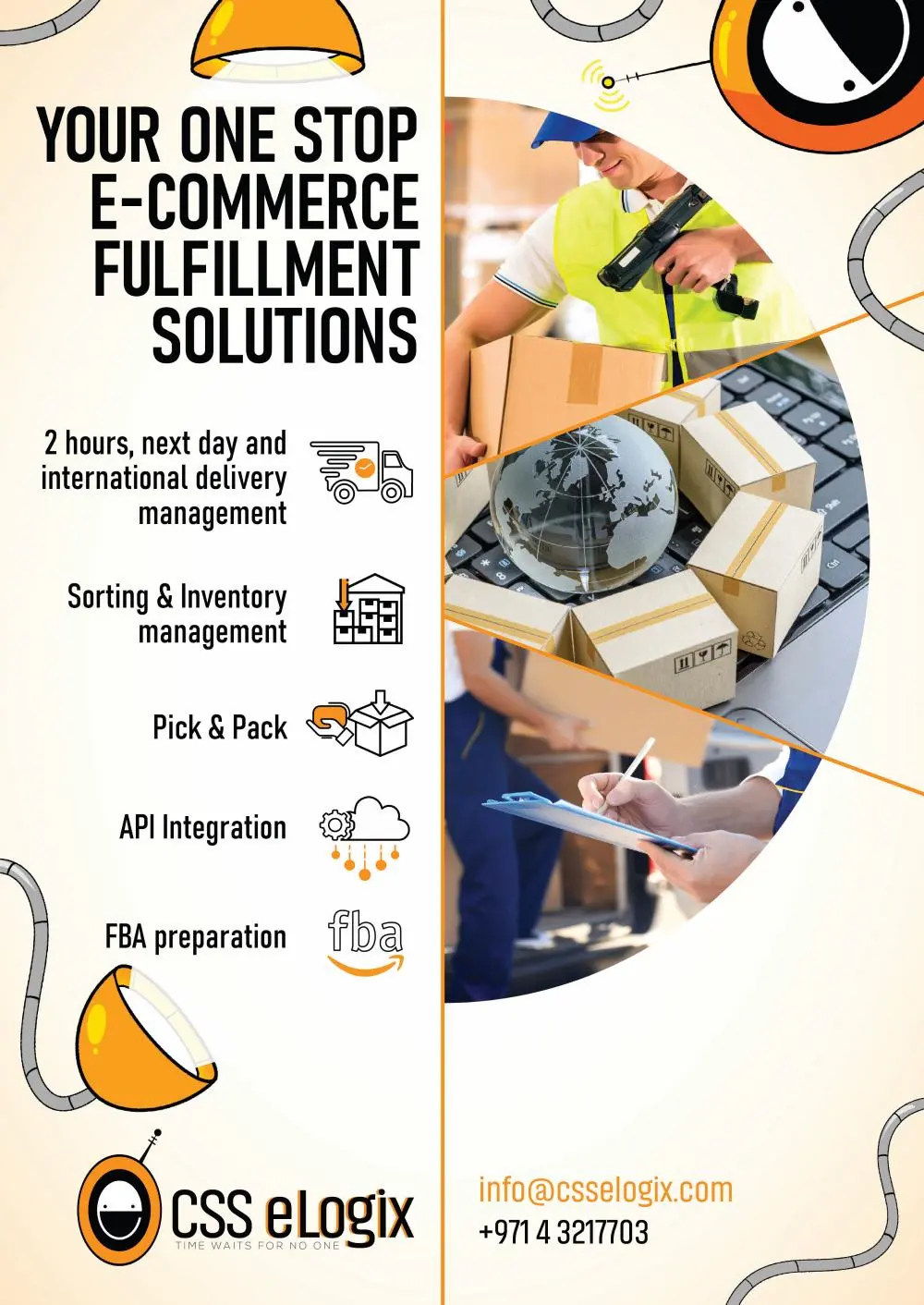
YOUR ONE STOP E-COMMERCE FULLFILLMENT SOLUTIONS

Chairman’s Message

2021 was indeed a tumultuous year. Most of the world was in lockdown for almost half the year while facing the highest freight rates in addition to the tightest space crunch in history. Despite the turmoil brought on as the aftermath of the pandemic’s first 2 waves, CSS Group ended the year on a triumphant note. We achieved some significant milestones that I wish to remind you about. One of which was the Art Logistics service coming into full force, offering logistical support to the burgeoning demand for fine art movements across the region and beyond. And then the following were other achievements that 2021 brought with it.

Strategy Meet at Georgia

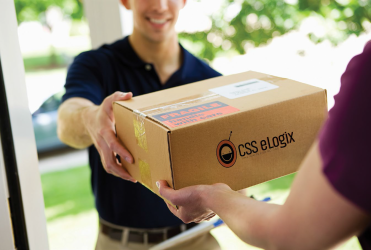
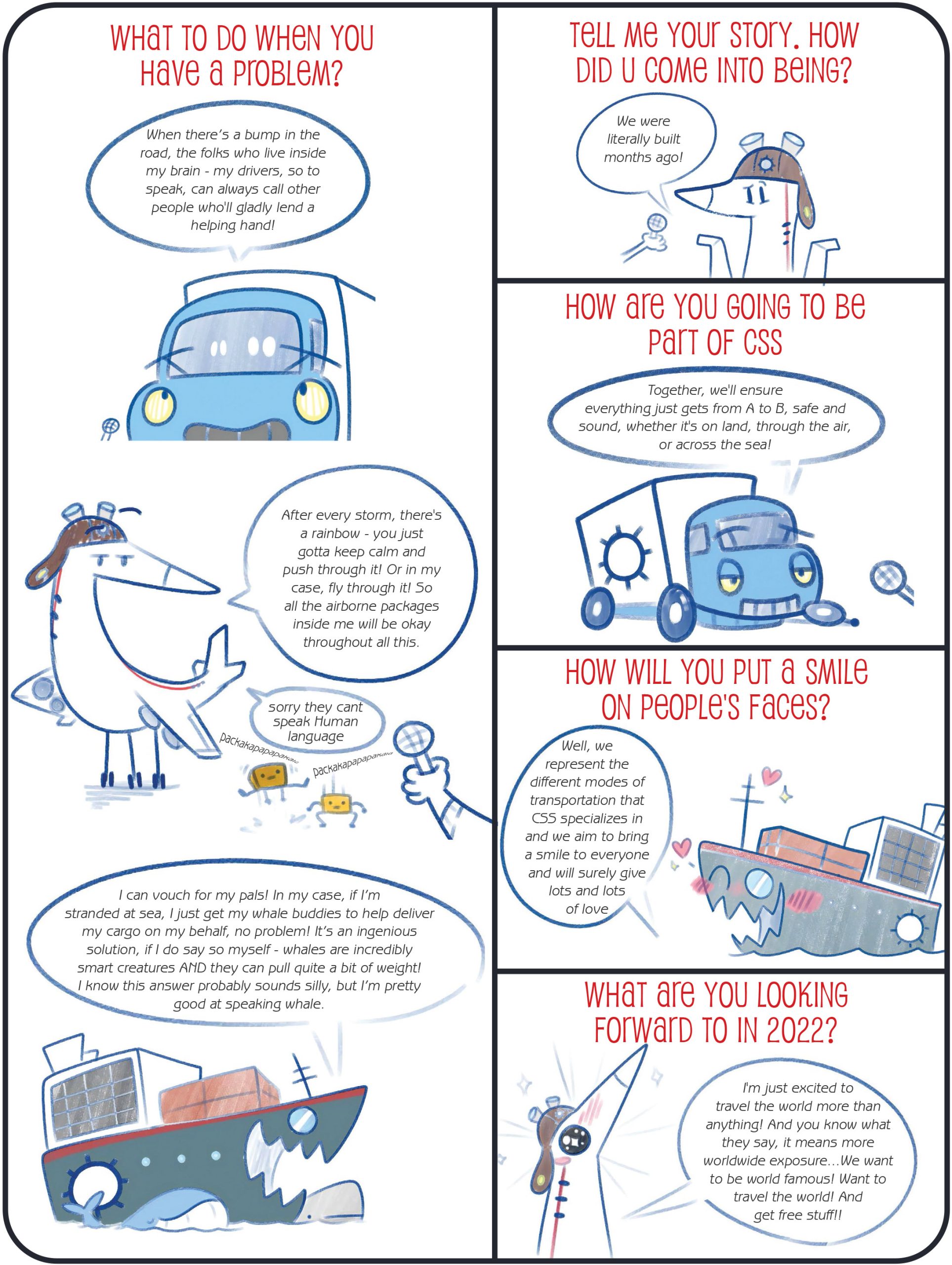
At our Annual Strategy Meet that took place in the gorgeous country of Georgia this time around, once again we raised the bar for ourselves with respect to our strategy for the coming year. To start with, we launched two new concepts at the meeting. The first being, the new vertical called eLogix that will provide e-commerce fulfillment services. The second exciting launch is the CSS Mascots, who will be the face of our company. You will make a close acquaintance with Charles the Truck, Wilbur the Plane, Ferdie the Ship, and Pack Packs on the pages of this magazine.

ELogix for E-Fulfilment

The growth-spurt in e-commerce activities that we saw, was no surprise with people conducting most of their shopping from the comfort of their homes rather than stepping out in the past 2 years. The UAE retail e-commerce market itself reached $3.9bn in 2020, a 53 year-on-year increase. In 2022, the forecasted value of e-commerce sales in the UAE is pegged at around $27 billion. In addition to this, with high social media penetration in the GCC region, the e-commerce market has certainly witnessed an extremely rapid growth. And with this growth, and the growing need for e-commerce fulfillment services, coupled with our expertise and experience in deliveries, we agreed this was the perfect footing to launch eLogix – our new vertical that will enable us to provide fulfillment services to our clients.

Going the Distance, Together

Remembering a particular African proverb, “If you want to go fast, go alone. If you want to go far, go together,” I would like to pay particular respects to our customers, partners and bankers for their continued trust and support, for it is because of them that we are able to envision what our bountiful future would look like. Without the support from our vendors, there is neither any way that we would enjoy our current success nor be able to plan for our future. Surely the same goes for the clients who have become family and whose trust we value so greatly. It is these relationships that we have always held so dear and who have helped us succeed, truly.

What Money Can’t Buy

While money can buy you most things, one of the key elements that money cannot buy is Experience, which is most vital when it comes to sustaining oneself when up against ‘The Impossible’. We have surely seen some of the toughest times in the last 2 years, but it is at times like these that the ones with formidable experience are the ones who clearly and calmly would show us a way out, for us to come winning at the other end. And I am proud to say that we have some of the best amongst the CSS family who repeatedly serve as guiding lights at any unforeseen situation, by way of providing solutions or improvisational skills that would only come with the experience they have garnered.

And with that, I would like to thank every member of the CSS family for their dedication and hard work over last year. It is your efforts that helped us surmount the challenges in 2021. Let us continue to work together towards the common goal of taking CSS to greater heights.

We are wishing you all a very Happy New Year!

CSS MANAGEMENT TEAMS MEET AT GEORGIA FOR THE STRATEGY MEETING 2021

After a gap of 3 years of conducting our annual meeting abroad and having it locally instead, the CSS Strategy Meet 2021 was held from 15th to 17th November at the Lopota Hotel & Resort, just a few minutes from the heart of the Kakheti region. Surrounded by breathtakingly beautiful Caucasus mountains, Lopota Lake Resort is located in the Kakheti region of Eastern Georgia, within 2 hours drive from the capital, Tbilisi. The vast enclosed property includes outdoor and indoor swimming pools, sauna, steam room and jacuzzi, fitness center, Lopota Forest Spa, Château Buera, Georgian and international restaurants, outdoor bungalows and bars, basketball and volleyball courts, mini-golf course, fishing area, stable and horse-riding area and other facilities for entertainment and leisure.

Presentations by Key Members of the Management Team

The meeting was attended by the management teams from all the global offices of CSS Group. The 2-day meet lined up several presentations by key management team members. On the first day, all the branches and NVOCC verticals presented their budgets and strategies for the year 2022.

Ms. Sasikala spoke at length about CSS’s new venture and forayed into e-commerce fulfillment services. She also represented the marketing division.

Day 1 concluded with the Chairman setting the target and the vision for the year ahead.

Day 2 dawned bright and clear and started with Mr. Roshmon’s presentation about the Freight Forwarding division and his colleagues who presented the Sales division, Ocean Freight wing, and the 3PL Logistics division. The meeting also revealed our growth with our network partners, projects division, Relocation division, and the HR and Finance department.

Day 2’s activities concluded with an astounding address by the Chairman, T.S Kaladharan.

Discussions, Debates, and Team Building Activities

The activities also included

  1. Case studies;
  2. Team building activities;
  3. An overall review of the current year’s strategy; and
  4. Setting the Key Performance Indexes and plan for the year ahead


Every department’s activities were analyzed and discussed in detail with the highlight on achievements and focused examination of the challenges faced in the year. The teams also carefully scrutinized how these challenges can be overcome for the year ahead.

The meeting also discussed CSS’s fantastic performance in the year gone by, despite the pandemic that turned the business world upside down.

LANDMARK CAR SHIPMENT BY AIR FROM DUBAI TO KOCHI

Adding another feather to its cap, CSS successfully moved yet another highend luxury sports car, the Lamborghini Huracán, from Dubai to Kochi by Air. Another grand feat about this movement is that it is the first time a car is shipped from Dubai to Kochi by air. The shipment was completed on 18th October 2021, with CSS providing door-to-door delivery, including return to Dubai.

This private car belongs to a Dubaibased businessman from Tirur in Kerala’s Malappuram district. The car shipment was passed under documents called “ATA Carnet” and would have to be returned to Dubai after the stipulated time of six months, at which point, CSS will undertake the return of the vehicle from Kochi to Dubai.

Carnet

The ATA Carnet is an international customs document used for the temporary duty/tax-free export or import of goods under international conventions. It is effectively a passport for a commodity in the countries that subscribe to the relevant conventions without paying the duty or value-added taxes on the goods.

Automobile Logistics – A CSS Forte

CSS proved its expertise and flair in Automobile Logistics with this recent air shipment of the Lamborghini Huracán. CSS’s Automobile Logistics wing offers effective and environmentally friendly loading and shipment of all types of vehicles. Bitto Babu, Business Development Manager at CSS, emphasized CSS’s competence and proficiency in handling Automobile Logistics, “We achieved a milestone with the air transfer of the Lamborghini Huracán. Our offices in Dubai and Kochi worked in tandem in coordinating with customs officials, and we were able to deliver the car to its owner on the very same day.”

Today, CSS is a reliable and trusted partner for automobile movement and logistics. CSS Automotive Logistics provides a wide range of services, including:

  1. Specialized racking of vehicles
  2. Carnet for vehicles
  3. Auto-racking for loading multiple vehicles in containers
  4. Experience in handling luxury & sports cars
  5. Large storage facilities
  6. Technical services on request
  7. In-house documentation and clearance facilities
  8. Door-to-door services offered.

Our facilities are available in Dubai, Abu Dhabi, Sharjah, Bahrain, and Oman, with an exceptionally strong worldwide network. The CSS Group team fully manages the end-to-end operations, which enables seamless and smooth shipments without any delays or roadblocks.

ANNOUNCING THE LAUNCH OF CSS ELOGIX

CSS is proud to introduce a new service vertical called CSS eLogix. Focused on e-commerce fulfillment services, CSS eLogix aims to provide seamless e-commerce logistics services to our clients. Our reliable, flexible, and scalable solutions with super-quick and accurate order fulfillment, CSS eLogix will be helmed by Britto Satheesh, who takes charge of the entire operations of the e-commerce fulfillment vertical.

An online shop can have all the bells and whistles with a fantastic user experience, a vibrant social media presence, and great Instagram ads, however, if the online venture does not have the right fulfillment strategy in place, it might be a failed venture in no time.

CSS eLogix offers a resilient and cost-effective supply chain for all types of e-commerce ventures, from online marketplaces and small-scale online retailers to medium and large enterprises across a broad spectrum of industry verticals. We have developed, implemented, and integrated the best technologies, systems, and processes to create world-class warehousing and fulfillment solutions.

CSS eLogix’s focus is to enable e-commerce outfits and brands to focus their attention on their marketing and sales efforts, while we look after every aspect of storage, fulfillment, and delivery at the operational end.

Our Key Differentiators

  1. Pick & Pack: We provide picking, packing and shipping of your orders with speed and accuracy.
  2. Economical: Our fulfillment services will help you cut costs by minimizing shipping timelines and costs.
  3. Advanced Software: Our software allows for real-time updates on your inventory across fulfillment centers and marketplace platforms.
  4. Returns Management: We help you manage your returns for hassle-free operations.
  5. Customer Support: On-demand customer support is provided by dedicated team managers.
  6. Reliability: You can rest assured that your customer will receive the order within the stipulated time after clicking on the “Buy Now” button.

We had a Q & A session with Britto Satheesh to understand how CSS eLogix intends to roll out the e-commerce fulfilment services.

Why should an e-commerce venture choose CSS eLogix for their fulfilment?

Digitization has been on the charts for most companies in markets across all geographical boundaries. The whole world has been slowly and steadily marching towards e-commerce trading and digitized trading – ‘slowly’ being the operative word. That was until COVID-19 came upon us. With pandemic-induced lockdowns enforced almost in every corner of the globe, digitization of trading and online markets gained momentum like never before. COVID-19 and global lockdown scenarios have inevitably changed the way we look at retail experiences.

More specifically, it has changed the way we shop. It has changed the consumer experience and expectations entirely. While we have seen a portion of the population return to the physical shops as restrictions on movement have eased, it is anticipated that the pre-COVID numbers may never return. This is especially the case in the UAE, where the retail sector relies heavily on the presence of tourists.

Due to various restrictions, including social distancing and other health and safety measures, combined with the increase of retailers and service providers moving their offering online (to some degree at least, if not in its entirety) means that the stage is firmly set for e-commerce to grow in the coming months and years.

When e-commerce activity flourishes, the need for e-commerce fulfillment is inevitably necessary. For the last 26 years, CSS has primarily focused on growing its verticals in the logistics industry to expand and re-affirm its services in the Middle East and Asia. And with the expression, “strike when the iron is hot”, we believe the time has come to move into the e-commerce capabilities space. This sector is still evolving and has not reached its full potential in the Middle East. CSS eLogix came into an e-commerce company as we delved into the online trading industry. With the sole purpose of enabling our clients to deliver their goods better, our service will help in reducing costs and enhancing efficiency.

Is CSS eLogix an e-commerce or an e-commerce fulfillment company?

Good question! This can confuse even the seasoned professional in the logistics industry. CSS eLogix is an e-commerce fulfillment company. Unlike other e-commerce companies and marketplaces like Amazon, Noon, Shopify, etc. we do not sell any products through our website. Our services are warehouse management, inventory management, and last-mile delivery management. These three service offerings form the three crucial pillars. We understand that these pillars are critical to the functioning of e-commerce f u l f i l l m e n t centers. To put it simply, the moment when a customer clicks on the “Buy” option either from Shopify or any other online platforms, the orders are then executed through our portal. We get the order, execute the pick and pack, and ensure the items are delivered in a timely manner to the customer.

Does CSS eLogix want to sell products through their website?

Yes, that is the long-term plan. But for now, we would like to concentrate solely on e-commerce fulfillment.

What are the attributes that set CSS eLogix apart from the other players in the field?

The e-commerce market in Dubai lies largely untapped, and this can be pegged at an astounding 75%. This big portion of untapped potential can directly result from having fewer fulfillment companies, unlike the western world. However, post-Covid, there is a surge in need for fulfillment companies. Backed by CSS’s logistics experience and prowess, along with its exceptional track record that spans more than 25 years, we intend to instill a similar spirit into our venture, eLogix.

Our #1 USP would be to deliver the products to customers within 2 hours from when they click to purchase. We also work on real-time inventory. Suppose one of our clients has their products on different platforms and a customer decides to purchase an item from any of those platforms. In this case, the inventory for that item on other platforms will be updated automatically. Therefore, this gives our clients a time-efficient way to manage inventory on a real time basis.

I realize that you have a very interesting slogan and, above all, a catchy mascot to go with your vision. What is the message that the brand wants to convey?

The Middle East has always been the hub for developmental strategies and plans. New infrastructure and the best soughtafter technologies are developing at a pace that no other country can match. So, it was perfect for CSS eLogix company slogan to be based on “time” and how it can be managed. My dad often says, “Time waits for no one.” We thought that this saying echoes our brand values. It conveys the importance of fulfillment service that we can offer our customers. To do this, we needed to create a mascot that revolved around the concept of time, and that’s how Ti:Me (pronounced as Timmy) came into being. We want Ti:Me to be the face of our company, and when anyone thinks of e-commerce fulfillment, Ti:Me should be the first thing they think of.

What is your vision?

We want customers to enjoy their online purchases, and above all, we want to enhance their experience when it comes to trusting companies in delivering their goods safely and professionally. Our services should exemplify excellence, trust, and above all, safety and security for anyone who wishes to choose us to be their partners. We want to remove all the hassles a customer may have to face during an online purchase. We want the customer to sit back and relax while we deliver their goods with our professional and expert services. It could be just apparel or accessories or gifts for their loved ones. Whatever the product, we want our customers to think of Ti:Me and engage with us in putting a smile on their faces when they receive their package on time and without any hassles. We aspire to establish ourselves as the number one fulfillment company across UAE and Middle East, thus setting the standards for excellence.

Shall we make an acquaintance with our new friends?

First, we are introducing Charles the Truck. Charles the Truck specializes in road freight, named after the famous American actor, Charles Bronson who has often donned the role as a tough policeman fighting against the bad guys. He loves long road trips and enjoys sightseeing.

Now we have Wilbur the Plane. Wilbur The Plane specializes in air shipping and takes his name from Wilbur Wright, one of the Wright Brothers. He is famous for inventing, building, and flying the world’s the first successful motor-operated airplane, the Wright Flyer. Wilbur sure does love traveling.

And Ferdie the Ship is named after Portuguese explorer Ferdinand Magellan. He is famous for discovering the interoceanic passage between the Atlantic and Pacific oceans, now known as the Magellan Strait. Our Ferdie is into overseas cargo shipping, and he loves to explore the high seas and play with whales in the open oceans.

Last but not least, it is Pack Packs. Now, Pack Pack’s language does not make sense to us, but it resembles the sound of a packed object within it. Pack Packs represent the boxes and packaging that is an integral part of the logistics industry, without which nothing can happen in cargo movement.

So, why are we going to have these mascots?

A Mascot, also known as a spokescharacter, works as an excellent branding tool that can increase our company’s recognition and service offerings. Our mascots will help us connect with our target audience as they help them better identify, remember, and understand our company and products and generate interest and increase exposure.

Unlike spokespeople who will age, mascots are ageless brand representatives that help our audience develop a closer relationship with CSS and our service offerings. Good mascots are memorable with an innate ability to work their way into the public consciousness. They will become an instantly recognizable symbol of the CSS service offerings. We sure know that our mascots will be well-loved by one and all.

So, let us have a chit-chat with our new friends and get to know them better as they become the face of CSS from here on out,

CSS CELEBRATES THE 50TH YEAR OF THE FOUNDING OF THE UNITED ARAB EMIRATES

Marking a momentous milestone on Dec 2nd, 2021, the nation of UAE completed her 50th year of unifying as a federation.

UAE is home to CSS Group, having set down our roots over 25 years ago in the sands of this ancient land. And to commemorate, CSS celebrated the UAE National Day with great aplomb. with both men and women staff adorning the national costumes, and all of CSS premises was festooned with colors of the national flag.

UNESCO announces World Futures Day

UNESCO (United Nations Educational, Scientific and Cultural Organization) has unanimously approved the UAE’s National Day as an World Futures Day. World Future’s Day, which will take place on this date every year, is an invitation to the world’s countries to embrace the future and develop their capabilities in the fields of foresight, readiness, and proactive policy-making to ensure sustainable development for the future generations.

The visionary leadership of the nation has achieved exceptional growth in the past 50 years. From a community of Bedouin tribes engaged in pearl diving, UAE has become a role model of what can be achieved within a short span of five decades. Today, the nation of UAE is a forerunner in charting national growth stories. The founding fathers had the largeness of vision to imagine and create the future by anticipating economic, industrial, and social change with its high readiness in future sectors. The UAE continues to deliver proactive policies and projects to embrace future trends and opportunities in all fields that affect daily life.

50th National Day Celebrations

The National Day was celebrated with much fanfare and grandiose celebrations at the Hatta enclave, a historically significant connecting point for tribal communities and caravans. UAE’s leaders came together in the majestic natural landscape of Hatta to mark the country’s 50th National Day. His Highness Sheikh Mohammed bin Rashid Al Maktoum, Vice- President and Prime Minister of the UAE and Ruler of Dubai, Sheikh Mohamed bin Zayed Al Nahyan, Crown Prince of Abu Dhabi and Deputy Supreme Commander of the UAE Armed Forces, and several other rulers, deputy rulers, and crown princes were in attendance.

The story of UAE’s progress since the country’s union unraveled before the leaders’ eyes in a stunning visual drama that paid tribute to the nation’s founding fathers.

The jubilee celebrations were marked with dazzling fireworks, festivities, and entertainment programs as the nation turned 50 years old. Several private sector companies also made the celebrations an occasion to remember along with the public sector.

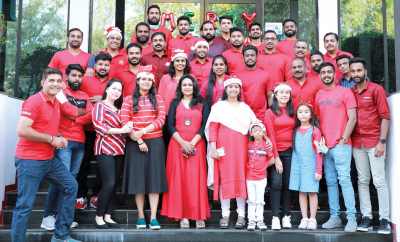
CSS TEAM SPIRIT ON DISPLAY AT THE ANNUAL CHRISTMAS AND NEW YEAR PARTY 2021


Yes, 2021 has been an uphill drive, as is with almost every organisation worldwide. But as always, CSS has managed to ride the wave and this year as well. We have worked together to overcome the hurdles, and we have managed to emerge triumphant against all the odds that were lined up against us.

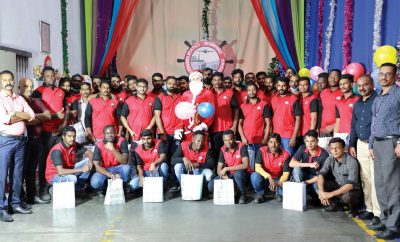
And with such a rollercoaster of a year, the closure of it brings good cheer! And surely what better time to get together and celebrate our victories with our yearend Christmas & New Year Party. As always, the CSS office premises and the warehouse were bedecked with festive decorations echoing the season’s spirit.

Keeping with the CSS Group tradition, the kick-off of the jolly season was with ensuring our offices were adorned with the festive feel, followed by quick games & entertainment through the week and the finale being our popular Potluck with everyone participating with much harmony and merriment.

It was a day of great camaraderie, displaying the hearty team spirit of our CSS family. The party buzz was evident in the air, and it was indeed a much-needed break from the day-to-day grind.

Another part of CSS’s year-end tradition is honouring & celebrating our warehouse team by presenting each of them with Christmas gifts at a gettogether catered specially for them. Every year, there is special attention given to this particular event with the rest of the organisation pitching in to help, for it is a known fact that this warehouse family is the primary reason for the success of CSS Group’s ever-growing & renowned consolidation operations.

At CSS, we lay great emphasis on celebration. We believe that as we come together, our bonds become stronger. And to state

very clearly, the hard work and team spirit displayed by each member of the CSS Family has made us what we are today. So let’s look ahead with positivity, to a new year that is filled with good health, good fortune and joy. May the year ahead cause all of us to forge ahead and scale new heights of success while overcoming any difficulties that we might encounter with confidence, conviction and finesse.

CSS STAFF TAKES PART IN THE DUBAI RUN 2021


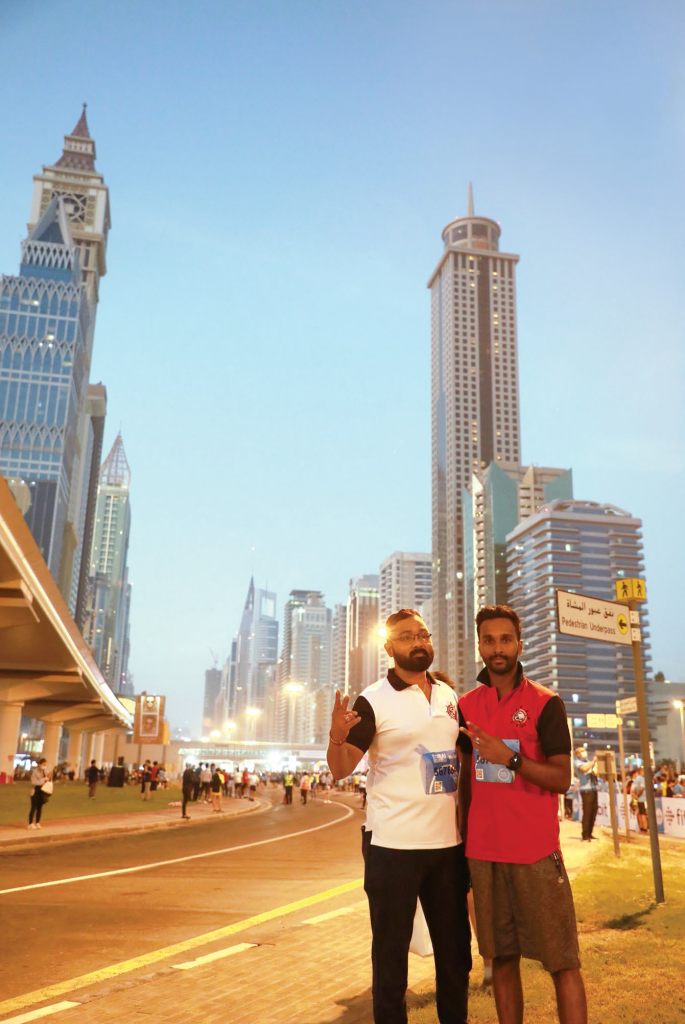
On Friday the 26th of November 2021 Dubai’s Sheikh Zayed Road became a giant running track for the annual Dubai Run 2021. CSS Group also participated and was represented by Alan Ramesh (Marketing Assistant) and Babu Krishna Pillai (Documentation Messenger).

With a total of 146,000+ participants the highway saw a sea of human beings in action mode. Dubai’s arterial road attracted people from all walks of life cutting across age barriers as they came in unison to celebrate Dubai’s spirit of enthusiasm and community.

His Highness Sheikh Hamdan Bin Mohammed Bin Rashid Al Maktoum, the Crown Prince of Dubai, being a fitness enthusiast himself, championed this challenge passionately. He was at the starting line, that had the backdrop of the Museum of the Future. Sheikh Hamdan posted a video on Instagram stories of himself at the run with a simple one-line motivational message: “Let’s do it.”

Sheikh Hamdan has been the force behind the Dubai Fitness Challenge – a month long fitness initiative to promote a healthier and fitter Dubai. As a part of the Driveway Fitness Challenge, UAE citizens, residents, and visitors are invited to partake in 30 minutes of exercise every day for 30 days, and the Dubai Run has been one of the main events within it. He expressed his exhilaration about the event, “Running alongside 146,000 people who completed the Dubai Run today, I was moved by the strength of our community and seeing what we can achieve when we work together. By turning out in such numbers, we have shown the world that this is one of the greatest cities to live in, work in and visit; a city with an unassailable spirit and ability to achieve.”

While families, amateurs, and those out for a day of fun generally did the 5km run/walk, some of the world’s top athletes ran alongside recreational runners and aspiring running champions in the 10km stretch. They included a team of elite Kenyan runners who have been participating in several DFC events and activities.

It was indeed a run to remember as the route took them past the iconic landmarks of Dubai like the Museum of the Future, Emirates Towers, Downtown Dubai, and Burj Khalifa.

The first run took place in 2019 and followed in 2020 as well. Last year, it was reorganized on different routes due to social distancing during the pandemic. The Dubai Fitness Challenge 2022 will be held from 28th October to 26th November

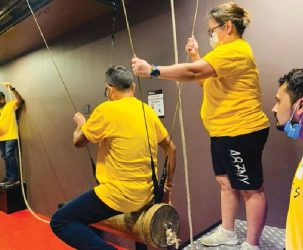
TEAM BUILDING IN A HIDDEN CAVE

As most of us know, these days in Dubai, there’s no dearth of fun activities available to engage in – from places to visit, to restaurants to dine at, to the famous nightlife we have here. And most of us can claim to have “been there, done that.”

But a few weeks ago, some of us were privileged enough to add yet another fun experience to our Dubai diaries. (Well, “fun” for some, “torture” for a select few….and “fun torture” for most of us.)

I am referring to the exhilarating team-building activity that was organized at the TEPfactor Dubai, an indoor adventure playground. While the interiors were this fascinating cave-like structure, this activity center was unassumingly located at Dubai’s fancy Jumeirah Beach Residence. Also “unassuming” were we, when most of us had very little idea about what to expect (which was part of the fun) – “was it team-games,” “was it brain teasers,” “were we physically fit enough” etc. were all the questions in our collective minds.

And guess what? It was all of the above, and then some. Mentally, some puzzles needed us to think outside the box (almost literally!), and physically we discovered muscles in our bodies that may have only been used 15 years ago, if that!

But all in all, with “teamwork” being the name of the game(s), and while kudos went to ALL of the 11 teams that took this grueling but supremely fun time quite competitively, there was only one winner. The “Grey Falcons,” who used a very tight strategy to overcome literal obstacles, pulled their teammates up (literally) and worked together to come out winning with stiff competition from the contending teams right on their tail.

So despite the physical and mental exhaustion, all of us were thoroughly uplifted in spirit with this experience and surely cannot wait to go back again.

FREE ZONES – UAE’S SUCCESSFUL DIVERSIFICATION STRATEGY

UAE is home to 45 free zones across the country, notably the highest globally, with ten more under construction. Defining a large part of the country’s private sector growth, these zones attract marketing, trade, and investment opportunities that accelerate the growth and success of the country’s finance, IT, logistics, trading, and media industries.

As of February 2021, more than 60,600 companies are registered in the country’s free zones, invariably accounting for eight percent of the total number of companies registered in the UAE. The government’s targeted efforts have helped the country achieve the position to become the most favorable business destination globally in recent years. Incentives for start-ups, entrepreneurs, and freelancers include reduced registration fees, visa extensions, and capital finance.

The free zones include prominent pillars of the private sectors related to trade, industry, energy and renewable energy, media and communications, metals and commodities, finance, healthcare, and IT.

JAFZA and DMCC – The Path Breakers

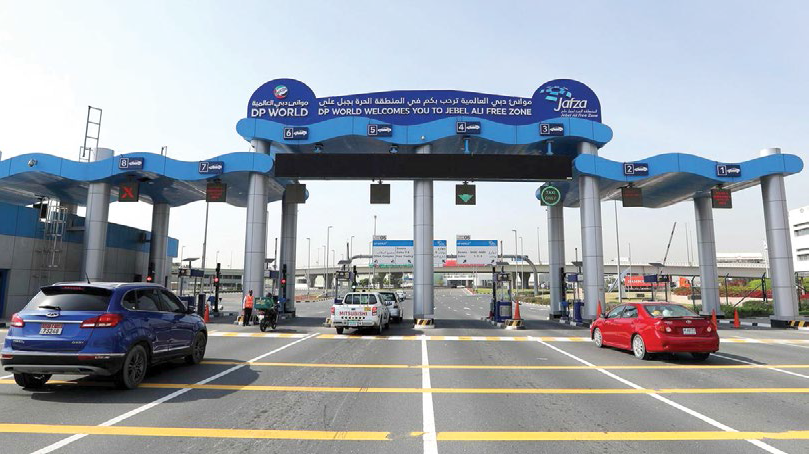
Dubai is now home to 30 free zones, including giants like JAFZA and Dubai Multi Commodities Centre (DMCC). UAE’s first free zone -the Jebel Ali Free Zone Authority (JAFZA) caters to over 7500 companies and accounts for 28 percent of Dubai’s GDP. Another feather in its cap is that JAFZA is the largest free zone in the world. That which started as a central pillar of economic diversification, JAFZA is today the blueprint for establishing several other free zones across the GCC. The DMCC is the largest and fastest-growing free zone in the UAE, which marks the country’s appeal for its budding multicultural international entrepreneurs.

Dubai is right now identified as a de facto-free zone hub.

Benefits of Being Under The Free Zone Umbrella

So what exactly is the lure of being under the free zone?

Largely defined by flexible policies surrounding foreign ownership, labor regulations, taxes, etc., the other benefits are:

  1. Foreign entities under the free zone enjoy 100 percent ownership circumventing foreign ownership policies with ease.
  2. Attraction of global talent to UAE as there are no adverse regulations to foreign labor.
  3. Apart from being exempt from taxes and fees like custom duties, the companies are allowed 100 percent capital and profit repatriation.

In short, the free zones bring over job opportunities, competitive salaries, a solid knowledge base, and an overall level of excellence.

Ancillary Services

Free Zone authorities extend ancillary services for legal, medical, labor, and immigration. The free zones also provide freelance permits to international branch office licenses from shared desk space on annual contracts to industrial warehouse leasing for 25 years. Simply put, everything is designed to attract and help investors build a business, grow trade and investment and facilitate the transfer of skills, knowledge, and technology.

Success in Times of the Pandemic

While industries worldwide were fighting to survive the pandemic, the free zones in the UAE stepped up their efforts to strengthen the business climate by launching several initiatives. This helped the government pick up the broken pieces of the economy in the form of health crisis and dip in oil prices. This was achieved largely due to the economic policy tools that was in place by the UAE government. For example, the Umm Al Quwain Free Trade Zone started the business LYTE packages that help prospective investors continue with their business set up plans with a neat 50 percent off. Also, acquiring licenses was done in just days compared to the earlier timeframe of ‘months’. Some free zones in the UAE introduced online services for investors, while others recorded an increased number of new registrations and business expansions, with technologyfocused sectors seeing higher traction.

Foreign Policy Objectives

As part of the agreement between UAE and Israel to normalize friendly relations, many of the newly formalized commercial links came to fruition among Gulf Free Zones. Dubai uses its flagship commercial entities to cement ties with its Israeli counterparts. In September, DP World formerly known as Dubai Ports Authority, and several government entities signed agreements with Israel-based Dover Tower Group to assess port and free zone development opportunities in Israel and establish a direct shipping route between Eilat port and the UAE port of Jebel Ali.

Encouragement for Developing Clusters

Free zones will continue to encourage the development of clusters, enhancing the UAE as a hub that encourages broader build-out of specialized infrastructure and develops sectors that are key to the economy while also facilitating job creation. Noting that free zones have become an integral part of the diversification plans of each Emirate, there is likely to be divergence in the development trajectories of such business hubs. The Israel Diamond Exchange and the Dubai Diamond Exchange, which is part of DMCC, agreed to enhance cooperation in the diamond trade.

Free zones are more likely to support the development of technology-based strategic industries and offer global investors attractive growth propositions. As the country continues to build on strategic focus industries, flexibility and multipurpose utility will be the key traits of successful free zones in the UAE.

GLOBAL FREIGHT MARKET INSIGHTS

Insights into the current market dynamics helps us to stay informed, assists with decision-making and helps in potentially mitigating risk, therefore avoiding disruptions to our supply chain.

The logistics sector was hit the hardest by the COVID-19 outbreak in 2020. With the lockdown in many countries and a major focus on the production of essential products, the volumes of air and ocean freight had fallen significantly in 2020. Vaccine hesitation and ongoing transmission, regional resurgence and variants and also difficulties with social distancing in ports, warehouses, and terminals led to major disruptions.

Apart from this there has been issues of high labour cost. These labour constraints also arose because of surging consumer demand, which could not be backed because of labour shortage.

Many manufacturing facilities left incompetent to face increasing demand for goods, lead to limited supplies and thereby higher prices.

There have also been major operational changes with regard to export screening requirements, consolidation and ground handling agents.

Ocean carrier consolidation has thelowest inventory levels since 1990s. Many airports around the world have been impacted by congestion too.

Shut down of manufacturing facilities and ports, to container shortages and labor issues, to rising costs and the ongoing pandemic, it has been the opposite of smooth sailing.

Air Freight Update

With completion of the China International Import Expo, Shanghai will see a boost in capacity. In most of East Asia, the capacity is stretched and rates are high and was expected to continue through November.

In India, cargo demand (both inbound and outbound) is outstripping capacity resulting in extended transit time and higher rates. A travel ban was lifted on November 8 but the impact on capacity is yet to be determined. Due to the various challenges faced in ocean freight, there are heightened levels of ocean-to-air conversion cargo, particularly in south India.

Transatlantic demand has been increasing in recent weeks. Easing of travel restrictions into the United States started early November, but short-term capacity increases are unlikely until seats on existing flights are filled.

In Frankfurt and Amsterdam, imports and exports has been affected due to Terminal congestion as a result of labour challenges.

There is a lot of constraint in southbound cargo from North America to South America. Freighter operators are already using their full fleets. As COVID-19 restrictions remain in place, limited additional passenger flights are entering the market and spot markets continue to trend up. This has resulted in the U.S air import terminals being congested.

However, some of these extreme delays have been eased since summer, with gradual improvement on labour.

Air Freight Capacity and Demand

With the reduction in passenger flights since the start of the pandemic, the air freight capacity has seen a -12% decline. Flights arrive in waves versus daily pattern of passenger flights pre- COVID-19 and this creates a large influx at one time and overwhelms warehouses, which are further constrained by labor shortages. Even the increase in freighter activity cannot cover this gap.

As on the demand front, inventory levels as percentage of sales are at a historic low. The disruption in global supply chain has lead to surge in demand. However, this all-time high demand has lead to ocean reliant cargo switching to air.

Challenges and Solutions

There are innumerable challenges at hand at Airport terminals and warehouses. These challenges can be tackled by proactive conversation, weekly guidance, increased notifications on terminal dwell times and adding alternative vendors, warehouses, and trucking options. Also re-directing freight to airlines or airports, which are less, impacted and leveraging truckload capabilities at origin and/or destination can ease the situations.

Air Freight Market Outlook

There are many strong future growth indicators. A steady increase in export order has been predicted. The rebound in jet fuel, during peak season is a positive trend. Terminal congestion variability and capacity at a premium is to be the order of the day.

Ocean Freight Update

In Northern America, there has been consistent improvement with regard to availability of vessel space. U.S. East Coast ports to Europe, and the Canada gateway for U.S., Midwest cargo to Europe through Montreal and Halifax ports have seen improved activity. Port of Los Angeles/Long Beach terminals, such as TTI, are taking steps to relieve congestion by extending their gate hours.

There are continued rail delays from the U.S. Midwest to both U.S. East Coast ports and to Canada. However, some railways such as the Burlington Northern Santa Fe (BNSF) are offering weekend gates to try and improve fluidity.

Nevertheless, congestion in the United States continues. Most terminals are congested at 80-90% utilization. The average dwell to berth is around 13-16 days, at LAX/LGB, 77 ships were at anchor or in the drift area and port wide there are chassis shortage.

As of now European ports of Hamburg, Rotterdam and UK port congestions issues still persist. There is increase in Europe port omissions. At UK ports, the surcharges are applied to ocean carriers.

In Australia, in the wake of resolution with MUA, delays at Australia are 7-9 days. On the Asia-Europe trade lane, space is expected to be extremely tight as high demand persists.

As a result of COVID-19 safety protocols, Suez Canal blockage, and Yantian port closures has created vessel bunching, berthing delays, and reduced yard capacity. Demand continues to increase; carriers must use blank/void sailings to mediate the congestion.

Oceans rate trends in US East and West Coast peaked in August-September 2021 and dipped. But trends are showing improvement. Schedule adjustments improved congestion briefly.

Key Factors to Consider

In order to navigate in today’s ocean market, forecast need to be made prior to 6-8 weeks minimum. There need to be flexibility in all facets of shipment-routing, carriers/services, modes, equipment and pricing. Also there should be prioritization, keeping variability in SKUs and/or parts. The success in the sector will depend on consistency and smoothing of volumes week to week.


FIFA WORLD CUP! “GETTING YOU IN THE GAME” FORUM: INDUSTRY EXPERT LOGISTICS LINE-UP REVEALED

As one can imagine, Logistics is critical to an event as large and complex as the FIFA World Cup. And it is no wonder that Logistics industry giants, GWC Logistics, was awarded the honour of Qatar’s Official Host Nation Logistics Provider for the FIFA World Cup 2022.

GWC Logistics was established in 2004 and has become a key player in the region’s logistics and supply chain sector. The company offers end-to-end logistics and supply chain solutions to many FMCG, Oil & Gas, Fine Art, Pharmaceuticals industries, to name a few. GWC also provides consulting, record management, and local and international relocation services.

On 16 November 2021, GWC revealed its panel of top industry experts for a virtual forum called ‘Getting You in the Game’.

FIFA’s Head of Event Logistics, Jose Dhooma, said in his keynote speech, “There has never been a more appropriate moment to discuss the role of logistics in the delivery of mega-events. This year, we have seen the critical role of logistics in the world’s economy, and now, with almost a year to the FIFA World Cup Qatar 2022, this forum is bringing together panels of experts to discuss and bring you further into the game of delivering logistics for mega-events.”

The forum featured two panels and two workshops. The first panel focusing on mega-event logistics featured Kirsten de Bruijn, Senior Vice President Cargo Sales, and Network Planning at Qatar Airways. Mark Novack, HC Event Logistics Assistant-Director at the Supreme Committee for Delivery & Legacy. Christopher Nelson, Operations Manager, Middle East Region inKObator, at The Coca-Cola Company and Mathew Phelps, General Manager at GWC. The discussions show-cased “what it takes to create a winning formula to turn visions of events’ enormity into a reality”.

The second panel included Afraa Al Noaimi, Executive Director at Josoor Institute. Laila Al Jefairi, Vice President of Business Development at Qatar Financial Centre, Bader Al-Madhadi, Investment Promotion Lead at Qatar Free Zone Authority, Lauri Becquart, Head of Retail & Private Holdings at Google Cloud and Hamdan Merchant, Senior Director, Innovation, IT & BPI at GWC. The panel analyzed the role of digitalization in the Middle East region and identified the impact of investments in making it an increasingly attractive place for largescale events.

Both panels were moderated by Al Jazeera English’s Senior Presenter Emily Angwin.

Two workshops followed the panels:

1. GWC’s large-scale planning to execute FIFA World Cup Qatar 2022, led by Syed Maaz, Chief Business Development Officer at GWC

2. The legacy of sustainability that the World Cup will leave behind led by Meshal AL Shamari, Director at Qatar Green Building Council.

The FIFA World Cup Qatar 2022 will take place from 21 November 2022 until 18 December 2022 in eight stadiums around Qatar – three of which are already fully operational, with two more scheduled for completion by the end of 2021. GWC has a logistical infrastructure covering more than three million square meters, including the region’s largest privately owned logistics hub, along with a team of dedicated and innovative specialists and state-of-the-art IT systems. GWC on board as a Regional Supporter and the Official Logistics Provider for the tournament will provide FIFA and its commercial affiliates with crucial support and expertise in logistics and supply chain management, which will ensure seamless efficient delivery of the competition.

“Logistics plays a significant role during sporting events to ensure the smooth and efficient delivery of complex, large-scale events, which involves executing a broad spectrum of logistics services in the lead-up, during, and after the final whistle. Moreover, the forum will bring attention to the hard work that goes into the FIFA World Cup Qatar 2022, turning it into a showcase for Qatar and the region,” said Group CEO at GWC, Ranjeev Menon.

Page1 … Page5

CSS Newsletter

In this issue:

Quick Links

  • Home
  • About
  • Services
  • News Media
  • Careers
  • Contact us
  • Corporate Brochure
  • CSS Corporate PPT
  • Lighthouse
  • News Hub
  • Privacy Policy
  • Cookie Policy
  • Disclaimer
  • T&C’s

Locations

  • Dubai
  • Abu Dhabi
  • Sharjah
  • Ras Al Khaimah
  • Bahrain
  • Oman
  • Qatar
  • Saudi Arabia
  • Kuwait
  • Kenya
  • Turkey
  • India

Subscribe to our bi-monthly newsletter, Lighthouse

  • Follow Us
© 2026 CSS Group. All rights reserved. Crafted with by Netventure