Skip to content

Lighthouse

Bi-monthly publication of CSS Group

Lighthouse
  • Call +971 4 8872333
  • Mail info@cssdubai.com
  • Menu
    • Home
    • About
    • Services
      • Global Freight forwarding
      • Ocean Freight Management
      • Supply Chain Management
      • Land Transportation Management
      • Industrial Packing, Crating & Lashing
      • Air Freight Management
      • Projects Oil & Energy
      • Exhibition Event Logistics
      • Automobile Logistics
      • Art Logistics
      • Non Vessel Operating Common Carrier (NVOCC)
      • Hospitality & Hotel Logistics
      • Multi-modal Operations
      • Container Freight Station (CFS)
      • Yacht & Marine Logistics
      • E-commerce Fulfillment
    • Locations
      • Dubai
      • Abu Dhabi
      • Sharjah
      • Ras Al Khaimah
      • Bahrain
      • Oman
      • Qatar
      • Saudi Arabia
      • India
      • Sri Lanka
    • Careers
    • Track & Trace
    • Login
      • Customer / Agent
      • Employee – Portal
      • Employee – Dashboard
      • CSS India Login
    • More+
      • Lighthouse
      • Media Hub
      • Feedback
    • Contact Us
  • Login
    • Customer / Agent
    • Employee – Portal
    • Employee – Dashboard
    • CSS India Login
  • TRACK & TRACE
  • NOTICES
  • LIGHTHOUSE
Lighthouse
  • Call +971 4 8872333
  • Mail info@cssdubai.com
  • Menu
    • Home
    • About
    • Services
      • Global Freight forwarding
      • Ocean Freight Management
      • Supply Chain Management
      • Land Transportation Management
      • Industrial Packing, Crating & Lashing
      • Air Freight Management
      • Projects Oil & Energy
      • Exhibition Event Logistics
      • Automobile Logistics
      • Art Logistics
      • Non Vessel Operating Common Carrier (NVOCC)
      • Hospitality & Hotel Logistics
      • Multi-modal Operations
      • Container Freight Station (CFS)
      • Yacht & Marine Logistics
      • E-commerce Fulfillment
    • Locations
      • Dubai
      • Abu Dhabi
      • Sharjah
      • Ras Al Khaimah
      • Bahrain
      • Oman
      • Qatar
      • Saudi Arabia
      • India
      • Sri Lanka
    • Careers
    • Track & Trace
    • Login
      • Customer / Agent
      • Employee – Portal
      • Employee – Dashboard
      • CSS India Login
    • More+
      • Lighthouse
      • Media Hub
      • Feedback
    • Contact Us
  • Login
    • Customer / Agent
    • Employee – Portal
    • Employee – Dashboard
    • CSS India Login
  • TRACK & TRACE
  • NOTICES
  • LIGHTHOUSE

CHINA’S COVID LOCKDOWNS AND THEIR RIPPLE EFFECT

Dozens of mainland Chinese cities, including the financial hub of Shanghai, have been locked down as authorities work towards their “Zero Covid” policy. The lockdown was enforced from the beginning of April and has dealt a heavy economic blow to China.

The impacts of the lockdown have been far-reaching, and they are:

†      After-effects in other ports: Wreaked havoc at Shanghai, the world’s biggest container port, which is now causing problems at other major ports worldwide.

†      Export slowdown: Chinese export growth slowed to its weakest pace since June 2020

†      Contracted imports: Chinese imports contracted, a sign of weak consumer spending as millions of residents were in lockdown.

†      Impact on Big tech: The supply chains of businesses from big tech to consumer goods have been impacted.

†      Effects on the global economy: As a “manufacturer to the world,” the disruptions in China weigh on the global economy.

Some Chinese cities, including Shanghai, have lifted Covid restrictions, but experts say that the damage has already been done, and global shipping will suffer well into the summer. The Chinese government is trying to get production back on track. Yet many foreign businesses say they’re still unable to resume operations. South Korean exports, a barometer of worldwide demand, grew by double digits in April. However, shipments to China dropped, suggesting China’s slowdown is a product of its Covid restrictions.

“Disruptions to production and deliveries may adversely impact shipments. The output and delivery components in April’s official PMI data deteriorated to the worst levels since the nationwide lockdown in early 2020.” by the Asia Economists Team.

This will exert even more pressure on global supply chains already reeling from Russia’s invasion of Ukraine and keep inflation running hot.

Inflation across the globe

China’s lockdowns triggered inflation. Consumer price growth is forecast to accelerate. Factory gate inflation will likely remain elevated in April. Apart from this, a “complicated and grave” employment situation will persist. Chinese Premier Li Keqiang instructed all government departments and regions to prioritize measures aimed at helping businesses retain jobs and weather the current difficulties. The government of China is working on stimulus packages to meet an economic growth target of about 5.5% this year. Credit data for April due this week will show whether monetary and fiscal support has had the desired effect of stoking borrowing.

U.S. may see high inflation figures; however, it’s projected to have moderated on both a monthly and annual basis, partly reflecting a dip in gasoline prices that have since picked back up. U.S. measure of prices paid to producers in April is slated for release and is expected to show some moderation in the pace of wholesale inflation. Inflation peaked in March at 8.5%, the highest in four decades. Price pressures are expected to remain elevated. Therefore, Federal Reserve officials will steadily lift borrowing costs in the months ahead.

U.K. gross domestic product data for the first quarter might already hint at stalling growth. Economists forecast a 1% increase in U.K. GDP for the first quarter, which may cover a period with no growth in March. Bank of England says that the situation is turning “starkly sour,” with double-digit inflation likely to crush any growth toward the end of the year. The BOE delivered a fourth consecutive rate increase this month.

Asia

In Malaysian markets, inflation remains tame, but economic slowdown risks remain. Officials in Malaysia are taking steps to bolster economic growth in the region.  In India, the Reserve Bank of India hiked the repo rates. After scrutinizing the April inflation data, economists will reassess their policy forecasts.

Europe

Germany’s ZEW gauge of investor expectations was forecast by economists to have dropped further in April from a level that was already the worst since the pandemic erupted in 2020.

Euro-area industrial production for March contracted noticeably.

Inflation reports from the Czech Republic show a new high above 13% for April.

In Russia, economists anticipate inflation may have exceeded 18%. It’s a dramatic surge in the space of just two months, doubling since the invasion of Ukraine. The central bank predicts further price surges. Russia is also reporting bleak trade data pointing to the impact of sanctions on imports and exports.

Latin America

Mexico’s full-month and bi-weekly consumer price data reflects a two-decade high.

With inflation now more than twice the 3% target. It is expected that Banco will raise the key rate to around 8.5%

In Brazil, April’s annual consumer-price reading vaulted past 12%. After raising its key rate to 12.75% on May 4, the central bank signaled that a rate hike is likely for next month.

Argentina’s monthly consumer prices annual pace pushed past 56%. Many local economists see that hitting 60% by year-end.

Peru is battling the fastest inflation in two decades. The central bank is expected to extend a record tightening cycle and raise the key rate to 5%.

IMPROPER ASSESSMENT OF DETENTION FEES CARRIER WAN HAI PENALISED WITH A HEFTY FINE

The Carrier Wan Hai has come to the forefront for the wrong reasons. Wan Hai is paying for an investigation into the detention fees it had wrongly charged against 21 containers in Southern California in 2021. Wan Hai has been forced to cough up USD 850,000.00 as a civil penalty as per the agreement with the US Federal Maritime Commission (FMC) Bureau of Enforcement (BOE)

When is A Detention Fee Imposed?

Detention fees surface in cases where the shippers fail to return an empty container within the time limit specified in the ocean freight contract. The carriers can charge the shipper in such a case. But in the case of the Wan Hai penalty, the shipper complained that the carrier was carrying improper assessment, as they knew that the containers could not be returned “knowing and willingly.”

This is the second major penalty two weeks after Hapag Lloyd was charged USD 822,220.00 in April for the same improper assessment. In the Wan Hai penalty, the FMC’s BOE assessed that 21 empty containers were wrongly charged with detention fees when their owners were offered no return locations or when the designated terminals were not accepting the container chassis or appointments were made unavailable for the containers.

The Findings of the Investigation

In an investigation led by the FMC in December, it was found that invoiced amounts for detention ranged from USD 125.00 to USD 1,550.00. It was noticed as a finding that the shipper had made an earnest attempt to return the containers but was refused to be acknowledged and slapped detention fees instantly as the carrier could not provide them terminal space or even schedule a reappointment. The investigation produced proof by the shipper showing screenshots where they asked the carrier to waive the amount as no promised service was provided, and they were refused.

The Wan Hai penalty follows immediately after the Hapag Lloyd case, which happened in mid-2021, where the drayage operator Golden State Logistics tried to return 11 empty containers but could not do so owing to uncontrollable factors. The judge in the Hapag Lloyd case stated, “it was looking into the ruling and will then decide further legal action.” This pushed forward the Wan Hai penalty as a settlement between BOE and the carrier Wan Hai. The carrier has agreed to pay the fine and no longer collect such detention fees from unnamed parties related to the 21 containers. The agreement said that it is not to be construed as an admission by the carrier on the violations in the December investigation and also stipulates that the BOE will take no further action against the carrier.

Ripple Effect of the Penalty

The CEO of the Harbor Trucking Association, Matt Schrap commented about the decision as “another chink in the armor for carriers on this issue; the veil has been pulled back.” The volume of complaints has risen since March, as the penalties levied in these cases have helped the offended parties file cases involving what they deem improper assessment of detention and demurrage fees by carriers.

As a part of inviting such complaints, the FMC issued a Dec 28 notice as part of an ongoing investigation regarding excess fees with a shipper advisory group urging the commission to investigate further from carriers to terminal operators. Presently, California’s federal and state legislation is actively involved in tackling the issue.

THE NEW JUDICIAL FEE LAW OF THE KINGDOM OF SAUDI ARABIA


Recently the Courts and Legal System of the Kingdom of Saudi Arabia introduced a new Royal Decree No. M/16 on 30/1/1443H to amend the judicial cost systems and implement the court fee for the newly filed legal suits. The new Law came into effect on 13th March 2022, encouraging litigants to settle their disputes amicably.

Even though the filing charges are already in existence in most countries, this is the new implementation by the Courts in Saudi Arabia, where there have been no filing charges or court fees since the inception of the Civil Courts in the jurisdiction. Since there were no filing charges earlier, the courts in Saudi Arabia were struggling with voluminous cases, which resulted in lengthy court proceedings and delays in pronouncing decisions.

The new Law applies to all lawsuits, petitions, and requests submitted to the Courts except Criminal Cases, Disciplinary Cases, or Cases relating to the Provision of Bankruptcy Law. The Law also exempts specific categories from paying the court fee, including the claim brought by the employees about their employment contracts and claims commenced by ministries and government bodies.

The new Law, or “Judicial Fee Law,” stipulates the different fees applicable to claims and applications. When the Law sets a certain percentage of the claim amount as the court fee payable for various categories of Civil Suits, including but not limited to the legal suit to nullify the Arbitral Award, the maximum ceiling of court fee is set out is SAR 1,000,000 under all categories. However, the fee shall be reduced to 25% of the fee payable if the parties settle after the first hearing but before the court’s decision in the case, and the balance shall be refunded if paid. Further, the Law also states that if a request results in a change in the estimation of the value of the case, the judicial costs of the case will be calculated based on the estimation of the new value thereof.

The Law also has a provision for refunding the entire amount of Court Fee paid in the event of (1) If the decision or Judgment pronounced in favor of the Plaintiff or the Claimant; Appellant or Applicant; (2) If the Claimant withdraws the claim by the applicable rules before the first hearing; (3) If the Parties settles the dispute before the end of the first hearing; (4) If any Civil claim was raised alongside the Criminal Proceedings and the Civil Claims is settled between the Parties regardless of the stage of the case.

However, it is also to be noted that except in limited circumstances, failure to pay the court fees does not prevent the court from hearing and determining the claim and application.

Chairman’s Message

The first months of 2022 have seen a couple of curveballs thrown our way. The transport and logistics sector has teetered under economic, industrial, and geopolitical pressures.

An Inclement Season

We have seen the rise in fuel prices that have impacted all modes of transportation. The pandemic-induced restrictions in oil production would require time to shake off and scale to capacity. The present Ukraine war has further imperilled the global commodity markets. International sanctions on Russia, one of the largest oil exporters have deepened the situation. All this is in addition to the foregoing supply chain challenges and labor shortages.

The sector witnessed soaring inflation and a weaker dollar. Crude oil prices have reached record levels in the US, and the current volatility exposes the uncertainty in the global energy landscape. There has been a weakening in connectivity between North Asia, including Japan and South Korea, to North America. This has led to more short sea services to China and trans-shipment to trans-Pacific services.

Meanwhile, the closure of the Ukraine – Russia air space would translate to longer lead times, and the impact of this crisis would only be realized in the months to come. Further, China reeling under strict quarantine measures would create further production and transportation disruption. We can expect higher cost pressures, especially between Asia and Europe.

However, consumer demand has seen an uptick in recent months, and this trend will continue. While demand increases, ports have seen increased vessel bunching, berthing delays, and reduced-yard capacity. Carriers are using blank sailings to reduce congestion.

Keys for Success Amidst Rough Times

Again, e-Commerce has been growing, amplifying demand, especially in the US. Experts call on us to focus on localizing the supply chain networks. Success would depend on agile supply chain systems and better forecasting for inventory and delivery. Technology would be a key driver towards achieving this. Companies are increasingly moving to last-mile solutions and crowdsourced delivery agents.

Amidst the human tragedy in Ukraine that is disheartening, the crisis has compelled the shifting of traditional trade routes. For instance, UAE’s food retailers have opted for alternate sourcing from destinations like India, Pakistan, and Australia.

Changes and uncertain times always bring to us not just risks but a platter of opportunities.

At CSS, I believe three actions would become our competitive advantage in these uncertain times. Firstly, we must maintain a strong relationship with key customers. Having our feet on the ground, eyes, and ears on the markets, and our hands quick to act. Thus, we proactively shape the future. Secondly, we must foster an organizational drive towards digital fitness. We must be able to innovate, focusing on cost efficiency and asset productivity. Thereby, we drive our strategic goals into our daily and weekly targets.

Finally, the critical factor in driving the above would be our culture. Building a culture of agility and flexibility would be crucial to achieving the first two paradigms. The Culture Conduit by Steph Honami is a practical take on what helps make human connections work at the office and in everyday life. Our culture drives the core of all our interactions. This often dictates how we conduct our business and personal life. Let us build a culture that makes it easier for people to work together across regions and boundaries.

At CSS, I am confident in our team that is moulded to face tomorrow. The future is challenging which makes it interesting, and with the right attitude, we can surely make it a WIN-WIN situation!

CSS TAKES PART IN THE ICONIC EXPO 2020 DUBAI RUN 3

Hailed as the most iconic Run Event of the year, Expo 2020 Dubai Run 3 was the last opportunity to be a part of one of the landmark events of this era. Never to be left behind, CSS marked our support with the enthusiastic participation of our athletic and agile employees – Emson Tomy (Sales Coordinator), Edhu Krishnan (Sales Coordinator), Ranjith Haridas (Sales Manager-NVOCC), and Shabas CP (BDM-NVOCC).

Expo 2020 Dubai Run 3 lowered the curtain on the hugely successful sporting series on March 26th, which started with Runs 1 and 2.

Resilience in the Face of Challenges

The Dubai Expo 2020 was the biggest event ever held in the Arab world. The event displayed massive resilience in the face of unprecedented challenges. With 192 countries coming together to showcase their nation’s best, Expo 2020 has proved to be an unparalleled amalgam of cultural, educational, and entertainment experiences, attracting nearly 3 million visitors since its launch on October 1st, 2021 successfully completing on March 31st, 2022

A Run for the People and the Planet

The March 20-26 Run was a part of the Programme for People and Planet, which seeks to explore humanity’s challenges and opportunities. 26th March 2022 was the final part of the trilogy for all abilities. In this spirit of optimism, more than 15,000 runners came together for the Expo 2020 Dubai Run 3. This Fun Run series was designed to promote active communities and a healthy lifestyle, attracting runners of all abilities and nationalities.

With the run beginning at 7 am, it was the fastest way to see the whole world in one place, taking in the best of the Expo 2020. The amazing route mapped for the runners went past the international pavilions, the stunning architecture of the Expo’s magnificence in the Sustainability, Mobility, and Opportunity Districts, and finally, the incredible Al Wasl Dome.

The event offered three race lengths to its participants -three km, five km, or ten km. The Minister of Sports of the Grand Duchy of Luxembourg, Georges Engel, joined runners in the Expo 2020 Dubai Run 3 in the morning. He also gave away prizes for winners of the 3, 5, or 10 km fun run. The third and final run of the successful community running series was a unique sporting event. The first two community runs also had resounding success, and Expo 2020 Run 3 was the grand finale of this epic Fun Run series.

The able CSS contingent participated in the 10 km course. All the CSS participants completed the 10 km course. “Finishing a marathon isn’t just an athletic achievement. It is a state of mind that says Anything is Possible!” said John Hanc, the author of “The Coolest Race on Earth”.

We want to commend the CSS runners for their stamina and grit and display sportsmanship spirit.

Bravo Emson, Edhu, Ranjith and Shabas!

UAE TRADERS OPT FOR FOODSTUFF FROM OTHER COUNTRIES TO MAKE UP FOR UKRAINE SHIPMENTS

The Russia-Ukraine conflict has paralyzed not just Ukraine but also many countries. Food supply constraint is a major concern for most of them. Wheat, a key commodity, has seen a sudden surge in its price as Ukraine has been its major exporter. All shipments have been barred, with the strife between the two nations still raging on. UAE foodstuff trader and major retail player Dr. Dhananjay Datar, MD at Al Adil, states that wheat can be brought in from India, Pakistan, and Australia. He also expressed his opinion about the shipments from the Mumbai port, “Yes, rising container costs are a worry, but that’s something all importers in all industries have been dealing with. Our shipment costs are at $950 for a TEU presently. It used to be $50 – $100. The important thing is to absorb the costs and try not to pass them to the customers.

Sky High Container Rates

Roshmon Manoli, Vice President, Freight Forwarding at Consolidated Shipping Services, expressed his views to the Gulf News, “On shipments from Jebel Ali to East Africa – a major food export route from here – carriers are releasing bookings only with a premium.” Shipment premium is based on sea priority and shipping guarantee. The container space situation is tight, and space is available only for bookings made two weeks in advance. The Ukraine situation has impacted cargo ships that pass through the Black Sea and created backlogs at European ports, another reason for higher shipping rates.

Rising Oil Prices

Another factor that has fueled the rocketing food cost is the never-ending rise in oil prices. When the year started, it was $100 a barrel, which spiked to $200 since the invasion of Ukraine.

Farad Mourad, a senior market analyst at XTB MENA, admits that the price hike raises the transport cost for all agricultural products, leading to inflation, which again could affect a country’s monetary policy. “Countries like Egypt could feel a significant impact as it remains largely exposed to the spillover effects of the war in Ukraine. Egypt’s import of agricultural products comes mainly from Russia and Ukraine as they provide 58 percent of cereals and wheat needs. Following this, they have diverted attention towards other producers like France, Canada, and the US. However, these countries could struggle to respond to the rapid increase in demand.”

According to commodity market analysts, the food commodities have started to show an upward pull, and the impact is severe. The Russia-Ukraine invasion has disrupted shipments, with the trade ministry suspending exports of fertilizers.

Steeper rates in oil have directly added to foodstuff production and transportation costs, although vacillating within a smaller band. The escalating geopolitical tensions also have a direct bearing on foodstuff, especially since both Ukraine and Russia are export giants in key food commodities like wheat, corn, and sunflower oil. Wheat futures have soared to a high not seen since the year 2008. The higher prices will eventually affect customers as it proves to be expensive for food makers who are likely to mark up their product pricing.

Wheat or Rice – Which Is Most Affected?

The wheat price has shot higher, making it an expensive food item. Interestingly, rice prices have not risen. As Sudhakar Tomar, President of India Middle East Agro Trade Industry & Investment Forum states, “Rice prices have not risen as much as other grains, but because it is an alternative staple, prices will climb up owing to freight and logistical expenses as well as increased demand.”

The price rise is not restricted to wheat and rice but includes corn and sunflower, which have gone up since February 24th at the onset of the Russian invasion. Sudhakar Tomar added, “Russia and Ukraine are two of the world’s top wheat exporters exporting more than 60 million tons of wheat each year, accounting for 25 percent of global wheat commerce. If the conflict and sanctions continue, the supply chain for food and fertilizers, petroleum, and banking transactions will remain disrupted, causing hardship for millions who rely on imports. Weather problems in Iran, Syria, Iraq, Turkey, and Egypt have exacerbated worldwide wheat shortages.”

ODYSSEY

Rahat Talreja

Vice President – CSS India Operations

…Tring Tring…

Steve, the freight forwarder: Hi it’s Steve

Exporter: Morning Steve, I have urgent cargo to airfreight from Heathrow to

JFK New York

Steve: What’s the tonnage?

Exporter: About 1 ton.

Steve: That’ll be 2 Pounds and 10 cents on British airways.

Exporter: Got that, Steve; sending the cargo today to your warehouse. Has it shipped on the 1st flight?

Steve: Don’t worry about it. We have daily flights to New York from

Heathrow, the cargo won’t wait.

Are you shocked? Not at all. It’s 2022, not 1940. This is a very, very normal conversation in 2022.

So now, let’s see the next conversation, sometime in 2045.

…Tring Tring…

Suzy, the space forwarder on Space Station Mars.

Exporter on Earth: Suzy, it’s Sven from Earth.

Suzy: Sven, how can I help you.

Sven: I got cargo to ship to Mars for my cosmic hotel this week. If you ever need a room, let me know. I got a Mars view room.

Suzy: Thanks, Sven. I have options on Virgin, Space X, Axiom , ESA,

Roscosmos.

Sven: I also have an accompanying technician with the cargo. Tell me the price

Suzy: 60 Million Space Francs

Sven: I’ll have it wired today. You’d like a 50% advance on the Mars account?

Suzy: Sure. Thank you, Sven.

Are you shocked? Yes, but no. We know it’s coming. This is going to be an everyday conversation in the next 20 years.

So as exporters, importers, entrepreneurs, and logistics executives, we ought to know the kind of cargo that will be transported to and fro Earth to Space Stations across the solar system. And the opportunities available for future business ventures and investment.

Protective Suits

Space First Aid Kits

Space batteries for vehicles

Space horn to send signals to other astronauts

Terraforming

Space base construction technology, glues, mortars

Meteorite protection technology

Solar Batteries

Spacecraft Navigation and communication services, repair and insurance

Components and Accessories for Space rockets

Space weapons

Space debris

Space Production: Zero gravitational manufacturing

Space backpacks

Creams and Products for ultraviolet radiation protection, force fields protection.

Components and Accessories for spacecraft, rockets, and space stations

New durable materials for building structures in space like graphene and fullerene

Space energy charging points

Space weather forecasting and remote sensing

Space internet and communication systems

Space tourism: Cosmic Hotels, Hostels, Cosmic Holidays, and Travel

stations, trips to planets, moons, asteroids

Space Taxi

Space sanatoriums

Space Summer schools

Space Healthcare and Therapy for muscle wasting due to lack of gravity

Space Food

Space Law

NORTH ASIAN EXPORTERS ARE UNDER PRESSURE DUE TO HIGHER RATES AND FEWER PORT CALLS

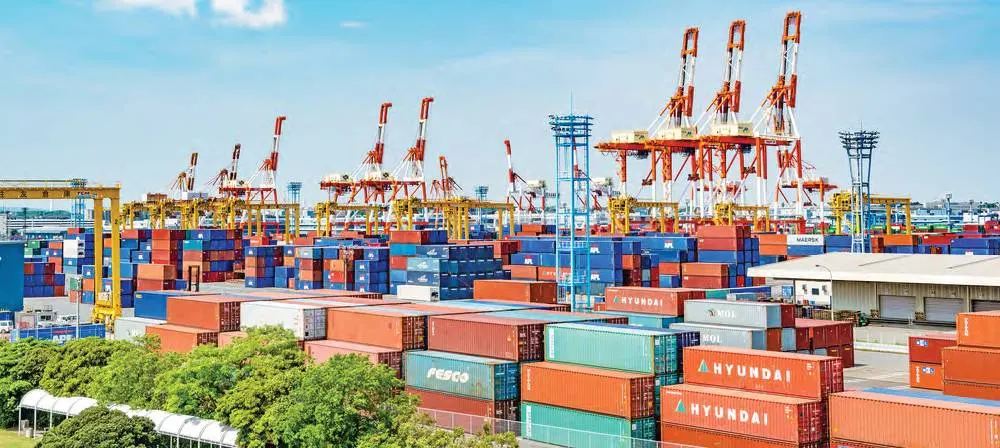
With the drop in direct trans, and Pacific calls with carriers, Japanese and South Korean cargo owners are paying high rates to ship their products to North America. China, however, has been offering transshipment to mainline services. The fall in connectivity has led shippers to use short sea services from Japan and South Korea to China.

The transpacific container volumes have shown a significant fall in 2020 The transpacific calls fell from 400 in 2019 to 350 in 2020. This figure was pegged at Yokohama, Japan’s second-busiest container port. However, it triggered the feeder services connecting ports in China, totaling 1,860 in the same year.

Managing Director at Geodis China, Ivan Siew, said “Carriers have rescheduled their vessels and implemented recovery plans to improve schedule reliability. In some cases, port calls have been cut off from Japan and South Korea. Some routings from Japan to the US West coast will ship via Shanghai. US East Coast services will keep the original ex-Japan/South Korea port schedule.” The spot rate to ship a 40-foot container from Japan to the US West Coast stands at 64 percent, higher than China, while South Korea stands at 32 percent higher. This has compelled most shippers to use short sea services from Japan and South Korea to China, where cargo is shipped to mainline services.

VOLUME DECLINED FROM MAJOR JAPANESE PORTS

The top ports in Japan like — Tokyo, Yokohama, Kobe, Nagoya, and Osaka, showed that volumes plunged in 2020. “Most shippers suffer from space availability, especially to the US West Coast,” said Keiko Kiso, managing director of Rhenus Sankyo Logistics Japan. He further indicated, “From Japan, we have only one direct service — the Far East Pacific 1 (FP1). The situation is worse now, as there have only been three vessels coming to Japan over the past eight weeks.”

AFFORDABLE RATES IN CHINA

Presently the freight rates from Japan to the US West Coast stand at $14,000 per FEU, South Korea to the US West Coast stand at $11,200 per FEU, and China stands at $8500 per FEU. The rates have been provided by the freight rate benchmarking platform Xeneta. Xeneta chief Peter Sand states, “Chinese ports are consolidating cargo before leaving the region. Since May 2021, the rates out of China on the trans-Pacific have become much cheaper than those out of Japan and South Korea.

2020 saw downward plunges in all of Japan’s ports -Tokyo, Kobe, Nagoya, and Osaka while China climbed upwards. The prices per FEU for spot export cargo from Busan to Los Angeles have gone up by 50% in January compared to August last year. At the same time, the prices from Shanghai to Los Angeles were down by 8%. Eunice Yu, Dacshers head of Ocean Freight Asia Pacific, mentioned, “Capacity from Busan and Japanese ports is always tight. Most of the time, Busan serves as the call on the trans-Pacific trade, so carriers tend to drop the Busan call to catch up on overall service reliability.”

SURGE IN RO-RO VOLUMES AT NORTHWEST SEAPORT ALLIANCE

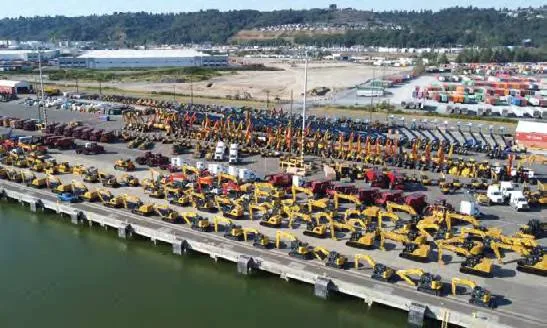
The Northwest Seaport Alliance (NWSA) saw a surge in roll-on/roll-off (Ro/Ro) volumes from cargo out of boxes, with the increasing trend of port congestion and high container rates in 2021. The overall breakbulk volumes are up by 25 percent, with port executives expecting the movement to strengthen in 2022. The NWSA is a marine cargo operating partnership of the Port of Seattle and Port of Tacoma and manages the container, breakbulk, auto, and some bulk terminals in Seattle and Tacoma. This partnership also connects to the second-largest concentration of distribution centers on the West Coast.

Andre Elmaleh, senior manager of non-container business development at Northwest Seaport Alliance, spoke about this scenario, “The surge in the breakbulk tonnage is driven by rate increase on containers. The big factor is the increase in the rates in the trans-Pacific trade for container ships”.

RORO – A FASTER ALTERNATIVE

The supply chain conundrum changed the scenario from container ships being the transport mode of choice for many RO-RO shippers. Elmaleh explained, “Ro-ro became more reliable, faster, and cheaper to the benefit of NWSA.”

The NSWA is slated to top its 2021 breakbulk volume in 2022. Elmaleh states, “Our customers indicate another record year, with a potential 10 percent improvement over 2021. RO-RO becomes more reliable, faster, and cheaper.” The ports handled 246,411 MT breakbulk in 2019, which shot up to 25.6 percent in 2020, which again grew to 366,184 MT in 2021. So the numbers speak for themselves. Companies like Caterpillar, John Deere, and Case New Holland Industrial, predict an increased demand for their goods. Growth is expected in all sectors, including construction and agricultural equipment. The NWSA operates breakbulk terminals handling automobiles and heavy cargo. “We attract RO-RO carriers but do not work on traditional lift-on, lift-off high, and heavy project cargoes,” Elmaleh added.

As per port data, RO-RO construction equipment constituted 67 percent of 2021 tonnage. Some RO-RO carriers involve EUKOR car carriers, Hyundai Glovis, MOL RO-RO, K-Line Ro-Ro, and NYK Ro-Ro.

SLOW IMPORTS ARE NOT A SIGN OF RELIEF AS YET FOR CONGESTED US PORTS

The slow rise in imports is not an immediate relief for the already congested US ports. US retailers expect sense to pick up in the first half of 2022, unlike the quicker pace of the previous year. However, even slower growth on top of already historic volumes means ports are unlikely to see much relief in clearing cargo backlogs.

Ben Hackett, the founder of Hackett Associates and co-author of Global Port Tracker and National Retail Federation, said, “A shortage of equipment, worker availability and storage space at distribution centers and warehouses across the country remains problematic as does the export of empty containers back to Asia.”

Additionally, the monthly import volumes in the future are complex due to vessel backlogs at significant gateways on the West and East coasts. The delays in vessel berthing arise primarily because few containers are on idle vessels. Though the Global Port Tracker (GPT) stated that the December imports are set to increase by 3.7 percent in 2020, the imports fell by 1 percent. The January imports were projected to rise by 4.4 percent compared to 2021, while February is projected to increase to 8.7 percent due to the pre lunar New year rush. As the first six months of 2020 had plunged due to Covid 19 related closures of factories in Asia and lockdowns in the US, the first half of 2021 showed an import surge of 35.7 percent. The US imports market is projected to increase 1.5 percent in the first six months of 2022 compared to 2021, while March projects a drop of 6.7 percent in US imports owing to the Lunar New Year holidays in Asia when factories are normally closed. However, April is set to see an increase of 2.2 percent, while May is set to fall by 2.6 percent before surging to 5.2 percent in June. (Numbers courtesy: Global Port Tracker)

PILING BACKLOGS

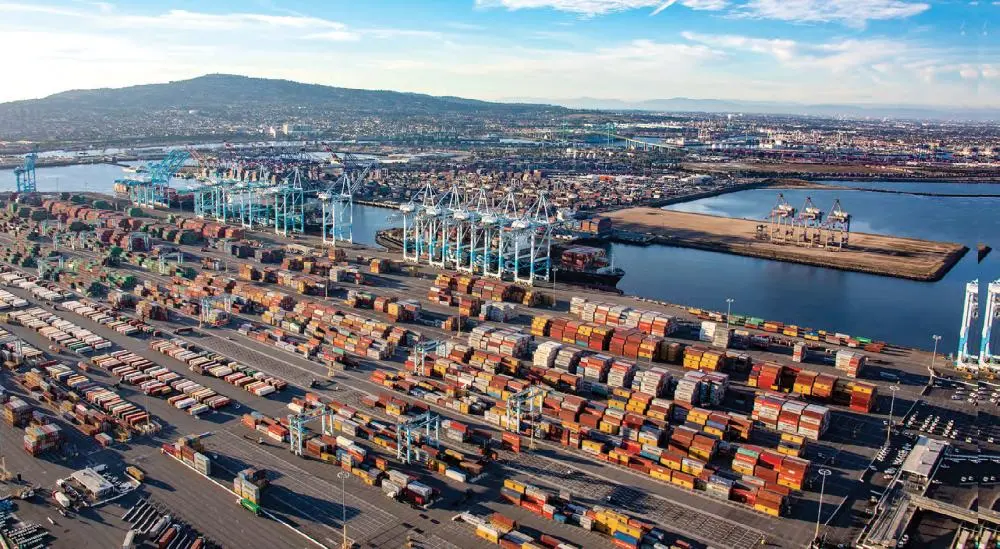
The Los Angeles Long beach was recorded as the most congested US port complex, with 34 of 78 vessels waiting within 25 miles of the coast and several following slowly. The Marine Exchange of Southern California recorded this container ship backlog. Hackett says, “Backups cannot be erased quickly as long as terminals continue to face a lack of space brought on by the supply chain’s inability to efficiently transfer cargo out of the terminals to its end destination.”

According to PIERS, US imports from Asia increased 14.4 percent compared to 2020″ A return to a more typical single-digit growth is expected this year given the much higher bar for imports that was set in 2021. The numbers remain high as consumers continue to spend despite Covid 19 and inflation. The slowdown in cargo growth will be welcome as the supply chain continues to adapt to the high volumes”, says Jonathan Gold, the NRF vice president for supply chain and customs policy.

PLANES, TRAINS, TRUCKS, AND OTHER VEHICLES MAKE WORLDWIDE DELIVERIES

THE UNWRITTEN RULE ACROSS ANY INDUSTRY IS THAT DISRUPTIVE FORCES ARE CONSTANTLY AT PLAY, RESHAPING HOW ORGANIZATIONS THINK ABOUT TECHNOLOGY, CONDUCT BUSINESS, AND LOOK TO THE FUTURE.

This is, of course, true for the logistics industry, where market trends are impacting the sector to a great degree. From new technologies to explore and take advantage of to shifting regulations that require new strategies and tactics to ensure compliance, logistics companies must stay plugged into new and emerging trends to stay at the bleeding edge and remain competitive. Companies that succeed are the ones that embrace a combination of the latest trends and utilize them in a way that capitalizes on traditional and established technologies.

Going forward, how will the current trends in logistics impact us?

1. RFID – For over a decade, Radio-frequency Identity (RFID) chips have promised to provide real-time tracking information. However, while many OFD (out-for-delivery) companies have invested much money in RFID, they have yet to see a real ROI from the technology.

So why is that – Simply having RFID chips doesn’t mean you have better access to the data because you need computers near the data to collect it and share it. Companies also need file-based integration technology to connect devices and edge computing systems back to the core enterprise systems to transfer reporting documents. The data can be stored and analyzed for insight and business decision-making. Further, the logistics companies that do utilize RFID technology to a value-producing extent are the ones that can blend traditional line-of-sight technology such as barcode labels with RFID. Barcode labels are well-established and relatively low-cost. The underlying systems and business processes are well-understood and common. By comparison, RFID implementation can be a high-cost addition to the logistics supply chain. Some estimate a 10X cost factor for implementing RFID tags versus bar codes. The price barrier for investment is why a blended approach to traditional and new makes sense. Additional concerns around data accuracy and reliability should also play a role in how a company chooses to leverage RFID.

However, there are viable applications companies should investigate – RFID in logistics has potential, particularly in route optimization and the real-time tracking of goods. RFID systems can provide precise location and quantity data in real-time when effectively integrated. For instance, tagging trucks, pallets, and inventory provide multi-lateral views of what is happening across the supply chain. Knowing exactly where a specific truck is at any given moment can allow a logistics company to be more proactive, to change a delivery route given unpredictable events such as accidents and weather. Companies that mix and match traditional and legacy technology with next-generation advancements are the ones who end up most successful. Those companies understand that completely replacing established technology and business processes is unwise. New technology tends to perform better than what is established and standardized.

2. Omnichannel Shipping – Omni-channel fulfillment is an increasing reality in the logistics industry, one that is being spurred on by a shifting approach to meeting customer expectations in the retail sector. According to the Harvard Business Review, the Amazon effect drives traditional retailers to offer more omnichannel touchpoints to increase customer loyalty. The goal is to provide a seamless and easy way to shop, whether it’s conducted digitally or in-store. In this context, successful logistics companies have evolved to offer more creative approaches to shipping to navigate growing omnichannel complexities within the supply chain. Here is a simplified look at possible omnichannel fulfillment and return order flows directly to (and from) the end customer:

†   Warehouse to consumer and back

†   Supplier to consumer and back

†   Store to consumer and back

†   Distribution center to consumer and back

Traditionally, the shoppers would travel to the purchased item. The “last mile,” so to speak, was thereby on the customer. Now, last-mile logistics are falling on the shoulders of the retail logistics providers and their partners. The changing expectation is for retail logistics deliveries to operate like UPS. Companies such as Amazon contract UPS to handle these deliveries since their system is already in place.

3. The Big Promise of Big Data – UPS may be the biggest success story for big data in the logistics industry. The company has made massive strides in operational efficiencies and cost savings through data collection, analysis, and demand forecasting.

1000’s of vehicles each have more than 100’s onboard sensors that measure speed, braking, backing up, location, and idling time. Some sensors collect diagnostic data on the vehicle battery and tire pressure, allowing for preemptive maintenance. The goal is to maximize the time a vehicle is on the road versus in the shop. Further, big-data-driven predictive modeling is the basis for massive gains in route optimization. Because of the proliferation of GPS and location sensors and real-time traffic updates, companies can now optimize delivery windows regardless of construction, parades, accidents, and the like. Companies utilizing big data technology create systems to allow them to change their route in real-time. This is done for a couple of reasons. Another big data outcome related to route optimization is to decrease mileage. The level of savings that companies in terms of mileage impact the wear and tear on vehicles.

While some forward-thinking companies are starting to invest in greener technology and big data initiatives, many supply chain companies are coming up with new techniques that parallel route optimization through how a mastery of inventory logistics management, optimizing shipments for efficiency.

4. Embedded Integration Technology – Logistics companies utilize embedded technology to better connect with their customers. They recognize that they need a data movement platform to share data back and forth between their customers seamlessly.

Embedded integration capabilities provide SaaS companies in the logistics space to offer value-added services related to logistics and supply chain data. This is a true encapsulation of digital transformation as more traditional logistics enterprises evolve into data-centric services companies. Organizations utilize modern services and solutions to process data and provide insight to customers. Being more dynamic than ever before by providing fast and critical information to and from customers is central to a business’s success. An embedded data platform provides secure communications protocol flexibility that enables robust transactional business flows. You need to be able to connect, transform, and integrate data through capabilities that are already built into the solution. Customers want to know everything, and information is of the utmost importance. Service-level agreements (SLA) must also be met, and companies are taking advantage of embedded software with business-level dashboard views and 24/7 monitoring to extend visibility throughout the process to ensure compliance with tough SLAs.

5. Globalization and Compliance – Globalization is forcing many logistics companies to focus on a strategy of achieving delivery KPIs while keeping costs in check.

The need for increased flexibility across the supply chain is paramount, and it recognizes that no single solution to the growing complexity will be one-size-fits-all. The landscape of global trade is constantly shifting. There is an unwavering need for logistics companies to stay ahead of evolving compliance requirements. This rings especially true for all the ways the enterprise needs to manage critical customer and partner data. Take the recently created Federal Maritime Commission plan to reform regulatory priorities. One recent change in governance directly affected the New York Shipping Exchange and aimed to combat shippers leaving less lucrative cargo behind. While this is a positive change, it is still a change – one that is increasingly happening everywhere.

Further, across the globe, the ability to comply with the plethora of data-related mandates is tied to how capable a company is in its ability to find, view, record, and report on the data. The regulation calls for full audibility. Companies need to provide full audit trails to keep track of their data and customers’ data with built-in governance and control throughout the process. Without the proper ability to comply with provable digital documentation, trucks could sit at the dock, ships get stuck in the harbor, and goods are stranded on trains or tarmac – for hours or even days.

6. Integrated 3PL Services – As e-commerce continues to expand beyond epic proportions, many companies also see quite a bit of potential in integrated 3PL services.

Businesses are seeing this by bringing in heavy assets in trucking and adding freight brokerage capabilities and warehouse facilities to provide deep integration into customers’ systems. As customers advance through their use of modern technology, logistics companies are embracing logistics automation trends by utilizing API integrations to connect e-commerce stores with a fulfillment center in addition to traditional EDI. Because supply chains have so many different channels and change so quickly to meet consumer demand, fulfillment practices must evolve to cope with COVID-19 and any other supply chain disruption that may arise. Logistics industry trends demand that customers have options for delivery, from last-mile services to same-day and next-day delivery, and it’s up to providers to make sure that customers have those very delivery options.

7. Re-Optimized Service Lines – When COVID-19 first struck, logistics companies started to re-optimize service lines to focus on industries that thrived the most during the pandemic, such as food, paper, and packaging.

This allowed these logistics enterprises to have a regular fleet rather than a non-dedicated, irregular fleet. No, it is not easy for companies to transition and pivot their strategic initiatives, but the result will prove beneficial for years to come.

8. Embracing Modern Integration Technology – Logistics companies recognize the importance of upgrading their legacy environment and evolving to a modern integration platform. The allure of a modern integration platform provides quicker onboarding of customers, trading partners, and suppliers and provides end-to-end visibility so logistics companies can conduct business quicker. From frictionless supplier integration to the ability to unlock back-office systems critical to third-party logistics (3PL) services, modernized integration technology can do it all. Logistics businesses everywhere see integration technology’s value for their supply chain. Those companies that migrated to a modern integration platform before COVID-19 were the ones that put themselves in the very best position to manage disruption to their supply chain. COVID-19 has shined a light on the importance of a modern integration platform.


To conclude – Today, the logistics industry looks entirely different from ten years ago. The question now becomes, what will it look like in another 10.

Market trends, such as those outlined above, will continue to impact the logistics sector well into the future. However, the success of trend-shaping nascent technologies requires that they are integrated with existing solutions and infrastructure. Logistics operation needs to enable processes like ingesting a load tender, but companies also need to look to how future technology can be leveraged to reduce margins. Businesses can create a next-generation stack that leverages previous technology investments while incubating big data and omnichannel solutions. Furthermore, the events of 2022 have disrupted the entire supply chain, and the logistics industry is no exception. The logistics landscape is plagued by uncertainty and disruption, but it is also ripe for digital transformation. Companies that succeed in 2022 and beyond will embrace a combination of the top trends in logistics management to become resilient to supply chain shocks.

JAWAHARLAL NEHRU PORT AUTHORITY OF INDIA TO FOCUS ON MULTIMODALITY

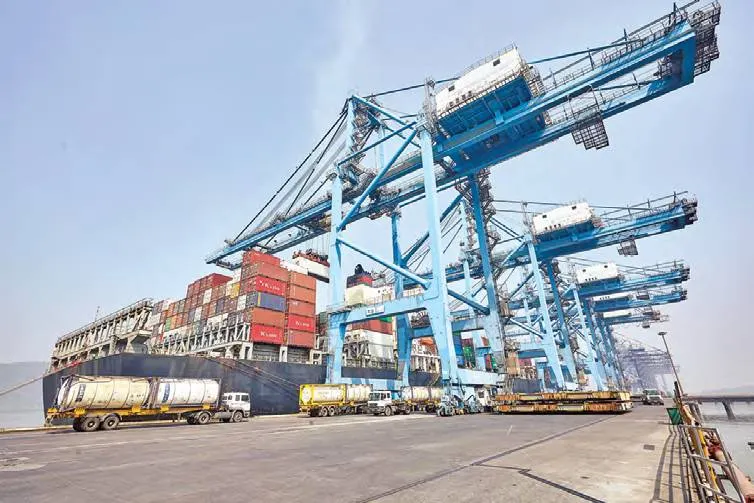
The Indian Government had started a flagship program in liaison with the Ministry of Shipping in 2015 called the Sagarmala. The program successfully covered seven years, and the Jawaharlal Nehru Port Authority (JNPA) has renewed its focus on multimodality under the PM Gati Shakti program. The program’s highlight was the development of dry ports in Wardha and Jalna in Maharashtra in Western India. Under the banner of Sagarmala phase has been completed, and will further bolster the economy in this region by connecting the upcoming multimodal parks seaports using big road and rail projects. A scheme with a budget of ₹184 crores, the dry port in Wardha, Nagpur, has been developed as a multimodal logistics park with the National Highways Authority of India(NHAI). The Jalna project has 90 percent of its Inland Container Depot (ICD) works completed. NHAI and Container Corporation of India (CONCOR) has expressed interest in its operationalization, with the project cost set at ₹327 crores.

Port-led Industrialization

The chairman of JNPA, Sanjay Sethi IAS, spoke about this focus on multimodality, “JNPA plays a pivotal role in the Governments initiative of the Sagarmala to boost the port-led industrialization. JNPA has multiple projects under Sagarmala based on the four-fold view – to change dynamics and reduce logistics costs in India, boost overall economic development through ports and empower coastal communities put across by the ministry.”

He emphasized, “Acting as the major catalyst for the trade and shipping industry, JNPA’s projects like the fourth container terminal, JNPA SEZ, Dry Ports at Wardha and Jalna, additional liquid cargo jetty, and many more will foster the port’s ease of doing business and take Indian EXIM to greater heights.”

Spurring Development of Indian Ports

Giving an update on the recent IT disruption that disturbed the terminal operations, Sanjay Sethi adds that the port had initiated a sanitization process for the entire digital infrastructure and set up a new protocol to avoid such future occurrences. He further added that the port would finalize the process of privatization of JNPCT on April 28 and the coastal berth on May 2, 2022.

Due to the Sri Lankan economic crisis, its effect on the Colombo Port is not small as most Indian ports on the eastern coast depend on them for transshipment. The Sagarmala initiative has allowed the Indian ports to handle large volumes efficiently. Owing to the immense potential in Maharashtra’s coastal region, 131 projects worth ₹1.05 lakh crore have been proposed to be implemented in Maharashtra, and these projects involve various categories like port modernization, rail, road, cruise tourism, RORO, ROPAX, fisheries, coastal infrastructure, and skill development.

IMPACT OF THE DISSOLUTION OF THE DIFC’S ARBITRATION INSTITUTE AND EMIRATES MARITIME ARBITRATION CENTRE

From its inception, the Dubai International Financial Centre (the “DIFC”) intended to establish an example for regional dispute resolution. In addition to the now well-known DIFC Courts, an arbitration Centre was created to provide alternative dispute resolution services (i.e., Arbitration and Mediation as “ADR”) for local and foreign businesses in the region. In 2008 the DIFC negotiated an agreement with the LCIA pursuant to which arbitrations under DIFC-LCIA Rules would be managed and administered with LCIA’s assistance.css

To deal with the alleged jurisdictional issues, Dubai Law 7 of 2014 was passed to amend Dubai Law 9 of 2004, the founding law of the DIFC. Pursuant to the Amended Law, the DIFC Dispute Resolution Authority (the “DRA”) was created, which comprises the DIFC Courts, the Academy of Law, the DIFC Wills, and Probate Registry, and the DIFC Arbitration Institute (“DAI”).

In November 2015, DAI entered into agreements with LCIA to manage and administer arbitrations in which the parties had selected DIFC-LCIA Rules, leading to the re-launch of DIFC-LCIA. However, on 14 September 2021, The Ruler of Dubai issued Decree No. 34 of 2021 (the “Decree”), accompanied by the Statute of Dubai International Arbitration Centre (the “Statute”). The decree came into effect on 20 September 2021 (the “Effective Date”) and took many within the dispute resolution community by surprise as it introduced fundamental amendments to the arbitration framework in the Emirate of Dubai, including the offshore free zone commonly known as the Dubai International Financial Centre (DIFC). Wherein, the same abolishes both the: (i) Emirates Maritime Arbitration Centre and; (ii) DIFC’s Arbitration Institute (DAI) (collectively the “Abolished Centres”); and provides:

  • for the Dubai International Arbitration Centre (“DIAC”) to assume the rights and obligations of the Abolished Centres and, after that administer cases; and
  • Lays down key details relating to the objectives, scope, and organization of DIAC.

From the Effective Date, the following (in respect of each Abolished Centre) shall be transferred to DIAC:

  • ownership of properties, movables, assets, devices, equipment, and funds;
  • employees (subject to a decision by the DIAC Board Chairman);
  • financial allocation designated to the Abolished Centres by the Government of Dubai; and
  • The Abolished Centre’s arbitrators, conciliators, and experts list.

In view of the above, the main concerns are as follows:

Impact on the maritime sector

DIFC’s Arbitration Institute was the administering body of the DIFC-LCIA Arbitration Centre. DIFC-LCIA Arbitration Rules are similar to LCIA rules, and this was a convenient option available to the parties in the maritime sector resorting to arbitration in their agreements.

This move certainly has repercussions in the UAE Maritime sector as EMAC was considered a specialized centre created for dealing with maritime disputes predominately. Though the decree ensures that the experts of EMAC will be retained, this decision has created much confusion and a lack of confidence in the maritime sector of UAE. Unlike the US, India, London, etc., UAE lacks an Admiralty Court.

Validity of existing arbitration agreements:

All agreements entered into before the Effective Date that refers to dispute resolution through an Abolished Centre’s regulations shall be deemed valid and effective unless otherwise agreed by the parties to such an agreement. In such circumstances, DIAC shall replace the Abolished Centres in considering and determining disputes. With regard to any agreement entered into after the Effective Date providing for the jurisdiction of an Abolished Centre will not be valid.

Competent Courts:

Dubai Courts and DIFC Courts will continue to consider cases, requests, and challenges relating to any arbitration award or procedure issued by arbitral tribunals within DIAC and the Abolished Centers, in accordance with their respective procedures and standards.

Default Seat

Pursuant to the Statute, the Dubai International Financial Centre shall be designated as the default seat of DIAC arbitration proceedings except where the parties do not agree to a seat or place of arbitration pursuant to their arbitration agreement or otherwise.

Transition Period

The decree provides DIAC with six months from the Effective Date to coordinate with all concerned entities and give effect to the transition set forth in the Decree and the Statute.

Described as aggressive yet progressive, the decree has taken the masses by surprise, and it is for the parties to take immediate action on any references in existing standard terms and conditions or existing and/or new contracts that are being currently negotiated that provide for arbitration in an Abolished Centre should be urgently reviewed and revised.

It is also expected for DIAC to issue new arbitration rules, form a new arbitration court similar to that of the ICC International Court of Arbitration, and a new board and a new administering body.

EMPLOYEES OF THE MONTH

award-1
RAPHAEL GODSON – Assistant Manager, Ocean Pricing awarded by Susanth Shekar, General Manager, H.R & Administration
award-2
VARGHESE THOMAS – Sales Co-Ordinator, Freight Forwarding, awarded by Thomas Mathew, General Manager, CSS Kingston
award-3
MOHAMMED JINSHID – Coordinator, NVOCC-operation awarded by Julie Adersh, Sales Manager NVOCC
award-4
SIVASUBRAMANIAN KUTHALINGAM – Cleaner, awarded by Sunny Xavier, General Manager, Project division.

U.S. SENATE PASSES SHIPPING ACT IN A BID TO EASE SUPPLY CHAIN WOES

The U.S. Senate has passed the Ocean Shipping Reform Act 22 (OSRA 22) and will seek to pass the bill’s final version with the House of Representatives before President Biden signs the legislation into law. The Act is designed to increase the federal oversight of ocean carriers and seeks to address the logjams in U.S. ports and the ensuing supply chain woes. The bipartisan bill gives the government more authority at ports and allows federal agencies to investigate unfair practices.

However, several shipping operators and cargo owners have expressed concerns over the Act. The World Shipping Council (WSC) wants the supply chain woes to be addressed even as imports continue at record levels, with the ports and workers on land finding it challenging to process the cargo.

Rising levels of consumption

In February 2022, the Port of Los Angeles processed 857,764 TEUs, a 7.3 percent increase compared to last year. The busiest month in its 115-year old history, this is followed by a track record of record-breaking months from the beginning of 2022. “NRF expects retail sales to increase in 2022, as consumers are ready to spend and have the resources to do so,” says Matthew Shay, President, and CEO of the National Retail Federation.

“We should see durable growth this year given consumer confidence to continue this expansion, notwithstanding risks related to inflation, COVID-19, and geopolitical threats.” The National Retail Federation has pegged retail sales in 2022 between $4.86 trillion and $4.95 trillion. This figure is 14% of the annual growth rate in 2021, the highest in more than 20 years. With the National Retail Federation expecting a stupendous growth in 2022 and the Port of Los Angeles recording its best-ever container handling in February, U.S. consumer spending shows an upward trend despite Covid, inflation, rising fuel prices, and the war situation. Given this background, the OSRA 22 is attracting disapproval from shipping operators.

Discontentment over OSRA 22

“Ocean carriers have deployed every vessel and container available and are moving more goods than at any point in history, but the U.S. landside logjams are keeping vessels stuck outside U.S. ports,” asserted WSC in response to the Act. “This import congestion is also consuming the capacity and space needed to ensure the uninterrupted flow of U.S. exports. The American people are looking for solutions to supply chain congestion resulting from the impacts of Covid-19. Unfortunately, the Ocean Shipping Reform Act of 2022, S.3580, addresses none of the root causes of the U.S. landside congestion.”

WSC has also stressed that the bill would worsen the existing congestion while the Senate bill passed in 2021 provides regulators enough authority to get the final rules right. The Council has further emphasized, “Instead of passing legislation that would do nothing to address the nation’s supply chain congestion, Congress should seek real solutions that take a comprehensive, forwardlooking view. That means continued investment in port infrastructure and promoting communication, innovation, and collaboration across sectors to strengthen further the intermodal transportation system that has supported the U.S. economy throughout the pandemic. The World Shipping Council will continue to partner with Congress and other stakeholders on these worthwhile efforts.”

Freight Logistics Optimization Works (FLOW)

Freight Logistics Optimization Works (FLOW) is the new initiative by the Biden administration for regulating supply chains. A fact sheet issued by the White House explains that FLOW is an information-sharing initiative to pilot key freight information exchange between parts of the supply chain. The commitment to moving the transportation logistics system to 21st-century digitization follows the commitment to move toward 24/7 operations many made last fall.

A slight dip in shipping rates

The Asia-US West Coast prices dropped by a meager 2% to $15,908/FEU. However, it has to be noted that the figure is up 170 percent from 2021. As lockdowns were imposed in China’s major export hubs like Shanghai and Shenzhen, minor effects have been on the supply chains. North Asia to the west coast of North America dipped below $9,000/FEU for the first time since December 14, 2021, and was assessed at $8,000/FEU on a FAK basis on March 18, S&P said in its report.

Congestion lessens in Long Beach/Los Angeles (LA/LB)

Total container ships backed up across the ports of Los Angeles/Long Beach was 42 as of March 22, 2022 – a new low, and 67 fewer than the record of 109 on January 9, 2022. “The 42 container ships backed up to include 3 container ships at anchor off the ports of LA/LB, plus 0 loitering within 25 miles, plus 39 slow speed steaming or loitering outside the Safety and Air Quality Area (SAQA),” according to data from Captain J. Kipling (Kip) Louttit, Executive Director, Marine Exchange of Southern California & Vessel Traffic Service Los Angeles and Long Beach San Pedro, CA.

According to an analysis by Sea- Intelligence, the decline in ships queued outside LA/LB ports is just the start. “What we saw during January appeared to be a kind of steady-state balance between the desire to operate the required vessels and the need to blank sailings due to the vessels being unavailable. Hence, more realistically, we might be back to the 100-105 vessels in the queue by the time we get to April.”

Chairman’s Message

We have set sail into 2022, and we brace ourselves for challenging yet exciting opportunities that will come our way. Covid-19 and its evolving variants will remain a central variable as we steer through. It is reasonable to predict that the longer the pandemic lasts, longer will be disruptions in ocean supply chains, and freight rates will continue to stay exceptionally high.



Keys to Success in 2022

We can already foresee supply chain issues, port congestions, driver issues, product shortages, and inflation. While the direct impacts of the pandemic may ease in the next quarter, we must prepare ourselves for the secondary effects. The global responses to these secondary effects of the pandemic may exert long-term impacts on supply chain functioning. Mitigating risks and responding with speed would determine our success.

At the CSS Group, we have consistently overcome challenges and are well equipped to face them. With our cumulative experience and varied skill sets, I am confident we are positioned to reach our vision for 2022.

Pandemic and The Growth of E-Commerce

We have set ourselves to exploring and providing new services in new sectors, expanding our foothold in new domains. Our foray into e-commerce is one of the many ways we seize the opportunities this pandemic has created. Pre-pandemic, the ecommerce sector reached a value of $22 billion by 2020. The coronavirus pandemic was a defining event, forcing businesses to rethink brick and mortar commerce. As many companies shut shop, ecommerce buoyed several others. By the end of 2023, the ecommerce market is expected to touch $62 billion in UAE.

UAE’s Strategic Weekend Shift

The UAE’s shift in its weekend classification to Saturday and Sunday from January 1st has aligned the United Arab Emirates with global markets. This move will positively impact businesses with increased ease in making deals and trade with clients overseas. More foreign investments, property transactions and liquidity at the local stock markets, with higher consumer spending, will boost UAE-based businesses across various sectors.

At CSS, this is a stepping stone to better productivity. We will be able to serve our international clients more efficiently and keep our UAE operations aligned with the rest of our offices across the globe. Historically, since UAE began its trading week on Sunday, a holiday for international markets, the interest in local markets and liquidity was low. However, we are set to see trading volumes are likely to go up once trading hours become more aligned with International business days. This is a welcome move and reinforces the innovative and progressive leadership within the UAE as they continue to roll out pioneering strategies within the region.

Bill Gates, the American software mogul, and philanthropist, said, “Success today requires the agility and drive to rethink, reinvigorate, react and reinvent constantly.”

At CSS, agility and drive should be the force of momentum as we move into newer sectors and embrace the opportunities that come our way. I commend each of you to be champions of speed and innovation, energizing us to conquer greater heights.

CSS BAHRAIN A STORY OF CONQUERING THE ODDS

Established in 2019, CSS Bahrain has come a long way. When operations started in early 2019, the team at Bahrain saw just two months of operations in full swing before the pandemic, and subsequent lockdowns and restrictions hit them.

The Island Nation of Bahrain – A Strategic Location

The Kingdom of Bahrain is geographically positioned as an ideal hub to expand and strengthen transportation and logistics foothold in the GCC and the world. Bahrain offers convenient access to the GCC market by air, road, or sea with advanced and interconnected transport infrastructure. The GCC’s largest economy, Saudi Arabia, is also merely a half-hour drive away from the famed King Fahd Causeway. The country also services a business-friendly environment backed by a skilled local workforce, competitive operating costs, and ease in customs clearance times.

Bahrain is also expected to develop its infrastructure with an investment of nearly $32 billion and further expand and connect its transportation network both locally and internationally.

CSS Bahrain – A Neutral NVOCC

CSS Bahrain works as a neutral NVOCC with its service offerings in Air & Sea Freight, Land Transport, and Projects. CSS Bahrain was established to become a preferred partner, maintaining excellent relationships with leading carriers ensuring competitive rates and services to its valued clients. CSS Bahrain offers turnkey project forwarding solutions to worldwide destinations, with hands-on management and a team of highly experienced project professionals. The team customizes our services according to the specific requirements of individual projects and client requirements.

Overcoming the Pitfalls of the Pandemic

The unanticipated lockdown led to stringent restrictions in direct visits to customers for more than a year. However, the team at Bahrain, captained by Mr. Amal Hareendran, Branch Manager, and competently supported by Mr. Udheesh Uthaman, Business Development Manager, and Mr. Bhanu Nazeer, Team Leader – Customer Service & Operations along with the commitment of entire team members in front office & back office helped to assuage these troubled times. They were quick to adopt the newest technologies available to provide the best service to customers while ensuring minimal disruptions in the supply chain due to the pandemic.

During and post the pandemic, the precarious nature of the market required a high level of commitment, diligence, and perseverance by the team, compared to pre-Covid times. The pandemic affected the staff and saw its impact on various stakeholders. There were delays in the vessel and port operations, a highly imbalanced logistics supply, and unpredictable space and equipment constraints.

Many of these operational snags called for manual intervention to ensure smooth execution and delivery. Today, Team Bahrain can proudly say that they have managed to achieve customer service at the highest level. Mr. Amal Hareendran was elated as he spoke about his team’s commitment, “We were able to raise CSS Bahrain once again in the market, upholding the goodwill and highest service levels we had built up over the years.”

The CSS Bahrain leadership team emphasized that they were not rushing in the due course. Nevertheless, have steadily accelerated CSS’s growth and market share. CSS Bahrain now holds a different name for the highest quality in customer service catering to multidimensional logistics.

Better, Stronger, and Ready to Conquer

The year 2021 has been a very good year for CSS Bahrain, having done exceedingly well in servicing customer logistics requirements in the high quality of service possible despite the challenges rocking the shipping industry. While the challenges continue to persist, CSS Bahrain, as they say, is a call away to provide the best possible solutions for the customers 24/7.

Today, having completed more than two years of operations after relaunching with new branding, CSS Bahrain is stronger than ever. Feedback from the market and customers reaffirm that the team has successfully weathered a difficult season. Surmounting multiple challenges thrown by the pandemic, CSS Bahrain has exceeded customer expectations and blazoned the tenets of the CSS brand.

The Way Forward

The new year has set the team at CSS Bahrain focused on scaling new heights. In 2022, Bahrain would aim to start maximizing Direct LCL service to Bahrain, aspiring to become the NVOCC leader in the market within the next two years by providing excellent service, better rates & faster transit to the LCL customers already commencing services from Spain, Nhava Sheva (India), Italy. The team also plans to start Direct Services from other destinations in Europe and China shortly.

The team also plans to start Direct Services from other destinations in Europe and China shortly. CSS Bahrain has also become one of the market leaders for LCL Exports from Bahrain, where they service every week via Jebel Ali to several destinations. CSS Bahrain office plans to expand further and build its team by the first Quarter of 2022. The mission is to expand and serve a larger pool of customers in Bahrain in an even better manner offering customized logistics solutions.

Looking back, CSS Bahrain has marched on resolutely amidst some demanding times. We commend the team and the staff for their spirited endeavor and wish them the very best as they continue to move forward.

CSS DELHI CREATES HISTORY WITH RECORD TEUS

CSS Delhi made history by closing the highest number of TEUS in import containers. A first time for CSS Delhi and the New Delhi consolidator fraternity, the Delhi team reached the milestone of 274 TUES in import consolidation.

Mr. Rajeev Kumar, took over as Sr. General Manager CSS North India Operations a year ago and achieving this milestone is a feather added.

He is ably supported by Mr. Prabhakar (Import Head), Mr. Praveen Gusain (BDM), along with able Overseas Sales coordinator team, Mr. Atul Jaiswal, Mr. Anil, Mr. Harikesh, and Mr. Roshan.

The Delhi office was star ted fourteen years ago and has experienced competition prevalent to the geographical location. The Delhi office caters to import and export, with a thrust on import business. Maintaining loyalty amongst consignees has been an uphill task. The market is vulnerable to new entrants offering lower rates, thwarting growth and market share.

Mr. Rajeev Kumar said, “We’ve been among the top consolidators for quite some time, and now we have become an established brand name in the Delhi market. The team created history by recording the highest ever Import TEUs for any consolidator in the Delhi market.”

Mr. Rajeev would like to recognize the efforts of Mr. Sumeet who handles debit notes and reconciliations, and also other members who functions tirelessly.

Special applauds for Mr. Chandan and the CS Team, Accounts Team, Mr. Sudeep and his team.

A truly remarkable feat, CSS Delhi has proved its potential and can proudly affirm its march to scaling a greater peak.

RESPECT IN THE WORKPLACE!

“Respect is a feeling when you treat someone well for their qualities or character traits, but respect can also be a manifestation of dignity towards people.”

Respect should be the norm in the workplace, regardless of personal feelings. Team and managers should respect each other as it creates a decent work environment, which increases productivity. It is an essential element in every workplace as it helps the team to work hard as their efforts are appreciated. Team members will not necessarily love or admire the personalities of their leaders or colleagues, but they still need to respect their work to achieve their goals and be professional.

            By: Abhilash Nair
       Global CEO of ISS Relocation
Employees value diverse types of respect:
  •  Respect should be shared equally with all team members.
  • Respect is ensured by courtesy and creating a space where each member of the group is valuable.
  • Well-earned respect or professional achievement lies in recognizing individual employees for quality tasks performed.
  • The manager can highlight employees who have exceeded expectations.
  • It is a confirmation that each employee has unique strengths and talents.
  • The respect earned meets each person’s need to be judged for superior performance.

Once you understand why respect is important, it becomes even more important. You will begin to understand why your colleagues are responding in certain situations and take steps to create a more positive work environment with everyone involved. When people feel respected, they show respect for others.

Some of the benefits of respect in the workplace are:
  •  Respect Reduces Stress – Reducing stress is especially important for employees’ health in the workplace. Stress-free employees feel more comfortable sharing ideas and working with colleagues to achieve their goals. Increased respect and reduced stress have mental and physical effects on workers’ health.
  • Respect Increases Productivity and Collaboration – Respect helps employees think innovatively and work hard as they know their ideas will be appreciated. Such workplaces become opportunities to learn from each other, where both employees and managers develop their skills. Once your employees start collaborating, crosstraining and informal learning can be done across all areas of your company.
  • Employee Satisfaction – Employees can be happy with their work and leave feeling proud of what they have done at the end of the day. This sense of satisfaction from employees can benefit employers overall. Satisfied employees usually want to stay with companies that value them and seek ways to advance or develop their careers. Happy employees are more likely to apply for internal promotions and lead their teams with the same respect and care they value. Lower employee turnover reduces revenue and time spent on training and onboarding.
How to Create a Respectful Environment in the Workplace?

  •  Do not Gossip at the workplace: If the news is not confirmed, it is inappropriate to provoke discussion of the topic based on rumors. This harmless act can cause worrisome psychological damage to a person, so avoid doing that.
  • Do not use Profanity: Even if the intention is good, do not use harsh language or verbally insult someone for any purpose.
  • Greet People at Workplace: This is another civilized behavior in workplaces. Even if a person is the busiest person in the world, they will still find time to respond to someone who is greeting with the same empathy. Do not ignore people’s greetings; walking past them without even smiling seems extremely rude.
  • Count an Employee Contribution: Appreciating employees’ contribution means that they are performing well, and giving due recognition to the employees’ efforts encourages them to work hard. When employees are attributed, their motivation is increased, and if their challenging work is not appreciated or attributed, they will be disheartened and become less productive.
  • Do Not Discriminate Against People: Creating prejudices against a person based on their race, gender, age, intelligence, and appearance should not be promoted at the workplace.
  • Do not be Insensitive to Employee Needs: Try to effectively address the feelings and needs of others, such as giving a colleague sick leave or giving maternity leave to someone. This makes employees happy and satisfied with their workplace.
  • Distraction During Work: Avoid talking on the phone during a meeting. Not greeting team members and managers are all activities that affect everyone and create a disturbance in the workplace.
  • Strong Communication Practice: Do not ignore employees’ phone calls and emails & do not disclose the contents of confidential emails to people outside the organization.
  • Defend Employees: Defend your employees and defend them before company management when necessary. If certain mistakes were made in your department, in a conversation with the company’s director, in no case shift the blame on employees, but speak on behalf of the entire department. Some department heads often try to shield themselves personally and blame a particular employee. If you strive to create a strong and friendly team, learn how to intercede with the leadership and solve the problem individually.

The Effects of Lack of Respect at the Workplace – Conversely, a lack of respect can do real damage. Eighty percent of employees who are not respected in the workplace spend considerable time thinking about poor managerial attitudes, and 48% deliberately reduce their performance. Also, disrespect is often spread among colleagues and transferred to clients. In all but the most toxic workplaces, fostering a respectful atmosphere in an organization does not require an HR policy review or other formal changes. Instead, there is a need to constantly search for different methods by which respect can become an important part of the workplace.

Disrespect leads directly to a serious loss of productivity, as a huge amount of time is spent on conflicts or trying to resolve them. Rude behavior, inappropriate tone, inappropriate activities such as being late for appointments, sending rude and unwanted emails to colleagues, gossiping, manipulating clients and colleagues with misinformation, and wasting time surfing the internet, instead of work. Also, it can escalate into illegal dismissal or harassment lawsuits.

Ignorance at the Workplace – When employees ignore their colleagues or opinions, those who are not respected tend to be defensive, making it difficult for them to trust someone at work. In such an atmosphere, everyone feels a little hostile, which indirectly affects their productivity and performance at the workplace. When managers ignore their employees or deny their opinions, they become unproductive as they constantly ignore to appreciate their challenging work. According to the Department of Public Human Resources Management of the US National Institutes of Health, effective teams are the foundation of business success, but disrespect from colleagues makes teamwork impossible. People are moving from command consciousness to self-preservation. Rudeness is also insidious because it is difficult to justify. This does not sound like overt verbal abuse or violence, but it leads to a lack of cooperation, open hostility, and mistrust between colleagues.

Impact of a Respectful Work Environment on Business Goals:
  •  Respectful employees work effectively and produce better and unique ideas that increase an organization’s market share and revenue.
  • Respect helps build strong teamwork, which is necessary for generating profit.
  • A strong and positive relationship with clients is necessary as it helps increase revenue, and a respectful work environment helps employees work effectively to achieve maximum client satisfaction.
  • A respectful work environment helps employees share their ideas and concepts without fear, and such interactive workplaces can easily stand out in a competitive market.
  • Reducing politics in the workplace will also help increase the productivity of teams.
  • Respect for the workplace will help improve communication between colleagues, improve teamwork, and reduce stress as the workplace is peaceful.

Give respect and get respect!

CSS CONDUCTS AN IN-HOUSE CRICKET TOURNAMENT

On 8th January, CSS rolled out a series of cricket tournaments for our employees. The matches were held at the Vision Cricket Center, Hatta Road in Dubai.

Most of the matches were played as limited over a series of 8 overs. A truly exciting event for CSS, the tournament was a breath of fresh air for the employees after the pandemic-induced restrictions and lockdowns of the past two years.

There were four promising teams with striking names representing various departments of the CSS family. The teams are:

The teams were:

1. CSS DXB Royal Strikers

2. JAFZA Super Giants

3. CKL Panthers

4. ISS Mission Squad

The most awaited final and the losers finals of the CSS in-house cricket tournament were held on 20th February 2022. JAFZA Super Giants and ISS Mission Squad won two matches of the six league matches. While both CSS DXB Royal Strikers and CKL Panthers won one match.

Scintillating Finals

The grand finale was slated to be played between ISS Mission Squad and JAFZA Super Giants and losers finals between CKL Panthers and CSS DXB Royal Strikers. The grand final was a limited ten-over match. It kickstarted at 2.52 pm, with the JAFZA Super Giants winning the toss and choosing to field. The ISS Mission squad’s batting department was on fire. Yaseem Baleem’s 42 runs from just 17 balls and his five massive sixes put ISS on its winning path. He was well assisted by Anoop, who took 23 runs from 14 balls. ISS Mission squad put up an impressive 112 /7 after ten overs. Vipin Ashok of JAFZA was their star bowler with three wickets in his kitty.

With a massive total on the board by the ISS batsmen, the bowler had to match the score! The ISS’s bowlers were as proficient as their batsmen. Balraj and Sanil took 4 and 3 wickets, respectively. Added to this, Balraj’s tight bowling, with an economy of 4.50 per over, won him the “Player of the Match.” ISS Mission squad restricted JAFZA to 67/9 after ten overs. Muhammed Rowmahs (JAFZA Super Giants) put up a total run tally of 15 runs from 6 balls but could not see his team through!

ISS Mission Squad was indeed on a “mission” that won them the Grand finale by 45 runs.

The Losers Finals

The losers finals took place between CSS DXB Royal Strikers and CKL Panthers. Both teams showed good batting, bowling, and fielding skills. CSS DXB Royal Striker, who won the toss, elected to field. Nadeer and Gopan of CKL performed well in the batting and bowling departments. Outstanding bowling by Shibu and Sadaqat (CSS DXB) combined with fielding performance by the team restricted CKL Panthers to 71/4 in 8 overs. But it was the batting prowess of CSS DXB Strikers that outshined. Harshith Haridas Harish and Mohammed Aksan put 68 runs on the board.CSS DXB Strikers achieved 72 runs in 5.4 overs with just the loss of 2 wickets. Harshith Haridas Harish was the match player for his 38 runs of 19 balls. CSS DXB Striker took third place in the series with an eight-wicket victory.

The tournament’s best batsman was awarded to Muhammed Rowmahs of JAFZA Super Giants with a total run tally of 139 runs in 3 matches played. He held an impressive average of 69.5 runs. His highest run-scorer for the tournament was 64. Indeed, an asset in the batting department. The bowler of the tournament was Yaqoob. His total wicket haul was eight wickets in 4 matches placed. His economy rate was about 5.50 runs—a brilliant bowler for the ISS Mission squad. The fielder of the tournament was Krishna, with a total of six dismissals. He was the most agile and athletic player in the tournament in team CSS DXB Royal Strikers.

The tournament’s most valuable player was Yaqoob (ISS Mission Squad), showing exemplary skill in all three departments -batting, bowling, and fielding!

The league matches before the Grande Finals were played on 8th February. The highlights of these matches are as below:

Stellar Show by ISS Mission Squad

The series kicked off with CSS DXB Royal Strikers and ISS Mission Squad matches. Team ISS Mission Squad won the toss and opted to field.CSS DXB scored 56/6. By the end of 4.1 overs, ISS achieved this target and lost only one wicket. ISS mission won the match by nine wickets. Balraj of ISS Mission was declared the match player because of his excellent performance in both batting and bowling departments with 26 runs and two wickets.

JAFZA Super Giants Puts A “Giant” Performance

In the match between JAFZA Super Giants and CKL Panthers, team CKL who won the toss elected to field. JAFZA Super Giants put up a “giant” score of 137 in 8 overs. CKL Panthers managed only 72 for 5 wickets by the end of 8 overs. JAFZA Super Giants won the match by 65 runs. Hafiz Shezad was adjudged the man of the match.

A Tight Contest Between Royal Strikers and The Panthers

In the match between CSS DXB Royal Strikers versus CKL Panthers, CKL opted to field after winning the toss. In 8 overs, the Strikers had 66 runs with six wickets down. CSS DXB team could not restrict CKL from achieving 70/5 in 6.3 overs. CKL Panthers won the match by five wickets. Sreerag was the player in this match.

JAFZA Super Giants’ Winning Streak

Post lunch, the matches resumed, JAFZA Super Giants played against ISS Mission Squad. ISS Mission Squad won the toss, and they elected to field. They scored 100/6 at the end of 8 overs. JAFZA limited ISS scoring to 72/5 in 8 overs. JAFZA Super Giants won this match by 28 runs. ISS Mission Squad Hafiz Shakoor with 22 runs and Yaqoob’s impressive haul of 5 wickets could not see ISS Mission through. The player of the match was Muhammed Rowmahs of JAFZA Super Giants.

ISS Mission’s Smashing Win

By around 4 pm, another match was played between ISS Mission Squad and CKL Panthers. CKL Panthers again won the toss and were ready to field. This was a highscoring match, with ISS Mission scoring a big score of 123/2 in the eight overs, but team CKL Panthers scored only 106/7 after eight overs. Vishnu of ISS Mission was adjudged as the player of the match.

Consistency Wins the Game for Royal Strikers

The final match was played between JAFZA Super Giants versus CSS DXB Royal Strikers. However, this was six over match. JAFZA Super Giants, who won the toss, elected to bat. JAFZA Super Giants scored 78/3 in the six overs. But it was CSS DXB Royal Strikers’ consistent batting and bowling performance that won them the match at 79/3 in 5.4 overs. Bitto was named the player of the game. Indeed, that was a nail-biting finish to the last of the matches.

Team sport is a powerful fuel for bonding and inculcates discipline and teamwork. At CSS, we believe that these types of team sports will boost employee engagement and help in de-stressing work pressure.

Page1 … Page5

CSS Newsletter

In this issue:

Quick Links

  • Home
  • About
  • Services
  • News Media
  • Careers
  • Contact us
  • Corporate Brochure
  • CSS Corporate PPT
  • Lighthouse
  • News Hub
  • Privacy Policy
  • Cookie Policy
  • Disclaimer
  • T&C’s

Locations

  • Dubai
  • Abu Dhabi
  • Sharjah
  • Ras Al Khaimah
  • Bahrain
  • Oman
  • Qatar
  • Saudi Arabia
  • Kuwait
  • Kenya
  • Turkey
  • India

Subscribe to our bi-monthly newsletter, Lighthouse

  • Follow Us
© 2026 CSS Group. All rights reserved. Crafted with by Netventure