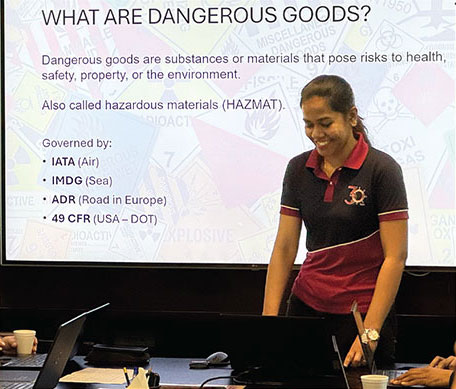
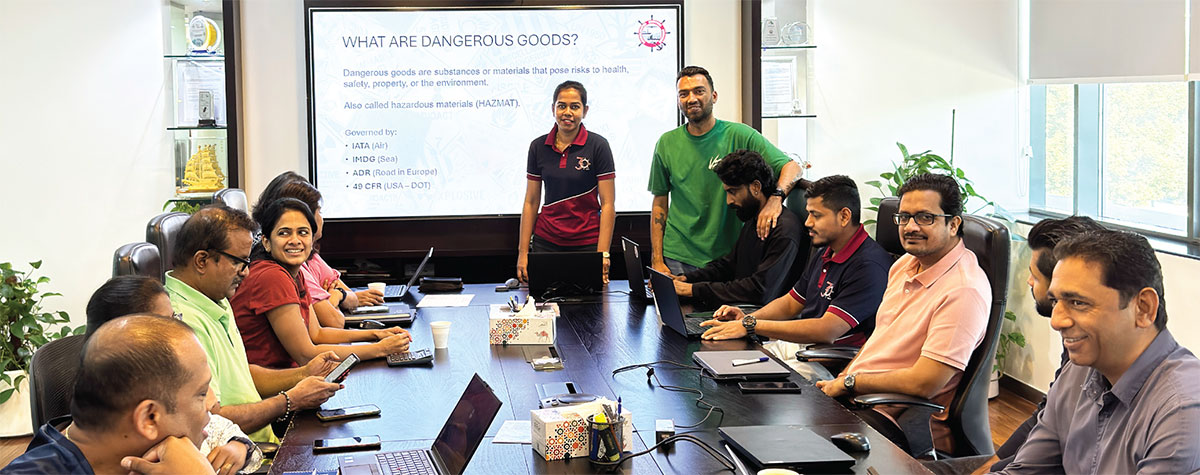
 In line with its ongoing commitment to safety, compliance, and operational excellence, Consolidated Shipping Services LLC organized a specialized training session titled “Dangerous Goods Training – Introduction to IMDG Code for Sea Transport.” The session was held on 25th October 2025 at the HQ Conference Room and was delivered by Ms. M. S. Ardra, DG Specialist – LCL Operations Department. The training was attended by
18 participants from the Forwarding – Sales Department.
The objective of the session was to strengthen participants’ understanding of the International Maritime Dangerous Goods (IMDG) Code and increase awareness of safety protocols related to the handling and transportation of dangerous goods by sea. The IMDG Code is an internationally recognized regulation that provides guidelines for the safe classification, packaging, labeling, documentation, handling, and
stowage of hazardous materials, ensuring the protection of human life, vessels, cargo, and the marine environment.
The session enhanced participants’ understanding of the IMDG Code and its role in ensuring the safe sea transport of dangerous goods. It covered the scope, purpose, and importance of the Code in global maritime safety. Participants learned about dangerous goods classification, correct packaging, marking, labeling, and documentation requirements for compliance. The session also explained segregation and stowage procedures, highlighting how improper placement of goods can increase safety risks.
Special attention was given to the responsibilities of freight forwarders, stressing the importance of accurate declaration, proper handling, and strict adherence to safety regulations to prevent accidents and ensure safe transportation.
 Building Regulatory Awareness and Operational Excellence
To make the session more engaging and practical, the presentation incorporated real-life examples of commonly used products that fall under the category of dangerous goods. Everyday items such as aerosols, paints, lithium batteries, and cleaning agents that are classified as dangerous goods under international regulations were showcased to demonstrate how they can pose significant risks if misclassified, improperly packed, or incorrectly declared. The training also provided detailed insights into critical documentation requirements, including the correct use of Material Safety Data Sheets (MSDS) and Dangerous Goods Declarations.
Participants were briefed on the importance of accurate and consistent documentation, as even minor errors can result in operational delays, regulatory penalties, or safety incidents. The session provided clear guidance on regulations, responsibilities, and best practices to ensure the safe handling and movement of dangerous goods, enabling participants to educate customers effectively and support business growth.
In addition, the session included a brief overview of the International Air Transport Association’s (IATA) Dangerous Goods Regulations (DGR), providing participants with a broader understanding of the dangerous goods regulations. Industry case references were shared to demonstrate how improper handling, misdeclaration, and non-compliance can lead to accidents, cargo damage, environmental harm, and financial or reputational losses. Interactive case exercises were conducted to reinforce safety awareness and enable participants to apply their knowledge through practical, real-world scenarios.
 Fostering a Culture of Compliance and Shared Responsibility
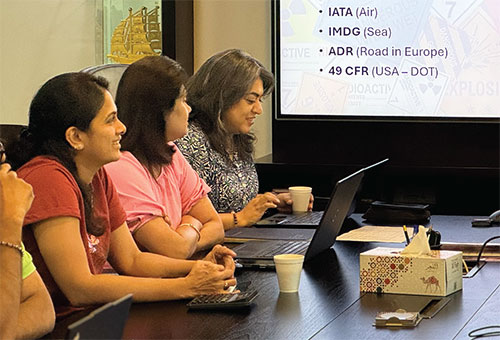
The training session was well-received and successfully fostered a culture of proactive learning and regulatory awareness within the organization. Practical tips and best practices were shared to help employees process approvals more efficiently, leading to smoother operational workflows and enhanced customer satisfaction. Strong emphasis was placed on individual responsibility, reinforcing that safety is a shared duty across all functions, not limited to specialized departments. The interactive session encouraged active participation, allowing attendees to ask questions and clarify their doubts for a deeper practical understanding. Discussions highlighted the broader impact of compliance in protecting operations, human life, port authorities, vessels, and the marine environment, reinforcing that regulatory compliance is a core element of responsible and sustainable business practices.
Consolidated Shipping Services LLC remains committed to continuous learning and development, equipping employees with the necessary knowledge and skills to handle every shipment with the highest level of care. Through such initiatives, the company continues to strengthen its commitment to international safety standards, operational excellence, and customer trust.