 Understanding the principal causes of Employee Burnout is of paramount importance, particularly for individuals in leadership and prime positions. Identifying and resolving these factors is instrumental in fostering a more wholesome work environment:
1. Workload: Juggling work responsibilities outside of traditional work hours, such as evenings and holidays, can significantly contribute to burnout and exhaustion.
It is essential for executives to prioritize self-care by ensuring they get sufficient sleep, engage in regular exercise, maintain a balanced diet, and manage stress effectively. Taking regular vacations and breaks throughout the day can also be highly beneficial. Self-care practices vary from person to person, ranging from spending time with loved ones to running errands or exercising. It is crucial to recognize the signs of exhaustion and prioritize self-awareness to maintain a healthy work-life balance. Setting boundaries, refraining from work-related discussions after hours, and engaging in hobbies are also important for achieving this balance. Proper rest and relaxation have been scientifically proven to enhance work performance, motivation, and enjoyment. However, with the rise in remote work, establishing boundaries between work and home can be challenging. Many are experiencing inadequate sleep, which significantly impacts their quality of life and productivity. If separating work and home spaces is not feasible, taking breaks outside the house or finding an alternative place to unwind, such as a coffee shop or gym, can be beneficial.
 2. Lack of Control: Managing conflicts, particularly when navigating the input of multiple supervisors, can create a sense of uncertainty and stress, impacting overall well-being.
Navigating conflicting demands and expectations from different supervisors can often lead to a sense of lack of control, generating uncertainty and stress that can have a significant impact on your overall well-being. Establishing a strong support system is crucial for mitigating the risk of burnout in executives, given the demanding nature of their roles. These positions often entail high levels of stress, immense responsibility, and feelings of isolation. Therefore, having a dedicated team that offers both emotional and practical support can greatly aid in navigating and mitigating these challenges. Lack of control could even derail one’s mental health and the quest to find a harmonious workspace can be totally lost. Your mind is your temple hence it is an added necessity to ensure you have a strong grip on day-to-day activities and this can play a major role, in helping you find sustained success in the workspace.
3. Insufficient Reward: The absence of acknowledgment and appreciation for one’s efforts and contributions can lead to demotivation and disengagement, exacerbating burnout.
When employees don’t feel recognized and rewarded for their hard work, they may start to think that their organization doesn’t value their efforts. This can make them less motivated and feel disconnected from the outcomes or rewards they receive. Employees who are not motivated are less likely to go the extra mile or take on additional responsibilities, which can ultimately impact productivity and team morale.
4. Community: The nature and quality of workplace relationships play a vital role in individual well-being, with supportive and positive connections contributing to a healthier work environment.
A strong support network can offer valuable emotional guidance by listening, showing empathy, and providing words of encouragement. Conversations with teammates who understand the challenges of work can be uplifting and motivating. “Relationships are among the most important in the entire company.” When facing high pressures in the workplace, having a team to support you with tasks and responsibilities can be incredibly reassuring.
5. Fairness: Being treated with respect and fairness is fundamental to fostering a positive and healthy work environment, and instances of unfair treatment can significantly impact overall well-being.
A. Building Fairness in the Workplace Establishing Clarity: It’s important to create and communicate clear policies to ensure fairness and address issues effectively.
B. Learning and Progress: Providing training on diversity, equity, and inclusion empowers employees to identify and address biases, fostering a more inclusive environment.
C. Seeking Input: Creating avenues for employees to share their concerns and feedback facilitates prompt resolution of fairness issues.
D. Leading by Example: When leaders demonstrate respect and fairness, it sets a positive tone for the entire organization.
Leaders should prioritize developing good connections with their staff based on trust, empathy, and mutual respect. Leaders may identify and resolve potential stressors by encouraging open communication lines and actively listening to employee feedback. To set a positive tone for the organization, leaders should also set a good example by displaying healthy work practices and prioritizing their health.
6. Conflict with Values and Accountability: When personal values are at odds with the demands and expectations of the workplace, individuals may experience substantial stress and inner conflict, contributing to burnout.
Accountability within the workplace plays a pivotal role in cultivating a high-performing team and fostering a positive organizational culture. It entails employees assuming responsibility for their actions, performance, and the outcomes of their work, rather than participating in a culture of assigning blame when errors occur.
A. Makes work better: When people know what they should do, they do a better job.
B. Helps teamwork: When everyone does their part, it helps the team to work together better.
C. Makes us learn: When we take responsibility, we learn from our mistakes and get better at our jobs.
D. Makes us care more: When we feel responsible, we want to do our best.

7. On and Off field events – How do team activities play a role in eliminating burnout?
Many organizations think that it is only important to work hard without any off-field events. That is not the case anymore, as off-field team engagements play a more vital role in one’s overall development and professional growth. A simple get-together or casual dinner event can act as a reward and a platform to understand the team dynamics better. It just doesn’t stop at dinners or formal events but giving employees the opportunity through team building and sporting activities can greatly enhance togetherness and spirit while keeping the burnout concerns in check. Such events even help the quietest ones to have a voice in a controlled comfortable environment and help those hidden talents take center stage.
To Summarize – Executive burnout is a significant challenge that many organizations face, but it can be addressed by understanding its causes and adopting proactive strategies. Recognizing the signs, setting boundaries, seeking professional support, and fostering a supportive culture are essential steps toward avoiding burnout and thriving in workplace roles. Organizations that prioritize leadership, staff well-being, benefit from engaged, resilient, and effective team players. Experiencing burnout doesn’t mean failure; it’s a signal to prioritize self-care and seek help. Recognizing and proactively managing these factors is instrumental in promoting a productive, content, and energized workforce.
Last but not the least, Senior executive must comprehend that burnout risks are severe for any organizational level employee and can lead to mental agonies. Senior executives must recognise burnout is a complex concern that go beyond professional stress thus leading to deterioration in mental health. They must grasp the different elements mentioned in this little article to combat burnout issues- such as job demands, organisational culture, interpersonal dynamics, and external pressures. Recognising the intricate interaction of these elements allows executives to get insight into the underlying causes of employee distress and design actions accordingly. They should recognise that burnout is frequently caused by systemic difficulties inside the organisation, rather than individual shortcomings. Leaders should encourage people to seek help and handle burnout proactively by cultivating an open communication and psychologically secure culture. Recognizing the significant influence that burnout has on employee morale, productivity, and retention, leaders must handle these difficulties with empathy, foresight, and strategic planning. Recognizing the varied nature of these issues and understanding their core causes allows leaders to develop focused solutions that build a workplace culture that values resilience, innovation, and employee well-being.
 Every human regardless of gender or genealogy is born with the inherent ability to become a leader, this ability is the leadership nature. Although everyone has the leadership spirit, no one will ever truly become a leader until they develop the spirit of leadership, the ATTITUDE to lead. The purpose of the leadership spirit and spirit of leadership is to serve humanity in any capacity (fulfilling purpose) NOT TO DOMINATE or BOSS anyone. Leaders are ordinary people who accept or are placed in extraordinary circumstances that bring forth their latent potential, producing a character that inspires confidence and trust amongst others.
 True leaders see people right through and pay close attention to those that are around them. They never forget their identity. In other words, great leaders aren’t using others to build themselves; they are expending themselves to build others. I personally have firsthand experience in working with such leaders for the first time in my entire life and carrier of 25 years in this industry as I write this very inspiring article.
 From this definition, the requirements for leadership are a purpose, a conviction of that purpose, a vision towards that purpose, passion in pursuing that vision.
 Intuitive leaders become visionary, they can define and articulate your vision, they recognize other’s achievements, encourage two-way communication, maintain integrity, always lead by example, delegate and empower the team and constantly encourage growth and development. Good, clear, effective communication, engaging and knowing your employees/ team/ staff/ colleagues, setting clear expectations, active listening, allocating/ managing resources, being transparent are also the qualities of a great leader.
 Truth is that everybody is born to be a leader, and everyone has the leadership spirit within them.
 Onam, the grand harvest festival of Kerala, is much more than a celebration — it is a cultural phenomenon steeped in history, tradition, and togetherness. Celebrated with immense enthusiasm across the southern state of Kerala, Onam brings people from all walks of life together in a vibrant display of unity and cultural pride. This year, Onam 2024 has been an even more special occasion for CSS Group, marking not only the essence of Kerala’s rich heritage but also key milestones and partnerships in the UAE.
 Another highlight of the Onam celebrations was the highly anticipated pookkalam competition hosted by the CSS Group. The vibrant and intricate floral arrangements, made entirely of natural flower petals, showcased the creativity and dedication of the employees. The winners of the CSS Group’s 2024 pookkalam competition were RELOCATIONS (1st), CSS AUH (2nd) and CSLC (3rd)



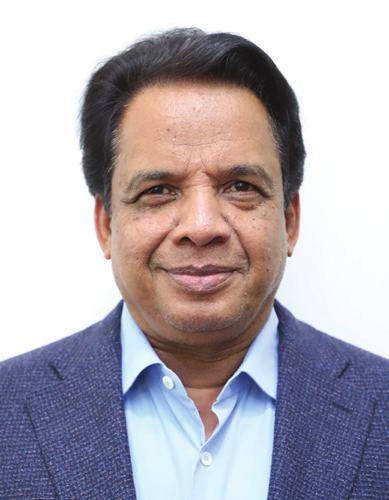
 Fida’s entry into CSS was not conventional. He began as a cricketer, leveraging on his notable reputation as a cricketer from, Kerala, South India. Cricket, which had been a part of his life since childhood, played a pivotal role in shaping his approach to work. His discipline on the field, where he played at various levels including U17, U19, U21, U23, and the prestigious Ranji Trophy, translated into a disciplined work ethic at CSS. His transition from a promising cricketing career to the logistics industry was marked by hard work and a determination to excel in an entirely new field.
 Reflecting on his 25 years with CSS, Fida expresses a profound sense of belonging and accomplishment. Fida reflects on his journey with CSS as a long and rewarding experience. He acknowledges that he built his career at the company, which is something he never imagined he would do. Over the years, he made many friends and feels like he is a part of the CSS family.
 Cricket has been more than just a sport for Fida. It has been a guiding force in his life. Fida shares that cricket, being a disciplined and gentlemen’s game, taught him the importance of hard work and discipline. He believes that applying these principles to one’s work will ensure that everything else falls into place. This philosophy has undoubtedly influenced his approach to work at CSS.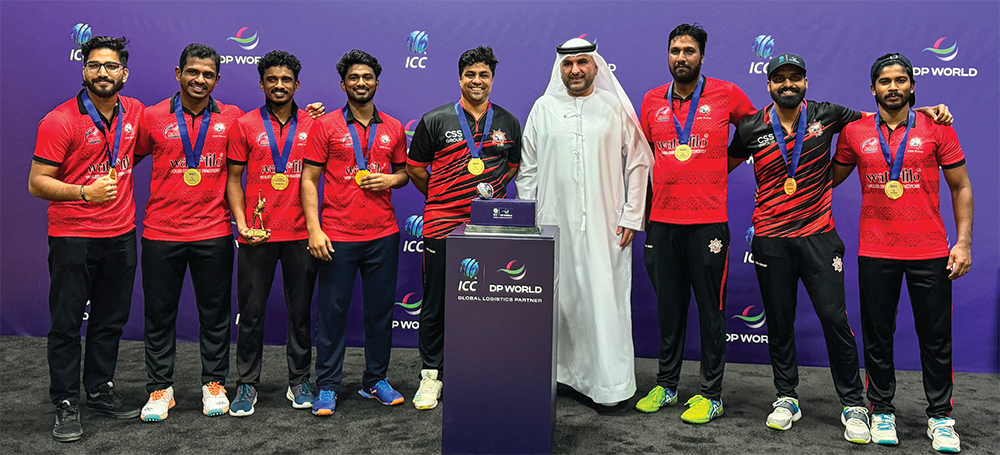
 Six franchise owners have been selected through a competitive tender process. Notable personalities and entrepreneurs such as T S Kaladharan of Consolidated Shipping Services India Pvt Ltd, filmmaker Priyadarshan and, Sohan Roy of Aries Group are among the franchise owners. The teams will be assembled through an auction of registered players under KCA, ensuring a fair and competitive selection process.
 Over the past decade, the international trade landscape has undergone substantial changes driven by natural disasters, health pandemics, geopolitical tensions, economic shifts, and technological advancements. Despite these challenges, the logistics industry has demonstrated remarkable growth and resilience, with its valuation rising from $5.8 trillion in 2018 to $10.41 trillion by 2023, and projections suggest it could surpass $18 trillion by 2030. However, the latest report from the United Nations Conference on Trade and Development (UNCTAD) underscores persistent challenges, including geopolitical tensions, rising shipping costs, and high debt levels, which could affect global trade.
 3. Bridging the Talent Gap
 5. Global Trade Dynamics
 Conclusion: Balancing Growth and Challenges
 In the realm of logistics, few tasks are as challenging as the transportation of heavy-lift cargo to complex markets. Our team recently accomplished an impressive feat by delivering two 100-ton heavy-lift items and accessories, totaling approximately 750 cubic meters (CBM), to Iraq in the Persian Gulf. This project exemplified our dedication to meticulous planning, coordination, and seamless execution.
 One of the key components of this project was the advanced arrangement of all necessary documentation and legal requirements. By anticipating potential hurdles and addressing them proactively, our team ensured smooth clearance and direct delivery upon arrival in Iraq. This strategic approach minimized delays and ensured that the cargo reached its destination efficiently. This achievement would not have been possible without the collective efforts of our dedicated team and reliable partners. The collaboration with esteemed colleagues and trusted shipping carriers played a crucial role in the project’s success.


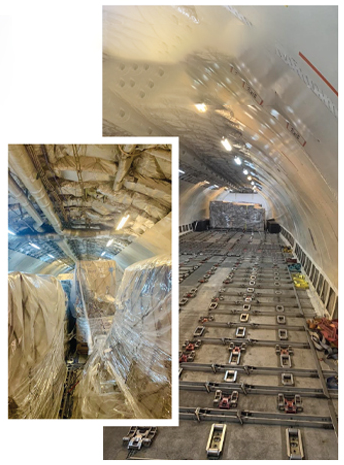 In today’s fast-paced world of global logistics, where time-sensitive shipments are the norm, CSS Global Forwarding has made headlines with a remarkable feat. Recently, we successfully delivered a 35-ton cargo shipment to the interiors of Africa on a tight deadline, showcasing our expertise and commitment to meeting customer needs.






 The global container ship fleet is experiencing its fastest growth in 15 years, marking a significant expansion in reshaping the shipping industry landscape. Since the beginning of the year, the fleet’s capacity has surged by 1.6 million TEUs (twenty-foot equivalent units), representing an 11% increase from the previous year, according to Niels Rasmussen, Chief Shipping Analyst at BIMCO. This growth brings the total capacity to 29.5 million TEUs, underscoring the robust demand for container shipping.
 The peak summer shipping season brings a surge in volume, worsening existing challenges such as the ongoing issues in the Red Sea region. These complications have led to significantly higher shipping costs and severe equipment shortages. As freight forwarders, it is essential to develop and implement strategies that ensure the smooth movement of goods, support customer satisfaction, and keep the industry running efficiently. Here is how we can achieve these goals.


 Dubai has rapidly emerged as a global leader in trade and logistics, capitalizing on its strategic location, world-class infrastructure, and favourable trade policies. This thriving city stands out as a pivotal hub connecting the East and West, providing efficient pathways for goods to travel by road, air, and sea. The logistics sector significantly contributes to about 14% of the UAE’s GDP—a figure poised for further growth.
 Bhanu Nazir
 Abhiram Hrithwik