Skip to content

Lighthouse

Bi-monthly publication of CSS Group

Lighthouse
  • Call +971 4 8872333
  • Mail info@cssdubai.com
  • Menu
    • Home
    • About
    • Services
      • Global Freight forwarding
      • Ocean Freight Management
      • Supply Chain Management
      • Land Transportation Management
      • Industrial Packing, Crating & Lashing
      • Air Freight Management
      • Projects Oil & Energy
      • Exhibition Event Logistics
      • Automobile Logistics
      • Art Logistics
      • Non Vessel Operating Common Carrier (NVOCC)
      • Hospitality & Hotel Logistics
      • Multi-modal Operations
      • Container Freight Station (CFS)
      • Yacht & Marine Logistics
      • E-commerce Fulfillment
    • Locations
      • Dubai
      • Abu Dhabi
      • Sharjah
      • Ras Al Khaimah
      • Bahrain
      • Oman
      • Qatar
      • Saudi Arabia
      • India
      • Sri Lanka
    • Careers
    • Track & Trace
    • Login
      • Customer / Agent
      • Employee – Portal
      • Employee – Dashboard
      • CSS India Login
    • More+
      • Lighthouse
      • Media Hub
      • Feedback
    • Contact Us
  • Login
    • Customer / Agent
    • Employee – Portal
    • Employee – Dashboard
    • CSS India Login
  • TRACK & TRACE
  • NOTICES
  • LIGHTHOUSE
Lighthouse
  • Call +971 4 8872333
  • Mail info@cssdubai.com
  • Menu
    • Home
    • About
    • Services
      • Global Freight forwarding
      • Ocean Freight Management
      • Supply Chain Management
      • Land Transportation Management
      • Industrial Packing, Crating & Lashing
      • Air Freight Management
      • Projects Oil & Energy
      • Exhibition Event Logistics
      • Automobile Logistics
      • Art Logistics
      • Non Vessel Operating Common Carrier (NVOCC)
      • Hospitality & Hotel Logistics
      • Multi-modal Operations
      • Container Freight Station (CFS)
      • Yacht & Marine Logistics
      • E-commerce Fulfillment
    • Locations
      • Dubai
      • Abu Dhabi
      • Sharjah
      • Ras Al Khaimah
      • Bahrain
      • Oman
      • Qatar
      • Saudi Arabia
      • India
      • Sri Lanka
    • Careers
    • Track & Trace
    • Login
      • Customer / Agent
      • Employee – Portal
      • Employee – Dashboard
      • CSS India Login
    • More+
      • Lighthouse
      • Media Hub
      • Feedback
    • Contact Us
  • Login
    • Customer / Agent
    • Employee – Portal
    • Employee – Dashboard
    • CSS India Login
  • TRACK & TRACE
  • NOTICES
  • LIGHTHOUSE

NEXT PHASE OF PRINCE RUPERT FAIRVIEW TERMINAL EXPANSION UNVEILED

CAPACITY INCREASE TO 1.8 MILLION TEU IN 2022 AND CREATION OF 300 NEW JOBS

Dubai, United Arab Emirates, 20 June 2018: The Port of Prince Rupert and DP World have agreed on terms of a project development plan that outlines the next phase of expansion for the DP World Prince Rupert Fairview Container Terminal.
The Phase 2B expansion will increase annual throughput capacity at Canada’s second largest container terminal to 1.8 million TEUs (twenty-foot equivalent units) when complete in 2022.

DP World Group Chairman and CEO, Sultan Ahmed Bin Sulayem, said: “Canada is an important part of our global network and we are delighted to confirm these plans, which underline our commitment to Prince Rupert, which plays a major role in enabling trade in the region and across the west coast with rail connections inland to the rest of the country and the United States. It also demonstrates the excellent relationships built with the Port Authority and the confidence we both share in the future and the creation of jobs in the community, stimulating the local and regional economy. I would like to thank all our partners and people at Prince Rupert for their commitment and ongoing support.”
The Fairview Phase 2B project follows the 2017 completion of Fairview Phase 2A, which increased the terminal capacity by 500,000 TEUs to its current capacity of 1.35 million TEUs. Construction on Phase 2B will begin in mid-2019. There will be an initial gradual release of capacity to 1.6 million TEUs in 2020, following the completed expansion of the container yard to the south.
Port of Prince Rupert Chair, Bud Smith, said: “The execution of this agreement signifies DP World’s commitment to enabling Canadian trade with another significant investment that will bring a total of one million additional TEUs of container capacity to the Port of Prince Rupert in less than five years. This project will provide critical trade-enabling infrastructure for Canada’s west coast, a timely response to forecasted growth in trans-Pacific trade and supportive of Canada’s efforts to diversify markets through new free trade agreements such as the CPTPP.”
The project will expand the container yard from its current 32 hectares to 41 hectares and add two new rubber-tired gantry (RTG) cranes as well as an eighth dock gantry crane. The existing maintenance and administration buildings will be relocated to create additional container storage capacity.

DP WORLD JOINS WORLD OCEAN COUNCIL

FIRST COMPANY IN SECTOR TO BECOME A FULL MEMBER

Dubai, UAE, 7th June 2018: Global trade enabler DP World has become the first company in its sector to join the World Ocean Council (WOC) as part of its leadership journey to actively engage in the protection of the world’s oceans. By becoming a member of the growing international multi-industry alliance on “Corporate Ocean Responsibility” DP World will commence, enhance and advance its role as a responsible leadership company.
The WOC is a global, cross-sectoral business leadership alliance with a network of over 35,000 stakeholders addressing corporate ocean responsibility. Developed by and for the private sector, it addresses issues affecting ocean sustainable development, science and stewardship. It brings together representatives from shipping, oil and gas, tourism, fisheries, aquaculture, mining, renewable energy, ocean technology and financial services sectors. The WOC is a registered not-for-profit organisation in the US, the UK and Europe.

BEING RESPONSIBLE-CSR INITIATIVES

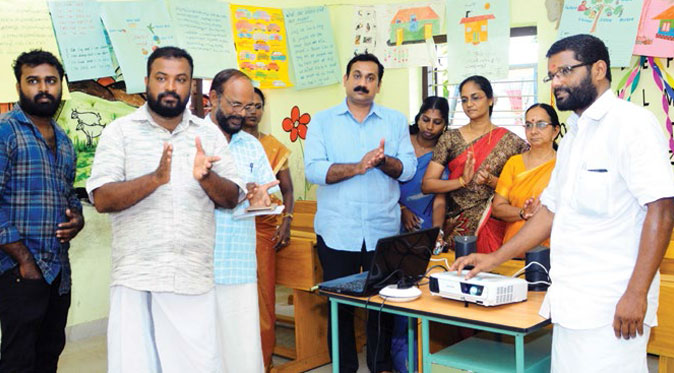
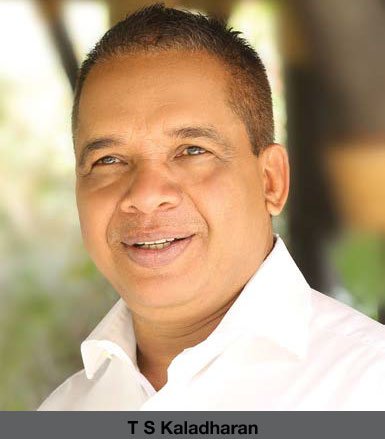
As part of a CSS – CSR initiative, school kits including new bags and umbrellas were distributed amongst pre-primary and primary school children in and around Thrikkunnappuzha, Alleppey Dist. Kerala. Five lower primary schools and the new commers of one Upper primary school running under the Government of Kerala aid benefitted by this regular CSR programme of school aid distribution by CSS under the guidance of T S Kaladharan, Group Chairman. The schools were Govt. LP School Valiyaparambu, Govt. LP School Thrikkunnappuzha, Govt. LP School Panoor, Govt. LP School Pallana, Govt. LP School Atmavidya Sangham and MT UP school, Thrikkunnapuzha.

New school kits brought beaming smiles on the faces of more than 1000 little faces. The school aid distribution was inaugurated by Unnikrishnan G, Head of Marketing & Corporate communications, CSS Group. The function was attended by Government Local body representatives, School PTA members, and school authorities. Students accompanied by their parents were welcomed with sweets and balloons to the function. Local body representatives and the school authorities thanked CSS and its Chairman for this noble activity, followed by lunch.

SPARE THEM FROM EDUCATION

The criteria for education in today’s times is only one thing: How much of a profiteer you become. Development of virtues like integrity, character, persistence, commitment which are intangible are not even counted since the ultimate parameter of evaluation has become profit, Nothing else.
As I famously tell people: Cost price is the truth and Selling Price is a lie. The difference between truth & lie is called profit.

So, without getting into the morality of education, let us extrapolate on the reasons why everyone is after education these days and how it will create serious labour issues in our world going forward.
If you see the pattern of education, it is primarily to bring you to the work desk. After that, only work skills and domain experience matter. But a dangerous trend is emerging, especially in countries like India, where everyone wants to be “educated” And that is a serious problem. So, watchmen, electrician, plumber, driver, maid, cleaner, mechanic all of them are in a race to educate their children. This primarily emanates from the need for dignity of labour which has been lacking with these skills for decades. But here is the catch. Their time has come now. Because the educated space is getting congested by the day. Jobs are being chased by millions. Anyone will tell you that price corrections in salaries have already happened for graduates & engineers who are queuing up for the same jobs and creating a huge supply – demand gap.
Compare this to a truck driver. An interesting incident happened last month for us and give us the jitters for completing a very important project shipment. We had scheduled pick-ups in trailers but there was a severe shortage of drivers. This is unique and unheard of in so many decades. Due to several overlapping reasons there was an acute driver shortage. On engaging further with transporters, we also learnt that these days drivers make more money than the transport owner himself. Because they are in shortage and therefore command a premium.
Ask any Indian household. They will tell you that the most important service provider in the house is the maid. In urban cities like Mumbai, not an inch can move without them. It is common to see maids being treated at par with the house owner’s family. Taken to parties and even vacations. A car mechanic I know for many years now said he is saving to make his son educate himself. One thing I have seen is common. No one wants their children to be in the same profession. I asked him to make his son a mechanic because education will only put him in a queue which is congested. But the future will have no mechanics compared to the demand. So, his earnings will be much higher. But he might privately think that I am not his well-wisher for giving such an advice.
But this is what I call a classic curse that the poor carry. Their time has come now but they are moving towards education which will keep them poor again. Only if they see that continuing the same profession will lead to enormous wealth for themselves along with the dignity that these scarcities will bring for them. But no, they want their kin to study. Study makes one a smooth talker but talking alone does not run the world. Look at your own self. If every body part wants to be the head, what will the head stand on? We need feet for sure. You may not give feet the dignity that you give the head. I have not seen people shampooing their ankles and feet more than their head and faces. That will always remain. But the feet are feet and we need labour class to run our world.
Look at the developed world too. America and Europe. They had this 100% educated population and had issues growing their societies too. So, they made immigration policies and labourers from across the poor countries moved to these nations and helped build them. Even today the taxi drivers, grocers, cleaners, newspaper boys, truck drivers, forklift operators etc are mainly immigrants. The problem is with growing wealth across the world and across classes, who will be left to do these jobs? And the generations of skills that they carried will be lost. They should know that we live in a pyramid model society where people at the bottom provide the foundation and support to people at the top. If everyone is the top, it becomes the bottom.

MARITIME INDUSTRY IN THE DECADE OF DIGITAL TRANSFORMATION CHALLENGES AND OPPORTUNITIES – SINGAPORE’S JOURNEY TOWARDS DIGITALIZATION IN 2018

The rapidly developing digital technologies are embarking on a significant transformation of the Shipping Industry across the globe. The implementation of Digitalization, the innovative cyber security systems and technological solutions, autonomous mobility and artificial intelligence has helped in transforming the developments in the shipping industry. With the inputs of accurate, updated and secure data insights, delivered on time, the achievement of a more strategic and cost effective productivity along with maximum performance is possible. The ability to centralize the decentralized digital transformation on a digital platform creates a great potential for organizing markets efficiently. The exchange data and digital platforms enables the companies to have a control of and also organize the logistic chains delivered on time, by reducing the waiting period and predicting the arriving time of the vessels accurately, thus opening up the possibility of unmanned ships in future.
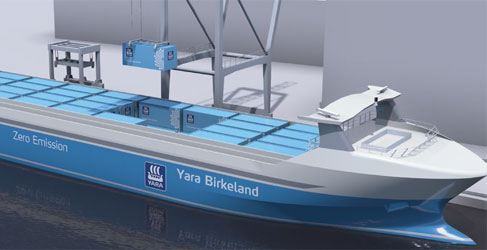
The world’s first crewless cargo ship will be delivered in 2018 under the name and fame of Yara Birkeland and the operations is assumed to commence in 2020. These Unmanned Ships are also referred to as “Unmanned Sea Surface Crafts” and these vessels are either remote controlled by shore- based controllers/officers, or controlled completely by complex algorithms with no human existence or a combination of the above mentioned two. The challenges that will be faced by these are guidelines and legal regulations to be followed in case of any violations, or maritime incidents involving any damage to the vessel, the cargo, human life, environment and property. The existing legal framework is that of the UNCLOS82 regulations by the International Maritime Organization. The present legal system and maritime regulations are designed for manned vessels so this will make it a difficult task for the legislators and jurists to decide upon the best and effective legal resolution in case of a violation or dispute. Therefore many countries are already considering amendments or integrations in the existing regulations and also drafting of fresh shipping guidelines and laws.
Digitalization has brought in many challenges as well as opportunities. According to the IMO over 90% of the world’s trade is carried out by sea as this is the most cost-effective way to move goods and raw materials across the world. One of the important factors is that it reduces cost and increases efficiency. The data inputs and interconnected technologies are emerging to create a revolution in the maritime industry. Systems like Radio Frequency Identification System (RFID) are used to track the movement of the vehicles cargo and people, and ensure timely delivery of cargo. GPS navigation system, automated electronic data exchange from ship to ship and ship to shore increases the efficiency, safety and accuracy in navigation and communications.


There are many challenges to overcome, and one of them is that of marine liability. The Question of liability is considered to be more complex as the vessel travel through different national waters and of different jurisdictions. The insurance industry will also face similar challenges in resolving disputes and also the difficulty to analyze the resources to risk management as well as to understand loss occurred. Thus, it becomes a necessity to ensure maximum data security for preventing a risk or loss. Cyber attacks on unmanned ships also can be problematic as container vessels reliant on digital navigation systems could be potentially manipulated and a small failure in a system can result in dangerous consequences in an interconnected digital environment. The networking of vessels and ports is an enormous opportunity for shipping. This also helps in reducing the ongoing over capacity paired with a relatively soft global demand, and the existing pressure on the rates and profit margins of the industry.

BUSINESS WITH HUMANITY IN MIND

Global enterprises interact across many cultures and social environments. The diversity of these, where communities are either reasonably rich, impoverished, exploited or inadequately recompensed for their services; has led to calls for businesses to conduct themselves with humanity in mind.
For such businesses ‘humanity in mind’ is not a mantra but a core value. It means thinking about the bigger picture within a company and how the decisions it makes may affect their employees and the communities in which they operate. It is a desire to do something for humanity which has led to persons like Bill Gates, Mark Zuckerberg, Sulaiman bin Abdul Aziz Al Rajhi and Sheryl Sandberg becoming internationally known philanthropists. They use a significant total of their income to help others less fortunate. They also recognise that it is their staff that deserves special consideration for their contribution to a company’s success. Of course, there will be those who ask; “Why should we bother about humanity, I am happy just making money for myself?” However, research confirms that when staff is valued from the top down and when a company actively engages within the communities where it operates, then the bounce-back goodwill is worth its weight in gold.
Many services and products have become ever more comparable and interchangeable. Clients now have more choice because the internet means they are better informed and consequently are no longer necessarily loyal to companies, brands or services. They may be satisfied with a product but nowadays it requires more than just satisfaction – it requires meaningful interaction and a ‘we like your company’s attitude and approach better than others’, to maximise customer retention.
Doug Conant, an internationally renowned business leader with over 40 years leadership experience with companies including Nabisco, Campbell Soups and Avon Products, highlighted how business with humanity in mind starts: – ‘To win in the marketplace you must first win in the workplace’. When leaders go with what they feel is right, being true to themselves and only treating others as they would like to be treated; then humanity starts cascading down. However, wherever we find ourselves in this chain there is one thing that frequently halts the process. It’s our own egos! Once we start to think it is important that others recognise that we are important then our ability to build positive relationships is soon frustrated. Putting aside our egos, and focusing on how we may help others develop, means that all of us may grow together. It’s currently known as ‘giving back’. Often, it’s the little spark, a magic moment that starts someone on the path to success. Be it within a company, or an interaction between a company and a community; a catalyst for good carries its own inherent rewards. Where a company, a leader, a team or even a single salesperson are known to encourage others and think about how they can help; the ‘we like your company’ attribute soars.
Equally the same applies when ‘giving back’ includes interacting with communities. Starbucks, the American coffeehouse chain, was founded in Washington in 1971. It now operates in 28,218 locations worldwide. Their ‘Meet Me at Starbucks’ campaign was an exceptional method to involve communities enjoying the experience of getting together in a Starbucks café all around the world. It showed how it could adapt to regional cultures, whilst offering the guarantee of a recognised quality brand served by staff focused on their regional environment. So, everyone is happy because they are being recognised for who they are, where they are and in a way that connects the company with their individual experience.
No matter what the size of an organisation the bottom line, when it comes to ‘business with humanity in mind’, is that everyone within a company equally from the leaders downwards, provides opportunities for others to flourish as individuals. At the same time humanity requires we seek out those, within a community, who may benefit from a little help. Random acts of kindness go a long way especially if given from the heart. Receiving smiles from others, as you conduct your business, is great recognition that you are succeeding in putting humanity into your business. It also means that your brand is honestly endeavouring to give something back – this really is operating your business with humanity in mind

CULTURE OF EXCELLENCE

When it comes to organisation culture, it really becomes difficult to define and explain. It is complicated, generally misunderstood and hard to change.
There are lot of writings on building the culture of organisation and moving on to excellence. Words cannot weave excellence. It is something like fragrance. You can feel it. It’s presence in the environment of the organisation can be felt through demonstrative passion, attitude and mindset of employees while discharging their functions. Excellence is something more than perfection. Stakeholders, be it internal or the external, get delighted when enter in the zone of the organisation having culture of excellence.
It is a myth that talent alone can bring excellence in the culture of organisation. Talent also brings hidden arrogance. It is not necessary that talent is always embedded with mindset to excel. It is desire to excel in a person that makes him performing with excellence. It is something like that one is smoking addict and he has to stop and leave smoking. Why efforts of bringing excellence in organisation culture failed many times are because of the fact that very few leaders of organisation purposely work on developing culture of excellence. They just kind of let it happen.
You cannot handoff this sensitive matter to anyone. Making the changes that lead to excellence is not an overnight pursuit-it is cumbersome, psychologically tough and long process. It is mistaken that attractive workplaces, weekend parties and get together, outbound adventure training in the name of team building and motivation create workplace culture of excellence.
None of these initiatives work if there is an element of disrespect, mistrust and achieving results by bulldozing the human dignity. What people prefer who have desire to excel at workplace is authenticity, trust, transparency in dealings and commitment to employees growth and well being along with organisation’s prosperity. Managers at all levels who are only functional experts in their domain should also be developed as organisation development experts. It will make easy for the business leaders to get the culture of excellence accepted at the root level.

CHANGES WILL IT BRING IN THE ATTITUDE OF THE WORK FORCE

1. An Organizational Vision is Communicated and Understood
To achieve a Culture of Excellence, every employee must understand not only the company’s vision, but also know their own roles, responsibilities and the specific actions they need to take in order to help achieve this vision.

2. Clear Purpose and Meaning
In a Culture of Excellence, employees feel that what they are working on is meaningful, significant, and purpose-based.

3. Focus on High Performers
Many managers actually empower their low performers by focusing their time and energy on trying to solve their problems—while ignoring their high performers. Those high performers leave because they aren’t being rewarded for their hard work.
Companies with a Culture of Excellence set an expectation of high performance organization-wide. Every employee is supported and encouraged to become a master in their role and area of expertise. High performers are nurtured, rewarded, mentored and recognized, and average performers are coached to move into the high performance category.

4. Change and Challenges
In most organizations, when change or challenges occur, employees become distracted and lose focus on the organizational vision and goals.
In a Culture of Excellence, employees develop the flexibility and resilience to deal with change, challenge and uncertainty. Even when there are obstacles and challenges that may seem impossible to overcome, the motivation to achieve the organizational vision is higher than the urge to avoid the discomfort. Managers support their teams in staying focused and on track, despite difficulties and challenges.

5. Collaborative Teams
A key feature of a Culture of Excellence is collaborative teams. Because every employee and all teams are working together toward a common organizational vision, they feel they are on the same side. And because this collaboration is encouraged and rewarded from the top down, there is no more reason to protect individual roles, projects or expertise.

6. Rewards and Recognition
HOW CAN WE ACHIEVE CULTURAL EXCELLENCE?

  • Promote a positive and happy environment.
  • Giving effective feedback
  • Clear & Consistent Communication
  • Teamwork
  • Growth Opportunities
  • Know your customer
  • Keep employees comfortable
  • Plan your action

Chairman’s Message

Andrew Carnegie, the American, industrialist and philanthropist, once said, “Successful teamwork is the ability to work together toward a common vision. The ability to direct individual accomplishments toward organisational objectives. It is the fuel that allows common people to attain uncommon results.”
I believe that people who are really motivated to aim for great accomplishments, for their company, will never disagree with the beliefs expressed in this quotation.
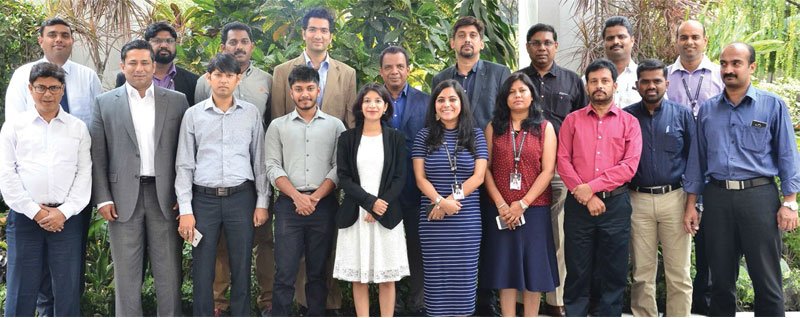
If you recall last year, in the May edition of Lighthouse, the message from my desk was about the one decade of completion of our services in India. It is true to say that CSS has been blessed with staff that has held true to Andrew Carnegie’s successful teamwork expectations. This was obvious when CSS India recently conducted their Annual Budget Meeting in Kolkata. Being a proud participant for the meeting and being fortunate to be able to share thoughts with CSS India heads, I can surely say that our company is moving in the right direction in terms of common strategies and goals.
The evidence of growth for any company is reflected in the spirits and attitude of their staff, and not just the figures that an excel chart conveys. We have to remember that challenges and opportunities may change without much notice. An ability to respond effectively is directly related to the attitude of your team. By keeping the sentiments of Andrew Carnegie’s quotation uppermost in our thoughts I am confident we will continue to move forward and achieve rewardingly uncommon results.

Newer boulevards and Novel strategies

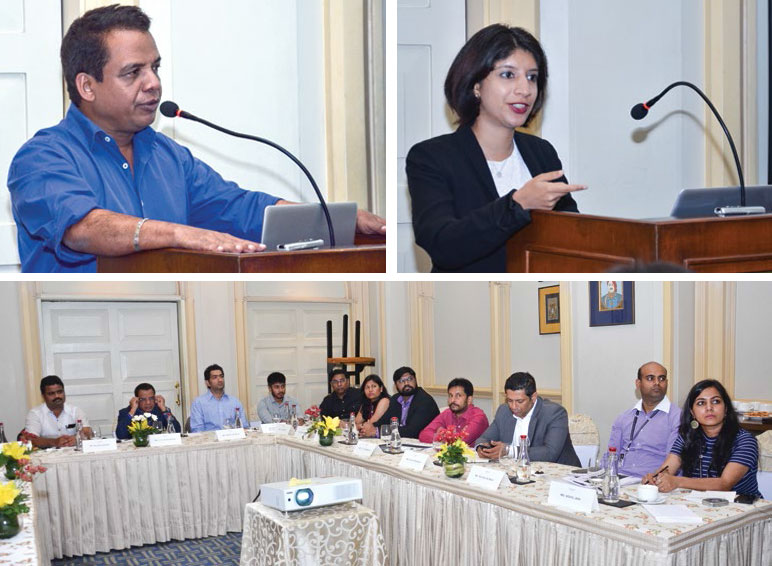
Seeking to strike a right balance between challenges and opportunities, the annual budget meeting of CSS India was held at Taj Bengal, Kolkata early in the month of April. Station heads and key decision makers from all over the Indian offices attended the meeting which was chaired by the Chairman, CSS group, T S Kaladharan.

In his welcome address, CSS North India Vice president Rajesh Arora re-iterated the need for close coordination amongst all branches for the attainment of a more focused approach so as to take the company to ever more heights. For the first time CSS team from Ludhiana and Kolkata had their presentations in the Annual Budget Meet. Ludhiana was represented by Meena Sharma, Branch Manager. CSS Kolkata being the host station was represented by Pijush Saha and Anirban Saha.

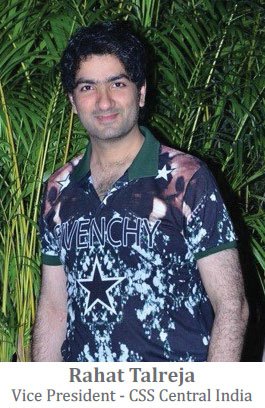
Rahat Talreja, Vice President CSS Central India during his presentation mentioned about the post GST scenario and the tactics to learn more from the challenges for enhancing growth. A session on the group software and its benefits was led by the CSS Group COO, NVOCC, Chandrakala (CK). She elaborated on the benefits of increasing the usage of ERP applications and bringing all offices under one umbrella of CRM, so as to better service the clients.

A session on “Effective ways of resource mana- gement” was taken by Ajay Krishnan, COO, Freight forwarding CSS Group, wherein he stated that the one reason why companies end up compromising their profits is due to the inefficient use of resources in hand. Throughout the presentation Ajay introduced tips on effective utilization of resources and mentioned that those tips if implemented properly will go a long way in assisting CSS in revolutionizing their resource management and utilization.

CSS South India was led by T K Vishwanath, General Manager. Budget figures and analysis of each of the CSS India offices were presented by the respective managers with a key focus on their projections and strategies. Other attendees included, Rajeev Kumar, Prasun Roy and Nishu Jain from CSS Delhi, Sandeep Anthur and Thainis Raj from CSS Chennai Sudeep and Jinu from CSS Corporate office.

CSS Group Chairman, T S Kaladharan in his closing remarks, congratulated CSS India team for successfully and profitably concluding the financial year. He also mentioned about his dreams and aspiration about the group company and while assuring support to the various suggestions put forward by the delegates, also stressed upon investing for a better tomorrow through clever delegation and planning.

Top Customer Award

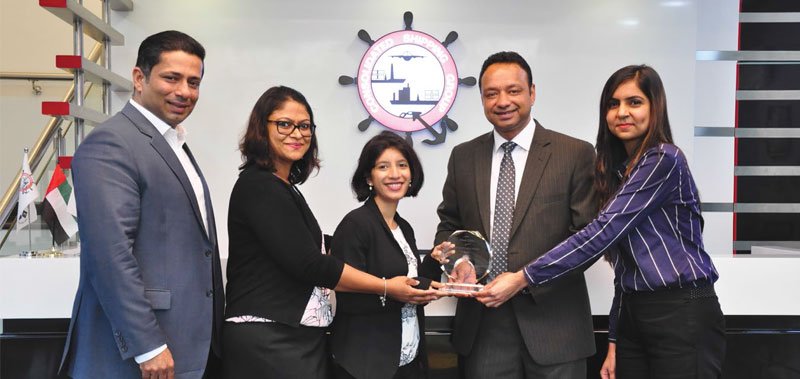
The CSS Group received the Top Customer Award from CMA CGM as a token of their support in 2017, on the 3rd of April, 2018.

With ISO 9001, ISO 14001 and ISO 18001 certified standards, the CSS Group is headquartered in Dubai, United Arab Emirates with brand offices across the GCC, South Asia and more.

The CMA CGM “Top Customer Award” was handed over by Santosh Devasper (Commercial Manager) and Anshika Bhatia (Senior Sales & Marketing Analyst), to the CSS Group’s Angeli Sudheer (Manager, Pricing & Customer Service Desk), Chandra Kala (COO, NVOCC) and Ajay Krishnan (COO, Freight Forwarding) as a token of the Group’s continuous support in 2017.

COO Chandra Kala said: “The CSS Group – as a whole – takes pride in being awarded the Top Customer Award by CMA CGM – it reinforces our commitment to our customers in providing the best to match their requirements.”

GPLN- 15th AGM in Bremen

Global Project Logistics Network (GPLN) will hold their 15th Annual General Meeting from May 26-28, 2018 at the Dorint Park Hotel in Bremen where a multitude of GPLN members, sponsors and media representatives from around the world will have plenty of networking opportunities during intense meetings and social events to maintain existing and established new contacts that will benefit greatly their business. The attendance of over 200 GPLN delegates speaks itself for the quality of the GPLN network and their highly skilled project forwarders. The day after the AGM on May 29 GPLN is organizing at the same venue their renowned Heavy Lift Maritime and Transport Seminar which is also open for non GPLN members and offers a great opportunity to learn more about Heavy Lift Shipping and expand technical abilities and knowledge for project cargo business. Right after these events GPLN will also exhibit at the Breakbulk Europe Transportation Conference & Exhibition in Bremen from May 30-31, 2018. Please visit their GPLN booth #1400 in Hall 5 of Messe Bremen where also many GPLN members will be present.
GPLN brings together project cargo experts and independent project logistics specialist companies from around the world, all of whom have an expert focus on project logistics.

Networking & Dinner

CSS attends SCLG annual industry networking and dinner

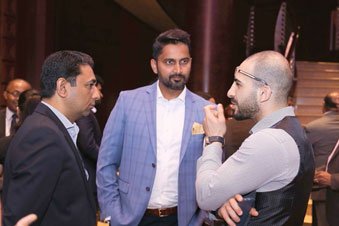
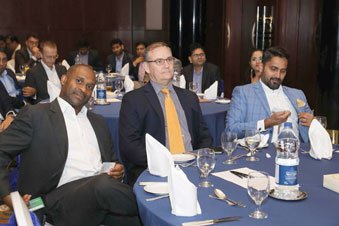
CSS Group attended the SCLG annual industry Networking and dinner held at Dusit Thani, Dubai on the 28th of March. The event was a perfect platform for networking and was hugely successful marked by presence of 100 plus senior personnel from 70 plus organizations. CSS Group was represented at the event by Rosh Manoli Deputy General Manager, Sales & Marketing, Richard Varghese Asst. General Manager, Sales & Marketing.
Headquartered in Dubai (UAE), Supply Chain & Logistics Group (SCLG) is a membership driven industry business group engaged in advancing supply chain & logistics industry locally, regionally and globally. SCLG currently has a membership base of 200+ corporate organizations and is growing.

The Art and Science of Selling

The Lighthouse editorial team sat down with Hinna Hussain – Team Manager, Sales – to know more about the day in the life of a salesperson, how CSS is different than most Multinational corporations and what drives her to succeed.


How would you describe yourself in under two minutes?

Prompt, efficient, bubbly, always on the job, workaholic.

How does a salesperson go about doing things – walk us through it?

You’re open to doing [business development] in any way that you feel; everyone has their own approach. It could be through LinkedIn, you would be searching for another company on social media, you might try finding people you have common connections with. It could just be various ways of trying to secure a client.
Once things come in, you begin to understand more. If a job is overseas, your stress is mainly dealing with the overseas offices to ensure things happen in a certain way, and to keep [customers] updated. If the job is being executed [in the UAE, or elsewhere], export or import, it would need you complying with all their procedures.

How involved would you be?

We are quite invested in the job – we have the freedom to fix the job from point A to point Z. In many other companies, your sales, costing, pricing departments are separate, the guys that quote your job and the ones that do invoicing are separate. You might close the sale but you are not really sure about what is happening in the background now. You might be able to bring in clients every single day but servicing them is not really easy because you are not the one involved in other aspects of the job. Here, you are truly involved in all aspects. You are always ready for a situation where suddenly everything is an urgent situation, an emergency, sudden calls in the middle of the night to make vessels and planes go faster become normal! The CSS structure runs better because you know more, you learn more, you are more invested in your job. At any given time, the client can call you for an update and you are more than aware on how to handle the situation. You are the sole person handling it, along with your support team.

How did you first get involved in the shipping and liner industry?

I think that purely happened quite by accident. I don’t think anyone ever enters logistics with an intention of entering logistics. I started from ground zero and it has been 7 years since [I have been with CSS].

What do you think it takes an employee at the CSS Group to get ahead?

You would really have to think out of the box, walk the extra mile. It is an internal motivation, rather than external. You should want to do it for yourself. Once you imbibe that, people recognize it. We have always had supportive seniors – they are always open to guide you. One cannot be spoon fed when it comes to logistics. If you have that desire to grow and learn, you are bound to be recognized. Everyone sitting here has the potential and an equal ground of opportunity to grow; your drive and the energy you put out there is key.

What do you enjoy most about working here?

The comfort of working with the team and the freedom to make immediate, executable decisions for your customers.

What is your personal philosophy regarding freight forwarding?

Whether you look at cargo, logistics or freight forwarding, people should just break it down. Freight forwarding has never been rocket science – it is so basic and so simple, the layman would have a laugh if they actually understood the concept. I think people just unnecessarily complicate it.

With the current state of affairs in the industry, what do you think are the positive and negative predictions that you could possibly make?

Everything is always evolving and growing. A constantly changing landscape brings with it its own challenges. But as with all challenges – there are opportunities to overcome them. Instead of focusing on areas that do have problems, you should rather work on areas that have more strength.

What would you say your greatest strength is?

My positive outlook

If you were to be faced by failure, how would you handle that?

Failure is something everyone has to go through because it is only then that you learn to be appreciative and thankful for what you have, what you are doing and for more yet to come. If you do not go through that phase, it is a human tendency to take things for granted. Go through it, deal with it, move on from it.

Growing Supply Chain Management

The exponential growth of supply chain management is a promising factor towards the growth of the economy of UAE. Lighthouse spoke with Hareesh Haridas, Manager /Logistics for SCM about the Supply chain activities within the CSS Group, his service and much more.

If you were to describe yourself in under 2 minutes, how would you?

I am a team player and like to be a part of good working environment. I was moulded by my experiences and work with a mentality of sharing and delegating things for a better and positive outcome.

How did you first get involved in this industry, specifically supply chain management? Did you go through a process like working with a shipper, liner or logistics?

My experience with the service industry started much before I joined CSS. I was with another company, five to six years working within the passenger services where you deal with people and their emotions directly. It gave me ample exposure understanding various situations. My experience in the logistics industry began with CSS.

How long have you been working with the CSS Group?

Its been a long journey, close to 14 years now. We even have staff working here ever since the company commenced operations. I had joined as a coordinator when the Supply Chain department. started within the company. In a short span, I climbed up the ladder with more responsibilities.

Tell us exactly what Supply Chain Management entails.

Supply Chain Management is the oversight of materials, information, and finances as they move in a process from supplier to manufacturer to wholesaler to retailer to consumer. Supply chain management involves coordinating and integrating these flows, both within and among, companies. In simple terms, catering the end to end needs of a customer with uncompromised quality.

What is included in your portfolio?

CSS has expanded their facilities with storage spaces across the Emirates. We have warehousing facilities in Sharjah, Al Quoz, Jebel Ali and Abu Dhabi with CSS personnel and equipment. We have more than 20,000 Sq.mt. being managed in Jebel Ali itself. My responsibility is to manage it professionally and constructively, to make these entities run as profit centres and provide exceptional services to our clients.

What is the innovation side of Supply Chain Management?

An efficient supply chain is vital for businesses to deliver their products to consumers who want or need them. with Dubai being a major marketplace in the MENA region, supply chain management must think more innovatively and proactively to balance product flow and costs throughout a product’s life cycle.

How does supply chain management, not only related to the CSS Group, play a role when it comes to oil, energy, projects?

CSS is amongst the top five consolidators in Jebel Ali. SCM is undoubtedly the backbone for A to Z Logistics activities, especially in freight forwarding. The SCM is a assembly of different activities happening in the entire supply chain starting from procurement of goods from suppliers to selling the goods to the end customer. It helps in managing and controlling materials, information and finances as they move from supplier to customer.

What would you want to tell someone to put them at ease if someone is exploring SCM?

You need to have the mindset to work and carry out a variety of tasks. How much time you spend in your job is immaterial, it is the dedication and concentration which really matters. Supply Chain Management is a highly promising area. Work hard and you will be successful.

With the current state of affairs in supply chain management, what are the negative and positive observations you can make?

Current market situations are rather fragile, even though the situations can change any time.

What do the words “local knowledge, global reach” mean to you?

CSS Group is very strong in the GCC and South Asia. We enjoy one of the strongest network of partners and associates across the globe. Over two decades of experience in the Middle East make us equally strong with the local knowledge.

What motivates you?

Every day is different! It becomes more and more demanding, just be ready to take up any challenge.

Admiralty Act comes into Force

Admiralty (Jurisdiction and Settlement of Maritime Claims) Act, 2017

April 1st 2018 will be considered as the most remarkable day in the history of Shipping in India. Finally the new Admiralty Bill has received the assent of the President and the Admiralty (Jurisdiction and Settlement of Maritime Claims) Act, 2017 has come into force on the said date, after repealing an almost 150 year old Acts namely, Admiralty Court Act, 1861, the Colonial Courts of Admiralty Act, 1890, Colonial Courts of Admiralty (India) Act, 1891 and the Provisions of the Letters Patent, 1865 which were introduced by British to bring uniformity with their Admiralty Laws.

With vast growing of international trade, the Shipping Industry has changed a lot in the last many years and the new decision and effort of the law framers to modify and amend the existing Admiralty Law in India is more welcoming and boon to all those who are part of this Industry. Moreover, the provisions of the new Act are framed in such a way as to regularise many issues, including conferring the admiralty Jurisdiction to various high courts in India. The old Colonial Court of Admiralty Act, 1891 and the Admiralty Court Act, 1861 established / conferred the Admiralty Jurisdiction upon the High Court of Bombay, Madras and Calcutta. However, the new Admiralty Act, 2017, confers the Admiralty Jurisdiction not only to these above-mentioned Courts but it also extends to the High Courts of Karnataka, Gujarat, Orissa, Kerala, Hyderabad (for the state of Telangana), Andra Pradesh etc.
Further, these Courts are also given the power to arrest a vessel within its jurisdiction, under Section 5 of the Act, for the purpose of providing security against a Maritime Claim where the court has the reason to believe that –
The person who owned the Vessel at the time when the Maritime Claim arose is liable for the claim and is the owner of the Vessel when the arrest is effected;
The demise charterer of the vessel at the time when the maritime claim arose is liable for the claim and is the demise charterer or the owner of the vessel when the arrest is effected;

The claim is based on a mortgage or a charge of the similar nature on the vessel;

The claim relates to the ownership or possession of the vessel;

The claim is against the owner, demise charterer, manager or operator of the vessel and is secured by a maritime lien as provided in Section 9

However, no Vessel shall be arrested if the claim/dispute is regarding the possession or ownership of a vessel or the Ownership of any share therein. Under this Act, the term “Vessel” includes any Ship, Boat, Sailing Vessel or other description of vessel used or constructed for use in navigation by water, whether propelled or not, and includes a barge, lighter or other floating vessel, a hovercraft, an offshore industry mobile unit, a vessel that has sunk or is stranded or abandoned and the remains of such vessel. Further as per Section 11 of the Act, the Claimant who initiate a legal proceeding to arrest a vessel, is required to provide an unconditional undertaking to pay such amount/money as damaged or as a security for any loss or damage which may be incurred by the Defendant as a result of wrongful / unjustified arrest.

The list of Maritime Claims upon which the High Courts may exercise its jurisdiction to hear and decide against any vessel is narrated under Section 4, in detail and the priority of the claim is determined under Clause 10 starting from the claim on the vessel where there is a maritime lien followed by mortgages and other claims. The priority of Maritime Lien is also mentioned in Clause 9 starting with Claim for wages and other sums due to Master and other members, followed by the claims in respect of loss or life or personal injury, claims for reward for salvage, claims for Ports and Claims based on tort.

However, for the provisions that are not specified in the Act, the Court shall apply the provisions the Code of Civil Procedure Code, 1908.

Since there is a sincere effort to modify the existing Admiralty Law, after a period of more than 150 years, the various sectors of Individuals and companies in this Shipping Sector are likely to find this new Act, very useful to settle the vast area of dispute arising in this Shipping Industry every day.

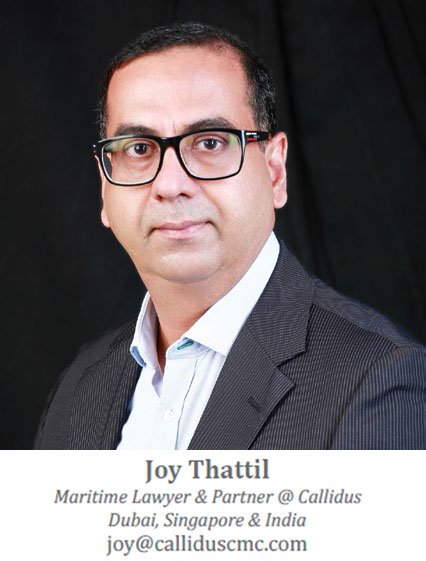
Contributed by : Advocate Joy Thattil; Maritime Lawyer & Partner @ Callidus; Dubai, Singapore & India ; joy@calliduscmc.com

Asking or Telling ?


The more you know things the more you are confused. In fact, being confused is a sure sign of being on the path to know more. Do you know why I say what I say. Read on.

We all know that there are seven colours in the visible spectrum ( that portion of the electromagnetic spectrum which is visible to the human eye).

VIBGYOR as we call it. Violet Indigo Blue Green Yellow Orange Red.
Now if I ask you why is something of a certain colour, what would your answer be. Example – If I showed you a RED rose and asked you why is it red in colour, you may say because it has the colour red in it out of these 7 rainbow spectrum colours.

But am afraid, the answer is something else son. The correct answer is that the rose contains all other 6 colours except RED. A yellow table has all colours expect YELLOW. A Blue whale has all colours except BLUE. And so on. The rules of the universe are that any thing or object reflects / projects only that which it doesn’t have in it. So what you SEE is actually what is NOT PRESENT i that object.

This is not fiction. When I first heard this, I was startled and goose-bumped. But then , the mind helps you and you can decipher things beyond the information you have. So I thought of it further and a few more examples cropped up.

Like snake venom. And its antidote.How is the antidote or anti venom made. You first need the venom, inject a small portion of it in an animal and the animal produces some antibodies which are collected to make the antidote. So the antidote comes from the venom. Think more.

Have you realised that when a person undergoes a health issue, most of the times he blesses others for their good health. So what you lack is health. And so what you project is health for all.
In acts of philanthropy, it has been observed that the poor are more giving than the rich. They share a part of their small fortunes easily than someone who has amassed a lot of resources ( money as we call it ) has major issues within himself to give away. Not always the case but sum of probabilities are higher. For the relatively poor, the motivation to give is the hope to get someday.

Have you ever read stories of super rich businessmen across the world ? The one common aspect is that most of them started with very low and humble backgrounds. Well that in itself is the motivation to go up. Being down. In fact it is the only motivation to keep accumulating more. Always feeling poor. If you don’t feel poor enough, why would you want more. In fact the joke is that children born to rich and average parents never really go THAT HIGH because they don’t know poverty well and therefore have no motivation to go all out for wealth. In fact abundant families often see children spending away or giving away in charity easily. Because they are high there, they want to go a little lower.

Balancing forces within us keep playing all the time. We humans too, therefore, project what is actually the opposite of our internal overpowering state of mind. When the state within is of total wisdom, total innocence is projected. In that context, a child is actually the most wise person always.
Facebook is a very easy method of knowing a persons state of mind. Lets say someone keeps projecting his wealth through pictures and updates of cars, vacations, phones, airplanes etc chances more are that the guy feels poor within. If a couple keeps projecting bliss and happiness in their relationship , chances are that everything is on the rocks already. The largest corporations have average websites and really average corporations have large and grand websites.

So do you see that colleague who projects arrogance and hate always. Chances are that he is full of love and compassion deep within and is just balancing it out. Or do you see that holy cow who always smiles, is nice, courteous, chances are the opposite of that is manifested within him somewhere. We are all playing the balancing act. Which brings me to the metaphor of the inverted banyan tree, as told by Shri Krishna, that this imperishable tree has its roots upwards and branches down and the one who knows this tree knows it all. What we are viewing in the world is actually a reflection of the reality. Today, after writing this article, it makes it even more relevant.

Understanding an Arbitration process, and its Scope in Singapore

Singapore is today one of the most illustrious and renowned seats of Arbitration because of the well-developed infrastructure, modern national legislation, and a strong position as a financial and commercial centre in Asia. Singapore has a wide spectrum of efficient arbitrators from across the globe ranging from seasonal dispute resolution generalists to highly specialized practitioners and expertise covering the entire legal and technical area of intellectual property. The Courts of Singapore is famous for its integrity, cost-efficiency, neutrality, competency and impartiality and also offer a high level of support for arbitration with minimum intervention. Moreover Singapore has many renowned local and overseas law firms and professionals who expertise in arbitration.

The obsequious nature of the people of Singapore towards the legal system is a notable factor. Singapore also welcomes foreign arbitrators and allows them to arbitrate in Singapore without a work permit and without withholding tax. According to the Singapore laws only a Singapore qualified lawyer from Singapore law practice can appear before the High Court for International arbitration related matters even though the original contract which was the subject matter of the arbitration may have been governed by a foreign law. Singapore also ensures that the arbitration legislation is kept responsive to the global legal and commercial developments. A recent study shows that Singapore is challenging the established centres of arbitration like London, Paris and Stockholm. Another factor that favours Singapore is its geographically convenient location and this makes it a neutral venue for parties from different parts of the globe.

The United Nations Commission on International Trade Law (UNCITRAL) the Model Law recognizes the incorporation and the enforcement of the arbitral award provisions by giving effect to the New York Convention of 1958 within its ambit. As Singapore is a signatory to the 1958 New York Convention, the Arbitral awards issued in Singapore are enforceable in over 150 UN Member states, and also in certain Commonwealth jurisdictions under the Reciprocal Enforcement of Commonwealth Judgement Act. The Awards are final and binding in nature and have no right of an appeal. In fact if parties to an arbitration can appeal it defeats the sole purpose or “raison d’etre” of arbitration.

Respect For Ones Elders?


If you are one of the many who regularly use social media, you will be aware of the gap which appears to be growing between the generations. The young appear to blaming the older generation for not making it easier for younger people to progress. Equally the older ones cannot understand why they are not shown the respect that they believe they deserve. After all they have, over many years, invariably contributed much to society.

It is true that different cultures treat the generation gap in dissimilar ways but generally, until recent times, the overall thrust encouraged respect for ones elders. Traditional Indian culture is a prime example of this. Equally the saying: ‘Learn from the people who have walked the path before you. Respect them because that chances are, sooner than you can imagine, you’ll be walking along a similar path’; is a truth not to be ignored.
However the growth of social media and its ability to link-up like minded persons has brought many traditional attitudes into question. Youth brings with it an assurance that simply wasn’t there, only three or four decades ago, when views use to be more isolated and not inter-related. Nowadays the sound of everyone shouting together cannot be ignored.

At sixteen it seems perfectly reasonable to say, “I am an adult and therefore I should be treated as one. Older people have no more rights to life, than I have, so why should I respect them? We’re just the same!” Of course, what this view overlooks is the fact that the passage of years gives plenty of time and opportunities to step up, screw up, take decisions and live with the consequences. This is why elders tell youth to respect their elders because they have already had the same experience. We’ve all probably said, at one time or another, “I am old enough to decide” only to regret it later on, because we had not taken the advice of those who were older. They have had the experience already, been there and done that, and therefore know the outcome regardless of the younger person’s deliberations. Experience is what matters and the longer we live the more we gain.

So that’s it sorted then is it? Young people should respect their elders? Well it isn’t as simple as this because if we defer to other well-known sayings:-
‘Mutual respect is the foundation of genuine harmony’ and ‘Respect will never be freely given, you must earn it’, it becomes clear that gaining respect is a two-way process. As a consequence the ironic part about gaining respect is that, in order to earn it you must give it!

This has never been truer than with our current generational demographics in terms of communication techniques and skills. Older people, in general, still prefer to chat and come to valued judgments; whereas youth has been brought-up on making more instantaneous responsive decisions. Of course an ability to take time to consider may well be seen, by younger folks, as the elderly slowing down. But coming to fully informed decisions based on experience usually does take time. It’s the way problems are avoided and contingency plans are made. Youth often doesn’t see the need to plan for other eventualities, because lack of experience often gives them a misguided full confidence in what they are doing. Quite rightly it is this confidence that makes young people unique and is an attribute which older people should never forget. We have all experienced this confidence, because it is part of growing up, and accordingly deserves respect.

So there it is; you have a summary about the need for respect between the generations, in a nutshell! But remember children always look up to their parents as role models. If mother and father have a way of life which shows respect, without discrimination to everyone, then their children will also start reciprocating. This accords with the a quotation from 18th century Irish novelist, Laurence Sterne, ‘ Respect for ourselves guides our morals, respect for others guides our manners’. Regardless of the influence of social media this style of family culture encourages generous, empathetic and self-respecting individuals who equally respect others, young or old. What could be better than this for all our futures?
Kaleidoscope desk

CHAIRMAN’S MESSAGE

The saying, ‘Time and tide waits for no one’ has been in use since at least the 1200s. So when an opportunity arises to pause and reflect, on what has gone before, it is an event that should be grasped enthusiastically. It gives us a chance to recognise our successes and also to learn from our mistakes. Taking time, in this way, is one of the basic requisites for leading a rewarding life. Our world is changing so quickly almost in the ‘blink of an eye’. Gradual beginnings, with the right direction, may soon gain a momentum all of their own. This is similar to our growth within CSS.

Our progress was gradual and organic because we utilised the opportunities that came our way. We were steadfast in applying the principles of building on confidence and trust by recognising the value of our customers and, most importantly, our staff. Making headway was not always easy. It called for determination, dedication and a belief in ourselves which has enabled us to grown in size and strength, so we may stand proudly where we are today.
It was Benjamin Disraeli who said’ “Change is inevitable. Change is Constant”. I firmly believe that if you stand still and tread water, others will very quickly overtake you. So it is with some excitement that I greet the event of CSS introducing two new Chief Operating Officers to our company. I heartily congratulate them and I enthusiastically look forward to this change bringing innovative contributions and progressive interactions with us all.

Whatever has been achieved, so far, has only been possible because of the amazing spirit shown by our staff and the enormous support they have given to our management. May this spirit continue and cascade on to new initiatives as well as permeating throughout all levels of CSS.

As a company the reputation earned by CSS, over the years, was due to the hard work of our staff and the confidence of the management which were equally reciprocated. By building on this ethos we will be assured of growth and success which emulates our past history of amazing achievements.

Never forget, from little acorns big oaks grow and CSS is still destined to grow even bigger.

LEADING with a VISION

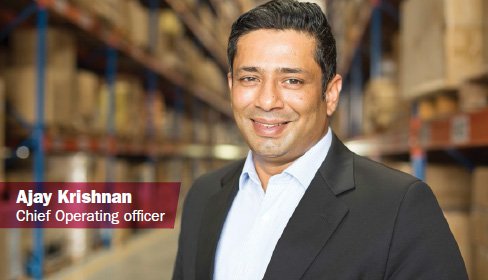
With the recent promotion of Ajay Krishnan to Chief Operating Officer of Freight Forwarding, CSS Group, Lighthouse editorial team sat down to gain insight into his past, what he is looking forward to pushing with his new responsibilities and more.
By Minaal Pervaiz

If you were to describe yourself in under two minutes, how would you do so?

Logical, tough, but fair. Hospitality background, came into shipping and logistics quite by accident. It has been twenty years since then.

How did you get into it by accident?

[…] A friend of mine gave me an opportunity saying do you want to try this [As a] hospitality major, I think I was a little ahead of my time. When she came up with the opportunity to join APL, shipping was new to me. It was supposed to be a temporary situation but it just [stuck].

Has your background with hospitality helped you?

Absolutely – coming from a hospitality background, it levels the playing field. You’re not in a silo, it opens up horizons and gives you full access into the service industry. Shipping was the first option that appealed to me, excited me. It gave me the opportunity to meet multiple, diverse types of individuals; not one trader is the same as the other.

Tell us how you joined the CSS Group?

I used to handle the CSS Group account while I was in APL. We helped grow the business with a lot of innovative ideas, which actually got me known in the company.

Freight Forwarding was a grey area for me – although we say it’s all shipping and logistics, it is very different. You have to engineer services – you have to find a way. Here, [you deal] with freight, land transport, LCL, warehousing, 3PL, relocation. If you want to continue in the logistics industry, the future is in being a third-party agent. The role of the middle man, as we call it, is increasing a lot.

[I was given] a blank slate – the CSS Group had quality Forwarding but we didn’t really have a Forwarding division, per say, with the focus that we have today. We have our own network now, our own agents. I was welcomed very warmly because I had some good relationships in place already.

What do you think it takes an employee to get ahead in the CSS Group?

Focus, an ability to understand the objectives of the company and keep your own objectives aside for the time being. There will be an opportunity for both of them to merge at some point, as this happened to me.

What is your renewed focus now for your division?

Growth. Nothing else but growth. You have to take the profile of the company to the next level. We do not want to be known as only a consolidator, a key vendor for a customer. We want a [visibly] balanced profile, saying we cover all products effectively.

What is your personal philosophy on working with Freight Forwarding at this point?

I am enjoying it! No two days are the same and that’s the best part about it right. Every day presents a new opportunity. I am a very aggressive individual but balance it off so that I do not come in as overwhelming. So I will continue to try to do that through a balanced approach, excite the sales guys enough to get them to go out and do it. I do not do business because I have to – I do it because I want to. That has been my philosophy throughout. You want to take the best out of the personal objectives, take the company objectives and try to get them to meet.

[…] your aggression and arrogance needs to be measured and in balance. It cannot be too much of one. If people need to understand what you are thinking then you need to talk to them a lot more.

What do you enjoy the most about working here?

The flexibility, the diversity, the energy. It’s all about engineering or re-engineering the process. We do not say no, we find a way. That has been a philosophy of the group for a very long time and that is extremely exciting to be a part of.

With the current state of affairs in the industry, what predictions can you make using your knowledge, thus far?

I think the industry is in a state of flux right now. Things change beyond your control. Right now, 2018 looks good. I am not going to predict anything. We’re going to ride the wave, going to put in control measures so that we do not fall off the edge of the wave. While it seems steady and stable, it is not. It looks more like the calm before the storm. We have some pretty focused plans in place where we are going to grow our business organically.

There are certain ways people handle failure and success – how would you handle failure for certain objectives, or a division?

Failure for me is more internal; it’s not external. Even in success, I beat myself up for failing a lot because you have certain expectations, objectives in anything that you initiate personally, or professionally. I do not have a philosophy or a thought process when it comes to external failures – it is always internal.

How would you motivate yourself?

If you do what I do, if you work with the people I work with, live with the people I live with, and if you are friends with the ones I am friends with, you are motivated all the time. It’s only about the energy, but it is the ability to think forward. One of the reasons I grew in both my jobs is because I do not think about today. I have a habit of thinking a year, two years, three years from now. If I have an environment that is challenging, it is more than enough to motivate myself. I need to go home feeling mentally exhausted. I need to go home and say, you know what, that was a good day.

Other than set targets for the rest of the year, is there anything else you have planned with the particular portfolio you are now in charge of?

Targets are one thing, and how to achieve them is the other. It is not enough having a number, It’s the process and how we want to achieve that output matters more.

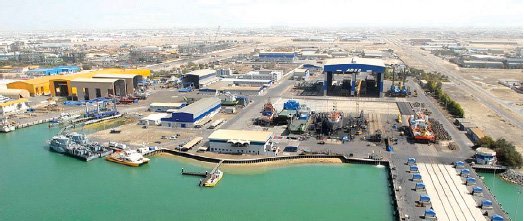
Abu Dhabi Ship Building Sees Second Highest Ever Profits

Abu Dhabi Ship Building (ADSB) has managed to break through the AED 100-million barrier with its second-highest profits in history for the year ended December 31st.

During 2017, ADSB re-branded its market position, and continued to build on the momentum from all operational segments, according to a statement from Khaled Al Mazrouei, CEO, ADSB.

In his statement, Al Mazrouei called attention to the improved financial position of the company, including increased gross profit (from AED 256.1 million in 2016 to AED 277.1 million in 2017), and increased net profit (from AED 61.3 million in 2016 to AED 104.8 million in 2017).

These results were mainly driven by the increased scope of the awarded Marine Support Services contract, which covers a period of three years (until January 2020), and cost efficiencies within existing Ship Build projects. Furthermore, efforts to expand into oil and gas fields significantly accelerated in 2017.

In terms of operations, the company implemented changes to drive a more effective and efficient organization. This included operational changes in the Ship Build (Naval Ship Building and Small Boats Construction), and Services (Marine Support Services, Naval/Commercial MRO, and Oil & Gas) sectors.

Page1 … Page5

CSS Newsletter

In this issue:

Quick Links

  • Home
  • About
  • Services
  • News Media
  • Careers
  • Contact us
  • Corporate Brochure
  • CSS Corporate PPT
  • Lighthouse
  • News Hub
  • Privacy Policy
  • Cookie Policy
  • Disclaimer
  • T&C’s

Locations

  • Dubai
  • Abu Dhabi
  • Sharjah
  • Ras Al Khaimah
  • Bahrain
  • Oman
  • Qatar
  • Saudi Arabia
  • Kuwait
  • Kenya
  • Turkey
  • India

Subscribe to our bi-monthly newsletter, Lighthouse

  • Follow Us
© 2026 CSS Group. All rights reserved. Crafted with by Netventure