Skip to content

Lighthouse

Bi-monthly publication of CSS Group

Lighthouse
  • Call +971 4 8872333
  • Mail info@cssdubai.com
  • Menu
    • Home
    • About
    • Services
      • Global Freight forwarding
      • Ocean Freight Management
      • Supply Chain Management
      • Land Transportation Management
      • Industrial Packing, Crating & Lashing
      • Air Freight Management
      • Projects Oil & Energy
      • Exhibition Event Logistics
      • Automobile Logistics
      • Art Logistics
      • Non Vessel Operating Common Carrier (NVOCC)
      • Hospitality & Hotel Logistics
      • Multi-modal Operations
      • Container Freight Station (CFS)
      • Yacht & Marine Logistics
      • E-commerce Fulfillment
    • Locations
      • Dubai
      • Abu Dhabi
      • Sharjah
      • Ras Al Khaimah
      • Bahrain
      • Oman
      • Qatar
      • Saudi Arabia
      • India
      • Sri Lanka
    • Careers
    • Track & Trace
    • Login
      • Customer / Agent
      • Employee – Portal
      • Employee – Dashboard
      • CSS India Login
    • More+
      • Lighthouse
      • Media Hub
      • Feedback
    • Contact Us
  • Login
    • Customer / Agent
    • Employee – Portal
    • Employee – Dashboard
    • CSS India Login
  • TRACK & TRACE
  • NOTICES
  • LIGHTHOUSE
Lighthouse
  • Call +971 4 8872333
  • Mail info@cssdubai.com
  • Menu
    • Home
    • About
    • Services
      • Global Freight forwarding
      • Ocean Freight Management
      • Supply Chain Management
      • Land Transportation Management
      • Industrial Packing, Crating & Lashing
      • Air Freight Management
      • Projects Oil & Energy
      • Exhibition Event Logistics
      • Automobile Logistics
      • Art Logistics
      • Non Vessel Operating Common Carrier (NVOCC)
      • Hospitality & Hotel Logistics
      • Multi-modal Operations
      • Container Freight Station (CFS)
      • Yacht & Marine Logistics
      • E-commerce Fulfillment
    • Locations
      • Dubai
      • Abu Dhabi
      • Sharjah
      • Ras Al Khaimah
      • Bahrain
      • Oman
      • Qatar
      • Saudi Arabia
      • India
      • Sri Lanka
    • Careers
    • Track & Trace
    • Login
      • Customer / Agent
      • Employee – Portal
      • Employee – Dashboard
      • CSS India Login
    • More+
      • Lighthouse
      • Media Hub
      • Feedback
    • Contact Us
  • Login
    • Customer / Agent
    • Employee – Portal
    • Employee – Dashboard
    • CSS India Login
  • TRACK & TRACE
  • NOTICES
  • LIGHTHOUSE

POOKALAM COMPETITION BACK IN FULL FORCE

After a year of hiatus due to the pandemic, the Pookalam competition was back this year. And the enthusiasm and excitement from all our branches were seen.

The intricate design and the team effort was seen in all the arrangements, and we congratulate all the participates. But after all, it’s a competition, and only one can take the trophy.


RESCHEDULED EXPO 2020 SET TO ATTRACT 25 MILLION VISITS IN DUBAI

Hosting the World Expo is the most ambitious project for the UAE. The event is also at the heart of the UAE’s plans for diversifying its economy away from Oil. Expo 2020 is special as it is the first with so many countries represented physically and digitally. Dubai is now the melting pot of the world. The Expo 2020 also represents the unique opportunity to experience the post-pandemic world.

Dubai Gearing Up for Expo 2020
Held every five years, the World Expo exhibitions see hundreds of countries using pavilions to show off the latest in architecture and technology. Before the pandemic forced the event to be postponed, organisers had expected 25 million visits during the course of the six-month international fair. It will now run from 1 October to 31 March 2022.

However, despite restrictions on travel, and the recent lockdowns in some parts of Europe, Reem Al-Hashimi, Managing Director general of the Expo 2020, expects a crowd turnout to match the pre-pandemic expectations. She says, “The world has gone through these galactical shifts over the last year but now with vaccines being rolled out, we believe that situation will settle by October, and that the situation will be far more positive by then.”

An Optimistic Outlook
It is an optimistic forecast for an event that relies on tourism, when most of the world has cutdown on international travel. But the various in-person conferences and trade shows held in the city over the last few months has made organisers more hopeful.

Expo 2020 is being billed as the biggest event to be held in the Arab world. For the UAE, the showpiece event comes at a time when it is trying to recover from one of its worst recessions in five decades. Last year, the economy contracted by 6.6% even as the government announced a series of reforms to attract investment and help businesses. Some of those steps have started to show results with the International Monetary Fund upgrading the growth outlook for the UAE to 3.1% for 2021.

The authorities are pinning their hopes on the World Expo to attract tourists in large numbers that would help accelerate economic recovery. Billions of dollars have been poured into the project since the UAE won the bid to organize the international fair in 2013.

Dubai World Expo: Key Facts

  • More than 190 countries are taking part, in the first such event to be held in the Middle East
  • These countries will participate in the Expo – showcasing innovations around the themes of sustainability, mobility and opportunity.
  • The Expo 2020 is expected to boost Dubai’s economy by $33bn (£24bn) and to create up to 300,000 jobs
  • The site covers 4.3sq km, or 613 football pitches, and the Expo site will have its own metro station
  • Uber is said to be testing flying cars during the event
  • Some 90% of the materials used in construction will then be used to create permanent buildings afterwards
  • The spectacle is particularly crucial for the Middle East’s financial hub – Dubai – as its economic model relies heavily on sectors that are driven by consumer spending, like hospitality, luxury retail and travel.

While most experts think it might be a challenge to achieve 25 million visits, there is a broad consensus that the millions who will attend the event will certainly have a significant impact on the economy. “Even if the event is partially successful it has the potential of reviving the economy and taking it back to the pre-pandemic levels,” says Scott Livermore, chief economist for the Middle East at Oxford Economics.

In February, the Tokyo 2020 (Olympics) committee announced that they would go ahead with the event in July regardless of the how Covid-19 situation evolves. Like the Japanese, the Expo 2020 organisers also had no plans of postponing or cancelling the event. “We are applying all the necessary safety measures as mandated by the WHO and following other best practices to allow the event to take place in a safe environment,” says Ms Al-Hashimi.

She also adds that there is a need for people to converge to discuss the next steps to tackle global challenges like the Covid-19 pandemic, and the Expo offers that platform. Dubai also has been one of the few cities to keep its economy open since July last year when most of the world was under lockdown.

Covid -19 Precautions
Despite the recent wave, the UAE has managed to roll out the vaccines at a rapid pace, with more than 75% of the population inoculated. The UAE aims to be one of the first countries to vaccinate most of its population and return to complete normality. This would also help in positioning it as a safe tourist destination. With UAE reaching the status as being the most vaccinated country, the organisers are hoping for the large turnout for the event.

“If the UAE is able to achieve herd immunity, then that would be a big positive for the Expo as it would be able to attract many more tourists, especially during the second half of the event,” says Mr. Livermore.

Role of Expo 2020
Mega-event Expo 2020 offers an international meeting point to not only 190-plus participating countries but also businesses, multilateral organisations and educational institutions. To catalyse entrepreneurial partnerships, Expo 2020’s official business integrator partner Dubai Chamber of Commerce and Industry has launched an introductory video series featuring the expectations of UAE business leaders titled ‘En Route To The Expo.’

Dubai Chamber of Commerce & Industry, A Catalyst for Cross-Border Partnerships
“Expo 2020 and DCCI are rallying the local and international business community to connect, network and together find cutting-edge solutions to encourage global partnerships and FDI flows in a post-pandemic world,” says Marjan Faraidooni, Chief Experience Officer of Expo 2020 Dubai.

She highlights the rota of business programming planned by the DCCI, which includes a series of thematic business forums designed and curated together with participating countries and partners that discuss challenges as well as opportunities for both the local and global business communities.

“The Chamber is also bringing on board three of its flagship global business forums – the Global Business Forum Africa, Global Business Forum ASEAN (Association of Southeast Asian Nations) and Global Business Forum Latin America,” adds Faraidooni.

Dubai Businesses to Reap Economic Benefits
Hassan Al Hashemi, Vice President of International Relations at the DCCI, says that business in Dubai is set to undergo a quantum leap with the city hosting Expo 2020, adding that the mega-event will highlight the economic potential of the UAE and other markets of opportunity.

As the official business partner to Expo 2020, the DCCI will play a pivotal role in creating new connections and fostering cross-border collaboration. The Chamber will provide an ideal platform for UAE companies and their international counterparts to network at its dedicated on-site facility at Expo 2020. In addition, it will host and support several high-profile events during the mega event, which aim to expand Dubai’s economic cooperation with promising markets around the world,” Al Hashemi added.

In a post-pandemic era, Expo 2020 will become a prime example of how major international forums can be held safely and successfully. “It will be the first major global event that uses technology and a hybrid format to navigate the obstacles presented by a situation that is unprecedented in modern times,” says Al Hashemi. “Dubai Chamber of Commerce & Industry is fully committed to ensuring that business functions run smoothly at Expo 2020.”

The non-profit public entity will play an essential role in catalysing partnerships for the global business community throughout the six-month event.


AUTONOMOUS PORT TRUCK SYSTEM INTRODUCED AT ABU DHABI PORTS

The Abu Dhabi Ports and the COSCO Shipping Ports Limited (CSP) are set to build a future together in the region with their first autonomous port truck system. It is the first of its kind in the Middle East. The technologically advanced port boasts of the use of smart automation.

The Deputy CEO, CSP Abu Dhabi – Naser Al Busaeedi, states, “We are proud to be the first terminal in the Middle East to implement an autonomous port truck system following the addition of six Qomolo Q trucks to our container handling fleet. Being efficient and cost-effective, the new vehicles also help us sustain container handling operations for longer periods and continue operating in situations where business continuity is an operational challenge. We look forward to experiencing the full potential of these autonomous vehicles in the coming months.”

The six electric Q-Trucks are produced by Qomolo, the sub-brand of ShangHai Westwell Lab Technology Company. The L5 autonomous freight trucks are equipped with an advanced 360-degree sensory system with traffic monitoring and driving guidance system and are also tasked with supporting the mother vessel in loading and unloading activities within the facility’s container yard. The electric Q-Trucks are powered by a 281kWh battery that carries 80 tons and works in an operating range of 200 km. These trucks can operate up to 44 hours continuously. Enhanced by a temperature-controlled system, the trucks direct vehicle navigation and help transport general and reefer containers. Presently these are on a two-month trial period.

The Head of Ports Cluster, Abu Dhabi Ports, Saif Al Mazrouei, stated, “The addition of CSP Abu Dhabi’s Q-Trucks has not only accelerated Khalifa Port’s position as the Middle East’s leading maritime facility but also serves as a prime example of how innovative technologies can transform the maritime and logistics industries.” “Employing solutions powered by ultra-modern technologies, such as artificial intelligence, Internet-of-Things and electrification can enable businesses to achieve a higher level of efficiency while simultaneously transforming their respective operations to be more sustainable and cost-efficient.”

With the innovative Q-trucks entering the scene, they are set to solidify CSP Abu Dhabi and Khalifa Port’s standing as the most advanced maritime facility in the region. The new Q-Trucks deliver reduced transformation and operating costs and a significant reduction in CO2 emissions. Apart from the autonomous port truck system, the greenfield project saw the adoption of the Fleet Management System (FMS) for overseeing the daily activities utilizing Q-Trucks. While simultaneously connecting to multiple systems, the platform provides real-time monitoring and workflow management process.

The future looks bright as CSP Abu Dhabi and Khalifa Ports will continue to explore the potential applications for AI-powered solutions for terminal and port operations.

H.H. SHEIKH THEYAB BIN MOHAMED INSPECTS ETIHAD RAIL’S NEW TRACKS TOWARDS ABU DHABI AND DUBAI

His Highness Sheikh Theyab bin Mohamed bin Zayed Al Nahyan, Chairman of the Abu Dhabi Crown Prince’s Court and Chairman of Etihad Rail, inaugurated the track laying at the railhead in Saih Shuaib, towards Abu Dhabi and Dubai.

Supervision Trip by H.H. Sheikh Theyab bin Mohamed
The new tracks are on time on the schedule for delivery. As part of the UAE National Rail Network development, this is one of the largest infrastructure projects in the nation. H.H. Sheikh Theyab bin Mohamed undertook the supervision and construction works from the starting point of track laying in Saih Shuaib towards Abu Dhabi and Dubai. He took the trip aboard an inspection train designated for supervision and inspection of construction works.

The trip also encompassed the 10-kilometer journey reaching Al Maha Forest. His Highness was informed in detail about Etihad Rail’s procedures and measures to protect the natural habitat and wildlife during the implementation of the project within the forest, including the development of bridges, culverts, and animal crossings.

Under His Highness’ diligent inspection, he noted that the nation’s wise leadership is precious for the development of Stage Two. He also placed on record the invaluable support offered by the local and federal government stakeholders as the company continues to support the developmental goals of the UAE, including those set for the next fifty years.

Strategically Important Project
This project is of strategic importance to the UAE and can revolutionize the UAE’s transport sector. Theyab bin Mohamed stressed that the network forms a vital part of the UAE’s world-class integrated transport ecosystem, strengthening the UAE’s global leading position in the provision of quality transport infrastructure.

Theyab bin Mohamed further accentuated the project’s role in supporting the UAE’s economic growth, connecting key ports with production and manufacturing points and population, which will positively affect the lives of citizens and residents in the country.

The network is significant in providing a modern and sustainable national rail network, bolstering the UAE’s leading regional standing.

During the visit, Theyab bin Mohamed said that the carefully considered and diligent scrutiny of our wise leadership bolsters the UAE’s regional and international positioning.

PREDICTIVE AI WILL REINVENT THE SUPPLY CHAINS OF TODAY

With highly reactive and disruptive supply chains, planning ahead is simply out of the question. They are continuously reacting to the number of orders, the position of the shipment, the state of production, and so on. That is the primary reason why the COVID-19 pandemic took us by surprise. Prior to the pandemic, there were always large-scale shortages, waste, and losses in millions of dollars. The pandemic has not just exacerbated the problem but also highlighted the major flaws of inventory-heavy supply chains.

Predictive Artificial Intelligence (AI) and Machine Learning (ML) has the capability in not just identifying the growth in demand across different nodes in your supply chain, but vastly reduce response and decision-making processes and the time taken to do it. A proactive approach, adopting these technologies is a prerogative to future-proof your supply chains for black swan events like the COVID-19 pandemic.

A Proactive and Lean Supply Chain
Using Predictive AI technology to optimise the various supply chain processes will improve your Supply Chain’s ability to respond effectively across the network to any disruptions, vulnerabilities, and also help you mitigate the effects of Black Swan events.

Knowing demand and predicting how events will affect demand, will aid in the management of all the moving parts of the supply chain, from manufacturing to distribution. This is precisely where a more proactive supply chain has an advantage.

While data analytics is based on past events, predictive analytics identifies patterns, tests assumptions, and employs Machine Learning algorithms to re-evaluate and adapt the model for the most accurate results. AI-powered predictive analytics has numerous applications in all supply chain processes, beginning with Demand Forecasting and progressing to Automated Production Planning, which is based on sensing demand at the distributor level and using that to forecast near-future demand.

This, in turn, has the potential to make production much leaner than the current inventory-heavy production model that is the norm across sectors and verticals. Companies will be able to meet 20%-30% more demand with the same or lower production capacity by applying the lean methodology throughout the supply chain, beginning with suppliers, vendors, and ending with distributors and retailers.

How can Predictive AI be implemented across the supply chain?
Supply Chains assist in making accurate decisions in near real-time and can be widely adopted across the value chain. With numerous applications, AI-powered predictive analytics can provide you with insights that you can use to further optimise various supply chain processes as listed below:

Inventory Management
Once you have insight into the granular demand, businesses can manage their inventory across warehouses, distribution centers, and retail outlets. Supply and demand must be balanced to avoid waste and stockouts. AI-powered solutions can calculate safety stock levels by analysing past trends, market signals, and inventory levels.

Transport Logistics Management
In countries like India, the distribution network has to reach small neighbourhood stores that dot the rural areas. Predictive analytics can analyze traffic patterns, reachability, lockdown constraints, weather, and other events to determine the best route of transportation to deliver products from distribution centers to retail stores.

Lean Supply and Production
Accurate demand predictions can assist manufacturers in prioritising and focusing their efforts on rationalising their product line and lowering production costs. AI can also be used to improve procurement and supply planning by identifying the best raw material supplier.

Promotions and Pricing
The insights gained from demand forecasts will assist you in optimising your promotional activities and pricing models, as well as shaping demand. You can run simulations for multiple scenarios with Advanced Scenario Planning to see how different promotions or pricing models affect your sales and consumer behaviour.

How to future-proof your business
Today’s hypercompetitive and volatile market demands superlative technologies like AI and Machine Learning (ML). Relying on older predictive methods is bound to throw you out of gear. During the pandemic, many companies failed to adapt their predictive capabilities, resulting in excess wastage and stock-outs in manufacturing and distribution. However, companies who have adopted AI and ML technologies for their forecasts were able to optimise their operations to the COVID-affected markets. Such companies have managed not just to survive, but thrive.

A recent McKinsey Report reveals that early adopters who successfully implemented AI-enabled supply-chain management were able to reduce logistics costs by 15%, inventory levels by 35%, and service levels by 65% when compared to slower-moving competitors. The implementation of organisation-wide AI practices will not just make your company resilient and ready for the future but also agile with improved processes in place.

However, simply adopting any AI technology is not the answer. Organisations should focus on integrating new technologies into their existing workflows in a simple and timely manner. The majority of businesses continue to invest in outdated technologies or in costly advanced solutions that take months to implement, resulting in opportunity loss for the organisation.

Predictive AI should simplify the already existing processes and not overburden the system. It should have the ability to stabilise forecasts, and allow businesses to identify opportunities immediately. It should help in facilitating teams to shift their focus to shaping demand. This is how we will transition from a purely reactive to a proactive and flexible supply chain.

INDIAN LOGISTICS INDUSTRY ADOPTS ELECTRONIC VEHICLES, AND THE IMPACT OF GREEN TAX

Despite the global pandemic, the logistics industry has witnessed exponential growth in the last few years. The industry has been incorporating new trends and technological innovations to stay on top of the game.

Logistics Industry Ushers in Electronic Vehicles
The logistics sector has played a crucial role in ushering in the Electronic Vehicles revolution in India. A giant leap for every industry, the logistics industry is driving this significant change for the entire nation. As we work towards sustainable growth, it is important to incorporate environmentally friendly techniques. India joining the World Logistics Passport has spurred the development of the national logistics sector.

Green Tax and the Logistics Sector
Implementing the ‘Green Tax’ by the Indian Government will have a big impact on the logistics sector. Mr. Nitin Gadkari, Union Minister of Road Transports and Highways, announced the imposition of Green Tax on older vehicles to aid sustainable best practices. The scheme expects vehicles to pay 50% of the road tax and applicable for petrol and diesel vehicles.
According to the ministry, transport vehicles older than eight years could mainly fall under the Green Tax radar (at 10-25 % of road tax) right after they receive a renewal of a vehicle fitness certificate. From September onwards, vehicles older than 15 years will be owned by government departments and public sector undertakings.

Working in tandem with the Indian Government
The logistics industry in India will work hand-in-hand with the Government to create a more sustainable future. The Green Tax law comes as a push for the entire sector to have an eco-friendly growth model. With the EV revolution taking place, it should be easy for the sector to adapt to this law to bring the necessary changes All the logistics solution providers already have a plan post imposition and have been working on the same. It shouldn’t be difficult for the logistics sector to adapt to this change and move towards a green economy with new technologies

RISING US IMPORTS FROM ASIA IN JUNE POINT TO A SURGE IN SUMMER IMPORTS

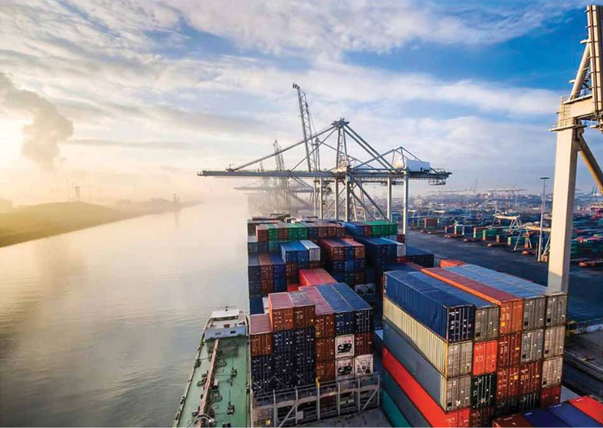
From late July 2021, the ports on the Western Coast of the USA have been preparing for a surge in import volumes as the accumulated backlogs in US imports from Asia have started arriving from Yantian and other Chinese ports.

While June saw an increase in imports, the volumes slightly dipped in May, but import volumes were still up almost 24 percent from a year ago. With retail inventories low, this might indicate that the second-half volumes are unlikely to let up.

From Los Angeles and Long Beach, carrier executives alert terminal operators at these ports to expect a spike in Chinese imports. This will also add to the traditional peak shipping season in the eastbound trans-Pacific that runs from August through October.

US imports from Asia touched a total of 1.52 million TEU in June. This figure showed an 8.8 percent drop from 1.67 million TEU in May.

This June showed the busiest first half ever in the largest US trade lane. Imports from Asia totaled 9.52 million TEU, up 38 percent from 6.9 million TEU in the first six months of pandemic-wracked 2020 and 24.5 percent higher than the 7.65 million TEU imported in the first half of 2019.

SSA Marine, which operates three terminals in Long Beach and the largest container terminals in Oakland and Seattle, was told by its carrier clients to expect a spike in imports later this month and into August.

An adviser to non-vessel-operating common carriers (NVOCCs) has stated that an import surge is on the way now that Yantian is digging out of its backlog. Other Chinese ports that had picked up some of Yantian’s business during the COVID-19 outbreak are also clearing out their backlogs.

“West Coast ports are expecting to be besieged by vessels delayed at Yantian at the same time we enter the peak surge. This comes at a time when NVOCCs are facing possibly the worst backlog of unshipped containers from China ever,’ he further stated. He said Yantian had experienced the worst backlog, but vessels also backed up in Shanghai and Ningbo.

Retailers trying to rebuild inventories

The increased import volumes are largely driven by US retailers trying to build back their inventories. According to the US Census Bureau report, the retail inventory-to-sales ratio, which was down to 1.07 in April, had never dropped below 1.34 in the 28 years before the COVID-19 pandemic.

The terminals at Los Angeles-Long Beach are bearing the brunt of the almost record-breaking import volumes in the last six months. For much of the year, the officials have to navigate problems like vessel bunching, congested yards, long truck queues, equipment shortages, and record rail container dwell times. However, the terminal officials said that the situation has improved over the past two months, and they hope to continue to do so.

E-SIGNATURE FOR THE EXECUTION OF DOCUMENTS IN THE NEW ERA OF REMOTE WORKING

The current restrictions on travel, businesses and social distancing due to the current pandemic COVID 19 has made the simple process of signing and witnessing the legal documents or the business contracts very difficult, with the signatories either working from home or in isolation. In the last year, 2020, we see that most of the businesses have started to have virtual meetings instead of in- person meetings as it is not feasible to conduct business meetings in the same room, and then to circulate the hard copy of the signed documents in the current scenario. Since the traditional face-to-face meetings and signing of documents are no longer possible, the contracting parties had started looking for other alternatives to execute the agreements and contracts to take forward their businesses, and gradually, they have started thinking of using E-Signature to finalize/execute the deals, even when working from home.

An E-Signature or Electronic Signature is a legal way to get consent or approval on an electronic documents or forms by replacing a handwritten signature, virtually. The ESIGN Act of USA, defines the term electronic signature as “an electronic sound, symbol, or process attached to or logically associated with a contract or other record and executed or adopted by a person with the intent to sign the contract or the record.” The UNCITRAL Model Law on Electronic Signature was adopted in 2001, to enable and facilitate the use of electronic signature by establishing criteria of technical consistency for the equivalence between electronic and hand-written signature. This Model law applies where electronic signatures are used in the commercial activities and in order to legally recognize the electronic signatures, it should be reliable and appropriate for which the data message is generated and communicated. Further, to consider it as reliable, it should meet the 4 conditions – (1) it should be linked solely to the signatory; (2) it should be under the sole control of the signatory; (3) any alteration of the electronic signature, made after signing, shall be detectable; (4) where the purpose of the signature is to provide assurance as to the integrity of the underlying information, any alteration of that information shall be detectable. It also imposes a duty on the signatories to use reasonable care to avoid unauthorized use of their electronic signature.

Though most of the countries have adopted the UNCITRAL Model Law into their legislation, it is very important that the contracting parties are familiar with the law in the relevant jurisdiction to make sure that an agreement or contract bearing an electronic signature is legally binding in their respective countries. Most notable countries that have accepted the E-Signature through their local law: for eg., The Information Technology (Amendment) Act, 2008 in India; The Federal Electronic Signature in Global and National Commerce Act in the United States of America; The E-Commerce Law [Law No (1) of 2006 on Electronic Commerce and Transactions in United Arab Emirates; The Electronic Signatures and Certification Business (Act No. 102 of 2000) in Japan; Electronic Commerce Act, 2006 in Malaysia and considers E-Signatures as equivalent to the hand written signature.

When we note that almost all Countries have Statutes regarding E-Signatures, the Companies were/ are still hesitant in adopting electronic signatures mainly due to its legality, cost of implementation and effort involved in it. The legality of the E-Signature is one of the main reasons which stop the companies to fully trust the E-Signature.

When all these above mentioned countries confirms that the E-Signature is considered in the same legal capacity as that of a hand written signature, they also allows an electronically executed agreement to be presented as evidence in a Court and also prevents the denial of its legal effect, validity or enforceability solely because it is in electronic form. However, it is also very important to note that none of the aforementioned countries would accept documents or negotiable instruments like Promissory Note or a Bill of Exchange; Power of Attorney; Trust Deed, Wills or any other testamentary dispositions, Real Estate Contracts, or any other Agreements that requires Stamping/Attestation/ Notarization if it is executed electronically, with an E-Signature.

Further, when using an E-Signature, there is an underlying presumption that any document that is signed with an E-Signature is under the sole responsibility of the concerned party who has affixed the E-Signature. The owner of the E-Signature must be very careful because the E-Signature can be used to sign any legal transaction and the burden of proving the non- authenticity of the signature is on the person, who owns the E-Signature.

Usually, if a document with hand written signature is challenged before the Court of Law, the Court compares the copies of the signature along with the testimony of the handwriting experts or witnesses present at the time of signing the document to establish the validity of the signature. For E-Signature, there is no need for going through this expensive and time consuming process, since it can be proved with the help of IP address, Date, Time and Location, when the document was received, viewed and signed. As per experts, this is a more credible method of establishing evidence than a sworn statement of whether a document is sent through E-Mail.

This being the facts about the use of E-Signature, an emerging trend in the new era, while executing a commercial agreement, it is always suggested to include / fulfill the below points in the electronically signed agreements, for protecting the interest of the contracting parties.

  1. Include a clause that suggests the consent of the contracting parties to sign the Agreement electronically and that it shall be considered as hand written signature for the purpose of enforceability;
  2. Make available to the respective contracting parties, a fully executed copy of the Agreement.
  3. Include a suitable governing law and jurisdiction clause, which provides the widest protection for E-signature.

With the current drastic shift in the business environment, the use of E-Signatures provides a way to enhance and simplify work. Trust and relationships built up over time would play an important role as deals are structured while face to face meetings remain constrained.

KUWAIT’S NEW LOGISTICAL PARK TO SPUR INVESTMENT AND JOB OPPORTUNITIES

Kuwait Ports Authority Chief-Sheikh Yousef Al Abdullah Al Sabah has cited Kuwait Ports Authority’s (KPA) plans to optimize metropolitan logistical activities. The Ports Authority has sought out recently acquired lands to prop up local trade and lure more foreign investment into the country. The proposed logistics cities’ land stretches over two million square meters.

Logistics Cities
In a recent interview, Sheikh Yousef Al Abdullah Al Sabah added that the planned “logistics cities” would serve a particular purpose. These logistics zones will prove beneficial in three ways, one being a support for fledgling small and medium- sized enterprises, second as a place where products are traded, and third as lucrative investment opportunities to firms abroad. Global design agencies design the logistics cities to ensure high standards that will support e-commerce.

Sheikh Yousef Al Abdullah Al Sabah highlighted two projects in the pipeline. “The first project is a maritime single window system that links three ports together for efficiency. The second “smart port” project will connect the systems of all related parties to release and secure the flow of goods electronically thereby converting the facility into a “contact point” linking all concerned bodies, apart from using automation and innovative technologies to manage the day-to-day operations.”

Turning Kuwait into a Trading Hub
Kuwait is all set to turn into a re-export and shipping center to neighboring countries. Offering a logistical solution at competitive prices, this move will also churn out job opportunities for citizens in the storage, artificial intelligence, and logistics sector. Sheikh Yousef said, “Meanwhile KPA will establish its first dry port to serve the flow of goods which will reduce the accumulation of trucks on the borders.”

When asked about the Kuwait Port Authority’s revenues, he stressed that the last six years pushed the total assets to USD 186 million, which is an increase worth 400 percent, and an accomplishment attributed to meticulous and intricate planning. The mishaps at sea and the unprepared-for pandemic brought a large part of the global trade to a standstill, but now with the proposed logistics cities, he was expecting stranded ships to be on the move and once again pick up the business where it left off.

CHAIRMAN’S MESSAGE

The ferociously lethal second wave of the COVID-19 pandemic had India gasping for breath. As India became ground zero of the global pandemic, the medical system in India was trying its best to cope with an acute oxygen crisis. The graph of daily infections that began soaring by late March breached global records on April 26th 2021, crossing more than 350,000 positive cases.

Narendra Modi, the Prime Minister of India, in his address to the nation on June 8th 2021, stated, “Never in a-100 years has there been such a pandemic, and this saw an unprecedented demand for medical oxygen across the country.”

Across India, tens of thousands of critically ill patients had their lungs damaged by the virulent strain of the SARS-CoV2 virus. As they were rushed into hospitals, the demand for medical oxygen spiked ten times from the norm. The deluge of new cases caused hospitals across the nation to post frantic alarms in the face of perilously dipping levels of life-sustaining oxygen supply.

The breath of life-saving air, which we take ever so granted, became the most precious commodity.

The international community was quick to respond to India’s time of need. The United Arab Emirates assured a steady supply of liquid medical oxygen as India was battling this deadly second wave. In a special gesture of solidarity, the iconic Burj Khalifa was lit up in the Indian tricolor and a message to “Stay Strong India.”

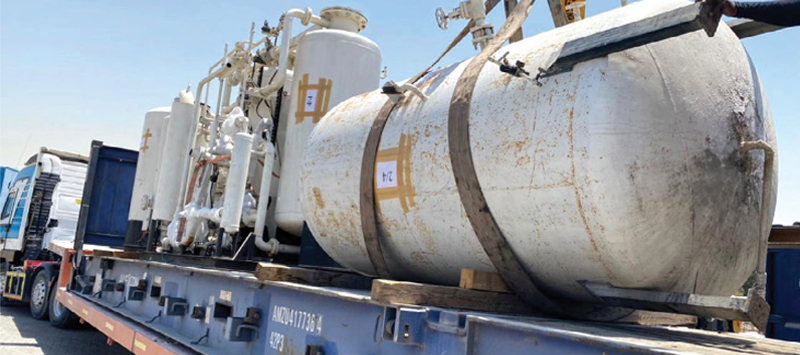
The CSS family feels extremely proud and considers it an honor and privilege to extend our hand of help to the nation of India in her time of dire need. CSS Kingston was instrumental in the movement of oxygen tanks and oxygen processing units from Sharjah to Mumbai. Our technical prowess and deep knowledge of critical and time-bound shipments ensured that the movement was handled seamlessly.

I want to conclude with this saying by the American footballer, Doug Baldwin.

“The greatest tragedy for any human being is going through their entire lives believing the only perspective that matters is their own.”  

The way you see the world is just the way you see the world. It defines only your truth. If you only keep looking through your lens, with time, your vision will get blurred.

Isn’t it time we borrowed the other person’s glasses?

You don’t need to agree with them. Dear CSS family, let’s try to understand our neighbor’s perspective on seeing the world. That’s how we rise to a level that’s higher than where we are.

Let’s stay connected with each other, and we can conquer the challenges that lay ahead.

WASH PLEDGE

We, Consolidated Shipping Services are proud to be a WASH Pledge signatory and commit to implementing access to safe Water, Sanitation and Hygiene (WASH) for all our employees in all of our premises. Under the pledge, we also commit to addressing WASH across our value chain, including amongst our suppliers, as well as in the communities that surround our workplaces and/or where our employees live.

Access to WASH is a fundamental human right and key to realizing the UN Sustainable Development Goals. Today, over 785 million people are still without access to safe drinking water and estimate 4.2 billion lack access to safely managed sanitation services. The WASH Pledge is an initiative created by the WBCSD (World Business Council for Sustainable Development), to engage companies to contribute to the implementation of the UN’s Sustainable Development Goal No 6 (for all people to have access to safe water and sanitation by 2030).

“As businesses, we can lead the way to significantly increase the number of people to have access to safe, affordable and sustainable drinking water, sanitation and hygiene. We call on all businesses and stakeholders to join this commitment to address one of the most pressing public health challenges of our time. We look forward to promoting social, environmental and economic well-being through our commitment to the WASH Pledge.

We would like to thank our client Xylem and WBCSD (World Business Council for Sustainable Development) for inviting us to be a part of this and hope to encourage others to participate as well. Water is our most valuable commodity on this planet and being responsible for this precious commodity is high on our priority list.” commented Anitha – GM CHR Networks & Special Projects.

CSS KINGSTON LOGISTICS FZC EXTENDS HAND OF SUPPORT IN INDIA’S COVID CRISIS

India is still reeling under the devastating second wave of the COVID-19 pandemic. Despite the prediction of a second wave, India surely could not fathom this level of impact. Within days, the counts reached staggering proportions, and India’s daily count of COVID-positive patients overtook even that of Brazil and the USA.

The healthcare system in the metro cities of the country was stretched beyond their capacity. With an increasing number of COVID patients requiring oxygen and ventilator support, there was a dire need for medical oxygen supply. In the initial days, several hospitals raised SOS alarms on social media for oxygen supply.

The crisis has prompted an outpouring of international support, offering to supply drugs, equipment, and oxygen to the country. The UAE was one of the first countries to provide unstinted support in India’s time of need.

CSS KINGSTON LOGISTICS FZC acts as the helping hands

CSS KINGSTON LOGISTICS FZC acted as the helping handing to reach out to the nation of India in this dire situation. With our capability and hands-on experience in time-bound shipments, CSS KINGSTON LOGISTICS FZC could step in and ensure that the critical shipment happened without any glitches or roadblocks. With the scope to arrange cargo from door to port using the low hydraulic bed, the requirement was to ship from Sharjah to Mumbai. Three oxygen tanks and one processing unit were part of the consignment.

Mr. Firosh, Senior Sales Executive at CSS Kingston echoed the sentiments of the CSS Family as a whole, “Team CSS KINGSTON LOGISTICS FZC feels extremely proud that we could be part of the UAE’s compassionate response to the second wave of the pandemic in India.”

CSS PROVIDES LOGISTICAL SUPPORT IN THE RETURN OF HELICOPTERS TO COLOMBIA

On the 9th of June 2021, CSS played a vital role that facilitated the movement of Mi-8 helicopters from Jebel Ali Port in Dubai, UAE, to the Republic of Colombia.

Specialized Care for Special Shipments

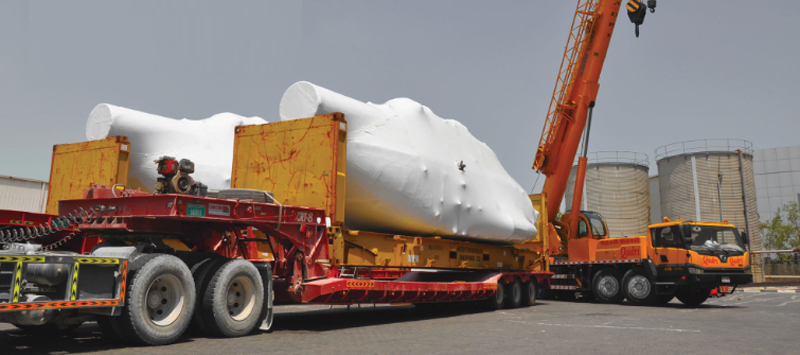
The operations commenced with the transportation of the two Mi-8 helicopter units from Dubai World Central Airport to the CSS CFS in Jebel Ali. The cargo units were offloaded using a 50-ton crane and then heat shrink wrapped to ensure damage-free transportation across the oceans to their final destination. Flexible and durable, heat shrink wrapping ensures that the cargo is completely weatherproof and tamperproof, regardless of its size. The helicopters were loaded onto 40’ Flatrack units and then dispatched to Jebel Ali Port after securely loading and lashing them onto the specialized air suspension low bed trucks.

One often thinks that helicopters are flown from the point of origin to their destination. However, it is more likely that helicopters are shipped either by sea or air freight. Flying the helicopters to their destination proves to be much more expensive than shipping them as you need multiple fuel stops.

CSS Capability in handling Complex Cargo

Helicopter shipments require specialists to attend to their loading and offloading and are carefully monitored every step of the way. The helicopters also require secure and proper packing. They need to be loaded under deck, or else the ocean spray can be very corrosive to this type of cargo on long transatlantic voyages, which is where the shrinkwrapping comes into play.

With its impeccable track record of carrying out the logistical requirements of several large and complex cargoes, CSS was brought on board to play the critical touchpoint in the UAE to enable the safe transit of the helicopters to Colombia. Through meticulous planning and teamwork, CSS’s operations team supervised by Suresh S and Don Raveendran made this move a successful mission.

CISCO WORKING ON 14 DIGITISING PROJECTS ACROSS SEVEN INDIAN PORTS

Cisco, the USA-based hi-tech company, has partnered with some of the largest Indian seaports and inland waterways to usher in an era of transformation by digitizing their processes.

The ports and waterways authorities that have come on board in this digitation drive include Visakhapatnam, Deendayal, Kolkata Port, and IWAI (Inland Waterways Authority of India).

Cisco has been working on 14 projects across seven ports in India, of which three projects have been completed, and 11 are in various stages.

Maritime Vision 2030

The partnership has been rolled out to enable India’s Maritime Vision 2030, which focuses on boosting the productivity and performance of the nation’s maritime sector over the next ten years.

The Indian Prime Minister, Mr. Narendra Modi, unveiled the Maritime India Vision (MIV) 2030 in March 2021 while inaugurating the three-day Maritime India Summit 2021, which had participants from 24 countries all over the world. A 10-year blueprint, the Maritime India Vision-2030, is drawn out to overhaul the Indian maritime sector. With a plan for Rs 3 lakh crore investment in the port project, the plan envisages generating employment for 20 lakh people.

“Shipping and Waterway, it also promises to unlock annual revenue potential for major ports worth over Rs 20,000 crore,” according to the Ministry of Ports, Shipping and Waterway

Digitization – Four Key Focus Areas

Digitizing Indian ports and waterways can help reduce overall logistics cost while enhancing its competitiveness to transform it into a global manufacturing powerhouse

Cisco’s initiative to digitize ports and waterways is centered on four focus areas.

1.Improve turnaround time: Cutting down on turnaround is the first primary positive outcome. This will directly impact the capacity and revenue of the ports and inland water authorities.

2.Prevent the loss of revenue and equipment: Digitization enables real-time equipment monitoring, which helps in preventing loss of revenue and equipment failure.

3.Improve efficiency: Cisco also plans to help improve efficiency through energy management and analytics.

4.Employee safety and communications: Cisco is also increasing employee safety and communications through a multi-channel communication and collaborative platform.

Some of India’s largest ports are positioned to improve turnover times, prevent loss of revenue and equipment failures through real-time monitoring, increase efficiency through energy management, logistics, and improving employee communications and safety.

Dave West, president for the Asia Pacific, Japan, and Greater China (APJC) at Cisco, said, “India has a goal to be a manufacturing powerhouse. To get there, they need efficient logistics.

Cisco’s strategic partnership will help India move closer to becoming a $5 trillion economy by 2025. Even though the COVID crisis has affected the economy of the land, it has spurred a rethinking of what the future is likely to be. Dave West added, “Cisco will continue to play our part to help our customers leapfrog in this region.”

Source: www.itln.in, www.economictimes.indiatimes.com

THE INDIAN RAILWAYS DELIVER 150 TONNES OF OXYGEN IN 24 HOURS

Severe Shortage of Medical Oxygen

A severe shortage of medical oxygen was experienced by hospitals in the Indian states that were severely hit by the second wave of the COVID-19 pandemic. It also led to the loss of several precious lives. India has a sufficient supply of medical oxygen however, the unavailability of containers and tankers was the culprit behind the severe scarcity.

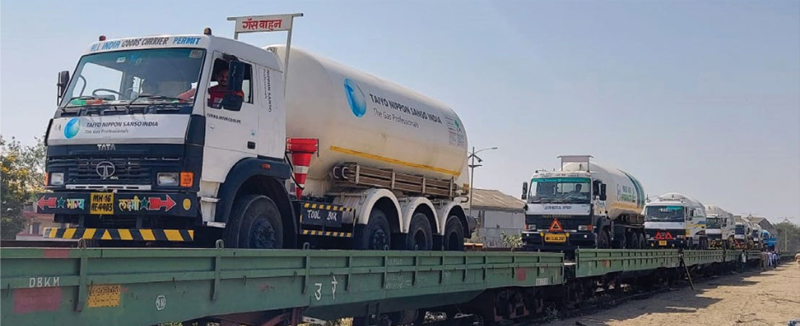
Within 24 hours, the oxygen Expresses of Indian Railways transported Liquid Medical Oxygen (LMO) tankers with over 150 tonnes of oxygen across the country amidst the severe shortage of medical oxygen in different parts of India. A total of 10 containers having nearly 150 tonnes of oxygen have been carried so far,” said the official press release by the Ministry of Railways.

The Oxygen Express by the Indian Railways

Railways ran the first oxygen express from Kalamboli in Maharashtra to Vizag in Andhra Pradesh and then back to Nasik in Maharashtra. With a distance of more than 1850 km between Kalamboli and Vizag, the railways were able to move the oxygen tankers within 50 hours.

To enable the smooth movement of oxygen supply, Indian Railways created ramps at stipulated places so that the liquid medical oxygen tankers could be moved easily. Seven tankers with more than 100 tonnes LMO were loaded in 10 hours and transported back to Nagpur within a short span of 21 hours.

“For the movement of Ro-Ro service, Railways had to map the entire route considering the various constraints like ghat sections, the road over bridges, tunnels, curves, platform canopies, overhead equipment, etc. at certain locations. Because height is an important aspect of this movement, Railways mapped the route via Vasai. The model of road tanker T1618 with a height of 3320 mm was found feasible to be placed on flat wagons. The longer route via Vasai was charted as Over Dimensional Cargo (ODC) is not permitted to travel in ghat sections over Mumbai division,” explained the official release by the Railway Ministry.

Severely affected states like Andhra Pradesh and Delhi had requested the Railways to operate more Oxygen Express trains. Liquid Medical Oxygen is filled in tankers at Visakhapatnam and Bokaro were transported through the Ro-Ro service of Indian Railways.

Indian Government Moves into Action

The Indian Prime Minister, Narendra Modi, chaired a high-level meeting to review steps taken to boost oxygen availability across the country. PM Modi emphasized the need for all ministries and departments to work in tandem to ensure the seamless supply of critical oxygen and medical supplies.

The Ministry of Finance announced, “The government of India has taken many measures in the last few days to improve the supply of oxygen and medical supplies. IAF planes are bringing in cryogenic oxygen tanks from Singapore. IAF is also transporting oxygen tanks in the country to reduce travel times.”

Green Corridor

As the Indian state of Uttar Pradesh also had a dire need to fulfill the requirements of medical oxygen in Uttar Pradesh, a green corridor was created between Lucknow to Varanasi for the movement of the train. The distance of 270 kilometers was covered by the train in 4 hours 20 minutes with an average speed of 62.35 km per hour.

Oxygen being cryogenic and hazardous, Indian Railways had to be extra cautious while transporting this vital lifesaving commodity. It is critical to avoid sudden acceleration or deceleration. To make sure that the movement happens without any incidents, the pressure had to be monitored at regular intervals, especially when the containers were filled and loaded.

Having taken it up as a challenge to be met during this dark hour in modern Indian history, the Indian Railway made meticulous preparations. For this purpose, the entire route was mapped, people were trained to transport the special tankers to the route that traversed through Vizag, Vasai, Nagpur, Bhusaval, and Surat.

The movement of oxygen over long distances is much better through trains as it can move much faster than road transport. While it can take up to three days by road, transportation through rail takes just two days. The time difference is because trains can run nonstop through the day and night while truck drivers need to take halts for rest and refreshment along the route.

Source: www.itIn.in

BLOCKCHAIN-ENABLED PRECIOUS METALS REFINERY AT DMCC, DUBAI

DMCC has announced signing a sale and purchase agreement (SPA) with REIT Development to establish the largest precious metals refinery and storage facility across the GCC. This refinery will be the first to be entirely enabled by blockchain in the GCC.

As part of the agreement, REIT Development has acquired industrial land strategically located in DMCC’s Jumeirah Lakes Towers (JLT) vibrant business district. The facility will refine and store precious metals, including gold, silver, platinum, palladium, and rhodium, which will be tokenized on goldexchange.com.

DMCC- the world’s flagship Free Zone

DMCC (Dubai Multi Commodities Centre) was established in 2002 by the Government of Dubai to provide the physical, market, and financial infrastructure required to establish a hub for global commodities trade. DMCC Free Zone is the largest Free Zone in the UAE, with more than 18,000 registered members as of 2021.

In 2018, DMCC was named the number one global free zone for a fourth consecutive year by the Financial Times.

DMCC is made for trade and has established Dubai as a leading center for trading international commodities. DMCC is also the world’s fastest-growing Free Zone. Promoting and facilitating trade across various goods from gold, diamonds, and precious metals to tea, food, and industrial materials, the DMCC is home to major multinationals and start-ups.

Gold Exchange DMCC

Gold Exchange DMCC is a secured trading platform. This platform will provide access to financial assets in stablecoins namely GoldCoin, SilverCoin, PlatinumCoin, PalladiumCoin, and RhodiumCoin.

Each Ethereum-based token will represent the current value of one gram of each metal and can be traded on the exchange. The tokens will be physically backed by the precious metals at DMCC’s secure storage facility, meaning they can be traded with confidence.

Ahmed Bin Sulayem, Executive Chairman and Chief Executive Officer, DMCC, said: “The gold and precious metals industry is at a tipping point, but without a doubt, there are boundless opportunities that lie beneath the uncertainty of a post-pandemic world.

He further emphasized, “The gold and precious metals industry is expected to witness significant growth in the coming period, and through similar agreements, we can advance the industry as a whole.”

Enabling Blockchain Technologies in Dubai

With the inking of this agreement with REIT Development, DMCC will continue to play a crucial role in pinpointing the UAE on the world map as a leader in the precious metals industry. Deployment of cutting-edge technology such as blockchain is the added advantage to the quotient.

In February 2021, Ahmed Bin Sulayem, the Executive Chairman of DMCC, and Jumeirah Lakes Tower joined the advisory board of the Swiss Government-supported blockchain investment company CV VC following an earlier agreement between DMCC and CV VC and CV Labs.

This partnership will bring a leading blockchain and cryptographic technologies ecosystem to Dubai.

First-of-its-kind facility by REIT Development

REIT Development is one of the leading organizations that is specialized in precious metals and blockchain technologies. This agreement is the first of its kind and will be completed in the last quarter of 2022. This new facility will strengthen DMCC’s position as a global hub for precious metals and a leader in technological advancements.

Mike De Vries, Chief Operation Officer, REIT Development, said: “Blockchain technology can enable more transparent and accurate tracking of precious metals, ensuring there is no ‘dirty gold’ in circulation and illicit trades.”

The 100,000 sqft precious metals refinery and storage will create a decentralized, immutable record of all transactions, making it possible to track all precious metals refined in our refinery and eventually sold internationally to over 150 countries. Customers who buy the products or use the storage can verify all the information in the blockchain.

This will set a precedent for metals trading of the future as blockchain will be the norm of the future. By the year 2025, it is predicted that every precious metals refinery and storage facility will be on a blockchain.

Paul Ashton, Executive Director – Property, DMCC, said: “The appeal of Dubai as a prime destination, combined with our world-class market infrastructure, state-of-the-art facilities, business-friendly environment and unparalleled investments in digital solutions, provide the ideal proposition for any business looking to grow and set operations in the region.”

Source: www.transportandlogisticsme.com, www.dmcc.ae

DEATH AND RESIGNATION

Rahat Talreja
Vice President – CSS India Operations

Yes, the topic is strange. At least the way it has been related. But do you know that resigning from a company has the same effect as a person’s death? Let’s evaluate.

Qualities of Death :

a) The person who dies suddenly becomes much greater than he was in real life. Or considered much worse than he was. Look around, and you will see the most prominent names in politics are either shown as super great or super useless, depending on which party the living person belongs.

b) Death brings along with it a sense of guilt to the living. Therefore they overcompensate by glorifying the deceased and crucifying those alive, almost to the extent of blaming them for the deceased’s problems and sometimes even calling them the reason for his death. A famous actor of Bollywood, who died last year, is experiencing this currently. None of his movies did as well, and suddenly once he passed away, supporters emerged from all holes, enough that if today he were alive, he would be bigger than any superstar, but when alive, he wasn’t even a fraction of the greatness by the same fans.

c) Victim mentality plays out within those living, and they start blaming the living powerful for their sorrows and empathizing with the dead. A man was always unhappy with his life and kept saying it’s better to die than to live like this. Then god heard him, and he died finally. But the moment he died, he started cribbing about the life of the dead. Roaming here and there over morgues, walking through doors without feeling them, being invisible to all living beings except their brethren and dogs ( who can see ghosts) So then god got confused and again gave them a rebirth. Since they came with so much misery, they already had health issues the moment they were born and caused great stress to their family from birth itself and again started cribbing about life and its better to be dead, so their cycle continued.

d) Those who die always have reasons like coronavirus, heart attack, grief, stress, cancer, etc, but that is what they focus on. What they forget are the several years they even lived. Death was just one moment, the rest of it was life. The focus suddenly is on the reasons for death. Till you were alive, god was great. When you die, god was mean.

Now let’s see the similar qualities when you resign or leave a company. You can compare with similar points above example a-a, b-b and can relate:

a) The person who resigns suddenly becomes greater than he was or considered worse than he was. The discussion revolves around how good he was by the naysayers within and how bad he was by the bootlickers within. The reality is that they existed with their good and bad when they worked for the company, and once they leave, the discussion is polarised, but the person isn’t. So futile to discuss.

b) After you resign, you have a sense of guilt, so you overcompensate it by glorifying the new company you join and crucifying the company you left. I once heard on youtube from the great investor Mr. Samir Arora of Helios Capital that: Warren Buffet decided to buy a company after reading 50 balance sheets over 50 years. This was regarded as a high conviction by all. But if it was a high conviction, why didn’t he buy it in the 49th year then. Why did he wait to read the 50th and only then buy? It is a case of no conviction since the rejection was 49 times. Similarly, if the new company you join is so great and the old one was bad, then why did you work for the old one for all these years?

c) A similar victim mentality plays out within the ones who are still working, who also are fed with the exiting employee’s negative pointers and their own anti-incumbency, and they start blaming in their hearts or private gossip- the management or boss for their grave sorrows and how they are enduring it with great pain. These people are similar to the dead than born, then dead, then born again type of livers.

d) Those who resign have several reasons like no growth, curtailment of their power pursuits, feeling worthless, primarily to hide their shortcomings and lack of sincere effort. So till they work and aren’t questioned, the boss is god. And when they are asked a little if they go astray, the boss is the devil.

So, friends, I hope you can read the overt and covert meaning of this article and walk on the path of true wisdom to reach a stage of neutrality where zero and infinity are the same, and you keep doing what’s required to be done without overthinking. Great leaders always follow this path!


UZBEKISTAN: A COUNTRY THAT IS RIPE WITH BUSINESS OPPORTUNITIES

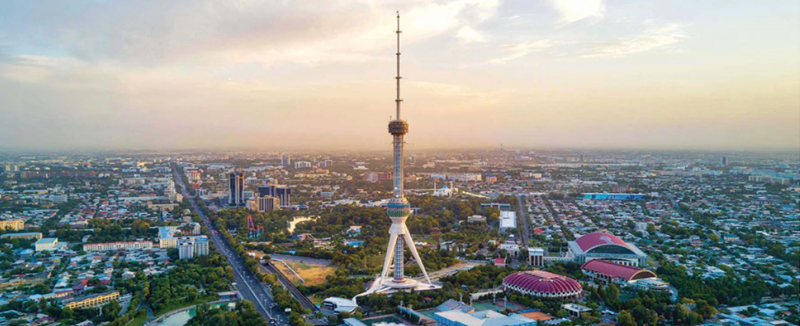
The Republic of Uzbekistan has been opening up to the world in recent years. Uzbekistan has strengthened its relationships with foreign partners in trade, investment, innovation, green energy, tourism, and other fields on the path of dynamic economic development. Noted as the largest consumer market in Central Asia, Uzbekistan is on the way to accelerated growth.

Following the President of Uzbekistan Shavkat Mirziyoyev to the UAE in 2019, UAE has become an important trading partner of Uzbekistan. Both the countries signed a joint statement including inter-governmental, inter-departmental documents, and investment agreements to implement 11 collaborative projects.

Food Exports

The largest share of the Dubai-Uzbekistan non-oil market comprises the food market that involves the production and export of apricots, carrots, cherries, etc. In 2020, the figures showed a steady rise of AED.1.42 billion of food exports, pointing to Uzbekistan as a leader in this position. The country is also developing its logistics and transport corridors to supply Uzbek fresh, and processed fruit and vegetable produce.

The average annual growth rate of agriculture, forestry, and fishery production for 2016 to 2020 showed an increase of 2.6 percent, with 7.2 percent coming in from the agricultural sector alone. This resulted from the structural reforms and implementation of measures that helped support sustainable development and modernization of the agricultural sector.

The UAE company that strongly supports this venture is Abu Dhabi based Sura Holding. Sura Holding has invested in projects designed to modernize the agricultural scene in Uzbekistan. Several other UAE-based companies have invested in agricultural projects across Uzbekistan.

The Energy Sector

The high potential market segment that UAE has invested in Uzbekistan is energy. UAE’s investments in energy projects reflect a growing interest and confidence in the energy market.

During the Uzbekistan President’s visit to the UAE in March 2019, UAE agreed to develop a 500-Megawatt wind farm project in Uzbekistan. This project was set to be developed by Masdar. Later in April 2021, the 500-megawatt project increased its capacity to 1.5-gigawatts.

In December 2020, Masdar completed its financial closure of the first PPP project, the Nur Navoi Solar Project. In recent news, the Dubai-based Phanes Group has inked a power purchase agreement and Investment agreement for a 200 MW grid connector solar PV plant in Uzbekistan that includes technical and commercial terms for building owning and operating a 200MWAC solar PV project including facilities connecting to Khimiya 220/110 kV substation.

Frontiers for Tourism

Uzbekistan has developed the regulatory framework for modernizing and expanding its tourism industry. Some of the plans laid down include introducing halal certification, training of halal tourism guides, and construction of halal hotels.

With the implementation of visa-free tourism in 2018 for Indonesia, Malaysia, and Turkey, tourists can come over to visit the Muslim shrines of the country without any hassles.

In 2019, the visa-free allowance was extended to UAE citizens and residents, which will positively facilitate business and tourism exchange between the two countries in the post-COVID years to come.

Retail Opportunities

Interestingly, UAE’s retail giant, the Majid Al Futtaim (MAF) Group, has already established its footing in Uzbekistan by opening several Carrefour supermarkets in Tashkent. The entry of the region’s leading mall operator highlights the retail sector’s potential in the country for UAE companies.

This move is an indication that the retail market in Uzbekistan is ready to be tapped. UAE-based retail companies can maximize the opportunities and play a crucial role in developing modern retail in the country and creating value for the industry and the Uzbek economy.

UAE-Uzbekistan – A Win-Win Partnership

The Expo 2020 in Dubai is ideal for Uzbekistan’s economic potential as Uzbek companies leverage the platform provided to market the Uzbek potential to a world audience.

The country’s embassy in the UAE will continue to work closely with public and private sector stakeholders to ensure that bilateral relations continue developing and flourishing. The Government-led reforms have brought positive changes to the nation’s business landscape, with the retail sector seeing growth from foreign investors and multi-national companies.

Source: www.transportandlogisticsme.com

IS DEMURRAGE AN EXCLUSIVE REMEDY FOR THE SHIP-OWNERS IN THE EVENT OF DETENTION?

cssSitting in the Commercial Court division of the High Court of England & Wales, Andrew Baker J aptly stated, “From time to time, a case provides the opportunity to resolve a long-standing uncertainty on the point of law of significance in a particular field of commerce.” The Eternal Bliss is certainly such a case.

In the case of K Line Pte Ltd v Priminds Shipping (HK) Co Ltd – The Eternal Bliss, where the ship (Owned/operated by K Line) on voyage charter under (Priminds Shipping) was delayed at the discharge port in China for 31 days due to alleged congestion or possibly lack of storage space ashore for the cargo of soybeans, due to which, the condition of the cargo deteriorated.

K-Line settled the receivers’ and their insurers’ claims at a total cost of about U$1.1 million and commenced proceedings against Priminds (Charterers) seeking indemnity in respect of that cost and for failure to discharge the subject cargo at the rate (within contractual laytime).

It is well-established that demurrage is by nature liquidated damages for failing to discharge at the required rate, but in that respect what does demurrage, calculated in accordance with the voyage charter, fix or limit the owner’s recovery?

In Reidar v Arcos1 and Suisse Atlantique2, it was held that, if damages in addition to demurrage are to be recovered, it is necessary to show a breach of a separate obligation as well as damage of a different kind from delay in the completion of the loading and discharging operation. However, Andrew Baker J held that it is unnecessary to prove a separate breach to recover damages in addition to the detention of the ship, i.e. demurrage and quoted “Agreeing a demurrage rate gives an agreed quantification of the owner’s loss of use of the ship to earn freight by further employment in respect of delay to the ship after the expiry of laytime, nothing more. Where such delay occurs, the demurrage rate provides an agreed measure by which the parties are bound for the owner’s claim for damages for detention, but it does not seek to measure or therefore touch any claim for different kinds of loss [emphasis added], whatever the basis for any such claim.”

The judgment by Andrew Baker J contains a forensic analysis of the cases and legal commentary on the issue, and in summary, held that “demurrage is not and/ or should not be the exclusive compensation where failure to load within the contractual laytime has consequences other than the detention of the ship,” and therefore, where a ship-owner has suffered a different type of loss arising from a failure to load or discharge the vessel within laytime (such as cargo claim liabilities) there should be no need for the owner to establish a separate and independent breach of contract to recover damages in addition to demurrage.

The decision has brought some delight to vessel owners, but it has yet to be determined since the Charterers have been granted permission to appeal to the Court of Appeal.


UAE ALLOWS FOREIGNERS TO HAVE 100% OWNERSHIP OF BUSINESS

From June 1st, 2021, people from other countries are allowed 100% business ownership of companies. Earlier, to start a company, expats had to have an Emirati shareholder or an agent. 

 The previous foreign investment law in 2018 permitted foreigners to own 100% of certain businesses outside of the free zones. With the new law being implemented in June, expats can now own businesses across the UAE and are not limited to the free zones.

The Minister of Economy-Abdulla bin Touq Al Marri said, “The amended Commercial Companies Law aims at boosting the country’s competitive edge and is a part of UAE government efforts to facilitate doing business.”

The amendment to the law was proposed in the year 2020 and the government of UAE has decided to bring it into effect from the month of June in 2021. 

This move will be a boost in the arm for the economy of the region and will improve the prospects of the region’s trade and industry.

Source: www.transportandlogisticsme.com

Page1 … Page5

CSS Newsletter

In this issue:

Quick Links

  • Home
  • About
  • Services
  • News Media
  • Careers
  • Contact us
  • Corporate Brochure
  • CSS Corporate PPT
  • Lighthouse
  • News Hub
  • Privacy Policy
  • Cookie Policy
  • Disclaimer
  • T&C’s

Locations

  • Dubai
  • Abu Dhabi
  • Sharjah
  • Ras Al Khaimah
  • Bahrain
  • Oman
  • Qatar
  • Saudi Arabia
  • Kuwait
  • Kenya
  • Turkey
  • India

Subscribe to our bi-monthly newsletter, Lighthouse

  • Follow Us
© 2026 CSS Group. All rights reserved. Crafted with by Netventure