Skip to content

Lighthouse

Bi-monthly publication of CSS Group

Lighthouse
  • Call +971 4 883 1303
  • Mail info@cssdubai.com
  • Menu
    • Home
    • About
    • Services
      • Global Freight forwarding
      • Ocean Freight Management
      • Supply Chain Management
      • Land Transportation Management
      • Industrial Packing, Crating & Lashing
      • Air Freight Management
      • Projects Oil & Energy
      • Exhibition Event Logistics
      • Automobile Logistics
      • Art Logistics
      • Non Vessel Operating Common Carrier (NVOCC)
      • Hospitality & Hotel Logistics
      • Multi-modal Operations
      • Container Freight Station (CFS)
      • Yacht & Marine Logistics
      • E-commerce Fulfillment
    • Locations
      • Dubai
      • Abu Dhabi
      • Sharjah
      • Ras Al Khaimah
      • Bahrain
      • Oman
      • Qatar
      • Saudi Arabia
      • India
      • Sri Lanka
    • Careers
    • Track & Trace
    • Login
      • Customer / Agent
      • Employee – Portal
      • Employee – Dashboard
      • CSS India Login
    • More+
      • Lighthouse
      • Sailing Schedule
      • News Hub
      • Feedback
    • Contact Us
  • Login
    • Customer / Agent
    • Employee – Portal
    • Employee – Dashboard
    • CSS India Login
  • TRACK & TRACE
  • LIGHTHOUSE
Lighthouse
  • Call +971 4 883 1303
  • Mail info@cssdubai.com
  • Menu
    • Home
    • About
    • Services
      • Global Freight forwarding
      • Ocean Freight Management
      • Supply Chain Management
      • Land Transportation Management
      • Industrial Packing, Crating & Lashing
      • Air Freight Management
      • Projects Oil & Energy
      • Exhibition Event Logistics
      • Automobile Logistics
      • Art Logistics
      • Non Vessel Operating Common Carrier (NVOCC)
      • Hospitality & Hotel Logistics
      • Multi-modal Operations
      • Container Freight Station (CFS)
      • Yacht & Marine Logistics
      • E-commerce Fulfillment
    • Locations
      • Dubai
      • Abu Dhabi
      • Sharjah
      • Ras Al Khaimah
      • Bahrain
      • Oman
      • Qatar
      • Saudi Arabia
      • India
      • Sri Lanka
    • Careers
    • Track & Trace
    • Login
      • Customer / Agent
      • Employee – Portal
      • Employee – Dashboard
      • CSS India Login
    • More+
      • Lighthouse
      • Sailing Schedule
      • News Hub
      • Feedback
    • Contact Us
  • Login
    • Customer / Agent
    • Employee – Portal
    • Employee – Dashboard
    • CSS India Login
  • TRACK & TRACE
  • LIGHTHOUSE

CHAIRMAN’S MESSAGE

The ferociously lethal second wave of the COVID-19 pandemic had India gasping for breath. As India became ground zero of the global pandemic, the medical system in India was trying its best to cope with an acute oxygen crisis. The graph of daily infections that began soaring by late March breached global records on April 26th 2021, crossing more than 350,000 positive cases.

Narendra Modi, the Prime Minister of India, in his address to the nation on June 8th 2021, stated, “Never in a-100 years has there been such a pandemic, and this saw an unprecedented demand for medical oxygen across the country.”

Across India, tens of thousands of critically ill patients had their lungs damaged by the virulent strain of the SARS-CoV2 virus. As they were rushed into hospitals, the demand for medical oxygen spiked ten times from the norm. The deluge of new cases caused hospitals across the nation to post frantic alarms in the face of perilously dipping levels of life-sustaining oxygen supply.

The breath of life-saving air, which we take ever so granted, became the most precious commodity.

The international community was quick to respond to India’s time of need. The United Arab Emirates assured a steady supply of liquid medical oxygen as India was battling this deadly second wave. In a special gesture of solidarity, the iconic Burj Khalifa was lit up in the Indian tricolor and a message to “Stay Strong India.”

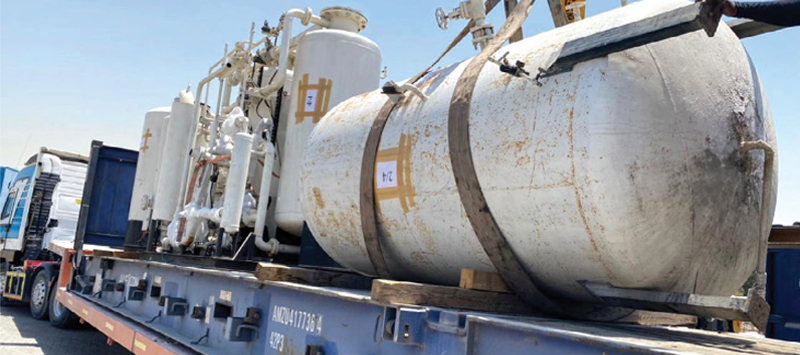
The CSS family feels extremely proud and considers it an honor and privilege to extend our hand of help to the nation of India in her time of dire need. CSS Kingston was instrumental in the movement of oxygen tanks and oxygen processing units from Sharjah to Mumbai. Our technical prowess and deep knowledge of critical and time-bound shipments ensured that the movement was handled seamlessly.

I want to conclude with this saying by the American footballer, Doug Baldwin.

“The greatest tragedy for any human being is going through their entire lives believing the only perspective that matters is their own.”  

The way you see the world is just the way you see the world. It defines only your truth. If you only keep looking through your lens, with time, your vision will get blurred.

Isn’t it time we borrowed the other person’s glasses?

You don’t need to agree with them. Dear CSS family, let’s try to understand our neighbor’s perspective on seeing the world. That’s how we rise to a level that’s higher than where we are.

Let’s stay connected with each other, and we can conquer the challenges that lay ahead.

WASH PLEDGE

We, Consolidated Shipping Services are proud to be a WASH Pledge signatory and commit to implementing access to safe Water, Sanitation and Hygiene (WASH) for all our employees in all of our premises. Under the pledge, we also commit to addressing WASH across our value chain, including amongst our suppliers, as well as in the communities that surround our workplaces and/or where our employees live.

Access to WASH is a fundamental human right and key to realizing the UN Sustainable Development Goals. Today, over 785 million people are still without access to safe drinking water and estimate 4.2 billion lack access to safely managed sanitation services. The WASH Pledge is an initiative created by the WBCSD (World Business Council for Sustainable Development), to engage companies to contribute to the implementation of the UN’s Sustainable Development Goal No 6 (for all people to have access to safe water and sanitation by 2030).

“As businesses, we can lead the way to significantly increase the number of people to have access to safe, affordable and sustainable drinking water, sanitation and hygiene. We call on all businesses and stakeholders to join this commitment to address one of the most pressing public health challenges of our time. We look forward to promoting social, environmental and economic well-being through our commitment to the WASH Pledge.

We would like to thank our client Xylem and WBCSD (World Business Council for Sustainable Development) for inviting us to be a part of this and hope to encourage others to participate as well. Water is our most valuable commodity on this planet and being responsible for this precious commodity is high on our priority list.” commented Anitha – GM CHR Networks & Special Projects.

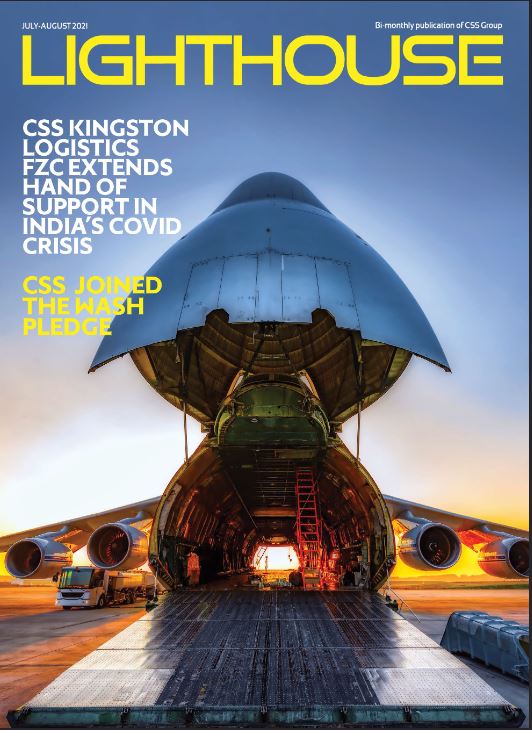
CSS KINGSTON LOGISTICS FZC EXTENDS HAND OF SUPPORT IN INDIA’S COVID CRISIS

India is still reeling under the devastating second wave of the COVID-19 pandemic. Despite the prediction of a second wave, India surely could not fathom this level of impact. Within days, the counts reached staggering proportions, and India’s daily count of COVID-positive patients overtook even that of Brazil and the USA.

The healthcare system in the metro cities of the country was stretched beyond their capacity. With an increasing number of COVID patients requiring oxygen and ventilator support, there was a dire need for medical oxygen supply. In the initial days, several hospitals raised SOS alarms on social media for oxygen supply.

The crisis has prompted an outpouring of international support, offering to supply drugs, equipment, and oxygen to the country. The UAE was one of the first countries to provide unstinted support in India’s time of need.

CSS KINGSTON LOGISTICS FZC acts as the helping hands

CSS KINGSTON LOGISTICS FZC acted as the helping handing to reach out to the nation of India in this dire situation. With our capability and hands-on experience in time-bound shipments, CSS KINGSTON LOGISTICS FZC could step in and ensure that the critical shipment happened without any glitches or roadblocks. With the scope to arrange cargo from door to port using the low hydraulic bed, the requirement was to ship from Sharjah to Mumbai. Three oxygen tanks and one processing unit were part of the consignment.

Mr. Firosh, Senior Sales Executive at CSS Kingston echoed the sentiments of the CSS Family as a whole, “Team CSS KINGSTON LOGISTICS FZC feels extremely proud that we could be part of the UAE’s compassionate response to the second wave of the pandemic in India.”

CSS PROVIDES LOGISTICAL SUPPORT IN THE RETURN OF HELICOPTERS TO COLOMBIA

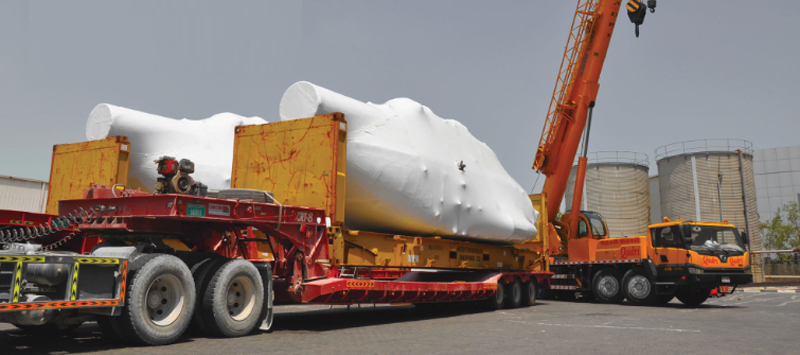
On the 9th of June 2021, CSS played a vital role that facilitated the movement of Mi-8 helicopters from Jebel Ali Port in Dubai, UAE, to the Republic of Colombia.

Specialized Care for Special Shipments

The operations commenced with the transportation of the two Mi-8 helicopter units from Dubai World Central Airport to the CSS CFS in Jebel Ali. The cargo units were offloaded using a 50-ton crane and then heat shrink wrapped to ensure damage-free transportation across the oceans to their final destination. Flexible and durable, heat shrink wrapping ensures that the cargo is completely weatherproof and tamperproof, regardless of its size. The helicopters were loaded onto 40’ Flatrack units and then dispatched to Jebel Ali Port after securely loading and lashing them onto the specialized air suspension low bed trucks.

One often thinks that helicopters are flown from the point of origin to their destination. However, it is more likely that helicopters are shipped either by sea or air freight. Flying the helicopters to their destination proves to be much more expensive than shipping them as you need multiple fuel stops.

CSS Capability in handling Complex Cargo

Helicopter shipments require specialists to attend to their loading and offloading and are carefully monitored every step of the way. The helicopters also require secure and proper packing. They need to be loaded under deck, or else the ocean spray can be very corrosive to this type of cargo on long transatlantic voyages, which is where the shrinkwrapping comes into play.

With its impeccable track record of carrying out the logistical requirements of several large and complex cargoes, CSS was brought on board to play the critical touchpoint in the UAE to enable the safe transit of the helicopters to Colombia. Through meticulous planning and teamwork, CSS’s operations team supervised by Suresh S and Don Raveendran made this move a successful mission.

CISCO WORKING ON 14 DIGITISING PROJECTS ACROSS SEVEN INDIAN PORTS

Cisco, the USA-based hi-tech company, has partnered with some of the largest Indian seaports and inland waterways to usher in an era of transformation by digitizing their processes.

The ports and waterways authorities that have come on board in this digitation drive include Visakhapatnam, Deendayal, Kolkata Port, and IWAI (Inland Waterways Authority of India).

Cisco has been working on 14 projects across seven ports in India, of which three projects have been completed, and 11 are in various stages.

Maritime Vision 2030

The partnership has been rolled out to enable India’s Maritime Vision 2030, which focuses on boosting the productivity and performance of the nation’s maritime sector over the next ten years.

The Indian Prime Minister, Mr. Narendra Modi, unveiled the Maritime India Vision (MIV) 2030 in March 2021 while inaugurating the three-day Maritime India Summit 2021, which had participants from 24 countries all over the world. A 10-year blueprint, the Maritime India Vision-2030, is drawn out to overhaul the Indian maritime sector. With a plan for Rs 3 lakh crore investment in the port project, the plan envisages generating employment for 20 lakh people.

“Shipping and Waterway, it also promises to unlock annual revenue potential for major ports worth over Rs 20,000 crore,” according to the Ministry of Ports, Shipping and Waterway

Digitization – Four Key Focus Areas

Digitizing Indian ports and waterways can help reduce overall logistics cost while enhancing its competitiveness to transform it into a global manufacturing powerhouse

Cisco’s initiative to digitize ports and waterways is centered on four focus areas.

1.Improve turnaround time: Cutting down on turnaround is the first primary positive outcome. This will directly impact the capacity and revenue of the ports and inland water authorities.

2.Prevent the loss of revenue and equipment: Digitization enables real-time equipment monitoring, which helps in preventing loss of revenue and equipment failure.

3.Improve efficiency: Cisco also plans to help improve efficiency through energy management and analytics.

4.Employee safety and communications: Cisco is also increasing employee safety and communications through a multi-channel communication and collaborative platform.

Some of India’s largest ports are positioned to improve turnover times, prevent loss of revenue and equipment failures through real-time monitoring, increase efficiency through energy management, logistics, and improving employee communications and safety.

Dave West, president for the Asia Pacific, Japan, and Greater China (APJC) at Cisco, said, “India has a goal to be a manufacturing powerhouse. To get there, they need efficient logistics.

Cisco’s strategic partnership will help India move closer to becoming a $5 trillion economy by 2025. Even though the COVID crisis has affected the economy of the land, it has spurred a rethinking of what the future is likely to be. Dave West added, “Cisco will continue to play our part to help our customers leapfrog in this region.”

Source: www.itln.in, www.economictimes.indiatimes.com

THE INDIAN RAILWAYS DELIVER 150 TONNES OF OXYGEN IN 24 HOURS

Severe Shortage of Medical Oxygen

A severe shortage of medical oxygen was experienced by hospitals in the Indian states that were severely hit by the second wave of the COVID-19 pandemic. It also led to the loss of several precious lives. India has a sufficient supply of medical oxygen however, the unavailability of containers and tankers was the culprit behind the severe scarcity.

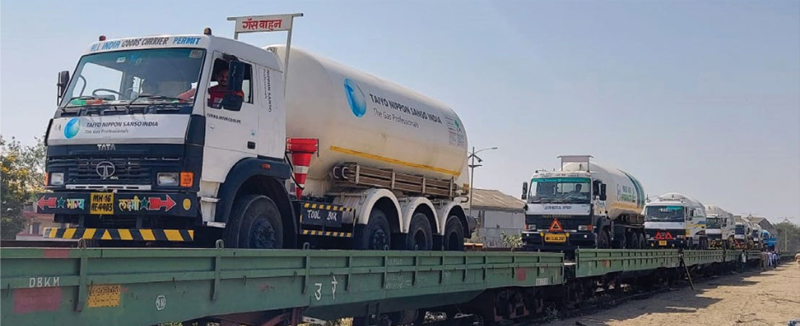
Within 24 hours, the oxygen Expresses of Indian Railways transported Liquid Medical Oxygen (LMO) tankers with over 150 tonnes of oxygen across the country amidst the severe shortage of medical oxygen in different parts of India. A total of 10 containers having nearly 150 tonnes of oxygen have been carried so far,” said the official press release by the Ministry of Railways.

The Oxygen Express by the Indian Railways

Railways ran the first oxygen express from Kalamboli in Maharashtra to Vizag in Andhra Pradesh and then back to Nasik in Maharashtra. With a distance of more than 1850 km between Kalamboli and Vizag, the railways were able to move the oxygen tankers within 50 hours.

To enable the smooth movement of oxygen supply, Indian Railways created ramps at stipulated places so that the liquid medical oxygen tankers could be moved easily. Seven tankers with more than 100 tonnes LMO were loaded in 10 hours and transported back to Nagpur within a short span of 21 hours.

“For the movement of Ro-Ro service, Railways had to map the entire route considering the various constraints like ghat sections, the road over bridges, tunnels, curves, platform canopies, overhead equipment, etc. at certain locations. Because height is an important aspect of this movement, Railways mapped the route via Vasai. The model of road tanker T1618 with a height of 3320 mm was found feasible to be placed on flat wagons. The longer route via Vasai was charted as Over Dimensional Cargo (ODC) is not permitted to travel in ghat sections over Mumbai division,” explained the official release by the Railway Ministry.

Severely affected states like Andhra Pradesh and Delhi had requested the Railways to operate more Oxygen Express trains. Liquid Medical Oxygen is filled in tankers at Visakhapatnam and Bokaro were transported through the Ro-Ro service of Indian Railways.

Indian Government Moves into Action

The Indian Prime Minister, Narendra Modi, chaired a high-level meeting to review steps taken to boost oxygen availability across the country. PM Modi emphasized the need for all ministries and departments to work in tandem to ensure the seamless supply of critical oxygen and medical supplies.

The Ministry of Finance announced, “The government of India has taken many measures in the last few days to improve the supply of oxygen and medical supplies. IAF planes are bringing in cryogenic oxygen tanks from Singapore. IAF is also transporting oxygen tanks in the country to reduce travel times.”

Green Corridor

As the Indian state of Uttar Pradesh also had a dire need to fulfill the requirements of medical oxygen in Uttar Pradesh, a green corridor was created between Lucknow to Varanasi for the movement of the train. The distance of 270 kilometers was covered by the train in 4 hours 20 minutes with an average speed of 62.35 km per hour.

Oxygen being cryogenic and hazardous, Indian Railways had to be extra cautious while transporting this vital lifesaving commodity. It is critical to avoid sudden acceleration or deceleration. To make sure that the movement happens without any incidents, the pressure had to be monitored at regular intervals, especially when the containers were filled and loaded.

Having taken it up as a challenge to be met during this dark hour in modern Indian history, the Indian Railway made meticulous preparations. For this purpose, the entire route was mapped, people were trained to transport the special tankers to the route that traversed through Vizag, Vasai, Nagpur, Bhusaval, and Surat.

The movement of oxygen over long distances is much better through trains as it can move much faster than road transport. While it can take up to three days by road, transportation through rail takes just two days. The time difference is because trains can run nonstop through the day and night while truck drivers need to take halts for rest and refreshment along the route.

Source: www.itIn.in

BLOCKCHAIN-ENABLED PRECIOUS METALS REFINERY AT DMCC, DUBAI

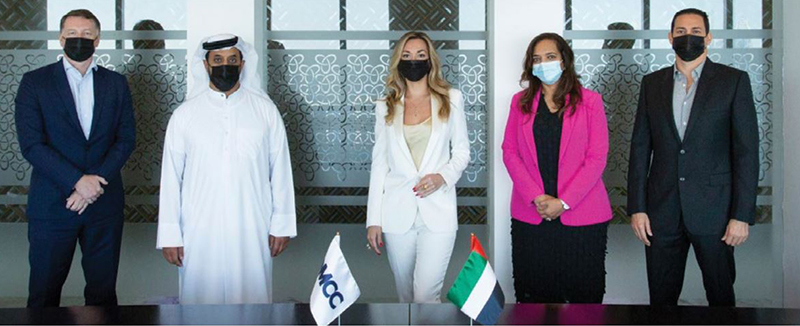
DMCC has announced signing a sale and purchase agreement (SPA) with REIT Development to establish the largest precious metals refinery and storage facility across the GCC. This refinery will be the first to be entirely enabled by blockchain in the GCC.

As part of the agreement, REIT Development has acquired industrial land strategically located in DMCC’s Jumeirah Lakes Towers (JLT) vibrant business district. The facility will refine and store precious metals, including gold, silver, platinum, palladium, and rhodium, which will be tokenized on goldexchange.com.

DMCC- the world’s flagship Free Zone

DMCC (Dubai Multi Commodities Centre) was established in 2002 by the Government of Dubai to provide the physical, market, and financial infrastructure required to establish a hub for global commodities trade. DMCC Free Zone is the largest Free Zone in the UAE, with more than 18,000 registered members as of 2021.

In 2018, DMCC was named the number one global free zone for a fourth consecutive year by the Financial Times.

DMCC is made for trade and has established Dubai as a leading center for trading international commodities. DMCC is also the world’s fastest-growing Free Zone. Promoting and facilitating trade across various goods from gold, diamonds, and precious metals to tea, food, and industrial materials, the DMCC is home to major multinationals and start-ups.

Gold Exchange DMCC

Gold Exchange DMCC is a secured trading platform. This platform will provide access to financial assets in stablecoins namely GoldCoin, SilverCoin, PlatinumCoin, PalladiumCoin, and RhodiumCoin.

Each Ethereum-based token will represent the current value of one gram of each metal and can be traded on the exchange. The tokens will be physically backed by the precious metals at DMCC’s secure storage facility, meaning they can be traded with confidence.

Ahmed Bin Sulayem, Executive Chairman and Chief Executive Officer, DMCC, said: “The gold and precious metals industry is at a tipping point, but without a doubt, there are boundless opportunities that lie beneath the uncertainty of a post-pandemic world.

He further emphasized, “The gold and precious metals industry is expected to witness significant growth in the coming period, and through similar agreements, we can advance the industry as a whole.”

Enabling Blockchain Technologies in Dubai

With the inking of this agreement with REIT Development, DMCC will continue to play a crucial role in pinpointing the UAE on the world map as a leader in the precious metals industry. Deployment of cutting-edge technology such as blockchain is the added advantage to the quotient.

In February 2021, Ahmed Bin Sulayem, the Executive Chairman of DMCC, and Jumeirah Lakes Tower joined the advisory board of the Swiss Government-supported blockchain investment company CV VC following an earlier agreement between DMCC and CV VC and CV Labs.

This partnership will bring a leading blockchain and cryptographic technologies ecosystem to Dubai.

First-of-its-kind facility by REIT Development

REIT Development is one of the leading organizations that is specialized in precious metals and blockchain technologies. This agreement is the first of its kind and will be completed in the last quarter of 2022. This new facility will strengthen DMCC’s position as a global hub for precious metals and a leader in technological advancements.

Mike De Vries, Chief Operation Officer, REIT Development, said: “Blockchain technology can enable more transparent and accurate tracking of precious metals, ensuring there is no ‘dirty gold’ in circulation and illicit trades.”

The 100,000 sqft precious metals refinery and storage will create a decentralized, immutable record of all transactions, making it possible to track all precious metals refined in our refinery and eventually sold internationally to over 150 countries. Customers who buy the products or use the storage can verify all the information in the blockchain.

This will set a precedent for metals trading of the future as blockchain will be the norm of the future. By the year 2025, it is predicted that every precious metals refinery and storage facility will be on a blockchain.

Paul Ashton, Executive Director – Property, DMCC, said: “The appeal of Dubai as a prime destination, combined with our world-class market infrastructure, state-of-the-art facilities, business-friendly environment and unparalleled investments in digital solutions, provide the ideal proposition for any business looking to grow and set operations in the region.”

Source: www.transportandlogisticsme.com, www.dmcc.ae

DEATH AND RESIGNATION

Rahat Talreja
Vice President – CSS India Operations

Yes, the topic is strange. At least the way it has been related. But do you know that resigning from a company has the same effect as a person’s death? Let’s evaluate.

Qualities of Death :

a) The person who dies suddenly becomes much greater than he was in real life. Or considered much worse than he was. Look around, and you will see the most prominent names in politics are either shown as super great or super useless, depending on which party the living person belongs.

b) Death brings along with it a sense of guilt to the living. Therefore they overcompensate by glorifying the deceased and crucifying those alive, almost to the extent of blaming them for the deceased’s problems and sometimes even calling them the reason for his death. A famous actor of Bollywood, who died last year, is experiencing this currently. None of his movies did as well, and suddenly once he passed away, supporters emerged from all holes, enough that if today he were alive, he would be bigger than any superstar, but when alive, he wasn’t even a fraction of the greatness by the same fans.

c) Victim mentality plays out within those living, and they start blaming the living powerful for their sorrows and empathizing with the dead. A man was always unhappy with his life and kept saying it’s better to die than to live like this. Then god heard him, and he died finally. But the moment he died, he started cribbing about the life of the dead. Roaming here and there over morgues, walking through doors without feeling them, being invisible to all living beings except their brethren and dogs ( who can see ghosts) So then god got confused and again gave them a rebirth. Since they came with so much misery, they already had health issues the moment they were born and caused great stress to their family from birth itself and again started cribbing about life and its better to be dead, so their cycle continued.

d) Those who die always have reasons like coronavirus, heart attack, grief, stress, cancer, etc, but that is what they focus on. What they forget are the several years they even lived. Death was just one moment, the rest of it was life. The focus suddenly is on the reasons for death. Till you were alive, god was great. When you die, god was mean.

Now let’s see the similar qualities when you resign or leave a company. You can compare with similar points above example a-a, b-b and can relate:

a) The person who resigns suddenly becomes greater than he was or considered worse than he was. The discussion revolves around how good he was by the naysayers within and how bad he was by the bootlickers within. The reality is that they existed with their good and bad when they worked for the company, and once they leave, the discussion is polarised, but the person isn’t. So futile to discuss.

b) After you resign, you have a sense of guilt, so you overcompensate it by glorifying the new company you join and crucifying the company you left. I once heard on youtube from the great investor Mr. Samir Arora of Helios Capital that: Warren Buffet decided to buy a company after reading 50 balance sheets over 50 years. This was regarded as a high conviction by all. But if it was a high conviction, why didn’t he buy it in the 49th year then. Why did he wait to read the 50th and only then buy? It is a case of no conviction since the rejection was 49 times. Similarly, if the new company you join is so great and the old one was bad, then why did you work for the old one for all these years?

c) A similar victim mentality plays out within the ones who are still working, who also are fed with the exiting employee’s negative pointers and their own anti-incumbency, and they start blaming in their hearts or private gossip- the management or boss for their grave sorrows and how they are enduring it with great pain. These people are similar to the dead than born, then dead, then born again type of livers.

d) Those who resign have several reasons like no growth, curtailment of their power pursuits, feeling worthless, primarily to hide their shortcomings and lack of sincere effort. So till they work and aren’t questioned, the boss is god. And when they are asked a little if they go astray, the boss is the devil.

So, friends, I hope you can read the overt and covert meaning of this article and walk on the path of true wisdom to reach a stage of neutrality where zero and infinity are the same, and you keep doing what’s required to be done without overthinking. Great leaders always follow this path!


UZBEKISTAN: A COUNTRY THAT IS RIPE WITH BUSINESS OPPORTUNITIES

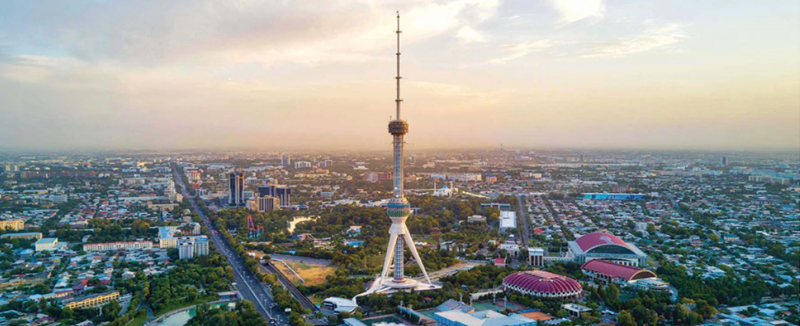
The Republic of Uzbekistan has been opening up to the world in recent years. Uzbekistan has strengthened its relationships with foreign partners in trade, investment, innovation, green energy, tourism, and other fields on the path of dynamic economic development. Noted as the largest consumer market in Central Asia, Uzbekistan is on the way to accelerated growth.

Following the President of Uzbekistan Shavkat Mirziyoyev to the UAE in 2019, UAE has become an important trading partner of Uzbekistan. Both the countries signed a joint statement including inter-governmental, inter-departmental documents, and investment agreements to implement 11 collaborative projects.

Food Exports

The largest share of the Dubai-Uzbekistan non-oil market comprises the food market that involves the production and export of apricots, carrots, cherries, etc. In 2020, the figures showed a steady rise of AED.1.42 billion of food exports, pointing to Uzbekistan as a leader in this position. The country is also developing its logistics and transport corridors to supply Uzbek fresh, and processed fruit and vegetable produce.

The average annual growth rate of agriculture, forestry, and fishery production for 2016 to 2020 showed an increase of 2.6 percent, with 7.2 percent coming in from the agricultural sector alone. This resulted from the structural reforms and implementation of measures that helped support sustainable development and modernization of the agricultural sector.

The UAE company that strongly supports this venture is Abu Dhabi based Sura Holding. Sura Holding has invested in projects designed to modernize the agricultural scene in Uzbekistan. Several other UAE-based companies have invested in agricultural projects across Uzbekistan.

The Energy Sector

The high potential market segment that UAE has invested in Uzbekistan is energy. UAE’s investments in energy projects reflect a growing interest and confidence in the energy market.

During the Uzbekistan President’s visit to the UAE in March 2019, UAE agreed to develop a 500-Megawatt wind farm project in Uzbekistan. This project was set to be developed by Masdar. Later in April 2021, the 500-megawatt project increased its capacity to 1.5-gigawatts.

In December 2020, Masdar completed its financial closure of the first PPP project, the Nur Navoi Solar Project. In recent news, the Dubai-based Phanes Group has inked a power purchase agreement and Investment agreement for a 200 MW grid connector solar PV plant in Uzbekistan that includes technical and commercial terms for building owning and operating a 200MWAC solar PV project including facilities connecting to Khimiya 220/110 kV substation.

Frontiers for Tourism

Uzbekistan has developed the regulatory framework for modernizing and expanding its tourism industry. Some of the plans laid down include introducing halal certification, training of halal tourism guides, and construction of halal hotels.

With the implementation of visa-free tourism in 2018 for Indonesia, Malaysia, and Turkey, tourists can come over to visit the Muslim shrines of the country without any hassles.

In 2019, the visa-free allowance was extended to UAE citizens and residents, which will positively facilitate business and tourism exchange between the two countries in the post-COVID years to come.

Retail Opportunities

Interestingly, UAE’s retail giant, the Majid Al Futtaim (MAF) Group, has already established its footing in Uzbekistan by opening several Carrefour supermarkets in Tashkent. The entry of the region’s leading mall operator highlights the retail sector’s potential in the country for UAE companies.

This move is an indication that the retail market in Uzbekistan is ready to be tapped. UAE-based retail companies can maximize the opportunities and play a crucial role in developing modern retail in the country and creating value for the industry and the Uzbek economy.

UAE-Uzbekistan – A Win-Win Partnership

The Expo 2020 in Dubai is ideal for Uzbekistan’s economic potential as Uzbek companies leverage the platform provided to market the Uzbek potential to a world audience.

The country’s embassy in the UAE will continue to work closely with public and private sector stakeholders to ensure that bilateral relations continue developing and flourishing. The Government-led reforms have brought positive changes to the nation’s business landscape, with the retail sector seeing growth from foreign investors and multi-national companies.

Source: www.transportandlogisticsme.com

IS DEMURRAGE AN EXCLUSIVE REMEDY FOR THE SHIP-OWNERS IN THE EVENT OF DETENTION?

cssSitting in the Commercial Court division of the High Court of England & Wales, Andrew Baker J aptly stated, “From time to time, a case provides the opportunity to resolve a long-standing uncertainty on the point of law of significance in a particular field of commerce.” The Eternal Bliss is certainly such a case.

In the case of K Line Pte Ltd v Priminds Shipping (HK) Co Ltd – The Eternal Bliss, where the ship (Owned/operated by K Line) on voyage charter under (Priminds Shipping) was delayed at the discharge port in China for 31 days due to alleged congestion or possibly lack of storage space ashore for the cargo of soybeans, due to which, the condition of the cargo deteriorated.

K-Line settled the receivers’ and their insurers’ claims at a total cost of about U$1.1 million and commenced proceedings against Priminds (Charterers) seeking indemnity in respect of that cost and for failure to discharge the subject cargo at the rate (within contractual laytime).

It is well-established that demurrage is by nature liquidated damages for failing to discharge at the required rate, but in that respect what does demurrage, calculated in accordance with the voyage charter, fix or limit the owner’s recovery?

In Reidar v Arcos1 and Suisse Atlantique2, it was held that, if damages in addition to demurrage are to be recovered, it is necessary to show a breach of a separate obligation as well as damage of a different kind from delay in the completion of the loading and discharging operation. However, Andrew Baker J held that it is unnecessary to prove a separate breach to recover damages in addition to the detention of the ship, i.e. demurrage and quoted “Agreeing a demurrage rate gives an agreed quantification of the owner’s loss of use of the ship to earn freight by further employment in respect of delay to the ship after the expiry of laytime, nothing more. Where such delay occurs, the demurrage rate provides an agreed measure by which the parties are bound for the owner’s claim for damages for detention, but it does not seek to measure or therefore touch any claim for different kinds of loss [emphasis added], whatever the basis for any such claim.”

The judgment by Andrew Baker J contains a forensic analysis of the cases and legal commentary on the issue, and in summary, held that “demurrage is not and/ or should not be the exclusive compensation where failure to load within the contractual laytime has consequences other than the detention of the ship,” and therefore, where a ship-owner has suffered a different type of loss arising from a failure to load or discharge the vessel within laytime (such as cargo claim liabilities) there should be no need for the owner to establish a separate and independent breach of contract to recover damages in addition to demurrage.

The decision has brought some delight to vessel owners, but it has yet to be determined since the Charterers have been granted permission to appeal to the Court of Appeal.


UAE ALLOWS FOREIGNERS TO HAVE 100% OWNERSHIP OF BUSINESS

From June 1st, 2021, people from other countries are allowed 100% business ownership of companies. Earlier, to start a company, expats had to have an Emirati shareholder or an agent. 

 The previous foreign investment law in 2018 permitted foreigners to own 100% of certain businesses outside of the free zones. With the new law being implemented in June, expats can now own businesses across the UAE and are not limited to the free zones.

The Minister of Economy-Abdulla bin Touq Al Marri said, “The amended Commercial Companies Law aims at boosting the country’s competitive edge and is a part of UAE government efforts to facilitate doing business.”

The amendment to the law was proposed in the year 2020 and the government of UAE has decided to bring it into effect from the month of June in 2021. 

This move will be a boost in the arm for the economy of the region and will improve the prospects of the region’s trade and industry.

Source: www.transportandlogisticsme.com

CHAIRMAN’S MESSAGE

As tragic scenes from COVID ravaged India shake the very essence of our being, we have come to a grave realization that the virus has not gone away. It caught India unawares even as several other countries worldwide battled severe second waves of the pandemic.

Several Indian states are reeling under the pressure of daily rising of positive cases along with a severe shortage of medical oxygen and a lack of hospital beds; things are spiraling out of control. The UAE was one of the first countries to offer help with six cryogenic oxygen containers, followed by financial aid. UAE also expressed its support to India by lighting up the iconic buildings in the Indian tricolor on April 25th.

It is essential to realize that the virus is not contained within countries and nations but can travel through international borders and boundaries. One country’s problem cannot be seen as an isolated one, but we need to accept that we are an increasingly global community. As global citizens, we need to embrace the suffering of our fellow human beings. I extend my heartfelt sympathies and condolences to everyone whose families in India have been affected by this virulent virus.

The real lesson from this catastrophe of epic proportions is the dire need for preparedness. The year 2020 was a watershed year for businesses across the spectrum. COVID-19 shook the logistics industry as well and it was indeed a wake-up call. Protocols were introduced to ensure the integrity and continuity of the supply chain. While 2020 proved to be a breakdown of all paradigms, 2021 is not a time to let down our guards. What we have to acknowledge today is that unpredictability is the new normal.

As we restructure and move ahead together, the CSS family must be flexible, open, and prepared; these are the keys to our success. We cannot sketch out the opportunities and challenges in the field of logistics. We need to be agile enough to operate in a flexible technology environment instead of predicting what’s ahead in terms of market conditions. If we do that, we will emerge resiliently, and more importantly, we will be better set up for success.

Let’s always keep in mind that the difference between successful people and unsuccessful people is that successful people are willing to do what unsuccessful people are not. As Aristotle said, “We are what we repeatedly do.” The compound effect is the principle of reaping great rewards from a series of small but smart choices. The compound effect works both ways, and it can also lead to ruin if the habits are bad.

It’s not the big things that add up in the end; it’s the hundreds, thousands, or millions of little things that separate the ordinary from the extraordinary

TEAM CSS ATTENDS THE PRESTIGIOUS IDEX AND NAVDEX EXHIBITIONS

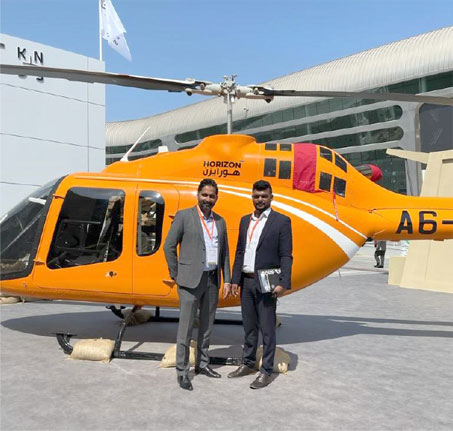
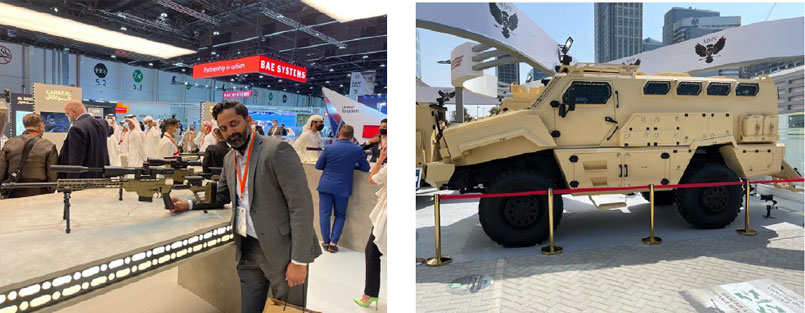
Represented by Mr. Bitto – Senior Business Development Manager and Mr. Roshmon – VP Sales and Marketing of the Sales and Marketing Team, Team CSS attended the International Defence Exhibition (IDEX) and the Naval Defence Exhibition (NAVDEX). Hosted under the patronage of His Highness Sheikh Khalifa bin Zayed Al Nahyan, President of the UAE, the event was held at the Abu Dhabi National Exhibition Centre – ADNEC, Abu Dhabi from February 21st – 25th, 2021.

CSS decided to be part of this path-breaking event in line with its growing capability in handling defense cargo. Over the past year, we have a proven track record of successfully providing logistical support to mission-critical projects across the region. Our reliable and strategic logistics have gained us a reputation in defense shipments, and we continue to build our capability in this arena.

UAE – A critical role in the global defense industry

His Excellency Mohammed bin Ahmed Al Bowardi, Minister of State for Defence Affairs in the UAE, inaugurated the conference. His Excellency highlighted how the UAE plays a critical role in advancing global defense industries. Subsequently, four main sessions were held, with the participation of a group of Emirati and international figures specializing in defense affairs, advanced technology, and the fourth industrial revolution.

Both local and international participants attended the five-day events. The event was a huge success, especially as it is the first global defense event during post-pandemic times. Strictly adhering to COVID protocols, the event was attended by 62,445 attendees at the venue across five days. There were 900 exhibitors, 59 countries, and 35 international pavilions at the IDEX and NAVDEX 2021. With five new countries participants – Israel, North Macedonia, Luxembourg, Portugal, and Azerbaijan, there has been an estimated USD 5.7 billion worth of deals that the UAE Armed Forces inked.

An exceptional event

The closing ceremony of the events was held in the esteemed presence of His Excellency Major General Pilot Faris Khalaf Al Mazrouei, Commander-in-Chief of Abu Dhabi Police, Chairman of the Higher Organizing Committee for IDEX and NAVDEX exhibitions, and His Excellency Major General Staff Pilot Ishaq Saleh Muhammad Al Balushi, Assistant Undersecretary for Industries and Development of Defence Capabilities at the Ministry of Defense, Vice Chairman of the Supreme Committee, and Humaid Matar Al Dhaheri, Managing Director and CEO of Abu Dhabi National Exhibitions Company ADNEC and its group of companies.

Commenting on the conclusion of the exhibitions, His Excellency Major General Staff Pilot Faris Khalaf Al Mazrouei, Chairman of the Higher Organising Committee, said, “The 15th edition of the IDEX and NAVDEX exhibitions has been nothing short of exceptional. These events continue to strengthen their global position, providing exhibitors and participants from around the world with an integrated global platform, despite the challenges imposed by the COVID-19 pandemic. IDEX and NAVDEX drive and enable innovation, in line with the rapid development of the fourth industrial revolution.”

He emphasized that these exhibitions’ success has been rooted in the stalwart and visionary support of UAE’s wise leadership. It is their confidence that has enabled the committee to host the world in Abu Dhabi.

With 2021 marking the Golden Jubilee Year of the foundation of the United Arab Emirates, the committee has a renewed commitment to cultivate and expand the nation’s defense infrastructure and technological systems, using them to ensure security and peace across the Middle East.

His Excellency explained at length the strict implementation of all precautionary protocols to ensure the health and safety of all participants, exhibitors, and visitors. IDEX and NAVDEX have also provided a boost to the tourism sector. These exhibitions ensure that UAE products are globally competitively, both meeting the nation’s needs alongside reaching new markets.

Mr. Bitto spoke on attending this landmark event, “With several high-value deals being sealed during the exhibitions, CSS can play a pivotal role in providing reliable and trustworthy supply chain management services to both local and international clients.”

Echoing his words, Mr. Roshmon concluded, “CSS’s logistics capability and successful track record will help us provide optimal solutions for challenging and complex defense cargo movements in the region and beyond.”

CSS PROVIDES CRITICAL SUPPORT FOR SHIPMENT FROM JEBEL ALI TO PORT HEDLAND IN WESTERN AUSTRALIA

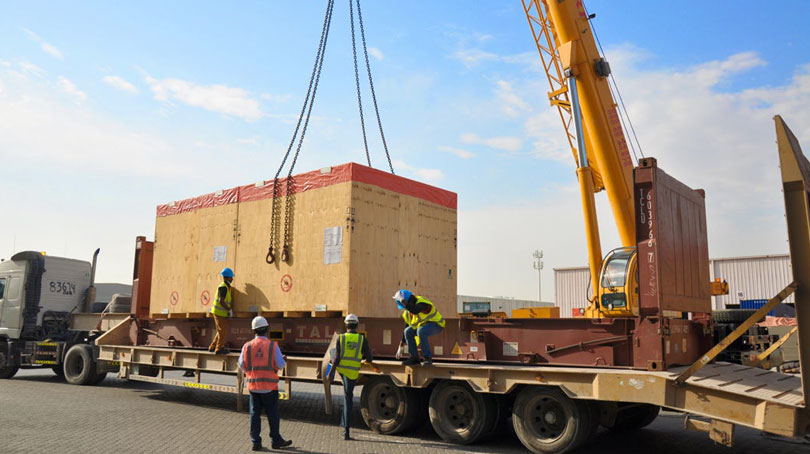
CSS proved its capability in the Projects, Oil & Energy logistic movements with the team’s recent shipment. The shipment was from Jebel Ali to Port Hedland in Western Australia.

Fourteen wooden boxes (4×40’FR) that are deployed Oil & Gas industry cargo were used for this shipment. CSS was instrumental in EXW’S cargo collection from Abu Dhabi to Jebel Ali port.

The CSS Projects, Oil & Energy division has a proven track record of successful project management and is seen as an expert in the global energy business.

The division always conducts intensive research into the geographical and product mix of every project we undertake to provide optimal solutions and save on time and money. CSS’s strength lies in scheduling flexibility, reliability, availability, and management accessibility.

DUBAI INITIATED WORLD LOGISTICS PASSPORT SPREADS ITS WINGS

The World Logistics Passport is a path-breaking development in the Logistics sector. This is a global freight loyalty program that has been launched by the Dubai Ruler HH Sheikh Mohammed Bin Rashid Al Maktoum under the directives of the Vice President and Prime Minister of UAE.

The program was launched at the World Economic Forum in Davos in 2020. With four continents and 11 countries adopting the program, it further strengthens Dubai’s position as a strategic trade hub for emerging markets. The program links Customs World, DP World, and Emirates Group, thus improving connectivity through Dubai. The WLP reinforces Dubai’sDubai’s growing status as a major global hub for multi-modal trade.

Speaking on the success of the program, His Highness Sheikh Mohammed bin Rashid al Maktoum said, “The World Logistics Passport is yet another major initiative that reflects the UAE’s vision to shape a brighter future for our world through programs that foster global trade cooperation. In just one year, we have taken the WLP from vision to reality, bringing together several leading nations, logistics partners, and multinational corporations in a close alliance focused on trade growth. The WLP demonstrates once again the UAE’s keenness to work together with other nations to enhance prosperity and expand growth opportunities for businesses at a time when global markets are seeking to renew their momentum for growth.”

The World Logistics Passport program offers numerous benefits, including:

  • In return for increased trade, the traders and freight forwarders get to access benefits in each of the trade hubs
  • Several businesses get the chance to diversify into new markets like Latin America, South Asia, and Africa
  • High performing business get several operational and financial benefits
  • In the uncertain times of the pandemic, the Government is assured of competitiveness and economic resilience
  • The WLP promises the creation of jobs and enhanced investment
  • The program helps in the utilization of financial and non-financial benefits for increased trade volumes by members
  • The WLP allows firms to remain internationally competitive by reducing costs and increasing the efficiency of the logistics value chain.
  • The WLP Digital Platform taps into a global network of more than 30 partners in 12 hub countries, thus unlocking opportunities that provide access to 20% of the world trade
  • The program has top organizations like UPS, Pfizer, Sony, Johnson & Johnson, and LG as its registered members
  • The platform creates opportunities for businesses to improve existing trade routes and develop new ones.

Thailand, India, Indonesia, Brazil, Colombia, and South Africa have become a part of the World Logistics Passport. Colombia, Senegal, Kazakhstan, Brazil, and Uruguay have already joined the initiative, aiming to handle a sizable portion of future global trade, with Dubai playing the hub point.

As the President of the Dubai Civil Aviation Authority, H.H Sheikh Ahmed Bin Saeed Al Maktoum (Chairman and CEO of Emirates Group and Chair of the World Logistics Passport-Global Steering Group) states “We are very proud that Dubai has been at the center of this exciting and novel initiative.”

The CEO of the World Logistics Passport – Mike Bhaskaran, states, “Our study has shown that traders were most concerned about the availability of information and experience in local demand and overseas regulation. Furthermore, 68% of respondents reported that they face issues connected with the complexity of clearance processes of goods. We are confident that the World Logistics Passport will tackle issues of traders, increase and enable entry to new markets- by connecting traders to local entities (benefit providers) and help overcome key obstacles to doing business in other markets“. The WLP is counted as the world’s first logistics loyalty program for freight forwarders and traders, incentivizing increased trade through more efficient and cheaper trade processes.

THE PINNACLE OF SUCCESS – INDIA STORIES

With over 25 years of experience coupled with excellence, the CSS family gets you to close to what you define as the pinnacle of success. – India Stories

MR. JINU JOHN: HEAD, CORPORATE FINANCE

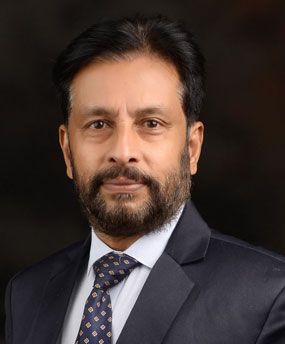
Jinu John started his career with CSS India in 2005 as Manager Accounts and now is Head of Corporate Finance. He is a team player and sees CSS as a customer-oriented and employee-friendly company. He has handled various challenges and delivered on key performance areas across his 16 years of continuous service. His goals and vision are to improve financial ratios related to working capital cycles, debtors management, Balance sheet health, and maintain compliance discipline in the best professional manner along with his focus on teamwork.

MR. T K VISHWANATH: GENERAL MANAGER SOUTH INDIA

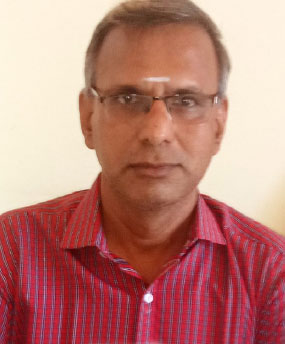
T.K. Vishwanath has been an old stallion and has been associated with the CSS Group since 1999. He heads the South India branches of Tirupur Tuticorin and Coimbatore. Tirupur, known as India’s knitwear capital, contributes a huge amount of foreign Exchange through cotton knitwear export and over 10000 garment manufacturing industries in Tirupur. The industry has been able to book orders from all the world market, including European Union, U.S.A, Canada, Japan & Gulf countries.

Tirupur & Coimbatore is an inland container station and movement through Tuticorin, Chennai, Cochin for the sea Shipments and Air Movements through Coimbatore, Chennai, Cochin & Bangalore. Apart from knitwear exports, they now started getting orders in provisions, coconut, coco by-products, food items, engineering tools, paper & pottery items.

Despite all challenges, his branches continue to deliver due. The most valuable thing he sees about CSS is job security, promotion, growth opportunities for the work done, treating employees in a friendly manner, and being given full freedom to work in their way of thinking.

“I HAVE BEEN INSPIRED BY THE MANAGEMENT & TRUE ENTHUSIASM EMPLOYEES HAVE TOWARDS CSS DEVELOPMENT.” says Vishwanath

CSS CHENNAI: MR. JITTENDRA / MR. SATHIYA

Chennai is a thriving metropolis that saw an unprecedented boom over the last two decades, with several new industries related to automobiles, engineering, ports, logistics, supply chain, chemicals, entertainment flourishing in this period.

The immensely talented human capital in this market catered to the logistics needs of the industry.

Our CSS Chennai team is no different, and with their talent pool and absolute commitment, they have been able to deliver on organizational goals at all times.

The branch is headed by Mr. Jittendra, along with Mr. Sathiya, who runs Accounts for Chennai & Bangalore, and their wonderful team serves the clients to their best potential and is highly efficient in their output. They find the culture at CSS as friendly and considerate. Their vision is to help fulfill the goals of the organization in the most committed and professional manner.

CSS COCHIN / HINDUSTHAN SHIPPING: MS. LATHA ASHOKAN

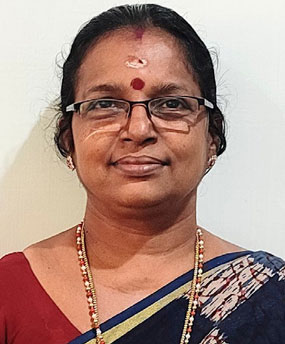
Latha has been with the CSS Group since 1997 and handles the clearance department under Hindusthan Shipping apart from the regular consolidation and logistics activities. She is highly motivated and very happy with her long stint at CSS Group. She strives to remain a committed employee to the company and serves her best always.

CSS BANGALORE: MR SANDEEP ANTHUR

Sandeep has been with the CSS Group since 2007. He started his stint at the Mumbai operations and then relocated to Bangalore in 2009 where he is currently a branch manager.

With an office at the prime St Marks Road in Bangalore, they cater to various customers from garments, forgings, furniture, elevators, luggage, and packaging industries.

Bangalore, the hub of Information Technology in India, offers a professional work culture and an organized environment. With their various service verticals under import, export, clearance, logistics, clearance, etc., CSS Bangalore is poised to cater to its clients’ logistics needs.

With a close working relationship with team Chennai, which serves as a hub for Bangalore, the team is committed to delivering!

CSS KOLKATA: MR PIJUSH, BRANCH MANAGER

Kolkata is the hub for all activity in the resource-rich eastern Indian belt.

West Bengal, Chattisgarh, Jharkhand, Bihar, Odisha, and even Nepal are served via the port of Kolkata.

CSS Kolkata offers logistics solutions to its customers in this industrial and mining belt with its various product verticals in imports and exports

They have the vision to be a provider of choice to the large marketplace. Pijush and his team, with the office located in the heart of the city, strive to satisfy their customer needs with all the resources at their disposal.

CSS DELHI: MR. RAJEEV KUMAR, SR GENERAL MANAGER

Delhi has evolved into a large manufacturing and services hub over the last three decades. Industries related to automobiles, textiles, garments, engineering, construction, food and beverage, spices, condiments, and renewable energy. With a massive development leading to high cargo volumes and strategic ICD’s at Tuglagabad, Dadri, Patparganj, and rail infrastructure connected to Mundra and Nhava Sheva ports, this market serves the entire northern belt of Haryana, Rajasthan, Uttar Pradesh, Uttarakhand, Punjab, Himachal Pradesh.

The developing towns of Panipat, Manesar, Sonepat, Ghaziabad, Faridabad, Gurgaon, and the prominence of Delhi as the national capital saw CSS Delhi commence its operations in 2007 and go on to serve these markets with their service offerings. Rajeev Kumar, who has been with the group since the day the Delhi office started, has been instrumental in this growth story. Along with his team, he is a dominant market leader by volume in the import consolidation vertical and continues to up the flag in this market for CSS India.
 
Team CSS Delhi’s experience is no different from any other office, and they find the creative and free decision-making atmosphere to be the hallmark of the group. It helps to hone talent in an open environment and leads to excellent thinking and quick decision-making to solve customer’s needs.
 

CSS LUDHIANA: MS. MEENA BRANCH MANAGER

Whether it is India’s telecom czar Bharti groups Mittal family or Shri KC Mahindra of the Mahindra Group, it is all thanks to this industrial city, which is also ranked as the best in India for ease of doing business by the World Bank. Small scale industrial units produce industrial goods, machine parts, auto parts, household appliances, hosiery, apparel, and garments. Ludhiana is Asia’s largest hub for bicycle manufacturing and produces more than 50% of India’s bicycle production of more than 10 million each year. Ludhiana produces 60% of India’s tractor parts and a 

large portion of auto and two-wheeler parts. Many parts used in German cars such as Mercedes and BMW are exclusively produced in Ludhiana to satisfy the world requirement. It is one of the largest manufacturers of domestic sewing machines. Hand tools and industrial equipment are other specialties.

Meena heads the branch for CSS Ludhiana and is instrumental in spreading the message of our service capabilities in this market. She is dedicated and hardworking with a team player spirit.

CSS MUMBAI

Mumbai is the financial capital of India. It also has the largest container port in India, which is Nhava Sheva, located to the east of Mumbai. This serves as a gateway for conglomerates like The Tata Group, Reliance, Essar, Mahindra, Bajaj, Mercedes, Skoda, Thermax, Cummins, Alfa Laval, Glenmark, Pfizer, Glaxo, from Indian to Foreign corporates who are based in the western belt of Mumbai, Pune, and Aurangabad. Financial giants like HDFC Group, Kotak, ICICI, Bajaj Finance, NCDEX, NSE, BSE are all part of this vibrant ecosystem. Not to forget the multi-billion entertainment industry such as Disney, Sony, Yashraj, Dharma productions, Netflix, Zee, Balaji, and Prime Video are all located in Mumbai.

Then investment banks and large brokerages like Morgan Stanley, Motilal Oswal, Edelweiss, IIFL or wealth management firms like Marcellus, Helios or construction giants like Indiabulls, Lodha, Hiranandani and shipping giants like MSC, Hapag Lloyd, Maersk, CMA CGM, no one misses the cash cow of Mumbai. Mumbai offers a very well-trained and professional workforce. Pune is also called the Oxford of the East with its wide range of universities and international students.

CSS Mumbai went on an expansion spree since 2007 and has seen year after year growth and is the heartbeat of CSS India. It has professional, committed, loyal people in its journey, who continuously

TOTAL AVERAGE

Rahat Talreja
Vice President – CSS India Operations

Jim Rohn says, “You are the average of the five people you spend the most time with.”

I’ll refine it further to say that these are five people that occupy your mind space and not necessarily physical proximity always.

You can apply this to your own life and see if it holds.

There are a set of words and thoughts that you constantly encounter, and your mind is occupied with them all the time.

Let’s take an example of a Carvels Ice cream store owner in Lynbrook, Long Island, New York. The words and thoughts resonating in his mind always are: Flavours, to promote the ice cream of the season, Lynbrook LIRR station to give directions to his customers, Weather to see if its summer enough for his clients to order ice cream, and so on.

Now take a flight and come to India.

The words that constantly resonate in a working Indians life and office are as follows :

Challan

TDS

ITNS 280

ITNS 281

Form 15CC

ESI

PF

Form 24G

GSTR 1

GSTR 7

GSTR CMP 08

GSTR 3B

GSTR 5A

Registration

Certificate

Form 3BB

Cess

LBT

Property Tax

Form 13

Form 16

Capital Gain

Long term

Short term

Indexation

Labels

Weights

Measurement

BMC

RTO

Aadhar

PAN

Passport

True Copy

Self Attested

Documents

Customs

SIIB

SVB

CBI

NIA

Flying Squad

Investigation

Form C

Notary

Stamp Paper

DIN

Digital Signature

Authorized Signatory

Xerox

Lunch Time

Scan

PDF

Front and Back Copy

Manager

Approval

Peon

Head Office

Returns

Statement

OTP

Password

RTGS

NEFT

Application

Form

Letter

Docket

KYC

File

Colour copy

Short payment

Excess payment

No payment

System

Virus

Hang

License

Restart

N Form

C Form

Form 15CB

Due Date

We are the sum total of all this. Till we reach our own Due Date

DP WORLD SIGNS PACT TO BUILD $1.2B CONTAINER PORT AND LOGISTICS PARK IN INDONESIA

Alongside its partner Caisse de dépôt et placement du Québec (CDPQ), DP World signed a long-term agreement with Indonesia’s Maspion Group to begin the construction of an international container port industrial logistics park in Gresik, within East Java Province of Indonesia.

The signing ceremony was held in the presence of the Suhail Al Mazrouei, UAE Minister of Energy and Infrastructure, and LuhutBinsarPandjaitan, Coordinating Minister for Maritime and Investment Affairs of the Republic of Indonesia, in Jakarta at the Indonesia-Emirates Amazing Week 2021 Building Path Towards Economic Recovery business forum. The signatories of the formal agreements are Sultan Ahmed bin Sulayem, Group Chairman and CEO of DP World, and Dr. Alim Markus, Chairman, and CEO of Maspion Group.

With a total investment of up to US$1.2 billion, the work on the project is expected to start in the third quarter of 2021. The project will enhance East Java’s position as a key trade gateway for Indonesia.

A Joint Venture

Ushering in a new season in the Indonesian transportation sector, the project involves a foreign direct investor (FDI) partner and a private sector Indonesian company. Under the agreement, a joint venture company will be established between DP World and CDPQ’s global investment platform and Maspion Group.

With a design capacity of up to three million twenty-foot equivalent units (TEU), DP World Maspion East Java will become the sole operator of a modern international container port.

Integrated industrial and logistics Park

DP World and CDPQ will also work with Maspion Group to develop an integrated industrial and logistics Park adjacent to the Container Terminal, with an initial land area of 110 hectares with scope for future expansion. The Park will provide a world-class trade environment for domestic and international businesses to help drive economic growth and create jobs.

Indonesia is rapidly developing as one of the world’s most important economies. “The partnership with Maspion Group is an important development in developing global ports and logistics network. This project will create modern, efficient infrastructure, as well as an industrial zone that provides quality logistics,” said Sultan Ahmed Bin Sulayem, Group Chairman and CEO of DP World.

Port Investments

Since its launch four years ago, the $8.2 billion DP World-CDPQ platform has invested in 10 port terminals globally and across various stages of the asset life cycle. This investment will allow the partnership to pursue its objectives to further diversify its reach in terms of geography and trade lanes.

“Maspion Group is committed to supporting Indonesia’s sustainable economic development to be aligned with President Jokowi’s grand plan to make Indonesia the fifth largest economy in the world. Surabaya is an important gateway in Indonesia. The existence of this Container Port will further enhance economic development and investment opportunities in Indonesia,” spoke Dr. Alim Markus, Chairman, and CEO of Maspion Group.

Ground-breaking on the Container Terminal is expected to take place in 2021, with commercial operations scheduled to begin in 2023.

Source: www.gulfnews.com

BETTER TIMES AHEAD FOR UAE LOGISTICS

The upward trend of the logistics industry of the UAE reveals that it is on a rebound with increased economic activity, especially in the field of eCommerce, as a result of the COVID-19 pandemic.

Ecommerce has come to rule the roost as people resorted to online shopping with the lockdowns imposed due to the pandemic. Geoff Walsh, country manager at DHL Express UAE, said logistics has, and always will remain, a necessity for trade and commerce to endure. Despite the industry’s initial shock in the first few months of the pandemic spread, “our industry was a vital service provider” during these times. The eCommerce sector has seen an unprecedented rise in the level of online sales.

Logistics Sector Spurs Economic Growth in the UAE

Latest research points that the e-commerce market in the MENA region surpassed $15 billion at 35 percent CAGR in 2020. The global retail e-commerce sales are expected to hit an all-time high of $50 billion by 2025. Ecommerce will pave the path for this upward trend, and it is indeed a time to make the most of this opportunity. Logistics players need to expand their operations and capture the untapped potential of cross-border eCommerce.

With the logistics sector contributing to nearly 13% of the UAE’s total gross domestic product (GDP), this sector is a substantial contributor to the nation’s economy. Geoff Walsh emphasized, “As we get closer to EXPO 2021, and with the UAE’s 2030 industrial plans in place, the logistics and supply chain segment is expected to strengthen even further”.

The airline and tourism sectors will also be the other positive drivers of economic growth with the travel and tourism sector’s restarting. UAE has started the travel and tourism business-related activity earlier than the counterparts in the GCC region. Increased cargo outflows and tourist inflow will kickstart the economy and take it forward.

“We are also seeing accelerated development in new technologies being introduced in the logistics industry, in the likes of data analytics, Artificial Intelligence (AI), robotics, Internet of Things (IoT), and Cloud services. As the pandemic transforms the future of work and business, the speed of innovation in our industry will be crucial to manage customer expectations,” he added.

Rising from the COVID Conundrum

Like every other business segment, the logistics sector was heavily impacted due to the economic crisis spawned by the COVID-19 pandemic. It required immense vigor to course unchartered territory as logistic companies scrambled to get essential supplies channels moving in the face of transport disruptions, limited cargo capacity, delayed connections, and broken trade links. With airports closed down and borders shut, providing seamless and timely deliveries was the biggest challenge for logistic and supply chain providers. But logistic companies managed to stay resilient and even saw a steep increase in cross-border e-commerce volumes in the UAE and other GCC markets.

UAE – The Hub of Connectivity

UAE stands among the top nations in the world for the infrastructure for connectivity and ICT. According to the latest DHL Global Connectedness Index 2020, the UAE emerged as one of the top five most globally connected countries in the world, on the same rank as the Netherlands, Singapore, Belgium, and Ireland. The DHL Global Connectedness Index 2020 tracks international flows of trade, capital, information, and people across 169 countries and territories, he said

The UAE also features among the most attractive ICT markets in the Middle East driven by digitalization initiatives and aided by the increased adoption of leading technologies such as Cloud, big data analytics, internet of things, and artificial intelligence.

UAE’s robust and highly resilient infrastructure and ICT network have enabled the nation to maintain its critical links to the global arena while COVID-19 derailed business and life worldwide.

A Season of Great Change

The pandemic has also ushered in a season of great change, with many learnings from navigating the disruptions of the global supply chain. Like most business verticals, the logistics industry is also in a flux state with several new trends that are predicted to remain while new ones are constantly evolving with the changing global business climate.

The question that is at the top of every logistics company is how one anticipates and plans for what consumers and businesses will do next to be better able to support customers and ensure speedy, seamless delivery is not impacted. There has been a significant shift in the B2C, and B2B landscape with the new wave of users, and companies need to re-align investments to match future trends.

As remote working models become the norm, companies need to ensure that they are closer to where their customers are and make themselves present in areas closer to the target locations. Digitization, investment in air networks, increasing courier and customer service capacity, and innovating last-mile delivery methods will become a primary focus for logistic companies.

Companies also need to analyze their reliance and spend on partner airlines and continue maximizing their fleet usage.

The UAE is poised to position itself as a global logistics hub in tune with the nation’s economic vision.

Logistics Giants like DHL are committed to investments in the UAE and the wider MENA region to support their clients and provide exceptional customer experience.

Source: www.khaleejtimes.com
WALMART OPENS E-COMMERCE MARKETPLACE TO NON-US VENDORS

Walmart rolled out its third-party marketplace to foreign sellers, who no longer need a U.S. address or business tax identification for trading. Walmart Inc. has removed rules requiring sellers on its marketplace website to be registered in the U.S. — an attempt to close the e-commerce gap with Amazon.com Inc. and tap into China’s vast network of manufacturers.

Walmart is looking to expand its marketplace, where suppliers can offer their products via its website and its allied services, like fulfillment and advertising. For retailers, marketplaces are attractive because they provide revenue from fees without the cost of storing inventory. Last year, Walmart began offering fulfillment services for its marketplace sellers, a move that Amazon made 15 years ago. Sellers can also purchase advertising on Walmart’s websites, supporting the company’s new Walmart Connect media platform. The vendors still will be carefully vetted, both locally and by Walmart’s global trust and safety team, to prevent the listing of unsavory items. The new sellers will make up just a fraction of Walmart’s total seller population, which is mainly based in the U.S.

Chief Executive Officer Doug McMillon has said that Walmart’s marketplace business is a “huge opportunity” for the retailer. In February 2020, he told investors that Walmart would make a “greater push” to expand new services like fulfillment. “We have strong relationships with many reputable companies around the world, and we have some of the most rigorous seller requirements in the industry,” Walmart said in an emailed statement. “As a result, we are opening our U.S. marketplace to a limited number of international companies who share our commitment to customer trust and safety.”

Hurdles in the Way

However, the opening of the doors poses several risk factors as well. Walmart’s marketplace has faced flak for carrying offensive items that hurt sentiments for certain segments of society. A while back, Walmart had to take down about 20 million items off its marketplace as it failed to meet its quality standards. AS opposed to the Amazon’s marketplace, which is open to anyone who registers, Walmart is invite-only, allowing the company to vet its sellers. Walmart has also made deals with Shopify Inc. and BigCommerce Inc. over the past year to widen its reach.

Rise of the Chinese Manufacturers

Chinese manufactures have tapped into the American customer base by reaching out to them through online marketplaces. According to researcher Marketplace Pulse, Chinese merchants represented 75% of new Amazon marketplace sellers, an increase from 47% a year earlier.

Walmart also foresees this same trend to be replicated in their online marketplace as well.

“This will get Walmart more selection, more affordable goods that already dominate Amazon best-sellers lists,” said JuozasKaziukenas, founder and CEO of Marketplace Pulse. “To an investor, that reads as positive news.”

Amazon vs. Walmart

More than 60% of the $532 billion global shoppers will spend on Amazon this year will go to marketplace merchants, according to researcher eMarketer. Amazon charges a commission — typically 15% — on each transaction plus additional warehouse storage, packing, and delivery fees. Amazon also charges its marketplace merchants to advertise on the popular website. Amazon’s advertising business will grow 30% this year to reach $23 billion in sales, according to eMarketer.

Walmart doesn’t disclose how many marketplace sellers it has, but Marketplace Pulse pegs it at about 80,000. Walmart carries more than 80 million unique items online. Not all of the new vendors will be based in China. While the company is opening up its marketplace to international sellers, it’s also making a push to stock more U.S.-made products in its aisles. Walmart Inc. ranks No. 3 on the Transport Topics Top 100 list of the largest private carriers in North America.

Source: www.ttnews.com

QATAR AND INDIA TO INCREASE DIRECT SHIPMENT CAPACITY

Qatar and India have shown a keenness to enhance the current direct shipment frequency as part of efforts to strengthen the economic and business relations between the two countries.
Qatar and India are working on finding new direct shipping routes between the two historically friendly counties. The move has come in the wake of the economic blockade imposed on Qatar by the siege countries. This situation has caused Doha to review and strengthen its maritime diplomacy. Ten days before the blockade, the Ministry of Transport and Communications launched a new direct maritime line between Qatar and India, India Qatar Express Service, linking Hamad Port with Mundra (Gujarat) and Nhava Sheva Port (Maharashtra).

The Qatar India Business and Investment Conference

The India Business and Professionals Council (IBPC) organizes the first Qatar India Business and Investment Conference (QIBIC). Speaking on occasion, K M Varghese, the president of IBPC, said, “To increase the frequency of the current direct shipment capacity, an exclusive session will be held on ‘Doing Business in Qatar’ from a logistics point of view, addressing relevant issues related to this subject”.

K M Varghese said the conference’s main objective is to kick-start a series of such events to bring experts, decision-makers, and key stakeholders in wide-ranging areas, both Qatar and India, to find the synergies to engage in the two countries. Being the first conference, this conference’s focus will be on expertise and technologies rather than outright investment and projecting expected trade volumes between the two nations, stated Varghese.

Varghese also disclosed that QIBIC is slated to be an annual event. He concluded by saying, “We believe a conducive ambiance and atmosphere should be built first, between the experts, decision-makers, and stakeholders, to find areas of common interests before getting into the next phase of investing. We do hope that later episodes will scale into a higher level of exploring business deals.”

Connectivity between Doha and Nhava Sheva Port, Mumbai

Milaha Maritime and Logistics, a subsidiary of Milaha Group, was the first to launch the direct container service between Qatar and India in 2015. The non-stop service connects Qatar’s Doha port with Nhava Sheva, also known as Jawaharlal Nehru Port, located in Mumbai.

Trade between Qatar and India has shown a phenomenal growth trend in recent years. The renewed trade links will further expand the thriving trade activities between the two nations. The trade links between the two nations go back in history, and India will always be Qatar’s natural business and trade partner

Source: www.gulf-times.com

Page1 … Page5

CSS Newsletter

JULY/AUGUST 2021

In this issue:

Quick Links

  • Home
  • About
  • Services
  • Corporate Brochure
  • CSS Corporate PPT
  • News Media
  • Lighthouse
  • Careers
  • Contact us

Locations

  • Dubai
  • Abu Dhabi
  • Sharjah
  • Ras Al Khaimah
  • Bahrain
  • Oman
  • Qatar
  • Saudi Arabia
  • Kuwait
  • Kenya
  • Turkey
  • India

Subscribe to our bi-monthly newsletter, Lighthouse

  • Follow Us
© 2025 CSS Group. All rights reserved. Crafted with by Netventure